How do restaurant chains source FF&E and building materials from China for multi-unit rollouts? The buyers who do it well stop thinking in single stores and start thinking in programs: one approved specification, a stable factory pool, and a repeatable container cadence that opens each new location on schedule. As a China sourcing agent and sourcing partner for restaurant chain buildouts, FBM Sourcing works with franchise owners, development managers and fit-out contractors who need store number twelve to look exactly like store number one — at a unit cost that keeps improving as the rollout scales.
Why Multi-Unit Rollouts Are a Different Sourcing Problem
A single restaurant fit-out is a project; a chain rollout is a supply chain. Three differences drive everything:
- Specification lock. Brand consistency means the same booth dimensions, the same laminate color, the same pendant light across every store. Factory substitutions that would pass unnoticed in a one-off project break a chain’s visual identity.
- Repeat cadence. Once tooling, shop drawings and QC standards are approved for store one, every subsequent store should be faster and cheaper. If your supplier is re-quoting from scratch each time, you are paying for the same engineering twice.
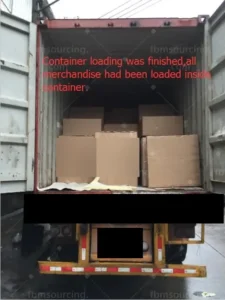
- Split deliveries. Stores open in different cities on different dates. Production batches must be consolidated and shipped per-store, each container documented for a different destination — sometimes different countries.
What Goes in a Restaurant Chain’s China Package?
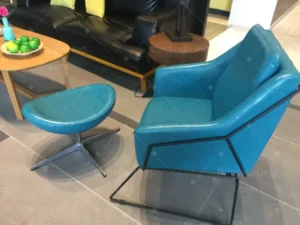
- Seating — booths, banquettes, contract-grade chairs and bar stools with commercial-cycle testing
- Tables and millwork — dining tables, counters, service stations, feature walls and joinery built from approved shop drawings
- Lighting — decorative pendants and architectural lighting matched across stores
- Finishes — floor tile, wall cladding, acoustic panels
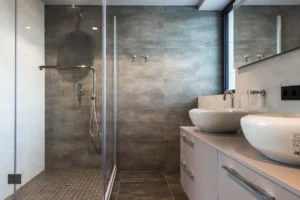
- Washroom packages — commercial sanitary ware, basins and partitions
- Outdoor dining — weather-rated patio furniture where the format includes terraces
One of our recent projects consolidated button-tufted lounge seating, PE rattan patio sets and illuminated bar furniture from three specialist factories into a single container for one fit-out — that is the normal shape of a restaurant package: several specialist factories, one coordinated shipment.
Sourcing this for a commercial project?
FBM Sourcing works with project owners, developers, main contractors and FF&E contractors on hotel, apartment, school, office and other commercial building projects. Send us your BOQ, drawings or product list — our team will review it and get back to you.
How Does the Program Model Keep Store Costs Falling?
- Store one is the engineering investment. Shop drawings, samples, finish boards and a full QC checklist get approved once, by the brand team.
- The factory pool is locked. Each product category stays with the factory that passed vetting — we keep backup factories qualified so capacity never blocks an opening date.
- Each new store is a release, not a project. A store order references the approved spec; production slots are booked against the opening calendar; per-store containers ship with store-numbered cartons and installation-sequenced load plans.
- Volume is negotiated annually. Committing a year’s store count to the factory pool is what actually moves unit prices — not haggling store by store.
What Should a Development Manager Check Before Committing?
- Contract-grade proof, not photos: cycle-test reports for seating, fire ratings for upholstery and panels where your market requires them — see our note on fire safety certificates for commercial FF&E
- Per-store logistics capability: can your agent document one container to Dallas and the next to Toronto under different import regimes? Understand the Incoterm options before you commit
- QC at every batch: inspection on store one proves nothing about store nine; a full pre-shipment inspection must run on every production run
- Spare-parts policy: chains live with damage; a small attic-stock allowance of chairs, table tops and light fittings per store, agreed at order stage, avoids emergency air freight later
Leisure and entertainment venues have a different package shape again — see sourcing FF&E and materials from China for cinema and entertainment venue projects for what actually sets the auditorium seating price and why the programme rather than the price is the real risk.
FBM Furniture
If your package is mainly public area and restaurant furniture, see public area and restaurant furniture on fbmfurniture.com, the site of FBM Furniture, the furniture sourcing line of FBM Sourcing Limited.
Get a China Procurement Quote for Your Rollout
Send us your store design package — drawings, finish schedule, seat count and your opening pipeline for the next 12 months. Our team will review it and get back to you. Start at our building materials & FF&E procurement page.