Yes — consolidating products from multiple Chinese factories into one container is standard practice for commercial projects, and for most hotel, apartment and fit-out packages it is the only economical way to ship. Goods from each factory are trucked to a consolidation warehouse — for building materials and furniture packages that usually means Foshan or Guangzhou — inspected, repacked where needed, and loaded into shared containers under a single loading plan and one bill of lading per container. This is the kind of scope a sourcing partner such as FBM Sourcing takes on.
The numbers that drive the decision:
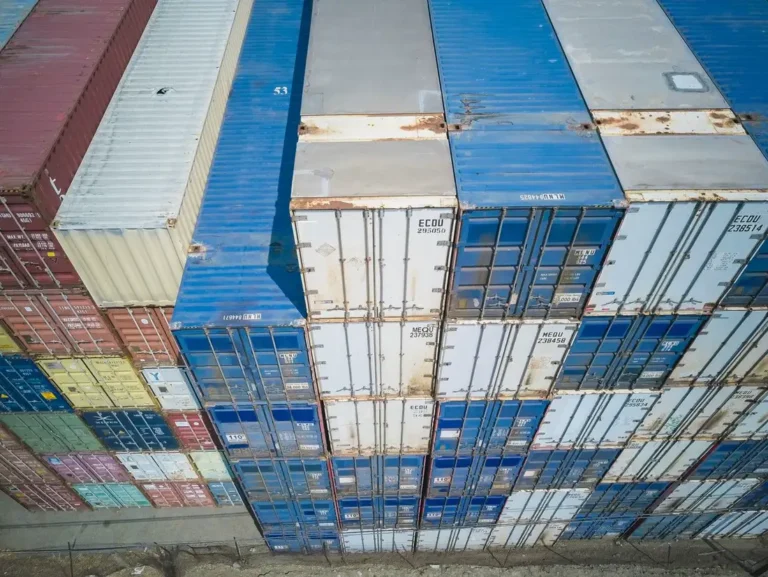
- A 40ft high-cube container holds about 76 m³; with mixed project cargo, 68–72 m³ of realistic usable volume
- Below roughly 15 m³, the answer is to widen the pool rather than shrink the box — add the other categories of the same project until the container fills
- Consolidation adds about 3–7 days versus shipping straight from a single factory
- One container, one bill of lading, one customs entry — instead of one set of documents per factory
- The container leaves when the slowest factory in the load plan finishes
How Does Factory-to-Warehouse Consolidation Work in China?
Each factory in the package finishes production on its own schedule and delivers to the consolidation warehouse. On arrival, cartons are counted against the packing list, checked for transit damage, and staged by container. Weak retail-style cartons get repacked or reinforced for ocean freight, oversized items get corner protection and stretch wrap, and every carton is labelled with a code that maps to the project’s room, floor or building zone.
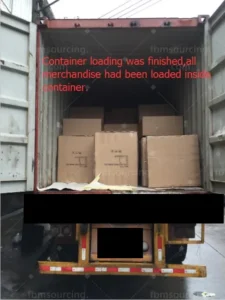
When all cargo for a container is in, the warehouse loads to a pre-agreed plan: heavy, dense goods low and forward — tiles, stone, hardware — with casegoods above and fragile or light items last. Done properly, the load plan is engineered before the first carton goes in; how many containers a package actually needs is worked out at specification stage, as covered in our hotel FF&E container planning guide.
When Does Consolidation Make Sense — and When Doesn’t It?
Consolidation pays off when a project buys from several factories whose individual volumes don’t fill containers. Three factories shipping 20 m³ each on their own means three sets of origin charges, three destination handling bills and three deliveries arriving on different days. The same 60 m³ consolidated into one 40HQ arrives together, clears customs once, and hits site as a single delivery your installation crew can plan around.
It stops making sense in two situations. First, when one factory alone fills a container — then that container ships direct from the factory floor and only the remainder consolidates. Second, when one product category is genuinely urgent: a consolidated container leaves when the slowest factory finishes, so a fast-tracked item should ship separately — in its own container, or by air for small critical pieces — rather than waiting for the pool. Realistic ocean and production timelines by category are in our China sourcing and shipping timeline guide.
How Do You Align Production Across Multiple Factories?
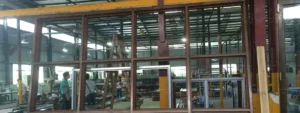
The hard part of consolidation is not the warehouse — it is getting eight factories with different lead times to finish inside the same loading window. Casegoods might run 45–60 days, custom aluminum windows 40–50, tiles from stock in 10, custom lighting 30–35. Left alone, those schedules scatter finished goods across six weeks, and either your warehouse stores the early goods or your container waits for the late ones.
The working method is reverse scheduling: fix the target loading week, then issue each factory a purchase order timed so its production lands inside a 7–10 day arrival window at the warehouse — stock items ordered late deliberately, long-lead custom items ordered first and chased weekly. This is coordination work a freight forwarder does not do; a forwarder moves the cargo it is given, while a sourcing agent (versus a 3PL or forwarder) controls the upstream purchase orders that decide whether consolidation is even possible.
For a deeper look at how the loading itself is planned — usable CBM, weight limits and load sequence — see our guide to 40ft container loading.
Sourcing this for a commercial project?
FBM Sourcing works with project owners, developers, main contractors and FF&E contractors on hotel, apartment, school, office and other commercial building projects. Send us your BOQ, drawings or product list — our team will review it and get back to you.
What Does a Project Loading Plan Look Like?
A proper project loading plan is a document, agreed before loading day, that lists per container: which factory’s goods, carton counts and volumes, weight distribution, and the unloading sequence at destination. For phased projects, containers are packed in reverse order of site need — if Building A installs first, Building A’s goods go into the first containers to sail, and within each box the first-needed cartons load last so they come off first.
Loading is also the final physical checkpoint before goods leave China. At FBM Sourcing, our own QC team supervises container loading at the warehouse, photographs the load stage by stage, and issues a loading report against the plan — so the client knows exactly what left, in which box, before the vessel sails. What happens at the receiving end — delivery, warehousing and floor-by-floor distribution — is covered in who handles FF&E delivery, warehousing and installation.
Who Manages Consolidation — Freight Forwarder or Sourcing Agent?
A freight forwarder consolidates cargo; it does not manage factories. If a factory delivers late, short, or in export-unworthy cartons, the forwarder loads what shows up. A china sourcing agent based in the production region owns the whole chain: purchase order timing, production follow-up, warehouse inspection on arrival, repacking decisions, the loading plan, and the document set that gets one consolidated shipment through customs cleanly. For packages centred on Foshan’s furniture and building material clusters, that is exactly the ground presence our Foshan sourcing agent service provides — and it is why consolidation is bundled into our a 5% commission for suppliers you nominate (products we source for you are quoted at a direct price) rather than sold as a separate logistics product.
Inspection Sequencing Across Multiple Factories
Each factory is inspected independently, on its own site, before its goods travel anywhere near the consolidation point. This matters because a defect found after goods have already been trucked to a shared warehouse is far more expensive to fix — the goods need to travel back to the factory, adding a full round-trip to the schedule. Piece-by-piece or AQL-sampled inspection at each factory catches problems while the goods are still on the supplier’s premises and the leverage of an unpaid balance is still in place. Buyers dealing with rework at this stage should see our guide on handling defects and rework before a container ships.
What Happens If One Factory Falls Behind Schedule
The realistic options are: hold the container booking and accept a short delay across the whole shipment, ship the ready product lines as a smaller consolidated load and send the delayed factory’s goods on a follow-up shipment, or expedite the delayed factory with an agreed cost and schedule recovery plan. Which option makes sense depends on how far behind the factory is and how time-sensitive the project’s installation date is — a sourcing agent managing all factory relationships directly is what makes it possible to negotiate a recovery plan quickly rather than the buyer discovering the delay only when the ship has already sailed without that supplier’s goods.
Once the consolidated box is on the water, see how to track a container from China and what the status updates mean for which reference number to use at each stage and the five reasons an arrived container still is not collected.
Where the factories were appointed by the buyer rather than sourced through us, consolidation can be run on its own: collection, receiving against your purchase orders, storage, loading and export documents. That scope is described in consolidation and export for buyer-selected factories.
Get a China Procurement Quote for Your Project
Planning a multi-category package — furniture plus tiles plus doors plus lighting — for a hotel, apartment or commercial development? Send us your BOQ or product list with quantities, destination port and timeline. We will map it to factories, estimate container count and consolidation schedule, and give you one coordinated plan: China building materials & FF&E procurement.
For a phased apartment or multifamily development consolidating multiple FF&E categories by unit type, see how mixed-container consolidation works specifically for apartment and multifamily projects.