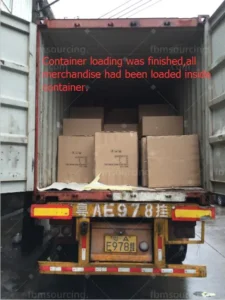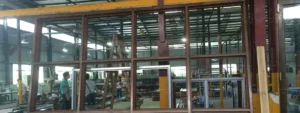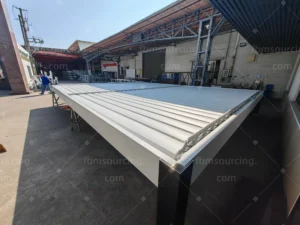
When defects are found before your container ships from China, the sequence is: classify every defect by severity against the agreed AQL standard, negotiate a written rework plan with a deadline, hold the balance payment and the shipping booking until a re-inspection passes, and only then release funds and load. Your leverage is greatest in exactly this window — the factory has finished goods it cannot sell elsewhere and 70% of the order value still unpaid — and it collapses almost entirely once the container is on the water.
Why the Pre-Shipment Window Is Your Only Real Leverage
Every remedy available to an overseas project buyer — rework, replacement, discount, rejection — is cheap and enforceable while the goods are still in the factory, and slow, expensive or practically impossible afterwards. In China, the factory’s commercial motivation is the unpaid balance under standard 30/70 payment terms; once you have paid in full and the goods have sailed, a defect claim becomes a negotiation with no collateral, conducted across time zones, about product that costs more to return than to replace. This is why experienced project buyers, and any competent china sourcing agent, treat the pre-shipment inspection not as a formality but as the contractual gate that the balance payment and the vessel booking both hang on.
Key Facts: The Defect-to-Shipment Sequence
- Step 1 — Inspect when 80–100% packed: Pre-shipment inspection runs against the approved sample and AQL plan; results are documented the same day with photos of every defect found.
- Step 2 — Classify: Critical defects (safety, non-function, regulatory) fail the batch outright; major and minor defects fail it only if they exceed the agreed AQL limits.
- Step 3 — Agree the rework plan in writing: Scope, method, deadline and who bears cost — before any repair work starts.
- Step 4 — Re-inspect the reworked goods: A second inspection covering the reworked units and a fresh AQL sample, at the factory’s cost if the first failed.
- Step 5 — Release and load: Balance paid and container booked only after the re-inspection report passes.
What Counts as Reworkable — and What Doesn’t?
Rework is the right answer when the defect is superficial or assembly-level: finish scratches that can be polished and re-coated, misaligned hinges and hardware, missing components, wrong or damaged packaging, incorrect labelling. Furniture, cabinetry, doors and metalwork factories carry out this kind of rework routinely in two to seven days, and quality after competent rework is indistinguishable from first-pass production.
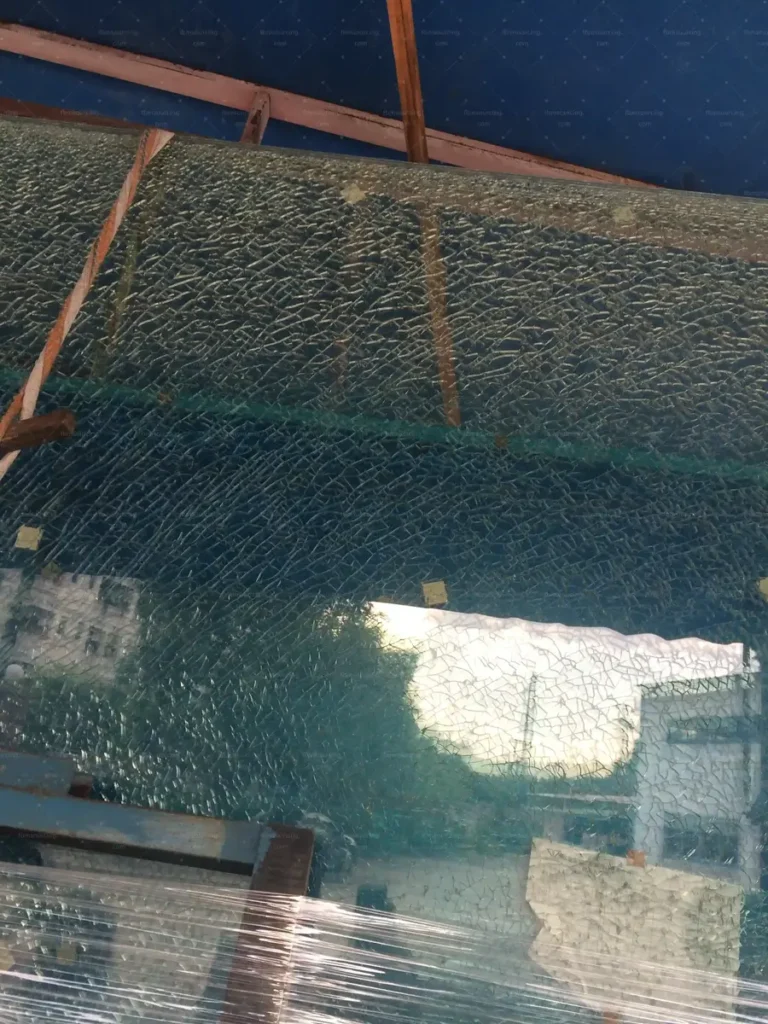
Some defects cannot be reworked and should never be shipped on a promise: dimensional errors in tempered glass or cut stone (both must be remade), colour variation across a tile or fabric batch (a dye-lot problem, not a repair problem), structural failures such as cracked frames or delaminating board, and any critical safety defect. For these, the options are replacement production, substitution of the affected quantity, or a documented commercial settlement — and the decision needs to be made deliberately, not defaulted into by a sailing date. A factory offering a discount to ship known-defective goods is pricing your site team’s ability to absorb the problem; on a project with an installation programme, that price is almost always wrong.
How Do You Negotiate Rework Without Losing the Schedule?
The tension is real: every rework day pushes against the vessel booking, and factories know buyers feel that pressure. Three practices keep the schedule honest. First, inspect early enough to leave a rework buffer — booking the inspection 10–14 days before the planned ETD, rather than 2–3, converts most rework from a crisis into a line item. Second, put the rework agreement in writing the same day as the failed inspection: itemised defects with photos, the repair method, the completion date, and confirmation that re-inspection cost sits with the factory. Third, roll the booking without hesitation if the deadline slips — carriers re-book containers week to week as a matter of routine, and a one-week roll is recoverable in a project programme in a way that a container of rejected goods is not.
Where the relationship is managed by a building material sourcing agent rather than a remote buyer, this negotiation happens on the factory floor in Mandarin, with the agent’s future order flow as additional leverage — which is usually the difference between a rework plan measured in days and an email chain measured in weeks.
Sourcing this for a commercial project?
FBM Sourcing works with project owners, developers, main contractors and FF&E contractors on hotel, apartment, school, office and other commercial building projects. Send us your BOQ, drawings or product list — we’ll come back with a sourcing plan and budget estimate.
Re-Inspection: Closing the Loop Properly
A rework cycle is only finished when a second inspection says so. The re-inspection has two parts: 100% verification of the specific units that were reworked, and a fresh AQL sample across the batch to confirm the rework did not introduce new damage — repaired cartons opened and re-sealed, units handled twice, finishes touched up in a hurry. Under ISO 2859-1 practice (the sampling framework behind pre-shipment inspection and AQL sampling, published by ISO), a failed lot re-presented for inspection is commonly checked at tightened severity — a stricter sample — which is exactly the discipline to apply. The re-inspection report, with before/after photos of each defect line, then becomes part of the order file: it is the document that justifies releasing the balance, and the evidence base if anything is disputed after delivery.
For orders where the buyer requires independent verification — lender-financed projects, government work, or first orders with a new factory — the re-inspection can be run by a third-party firm alongside the sourcing agent’s own QC, as described in our guide to third-party inspection in China with QIMA, SGS and Bureau Veritas.
Building Defect Handling into the Order Before Problems Appear
Everything above works dramatically better when it was agreed at order stage rather than invented during a crisis. The purchase agreement should state the inspection standard and AQL levels, tie the balance payment explicitly to a passed pre-shipment inspection, set rework at the factory’s cost including re-inspection fees, and give the buyer the right to reject and source replacement elsewhere if a second inspection fails. Factories accept these terms readily when they are in the original negotiation — they are standard for export production — and resist them fiercely when introduced after a failure. On multi-factory project orders, the same framework applies at the consolidation warehouse, where goods from each factory are checked again before FCL container consolidation, so one factory’s rework cycle never contaminates the loading plan for the rest of the project.
Get a QC and Procurement Plan for Your Project
FBM Sourcing manages factory selection, production QC, defect rework negotiation and re-inspection as one accountable scope for hotel, apartment, office and other commercial building projects — with the balance payment and container booking held until the goods genuinely pass. Send us your drawings, product list, destination port and timeline through our China building materials and FF&E procurement page and we will come back with a sourcing and inspection plan for your order.