
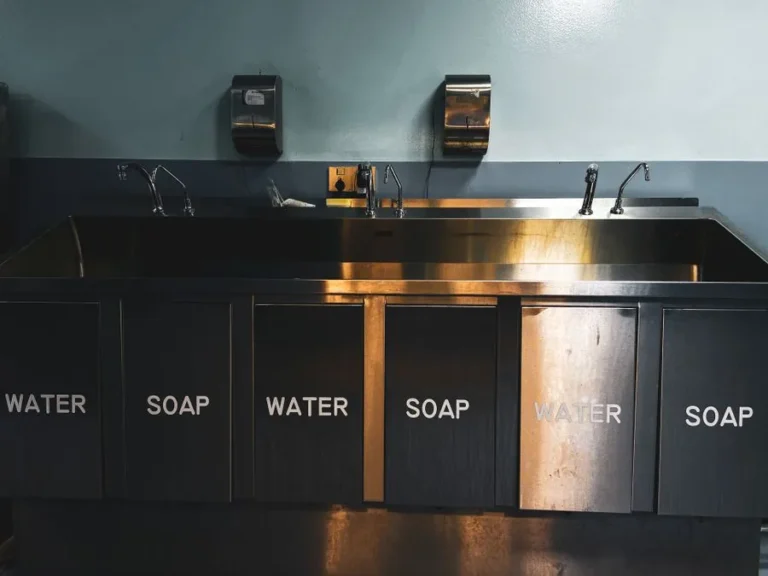
Grease interceptor manufacturers in China include stainless steel fabricators that build under-sink and floor-standing units, makers of moulded plastic and fibreglass interceptor tanks, precast and concrete tank producers, firms that supply automatic grease removal units with heaters and scrapers, and kitchen equipment suppliers that bundle an interceptor into a complete kitchen package. In a restaurant, a hotel kitchen or a food court the interceptor sits between the kitchen drains and the sewer, and it is one of the items an inspector asks to see. Each route supplies a different size range, material and servicing arrangement under the same name.
This guide sorts the supply side into five sourcing routes so a procurement team can send one brief to the right makers and compare the answers fairly. It is not a ranking. No factory is named or scored here, and no claim is made about the separation performance, capacity or approval status of any unit. The kitchen designer, the plumbing engineer and the local authority define those requirements, and each maker must show evidence for the exact model it offers. For related items, see our guides to commercial kitchen equipment manufacturers and floor drain sourcing.
What should a grease interceptor brief state?
A brief that says only “grease trap, stainless, 20 units” produces quotations that cannot be compared, because the duty, the location and the connections are left open. State at least the following, copied from the kitchen drainage drawing and the authority’s requirement.
- Item code and quantity: each interceptor type from the schedule with the quantity per kitchen, so equipment is priced against locations and not against a total.
- Duty and connected fixtures: the fixtures that drain to each unit and the flow the plumbing engineer has designed for, written as the engineer writes them.
- Location: under a sink, on the floor, below ground or outside, with the clearance the drawing allows for access and servicing.
- Size and type: the unit type the authority names, the overall dimensions and the connection sizes as drawn.
- Material and finish: stainless grade, plastic, fibreglass or concrete as the specification states, and the internal and external finish.
- Covers and access: cover type, load rating the drawing requires where traffic passes, and the number and position of access points.
- Fittings: baffles, flow control, air relief and sampling points the drawing shows, and who supplies them.
- Approvals the project names: the listing, test or certification the authority requires for each unit, with its standard and edition, set by the engineer and the authority and not by the maker.
- Packing: how units are protected and marked by kitchen, and which parts ship separately.
Five sourcing routes for grease interceptors
1. Stainless steel fabricators
Sheet metal workshops build under-sink and floor-standing interceptors from stainless steel. Ask for the drawing with wall thickness, the weld and finish description, the cover and seal description and a finished sample, and ask how connections are formed. This route suits kitchens where space is tight and the unit is visible.
2. Moulded plastic and fibreglass tank makers
These makers produce tanks in plastic or fibreglass for buried or floor use. Ask for the tank drawing, the material description, the wall construction and the cover and riser options, and ask how the tank is secured against uplift where the drawing places it below ground. This route suits larger units where weight and corrosion resistance matter.
3. Precast and concrete tank producers
Concrete producers cast large interceptor chambers for food courts and hotel kitchens. Ask for the structural drawing, the cover and access description, the joint and seal description and the lifting method, and agree who supplies fittings and who installs. Heavy goods have a freight consequence, so ask how units are loaded and marked. See our guide to manhole cover and drainage grating manufacturers for access covers.
4. Automatic grease removal unit suppliers
Some suppliers make units with a heater, a skimmer or a scraper and a controller that removes grease automatically. Ask for the drawing, the electrical description, the parts that move and the replacement parts offered, and agree who supplies the electrical connection and the controller documents for the destination.
5. Kitchen equipment package suppliers
Kitchen suppliers quote the interceptor with sinks, tables and cooking equipment. This puts one party in charge of the kitchen package, but ask the supplier to price the interceptor on its own line and to name the maker, so that evidence can be checked for the exact model.
Sourcing this for a commercial project?
FBM Sourcing manages the entire China procurement package for overseas construction projects. We work with Developers · General Contractors · Builders · Commercial Project Owners · Interior Design & Construction Companies · FF&E Solution Providers. Send your BOQ, drawings or product schedule for review.
How to compare grease interceptor quotations
- Model and type: the model named on each line, with the unit type stated as the authority names it.
- Dimensions and connections: overall size, connection size and position on each line, in millimetres.
- Material: material and finish named on each line, with wall thickness where it is drawn.
- Included parts: covers, baffles, risers, fittings and frames listed with quantities.
- Units of measure: price per unit or per kitchen, and what a unit contains.
- Evidence: which test and approval documents are offered for the exact model, with the date and the body that issued them.
- Exclusions and substitutions: any change of material, size, cover or fitting the maker proposes.
A quotation that is cheaper on one line may be thinner on another. Read the descriptions side by side before reading the totals.
Servicing, access and records
An interceptor works only if it is emptied and cleaned, and an inspector will ask who does it. Agree before the order how each unit is reached for servicing, what the access point allows, and what records the operator keeps. Ask each maker to state in writing which parts are wear items, how they are identified and how long the model stays available for spare parts.
Mark each unit on the kitchen drawing with its item code so that the operator can match the label on the unit to the servicing record. Settle labels and documentation in the brief and not on site, because the unit is hard to relabel once it is buried or boxed in.
Samples, approval and acceptance on delivery
Approve a finished sample of each type of unit, or at least a finished sample of its cover, connection and finish, before bulk production, and record the approval in writing against the item code. Keep the approved sample as the reference for the bulk order.
On delivery, check a sample of crates against the order: model, dimensions, connection position, cover, labels and quantity per kitchen. Note any damage or difference in writing on the day with photographs. Before shipment our own team checks quantities, finish, fittings and packing against the signed-off specification, and you receive a QC report with photos and video.
What evidence to ask each route for
Evidence should be requested for the exact model, not for a product family. Ask for the following in writing and keep the answers with the quotation.
- Stainless fabricators: drawing, material and finish description, cover and seal description and a finished sample.
- Plastic and fibreglass makers: tank drawing, material and wall description and the securing method.
- Concrete producers: structural drawing, joint and seal description and the lifting and loading method.
- Automatic unit suppliers: drawing, electrical description and the replacement parts offered.
- Package suppliers: a separate product sheet for the interceptor and the name of its maker.
Specification gaps to close before quotation
A quotation cannot answer the questions below for itself. Check that the brief answers these questions before it goes out.
- Which fixtures drain to each unit, and what flow has the engineer designed for?
- Which unit type and approval does the authority require, in which standard and edition?
- Where is each unit placed, and how is it reached for servicing?
- Which material, cover and load rating does the drawing show?
- Who supplies the connection fittings and who installs the unit?
- How are units marked by kitchen, and how do they ship?
Next steps for a kitchen drainage package
Send each maker the same brief and ask for answers in writing, line by line, with samples or documents before bulk production. FBM Sourcing manages China procurement packages for overseas projects; furniture-only packages are also run through FBM Furniture.
Questions buyers ask about grease interceptors from China
Can two interceptor quotations be compared by unit price alone?
No. A unit price says nothing about the material, the dimensions, the covers or the evidence. Compare the model, the type, the included parts and the approval documents on each line before comparing totals.
Who decides which interceptor a kitchen needs?
The plumbing engineer and the local authority decide. Name the requirement and its edition in the brief and ask each maker to show evidence for the exact model.
Should an interceptor be bought with the kitchen equipment?
It can be, which gives one party for the kitchen package, but keep the interceptor on its own line and ask for the maker so that the evidence can be checked for that model.
Do interceptors need a sample before ordering?
Approve a finished sample of the cover, connections and finish for each type, and keep it as the reference for the bulk order.
How does FBM Sourcing support this kind of package?
We review the brief, collect comparable quotations and manage the package for the project. For suppliers you nominate, we charge a 5% commission; for products we source for you, we quote a direct price. Our own team performs one inspection after bulk production is complete and before shipment, and the client’s project team is welcome to attend.
FBM Sourcing manages the entire China procurement package for overseas construction projects. We work with Developers · General Contractors · Builders · Commercial Project Owners · Interior Design & Construction Companies · FF&E Solution Providers.





