
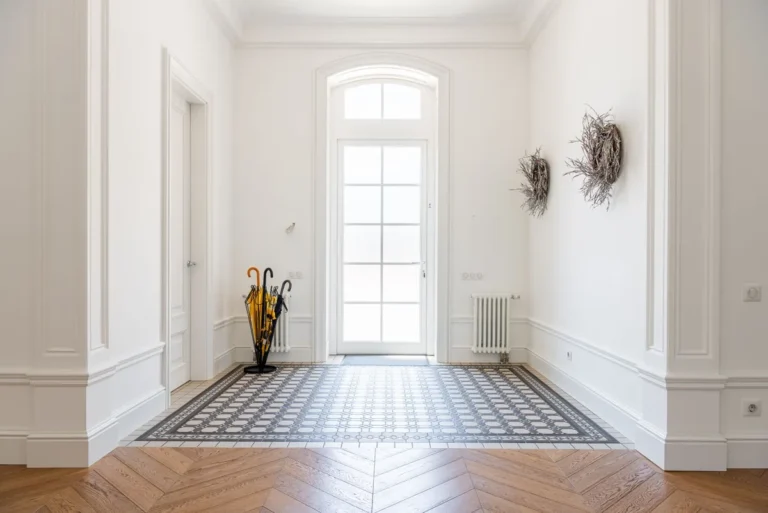
Floor transition strip manufacturers in China include aluminium extrusion makers, stainless steel and brass fabricators, makers of PVC, rubber and vinyl profiles, flooring manufacturers that sell matching accessories with their floors, and stone workshops that cut thresholds and saddles. A transition strip sits where one floor finish meets another, where the floor height changes or at a door. It decides how the joint looks, how it is fixed and how it takes foot and cart traffic. Each route supplies a different material and fixing under the same name “strip”.
This guide sorts the supply side into five sourcing routes so a procurement team can send one brief to the right makers and compare the answers fairly. It is not a ranking. No factory is named or scored here, and no claim is made about the slip resistance, load rating or accessibility compliance of any profile. The architect, the accessibility consultant and the local authority define those requirements, and each maker must show evidence for the exact profile it offers. For related joint and edge decisions, see our guides to expansion joint covers, stair nosings and SPC and LVT flooring manufacturers.
What should a transition strip brief state?
A brief that says only “floor trim, silver, 5,000 m” produces quotations that cannot be compared, because the profile type, the height range and the fixing are left open. State at least the following, copied from the flooring plan, the door schedule and the finishes schedule.
- Junction and item code: each junction type from the plan, such as floor to floor, floor to carpet, floor to door opening, floor to wall or floor over a movement joint, with the quantity per floor or per room type.
- The two finishes: the material and thickness on each side as given by the flooring package, since the profile has to suit both.
- Level difference: the height difference at each junction as drawn, including whether the junction is flush or ramped, and the tolerance the project accepts.
- Profile type: T-profile, reducer, end cap, edge trim, ramp, threshold plate or a cover for a joint, named for each item code.
- Fixing method: adhesive, screws, a track or clip system, or a fixing recessed into the substrate, with the substrate named, such as screed, concrete or timber subfloor.
- Width and length: the profile width, the piece length and whether pieces are cut to length at the factory or on site.
- Material and finish: aluminium, stainless steel, brass, PVC, rubber or stone, with the finish and the colour reference, matched to samples from the flooring package.
- Wet areas and entrances: where a strip meets water or outside grit, say so in the brief, and ask the maker to propose a profile that the drawings can confirm.
- Packing and marking: bundles labelled by floor, with the item code and length on each bundle.
Five sourcing routes for floor transition strips and thresholds
1. Aluminium extrusion profile makers
These makers supply aluminium profiles in anodised, powder-coated or wood-effect finishes, as straight lengths and as end caps and reducers. Ask for the section drawing of each profile, the finish description and a finished sample length. This route suits corridors, guestrooms and retail floors where the profile should be slim and the finish should match the other metalwork.
2. Stainless steel and brass fabricators
Metal workshops cut, fold and finish strips and plates in stainless steel and brass, including thresholds for entrances and wet areas. Ask for the drawing with the material thickness as offered, a finished sample, the finish description and the way each piece is fixed. This route suits lobbies, entrances and bathrooms where the strip is a visible detail.
3. PVC, rubber and vinyl profile makers
These makers supply soft reducers, ramps, carpet edges and cove profiles in flexible materials. Ask for the section drawing, the colour range, the way the profile is bonded or fixed and a sample next to the flooring sample. This route suits junctions with sheet flooring, rubber floors and carpet.
4. Flooring manufacturers with matching accessories
Some flooring makers sell profiles in the same decor as the floor and supply them with the floor order. Ask which accessories exist for the decor offered, how each is fixed and whether the accessory price is a separate line. Ask for a sample placed beside a floor sample, since a decor match on a screen can differ on the floor.
5. Stone and solid-surface threshold fabricators
Stone and solid-surface workshops cut thresholds and saddles to the opening width, with edge profiles drawn by the designer. Ask for the sample, the edge drawing, the thickness and tolerance as offered and how each piece is marked by opening. See also our guide to flooring manufacturers in China for the floor itself.
How to compare transition strip quotations
- Profile type: the section drawing for each item code, so that a T-profile is not compared with a reducer.
- Height range: the level difference each profile is offered for, written against each junction.
- Fixing: adhesive, screws, track or clip, with any fixings and adhesive included or excluded.
- Material and finish: the material as offered, with the finish and colour reference per item code.
- Length basis: price per piece or per metre, the piece length and whether cutting is included.
- Accessories: end caps, joiners and corner pieces listed per item code.
- Evidence: which documents are offered for each profile and for which size range.
- Exclusions and substitutions: any change of profile, material or finish that the maker proposes.
A strip that is cheaper per metre may be thinner in material or narrower in range. Read the section drawings side by side before reading the totals.
Sourcing this for a commercial project?
FBM Sourcing manages the entire China procurement package for overseas construction projects. We work with Developers · General Contractors · Builders · Commercial Project Owners · Interior Design & Construction Companies · FF&E Solution Providers. Send your BOQ, drawings or product schedule for review.
Measuring junctions before profiles are cut
Floor levels on site can differ from the levels on the drawings, and the difference decides which profile fits. Before profiles are cut to length or height, ask the contractor to measure the real level difference at each junction type once the screed and the floor layers are in place, and to return the figures against the item codes. Ask the maker to confirm in writing that the profile offered covers the measured range.
For door thresholds, measure the opening width and the door leaf position as built, because stone and metal thresholds are cut to the opening. Have each threshold marked by opening number, and keep the marking list with the order.
Samples, approval and acceptance on delivery
Approve a finished sample of each profile placed against the actual floor samples, not a photograph, before bulk production. Check the fit to both floors, the finish beside the other metalwork and the way the profile is fixed. Record the approval in writing against the item code and keep the sample as the reference for the bulk order.
On delivery, check a sample of bundles against the order: item code, length, finish, colour and quantity per floor. Note any damage or difference in writing on the day with photographs, so the maker can respond while the evidence is fresh. Before shipment our own team checks quantities, finish, labels and packing against the signed-off specification, and you receive a QC report with photos and video.
What evidence to ask each route for
Evidence should be requested for the exact profile and size, not for a product family. Ask for the following in writing and keep the answers with the quotation.
- Aluminium extrusion makers: the section drawing, the finish description and the documents offered for the exact profile.
- Metal fabricators: the drawing, the material and finish description and a photograph of a finished piece of the same model.
- Soft profile makers: the section drawing, the colour reference and the fixing instructions.
- Flooring makers: the list of accessories for the decor offered and the documents that cover them.
- Stone fabricators: the sample, the edge drawing and the marking list for the openings.
Specification gaps to close before quotation
The questions below are ones a quotation cannot answer for itself. Check that the brief answers them before it goes out.
- Which junction types does the plan contain, and how many of each per floor?
- What is the measured level difference at each junction once the floor layers are in?
- Which accessibility requirements apply to level changes, and who states them for the project?
- Which junctions are wet or exposed to outside grit?
- Who supplies the profiles, the flooring contractor or the main contractor, and who fixes them?
- How are bundles and thresholds marked by floor and opening?
Next steps for a transition strip package
Send each maker the same brief and ask for answers in writing, line by line, with samples or documents before bulk production. FBM Sourcing manages China procurement packages for overseas projects; furniture-only packages are also run through FBM Furniture.
Questions buyers ask about floor transition strips from China
Should transition strips be ordered with the flooring or separately?
Either route can work. Ordering with the flooring can keep the decor match in one hand, while ordering separately can widen the choice of profile. In both cases keep each profile type on its own line so that it can be checked item by item.
Who decides whether a level change meets accessibility rules?
The project’s accessibility consultant and the local authority state the requirement, and the maker shows evidence for the exact profile it offers. Put the requirement into the brief for each junction so that every maker quotes against the same range.
Can one profile serve at doors and in corridors?
Different junctions can need different profiles. List each junction as its own item code, with the two finishes and the level difference, and let the maker propose a profile for each.
Is a transition strip the same as a movement joint cover?
No. A transition strip finishes the meeting of two floors, while a movement joint cover spans a joint that is designed to move. See our guide to expansion joint covers for that brief, and state in the drawings which junctions are movement joints.
How does FBM Sourcing support this kind of package?
We review the brief, collect comparable quotations and manage the package for the project. For suppliers you nominate, we charge a 5% commission; for products we source for you, we quote a direct price. Our own team performs one inspection after bulk production is complete and before shipment, and the client’s project team is welcome to attend.
FBM Sourcing manages the entire China procurement package for overseas construction projects. We work with Developers · General Contractors · Builders · Commercial Project Owners · Interior Design & Construction Companies · FF&E Solution Providers.





