
Door and window sourcing from China is one of the most coordination-heavy scopes a contractor can move offshore — and one of the most rewarding when it is run as a single package. A mid-size project such as a 120-room hotel, a school block or an apartment tower can carry six or more opening types on one schedule: solid-core interior doors, fire-rated corridor doors, aluminum glass entrances, steel service doors, sliding balcony doors and the window line above them all. Bought separately, each type is manageable. Bought as one coordinated package, the schedule lives or dies on coordination — which is exactly where an experienced building material sourcing agent and sourcing partner earns its fee.
This playbook walks through how we structure door and window sourcing in China so that every leaf, frame, sash and hinge arrives matched to its opening number.
Why Door and Window Packages Fail Without Coordination
Doors and windows look like commodities until a full commercial schedule lands on the table. The typical failure pattern is not bad product — it is fragmentation. No single Chinese factory produces every opening type on a commercial schedule well. Wood door factories in Guangdong do not press fire-rated steel doors; the fabricators that extrude aluminum window and entrance systems have no interest in a hundred solid-core bedroom doors. A contractor who sends the whole schedule to one factory usually gets two product types made in-house and four quietly subcontracted with no quality control.
The second failure pattern is dimensional. Doors and windows interact with framing, flooring build-up, waterproofing lines and hardware. When three factories each interpret the schedule independently, you get frames sized to different wall thicknesses, window receptors that miss the facade detail, and hinge preps that do not match the hardware that ships in a separate crate.
What Coordinated Sourcing Looks Like
A china sourcing agent running a combined package treats the opening schedule — not the purchase order — as the master document. Every factory quotes against the same opening numbers, wall build-ups, hardware sets and finish references. One QC team inspects across all factories with one measurement protocol. One consolidation warehouse receives, labels and containerizes by floor or building zone, so site crews unpack in installation order rather than factory order.
The Door and Window Sourcing Process, Step by Step
1. Schedule Review and Factory Split
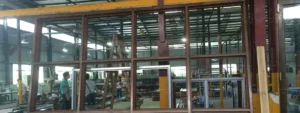
We split the schedule by manufacturing logic: engineered wood doors to a wood door specialist, fire-rated leaves to a certified fire door factory, windows and glazed entrances to an aluminum fabricator. Glazed systems run as their own workstream — see how we structure aluminum glass door sourcing from China with frame series, thermal breaks and glass build-ups locked before quoting starts.
2. Submittal Package and Sample Approval
Before production, every opening type gets a submittal: shop drawings per type, finish samples, hardware prep drawings and certification documents for rated assemblies. For rated openings, the paperwork behind fire-rated door sourcing from China must be verified against the listing — leaf, frame and hardware as one tested assembly, not three separate purchases.
3. Production Sequencing
Lead times differ by product: aluminum window and door systems, wood doors and steel doors each run on their own production schedule, and each factory confirms its lead time in writing before the order is placed. We sequence purchase orders backwards from the container plan so all factories finish inside the same consolidation window, instead of paying warehouse storage on early finishers.
4. Cross-Factory Quality Control
One inspection standard applies across the package: leaf and sash dimensions, squareness, core sampling on solid-core doors, coating thickness on steel doors, water-drainage checks on window sills, hardware prep positions verified against the actual hardware, and label verification on every rated leaf. Inspection reports reference opening numbers, so problems trace back to the schedule, not just to a factory batch.
5. Consolidation and Loading
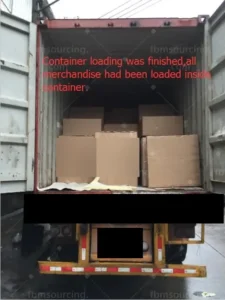
Doors, windows, frames and hardware consolidate in one warehouse. We label cartons by opening number and load by installation zone. A 40HQ container carries roughly 250–350 packaged door leaves depending on thickness and crating; windows and frames change that math, which is why the container plan is designed before production, not after. One delivered example of this approach — aluminum windows, doors and fire-rated steel doors moving as one program — is our Florida elementary school procurement case study.
Sourcing this for a commercial project?
FBM Sourcing works with project owners, developers, main contractors and FF&E contractors on hotel, apartment, school, office and other commercial building projects. Send us your BOQ, drawings or product list — our team will review it and get back to you.
What Contractors Should Prepare Before Requesting Quotes
The fastest path to a reliable package price is a complete brief: the door and window schedule with opening sizes and fire ratings, wall build-up and facade details, the hardware specification (or a request for us to propose equivalents), finish references, destination port and required on-site date. With those in hand, a preliminary factory split and cost frame typically takes under a week. The full range of opening types we handle is on our door sourcing from China page, including metal door sourcing from China for back-of-house and service openings.
Certification and Compliance Across the Whole Package
A combined door and window package crosses several compliance regimes at once, and the paperwork has to be assembled per destination market rather than per factory. Australian projects swap in AS 1905.1 doorsets, AS 2047 window performance and E0/E1 board ratings. The coordination point is simple to state and easy to miss: certification belongs to the opening, not the product. The window fabricator does not know which of its units land in a cyclonic region of your elevation, and the wood door factory does not know which corridors are fire compartments. Somebody has to map compliance requirements opening by opening before purchase orders are cut — on our projects that map is part of the schedule review, and every factory’s scope of supply inherits its requirements from it.
The Three Coordination Failures We See Most Often
Hardware Bought Separately from Doors
Hinges, closers and locks purchased as a bulk hardware order, disconnected from the leaves they belong to, produce prep mismatches that cost site labor to correct at every affected opening. Hardware schedules should be frozen before leaf production begins and first-article leaves fitted with the physical hardware at the factory.
Windows and Doors on Different Freight Timelines
When the window order ships six weeks behind the doors because it was placed later, the facade trade waits while internal trades stack up behind it. Sequencing purchase orders backwards from a single consolidation window costs nothing and removes the problem entirely.
Nobody Owns the Opening Schedule
Architect, contractor and three factories each hold a different version of the schedule. Every revision must flow through one controlled document — the version the QC team inspects against — or the container arrives with doors built to revision C for walls built to revision E.
How This Fits Your Design Team’s Workflow
Contractors sometimes assume that moving the package to China means redrawing everything to Chinese conventions. In practice the factories work from your architect’s schedules and details; what changes is the submittal layer in between. We convert design intent into factory shop drawings, return them for consultant approval, and hold production until the approval is documented. Design teams keep control of appearance and performance; the sourcing side absorbs the translation, standards mapping and factory management. For most projects the extra layer adds time at the front of the program and saves more of it at the back end, where site rework is the most expensive place to discover a coordination gap.
Get a China Procurement Quote for Your Door Package
FBM Sourcing manages door and window procurement from factory shortlist to container loading for hotels, apartments, schools and commercial buildings in the USA, Australia, Europe and the Caribbean. Send us your door schedule, drawings, quantities, destination port and project timeline, and our team will review your requirements and get back to you. Submit your project requirements here.
Related reading