Overview of the Project
Purchased Products
- Outdoor Teak Furniture
- Park Benches and Waste Bins
- WPC Decking
- Bicycle Racks
- Solar Street Lights
Project Background
Related Procurement Links
A municipal park development in the United States needed a complete outdoor FF&E and site-furnishing package sourced from China as one coordinated order: outdoor teak furniture, park benches, litter bins, WPC decking, bicycle racks, and solar street lights. FBM Sourcing acted as the project’s building material sourcing agent and sourcing partner on the China side — qualifying factories for each category, supervising production, running pre-shipment quality inspection, and controlling container loading for 3 x 40HQ containers shipped to the United States.
Public-realm projects are unforgiving on procurement. Every item is installed outdoors, exposed to weather and daily public use, and most of it is anchored into concrete once — so a wrong profile, a missing fixing kit, or an unstable frame is discovered exactly when it is most expensive to fix. For the developer and the main contractor, the practical value of a China sourcing agent on a package like this is a single point of control across six product categories made in six different factories, and evidence before shipment that the goods match the drawings before they are sealed in a container.
Project Type
Outdoor FF&E and exterior products procurement
Loaded Container
3 x 40HQ
Destination
United States
Delivery Time
2020
How It Works?
Purchased Products and Project Requirements
The purchased products for this municipal park package came from different supplier ecosystems in China. Outdoor teak furniture and park benches are made by solid-wood outdoor furniture factories; WPC decking comes from extrusion plants; bicycle racks and litter bins from metal fabrication workshops; solar street lights from lighting manufacturers that assemble panels, batteries, poles and lamp bodies from separate component lines. No single factory produces this scope, which is why project buyers who try to place a park package through one trading company usually end up with two or three strong categories and three weak ones.
The main procurement challenge was supplier-side control across those parallel factories. Each factory has its own production rhythm, packing method and documentation habits. Without China-side coordination, an overseas project team receives fragmented updates and cannot tell whether the order is genuinely ready to ship as one package — or whether one category will hold the containers back.
FBM Sourcing worked as the buyer’s china sourcing agent for the full package: one sourcing plan, one production tracker, one inspection standard and one loading schedule across all six categories. The project team overseas kept their attention on site works and the installation programme, while our team in Guangdong verified supplier execution week by week. This is the same structure we run for hotel building material packages and school fit-outs: the product mix changes, the control system does not.
Timing framed every decision on this order. Park construction runs on civil-works milestones: decking sub-frames, lighting foundations and furniture anchor points are poured to a schedule, and the fit-out package has to arrive complete — not in five partial deliveries. A missing category does not just delay its own installation; it keeps crews, lifting equipment and site storage tied up waiting. That is why the entire package was managed toward a single loading window from the first purchase order, and why readiness was measured factory by factory against that date rather than left to each supplier’s own definition of “almost finished.”
Planning a similar commercial project?
FBM Sourcing works with project owners, developers, main contractors and FF&E contractors on hotel, apartment, school, office and other commercial building projects. Send us your BOQ, drawings or product list — our team will review it and get back to you.
China Supplier Coordination
Factory selection was done category by category. For the teak furniture and park benches we shortlisted outdoor-furniture factories with kiln-drying and outdoor-oil finishing lines, because site furniture that leaves the factory with cabinet-grade finishing fails within one season outdoors. For WPC decking we compared extrusion plants on profile tooling, co-extrusion capability and colour-batch control. Bicycle racks and litter bins went to metal fabricators with powder-coating lines and experience in public-space hardware. Solar street lights were placed with a manufacturer able to document panel output, battery capacity and lamp-body IP rating against the specification — not just quote a wattage figure.
Purchase orders were issued with staggered production start dates so that all six categories would reach completion inside the same shipping window. Suppliers received one common packing and marking standard from day one: export-grade cartons, corner protection on furniture, bundled and end-capped decking, and complete fixing kits packed with the products they belong to. Buyers who have sourced mixed packages through Alibaba direct orders will recognise why this matters: packing standards, not product quality, are where mixed containers usually go wrong.
Material verification happened before any order was placed. Teak was confirmed as plantation-grade solid stock with moisture content appropriate for outdoor joinery, not a lookalike hardwood stained to match. Metal components were specified with zinc-rich primer under powder coat for coastal-grade corrosion resistance. WPC decking samples were approved for surface embossing, colour and profile before tooling was committed. Each factory’s quotation was normalised to the same specification sheet, so the client compared real like-for-like costs — a step most project buyers never get when quoting factories directly, because each factory quietly quotes its own house standard.
Production Follow-Up Before Export
Between order placement and inspection, our team tracked each factory’s production stages against the master schedule — material intake, machining or extrusion, assembly, finishing, and packing. Progress was verified with dated production photos and factory-floor visits rather than supplier self-reporting, and the consolidated tracker gave the client one weekly view of all six categories.
Production follow-up on outdoor packages concentrates on the failure points that only appear at installation: WPC decking profiles that drift from the sample batch, bicycle rack mounting points that do not match the anchor drawings, solar light brackets machined for the wrong pole diameter, and furniture components that leave the line without protective packing. Catching these at the factory before shipment — while rework is a factory-floor task instead of an international claim — is the core of what a furniture sourcing agent contributes between the purchase order and the container date. Two categories were re-sequenced during this phase to hold the loading window, and the client saw the change in the tracker the same week, with no surprise at the port.
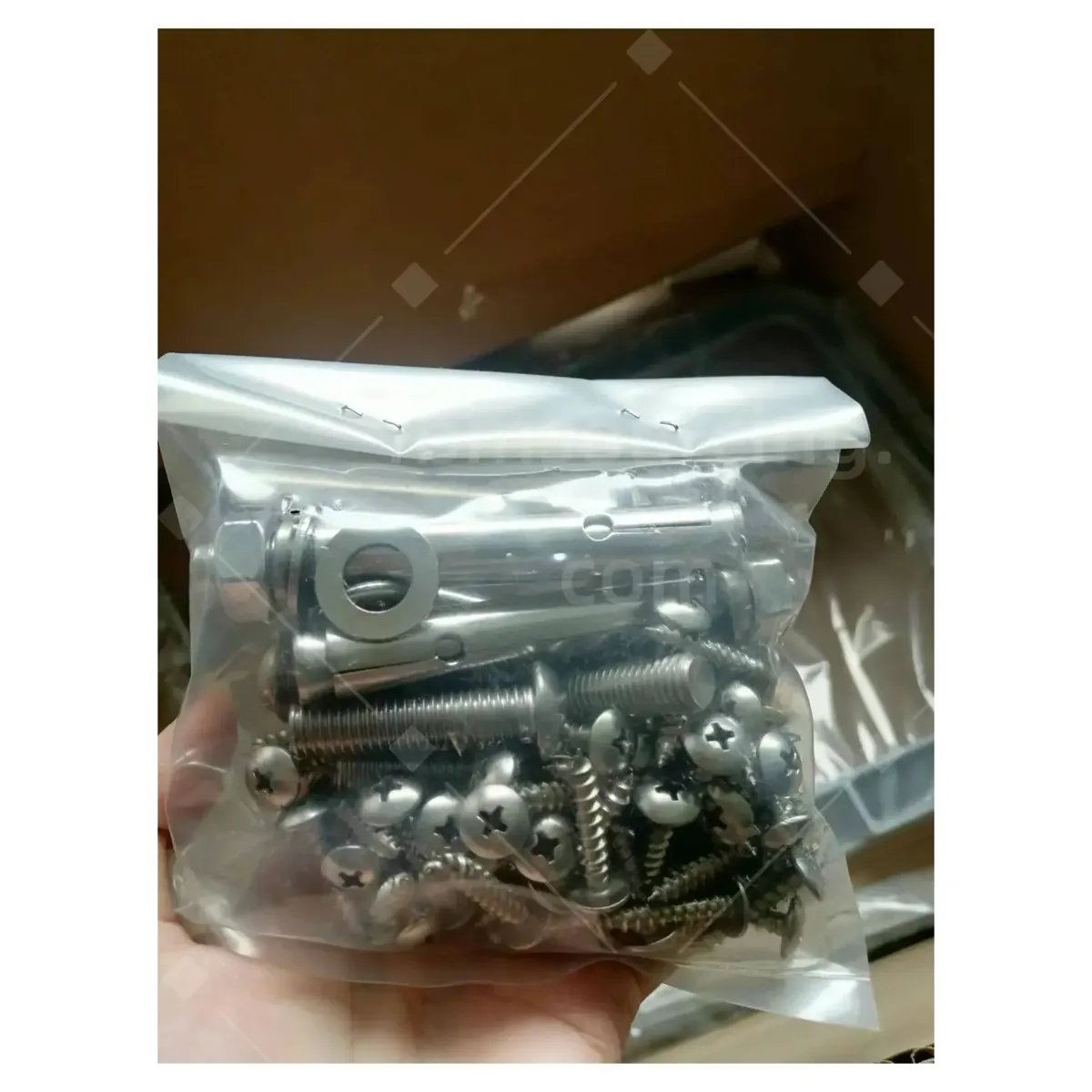
Documentation ran in parallel with production: export packing lists were built carton by carton as goods were packed, so the receiving team in the United States could reconcile the shipment against the purchase order without opening every box. Fixing kits, spare fasteners and touch-up materials were logged and packed with their parent products — small items that stop an installation crew when they are missing.
Quality Inspection for Outdoor FF&E
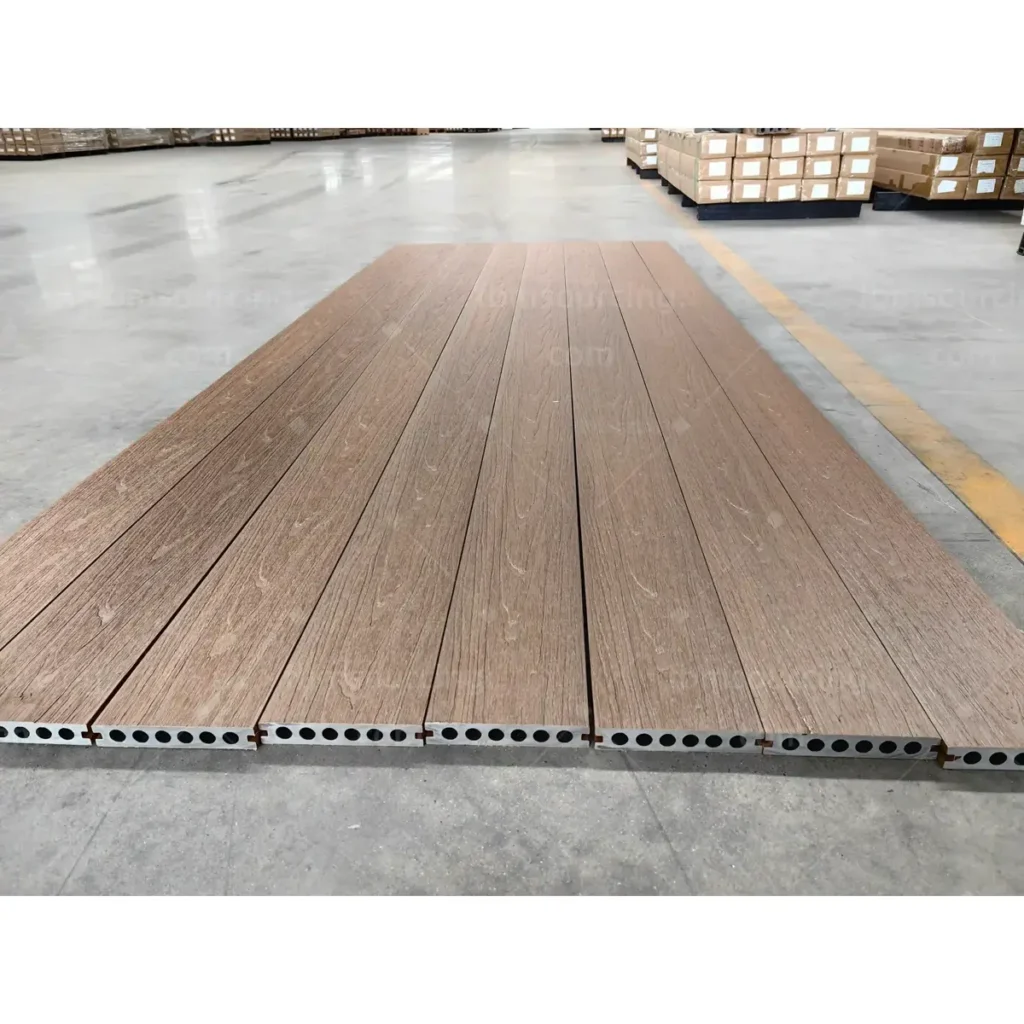
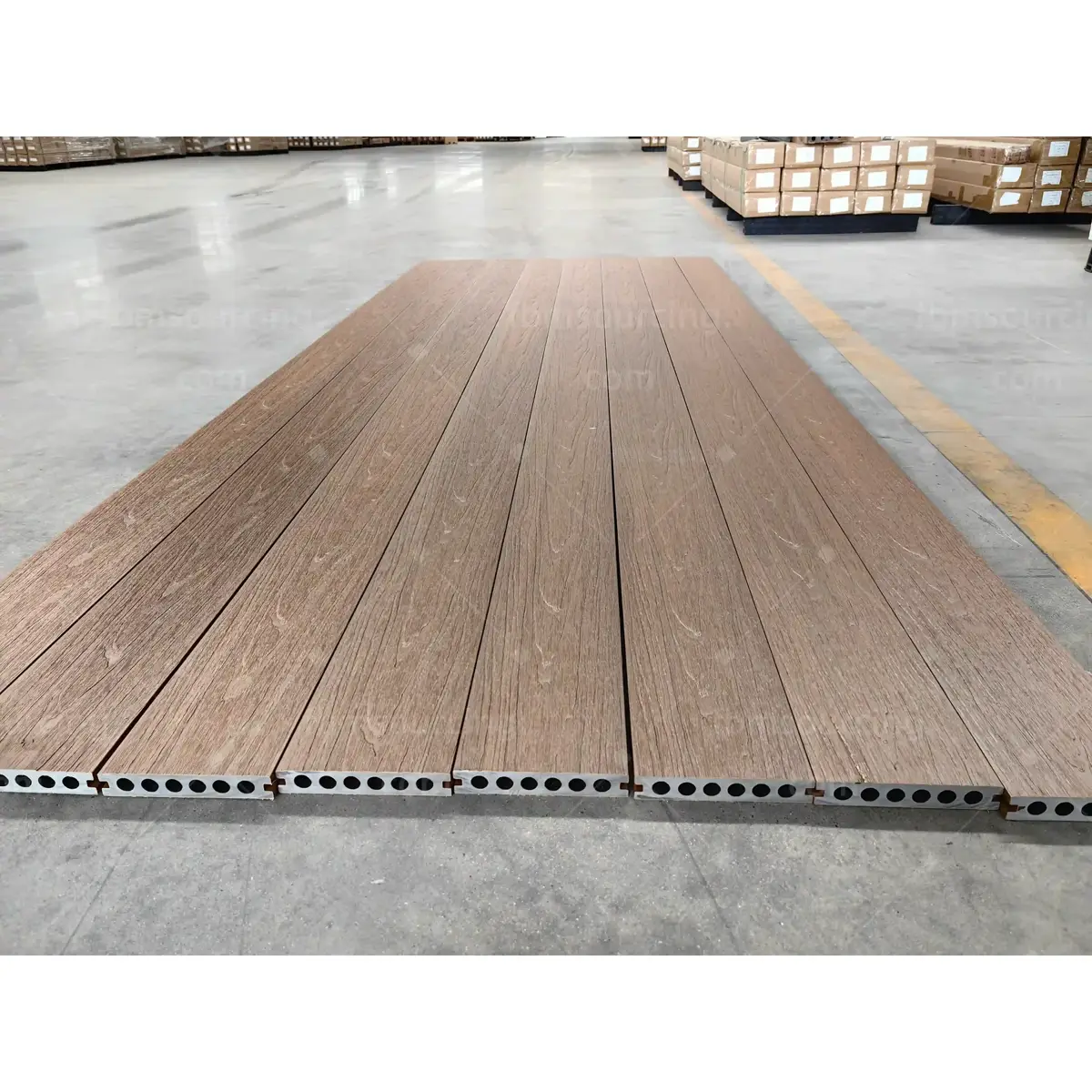
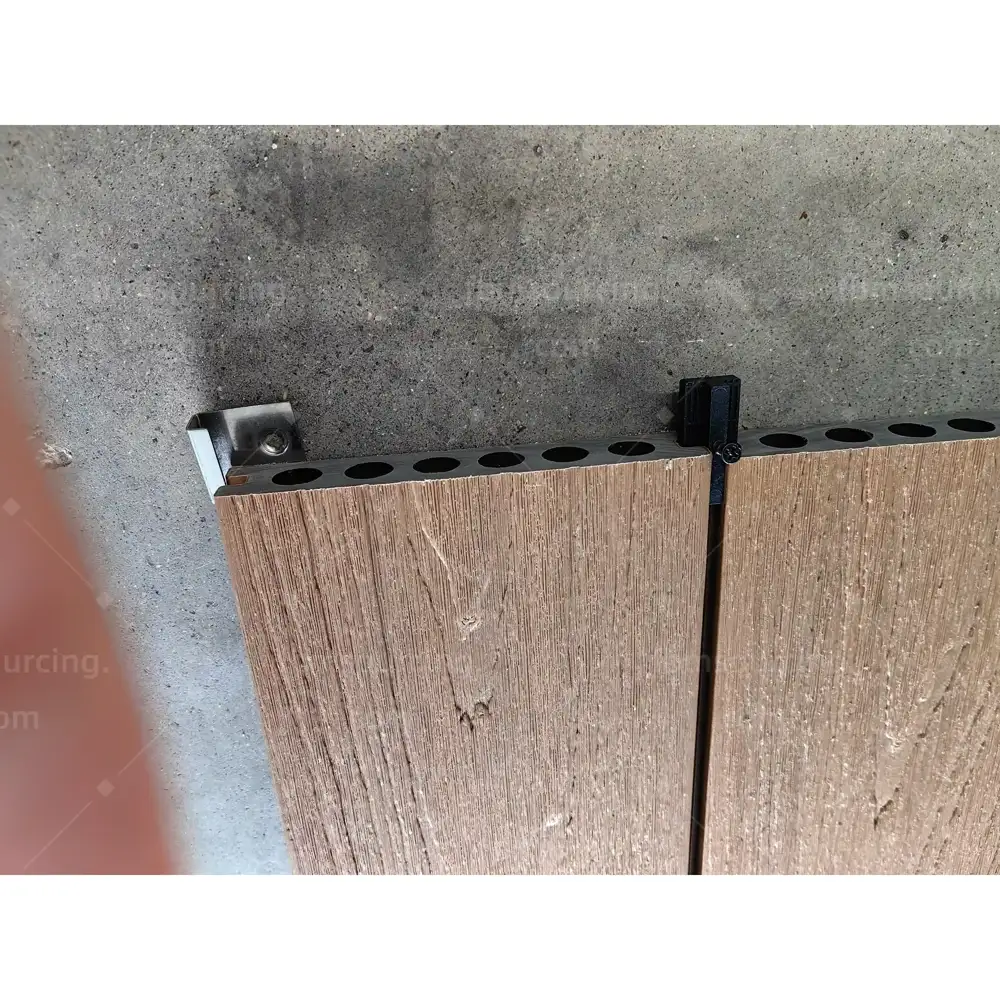
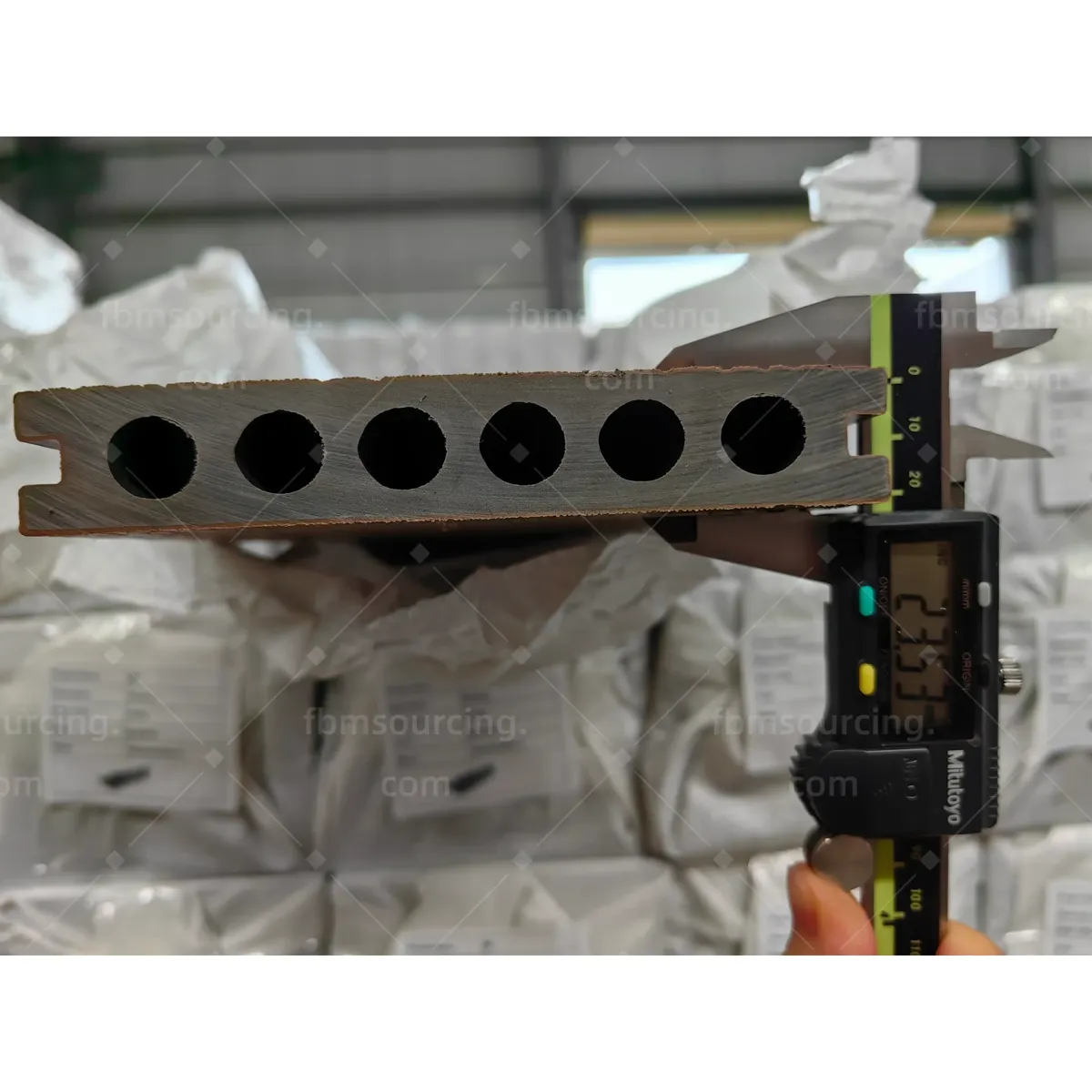
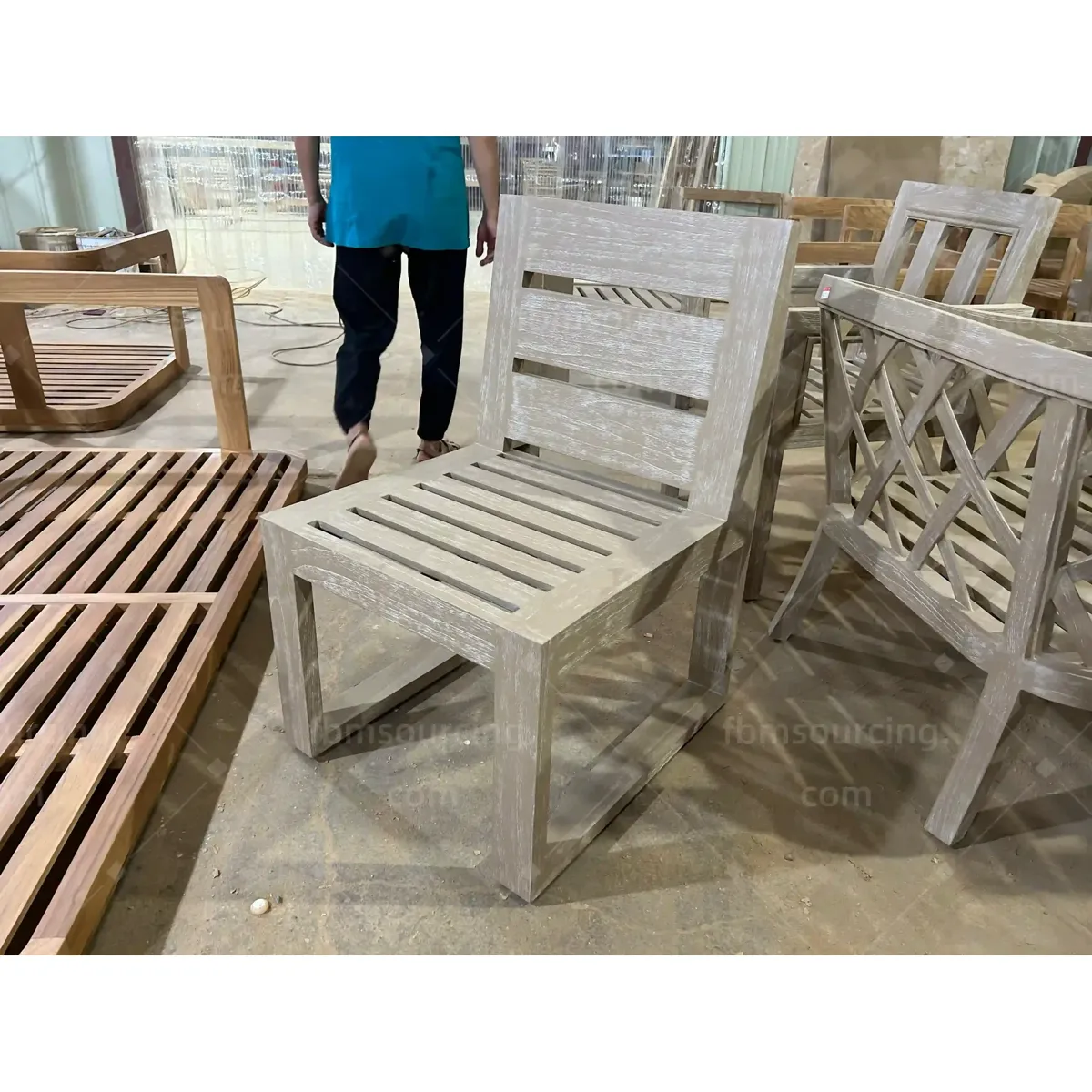
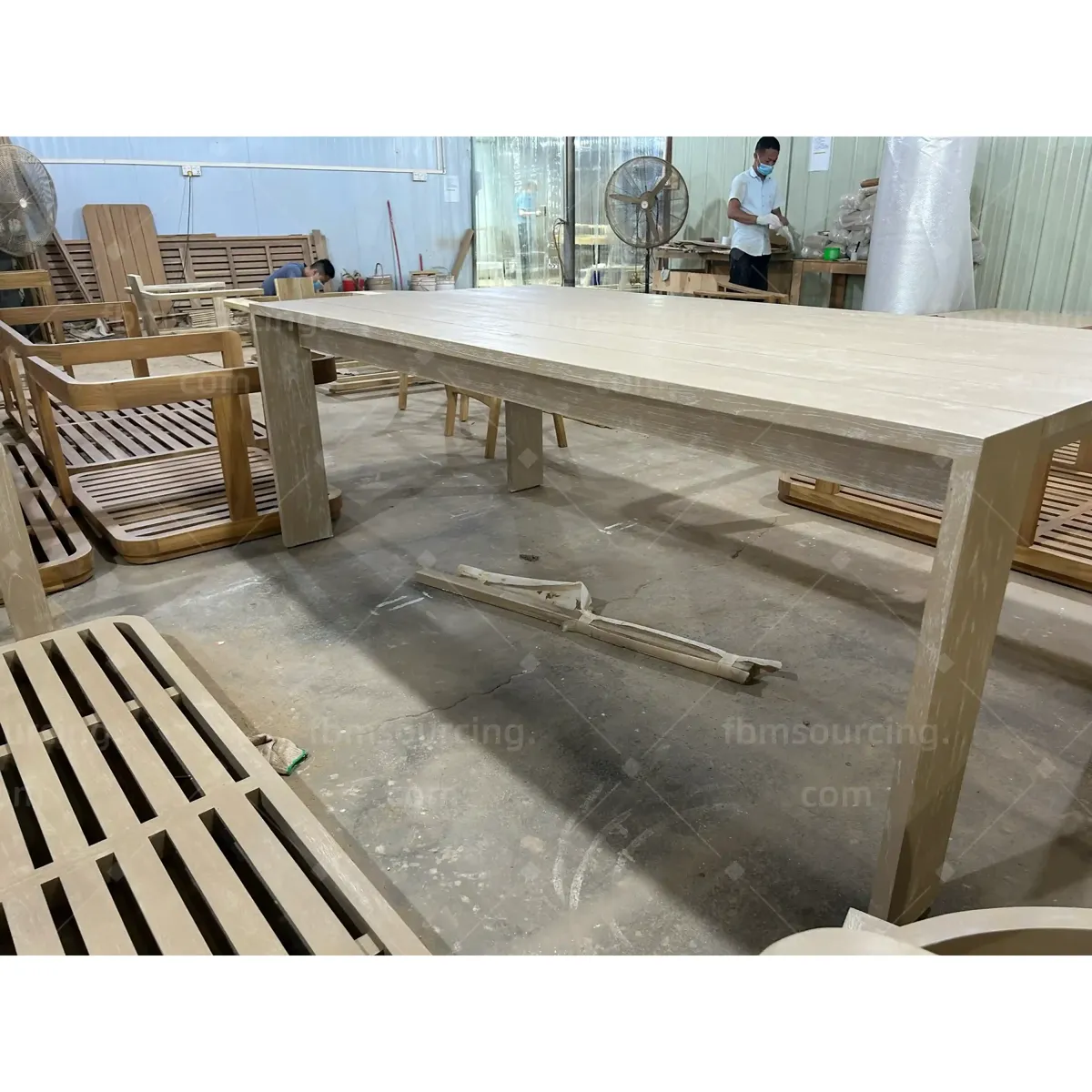
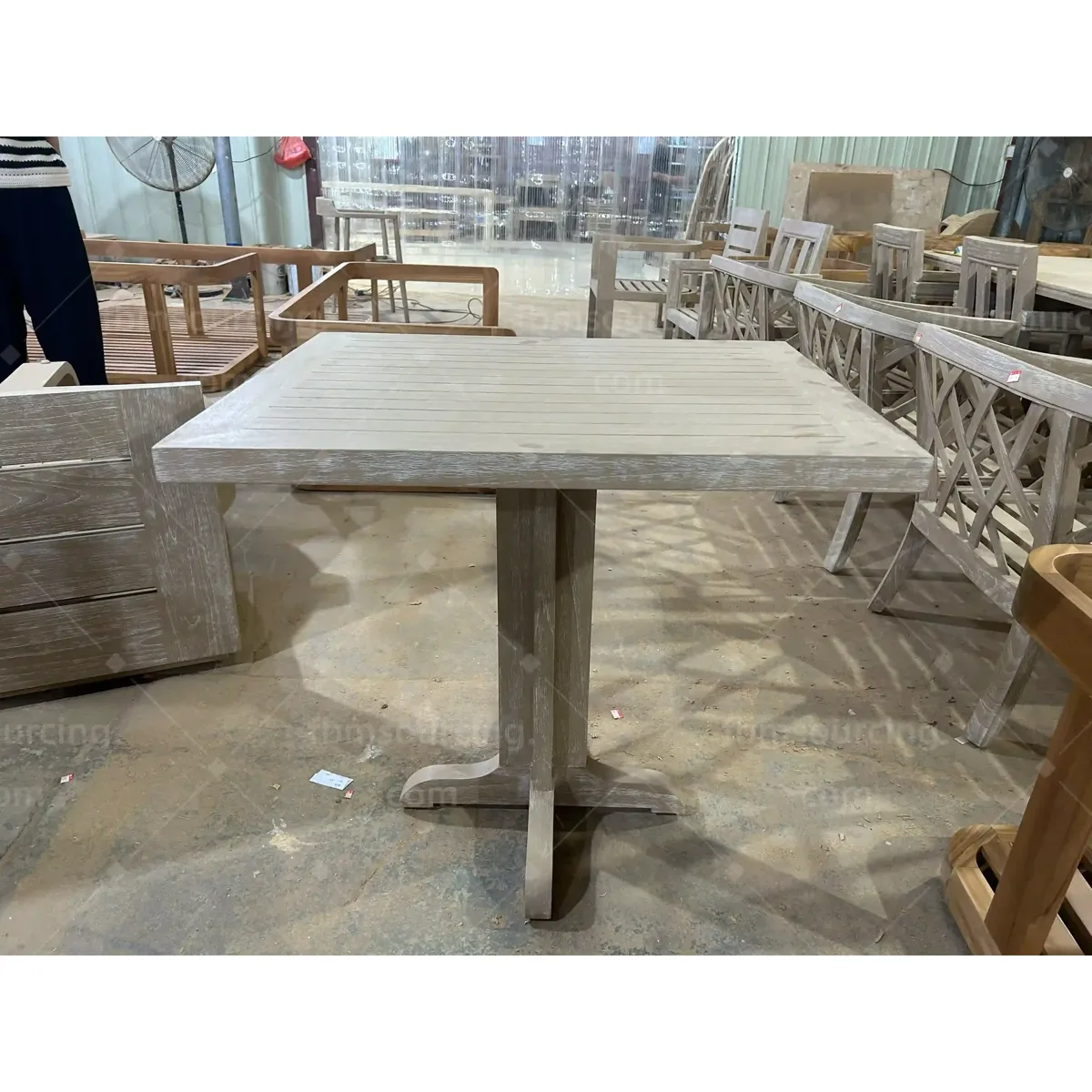
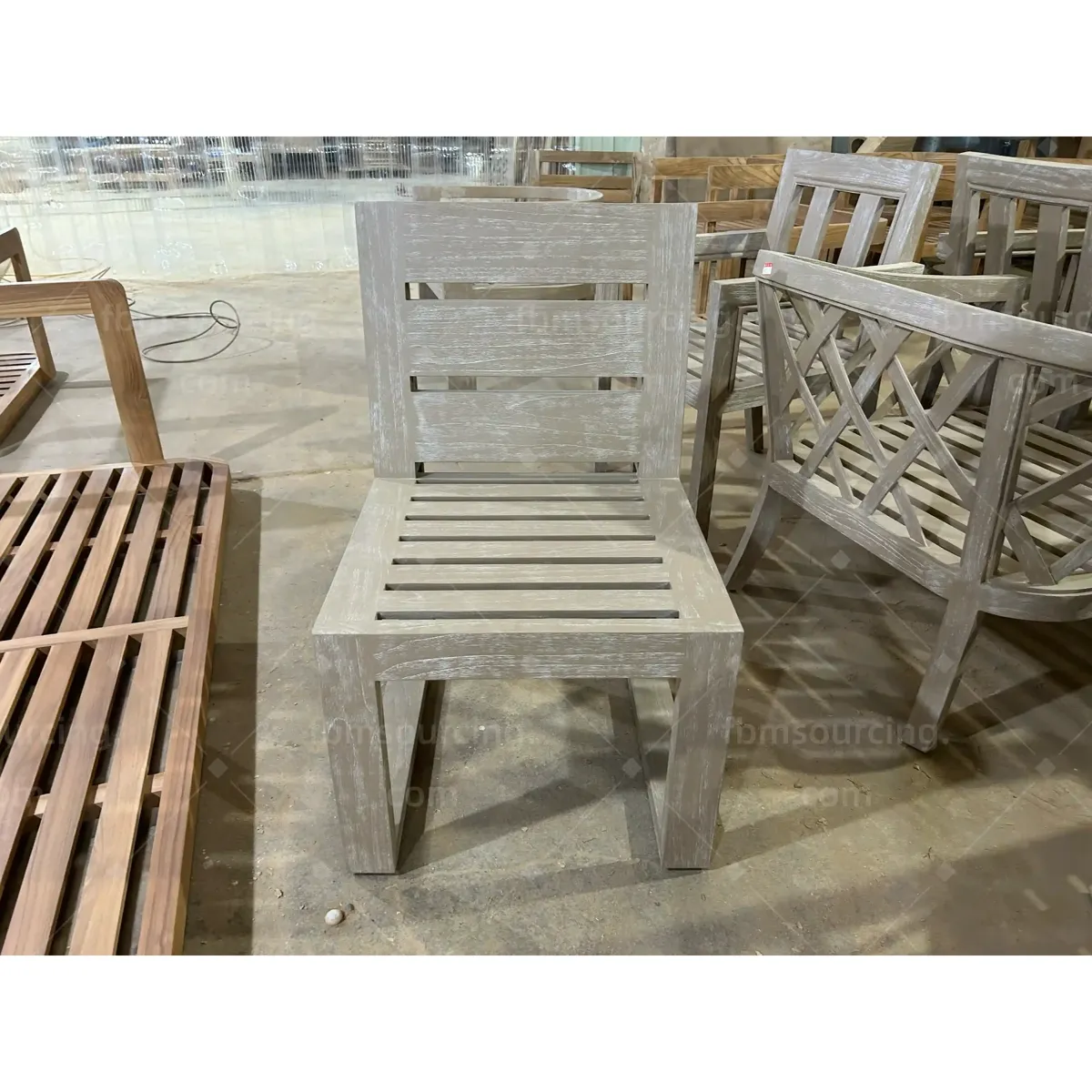
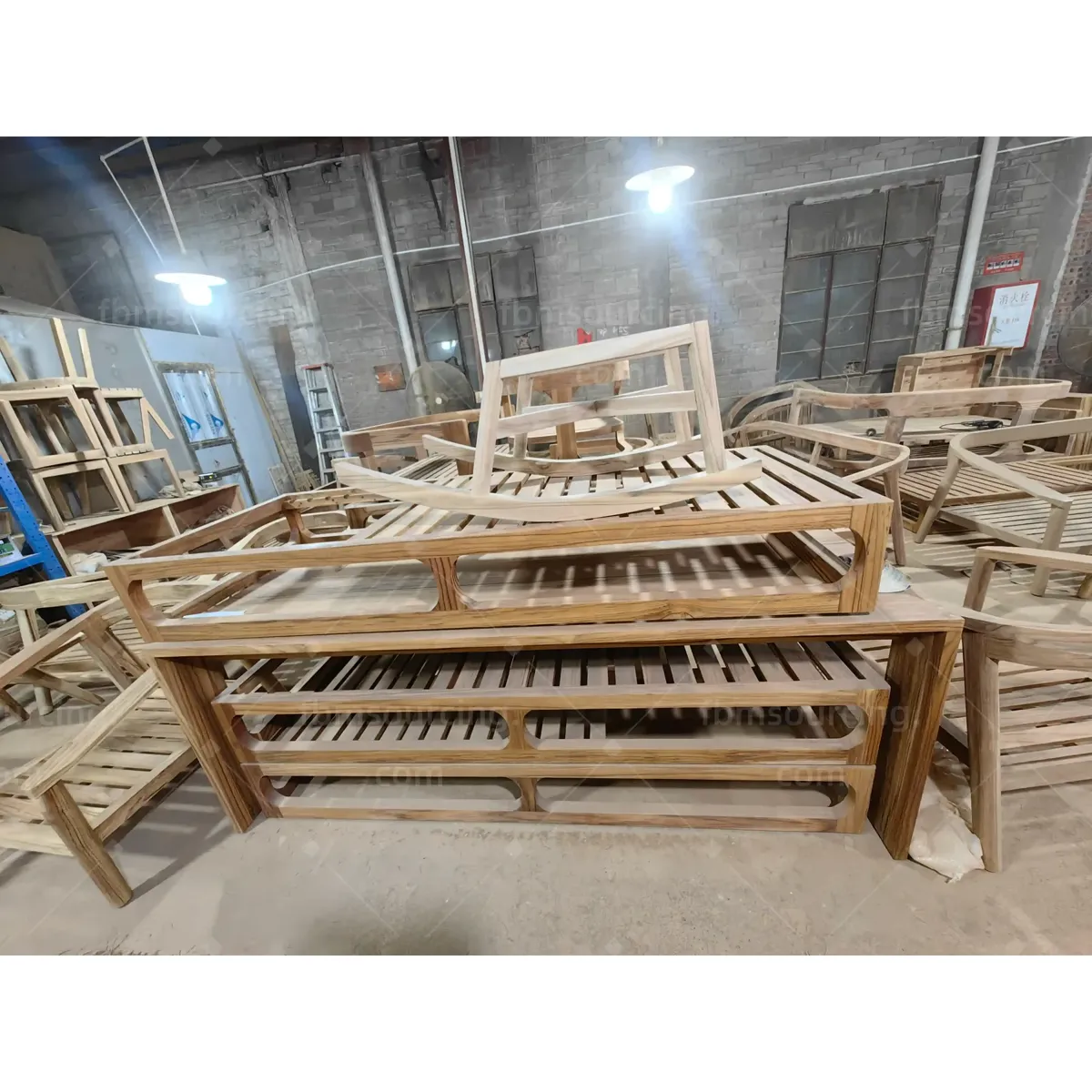
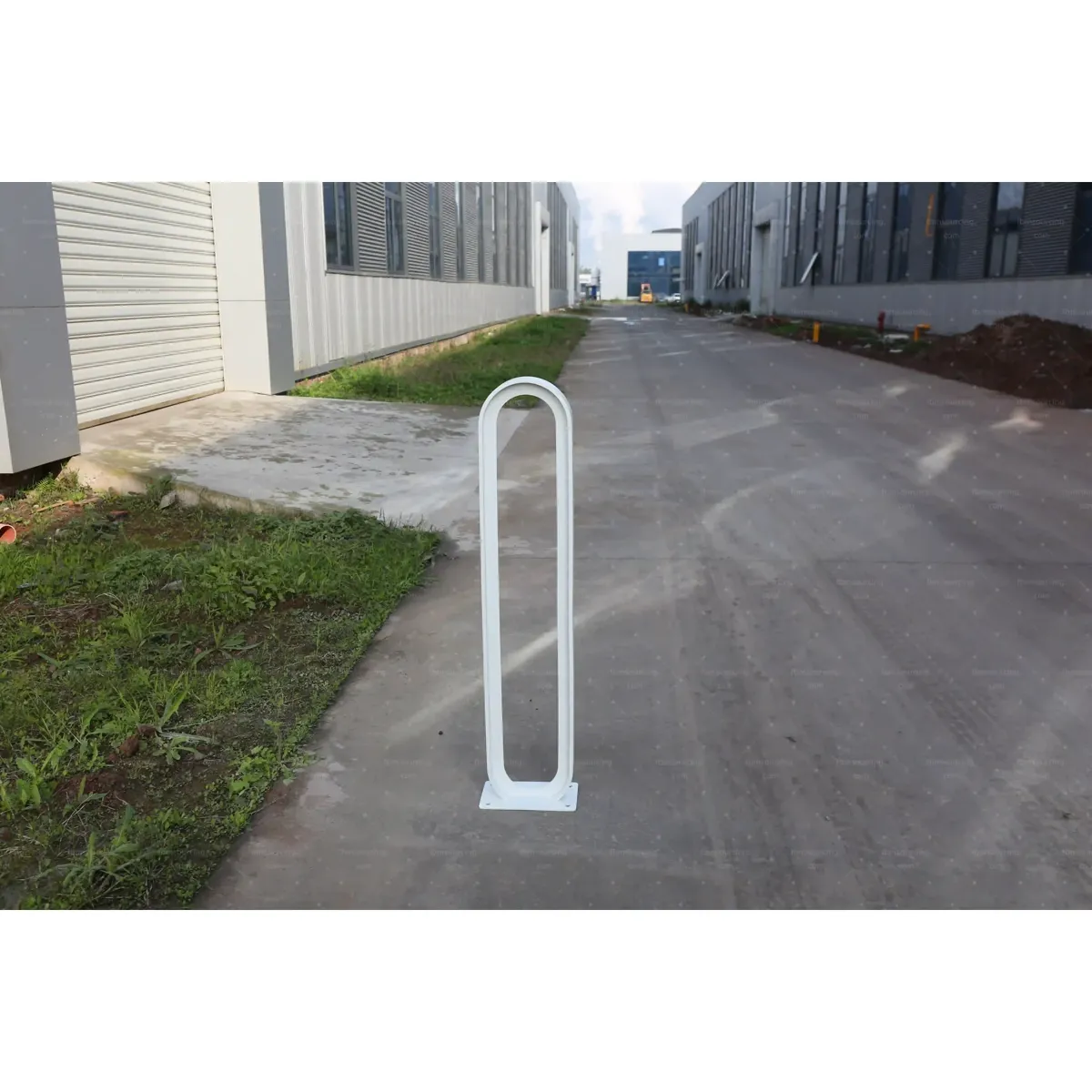
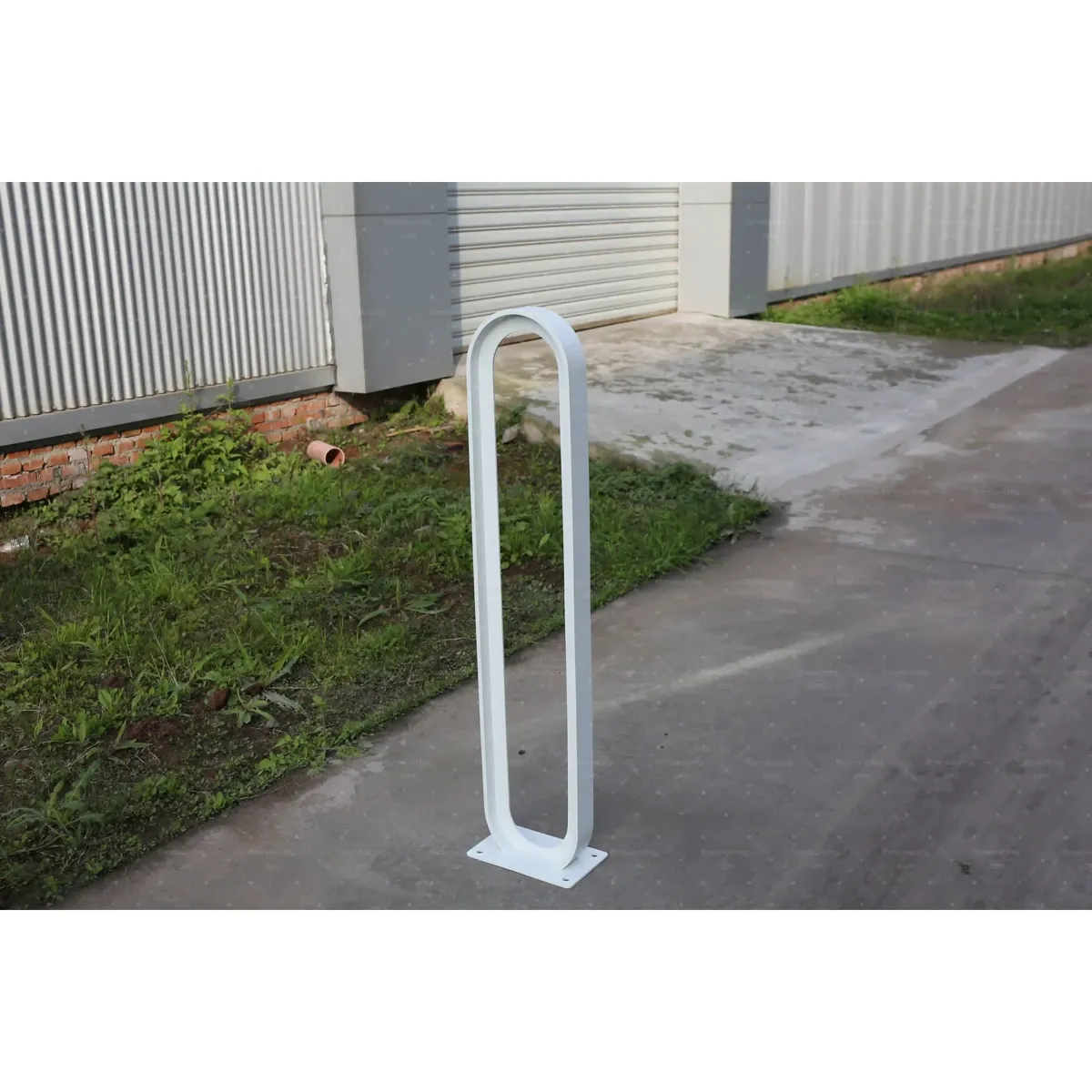
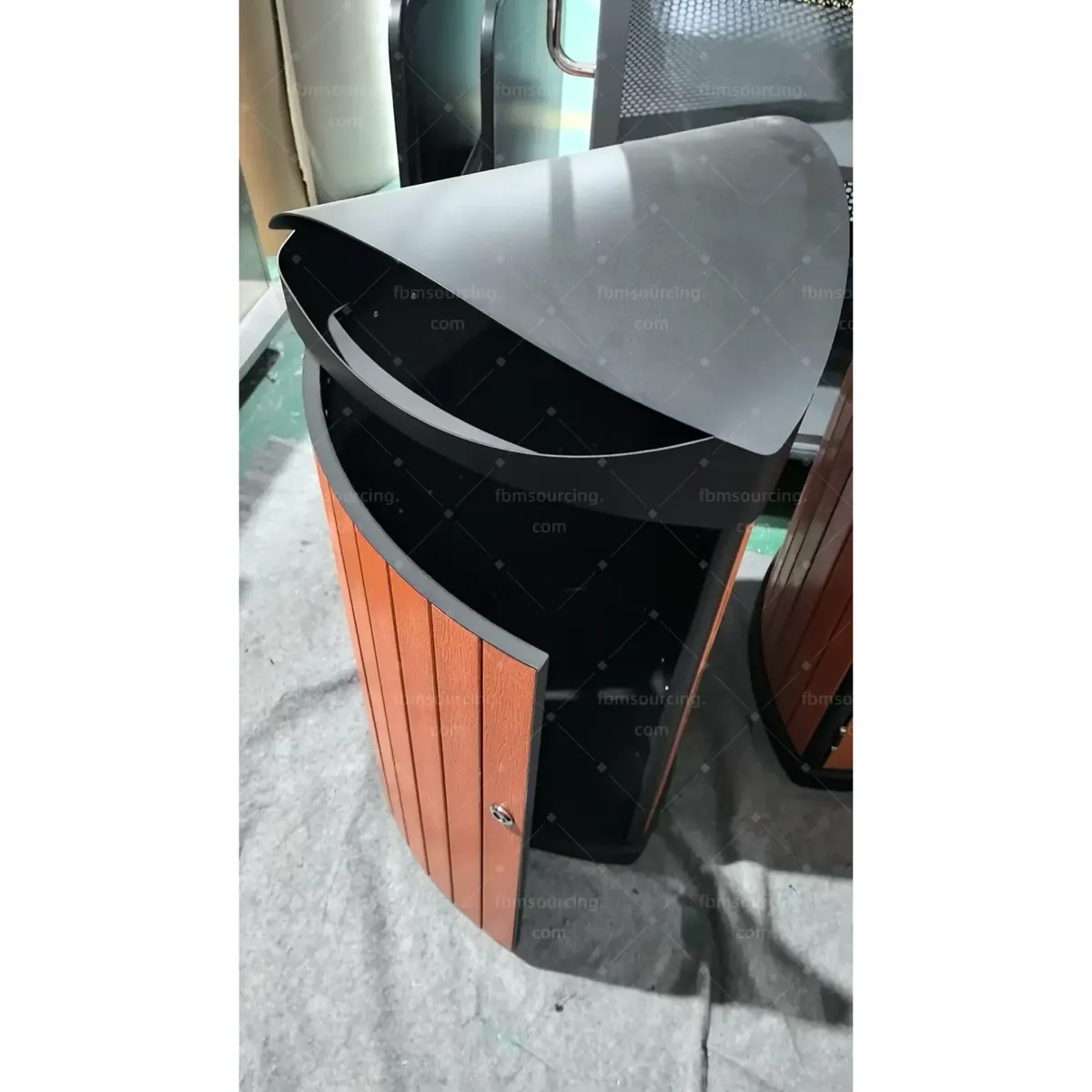
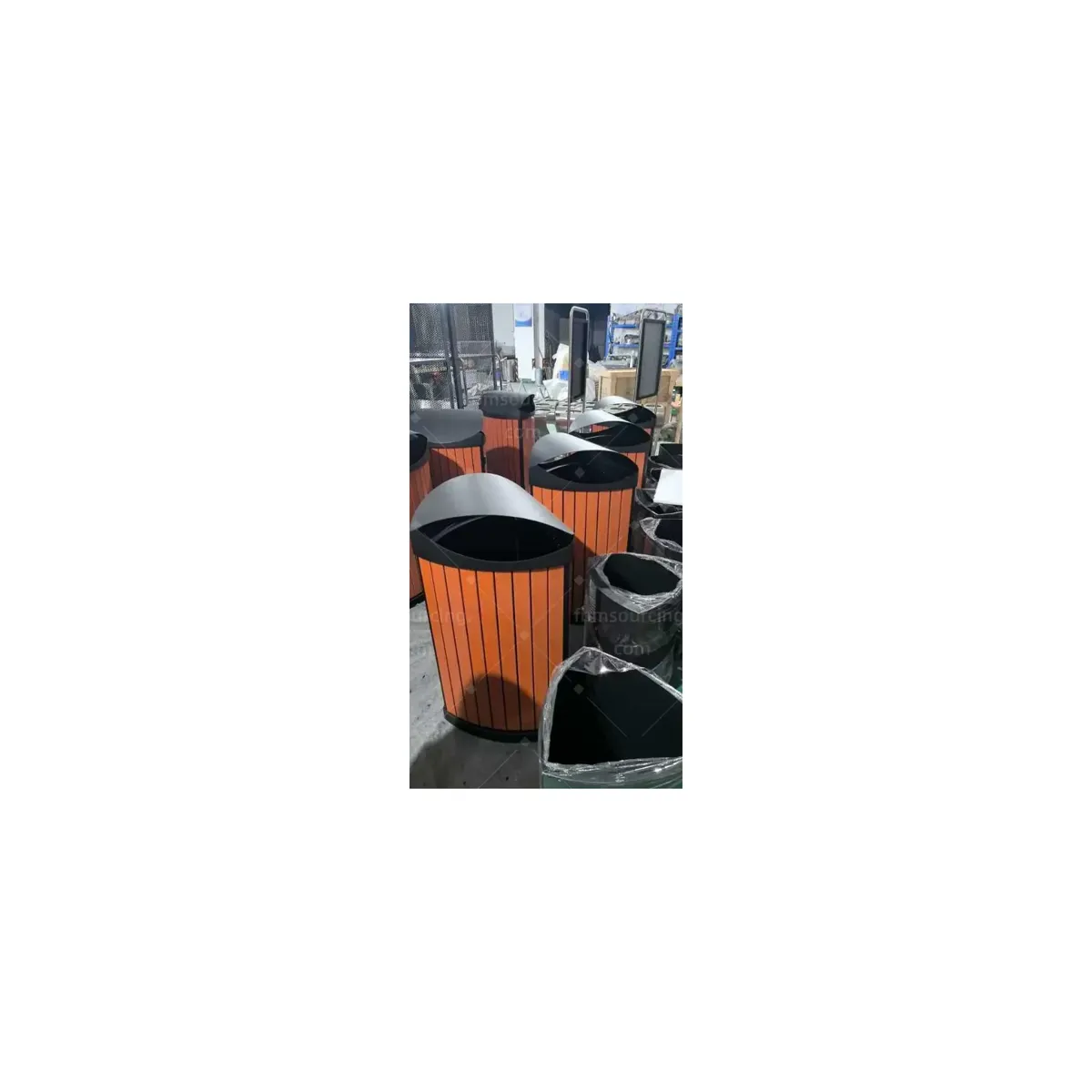
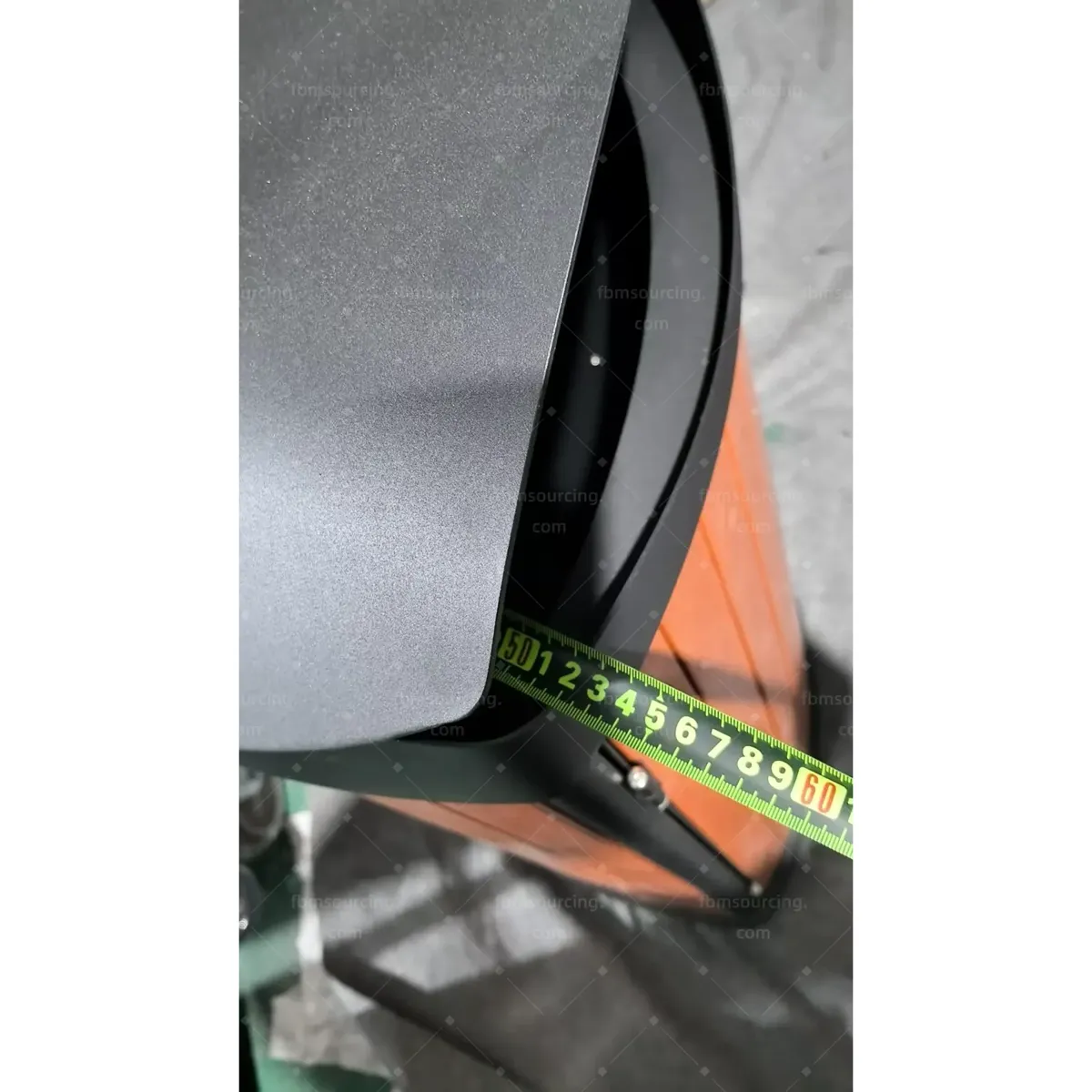
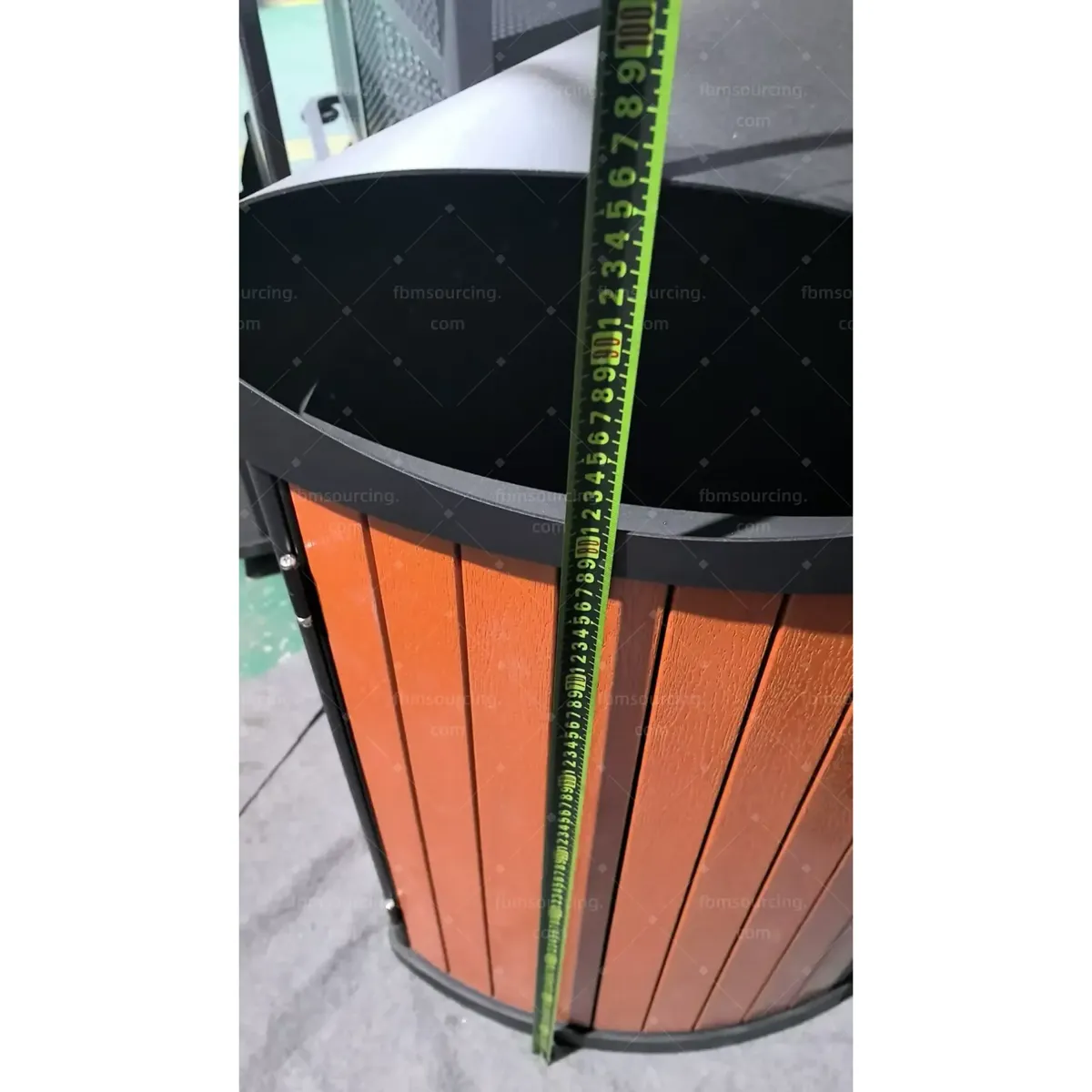
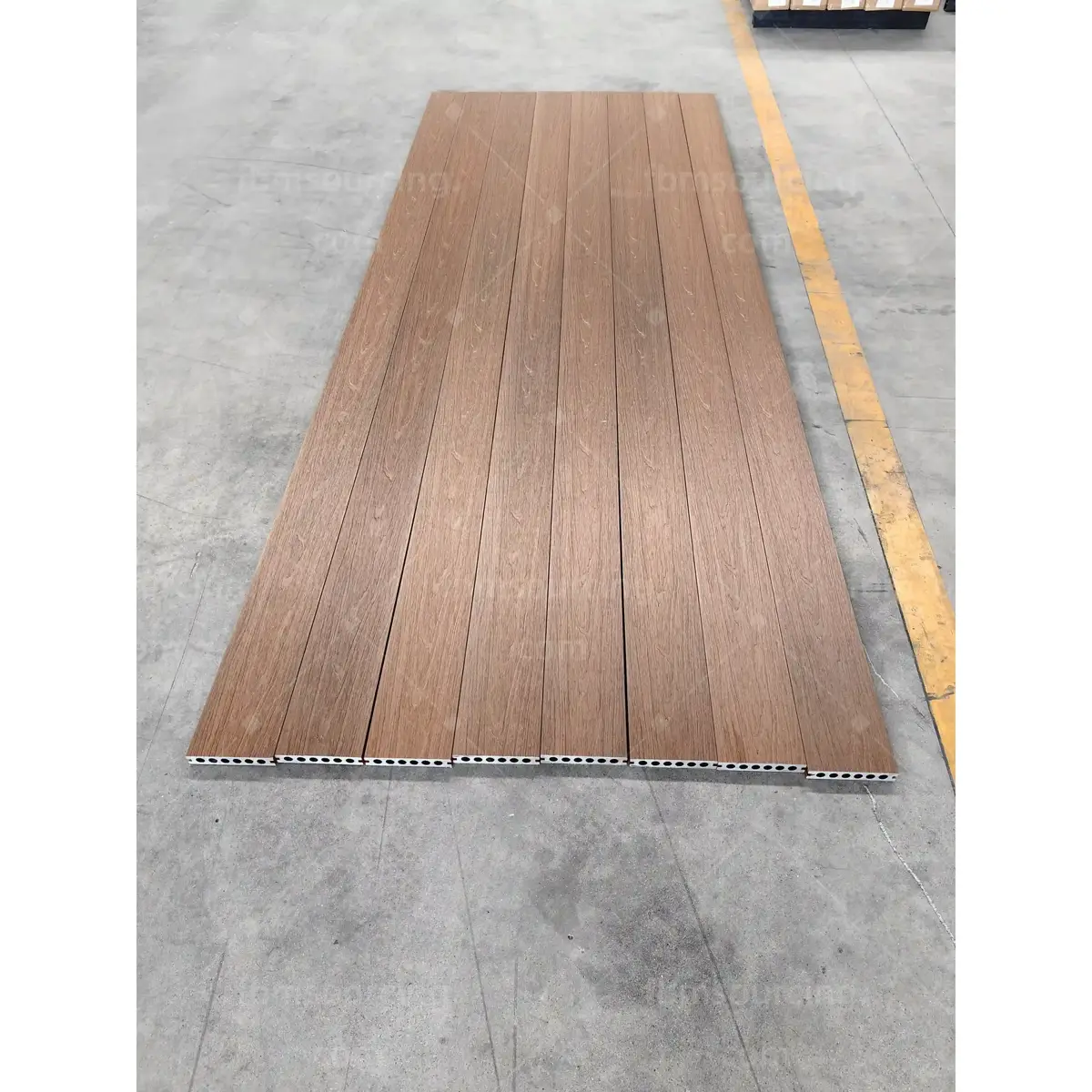
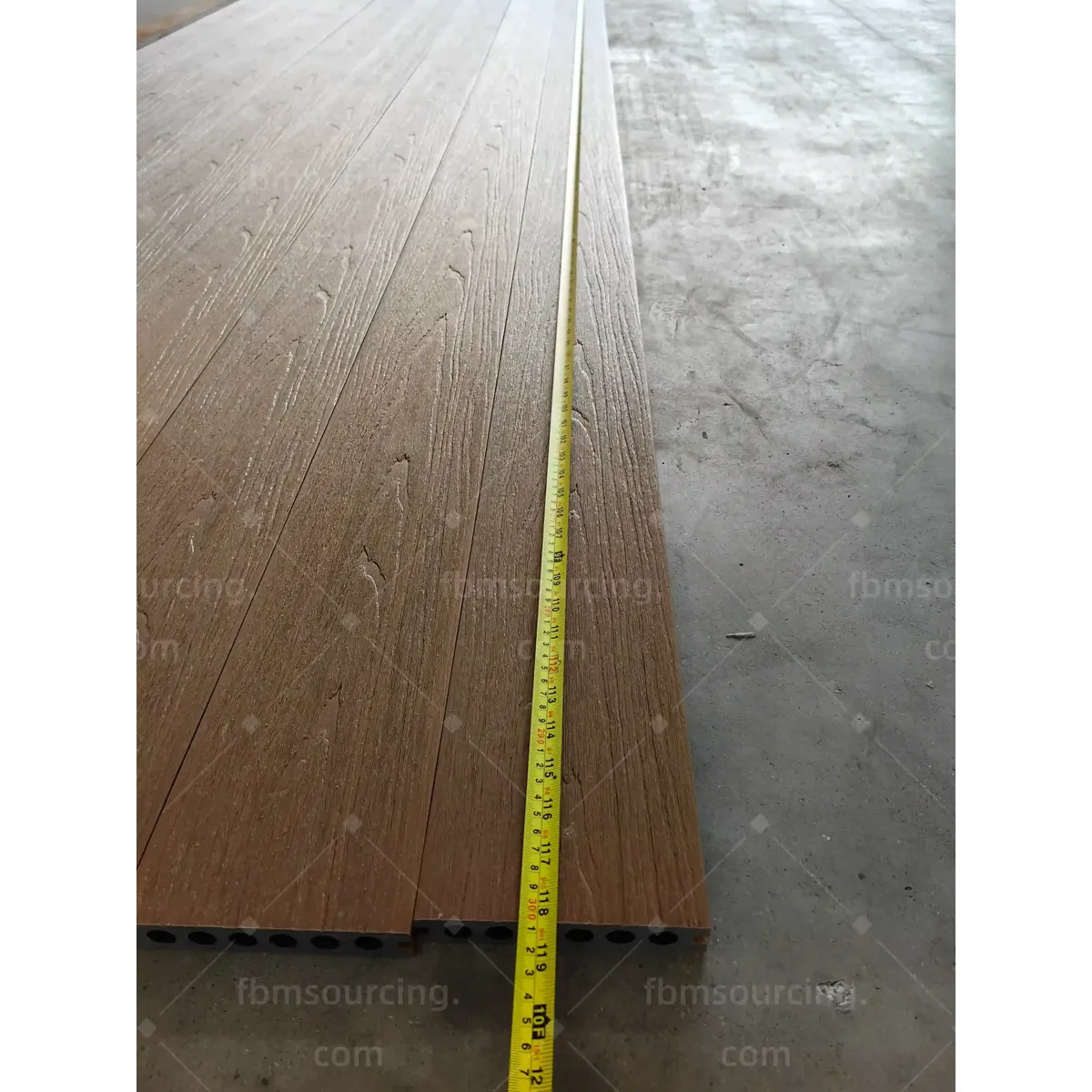
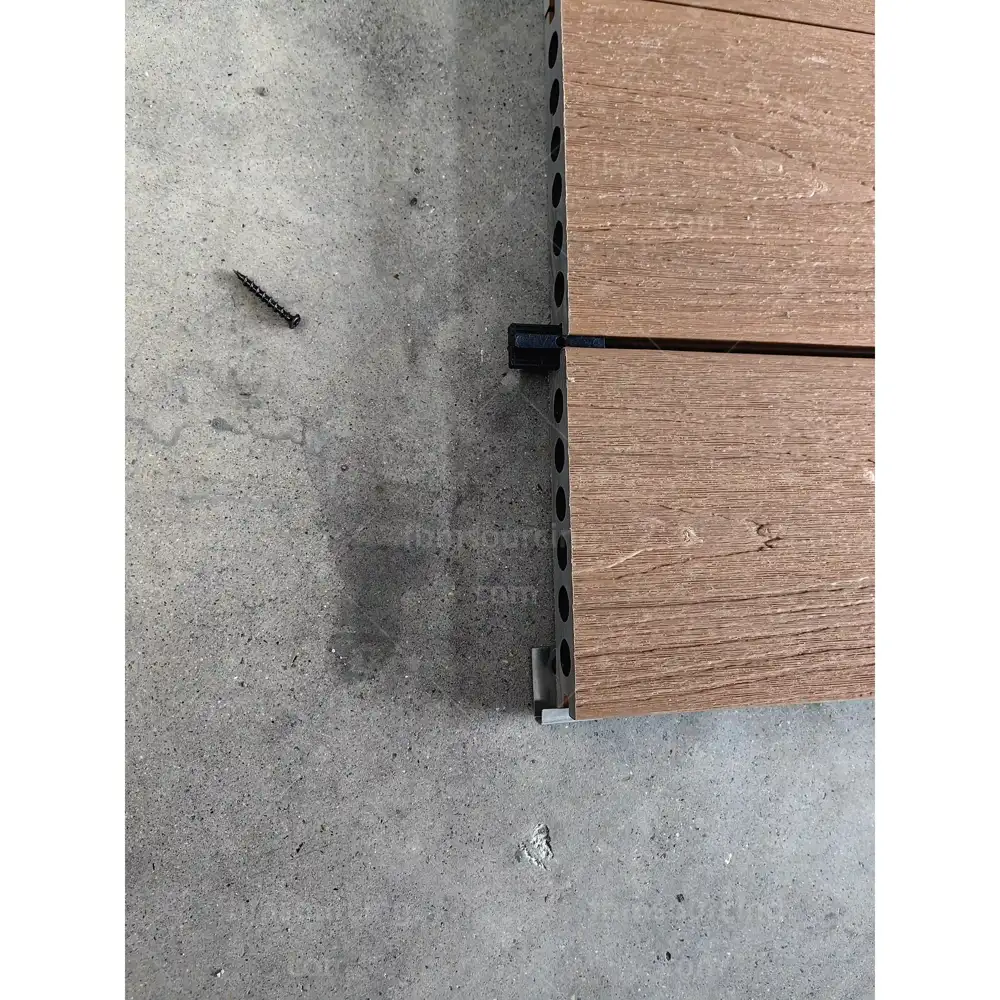
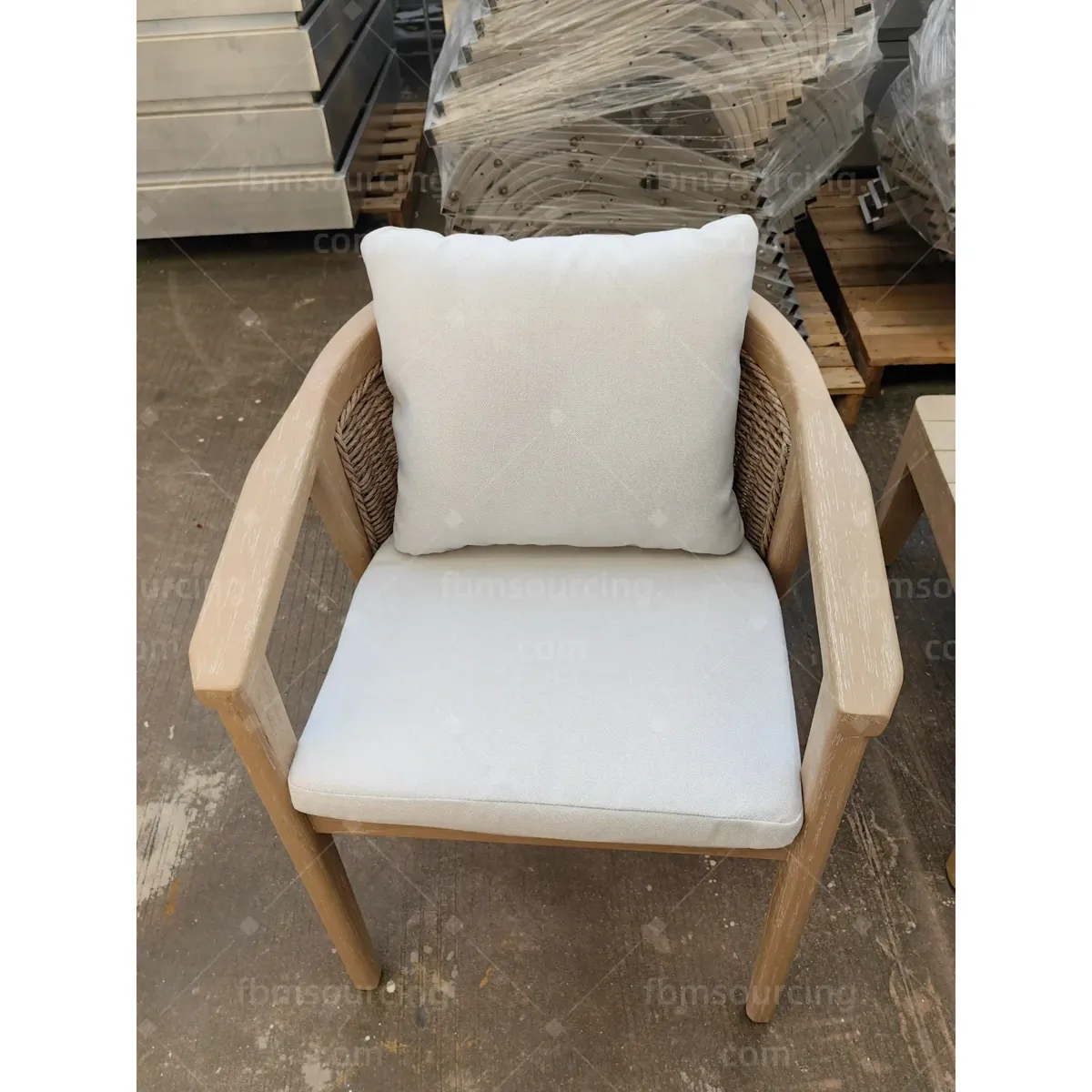
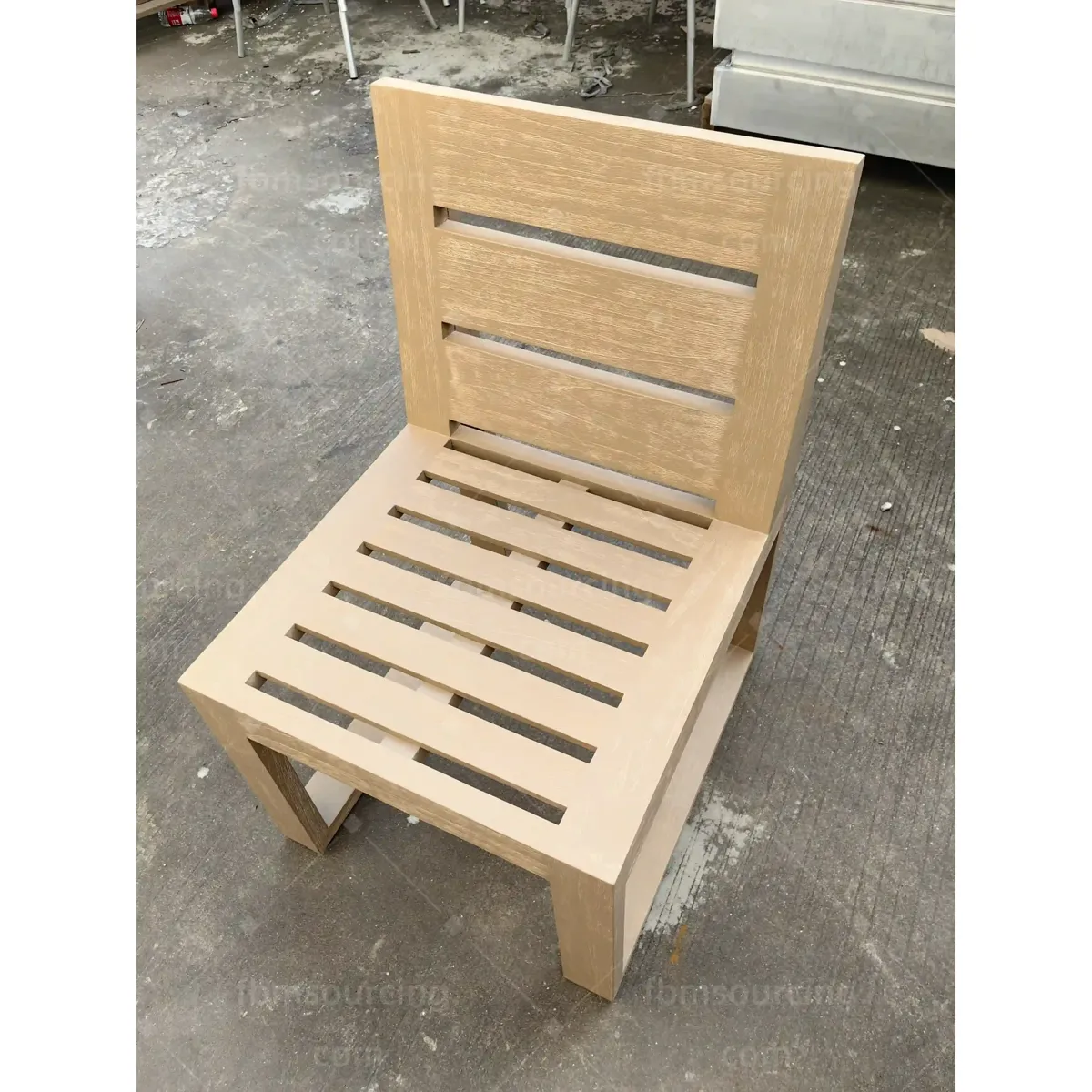
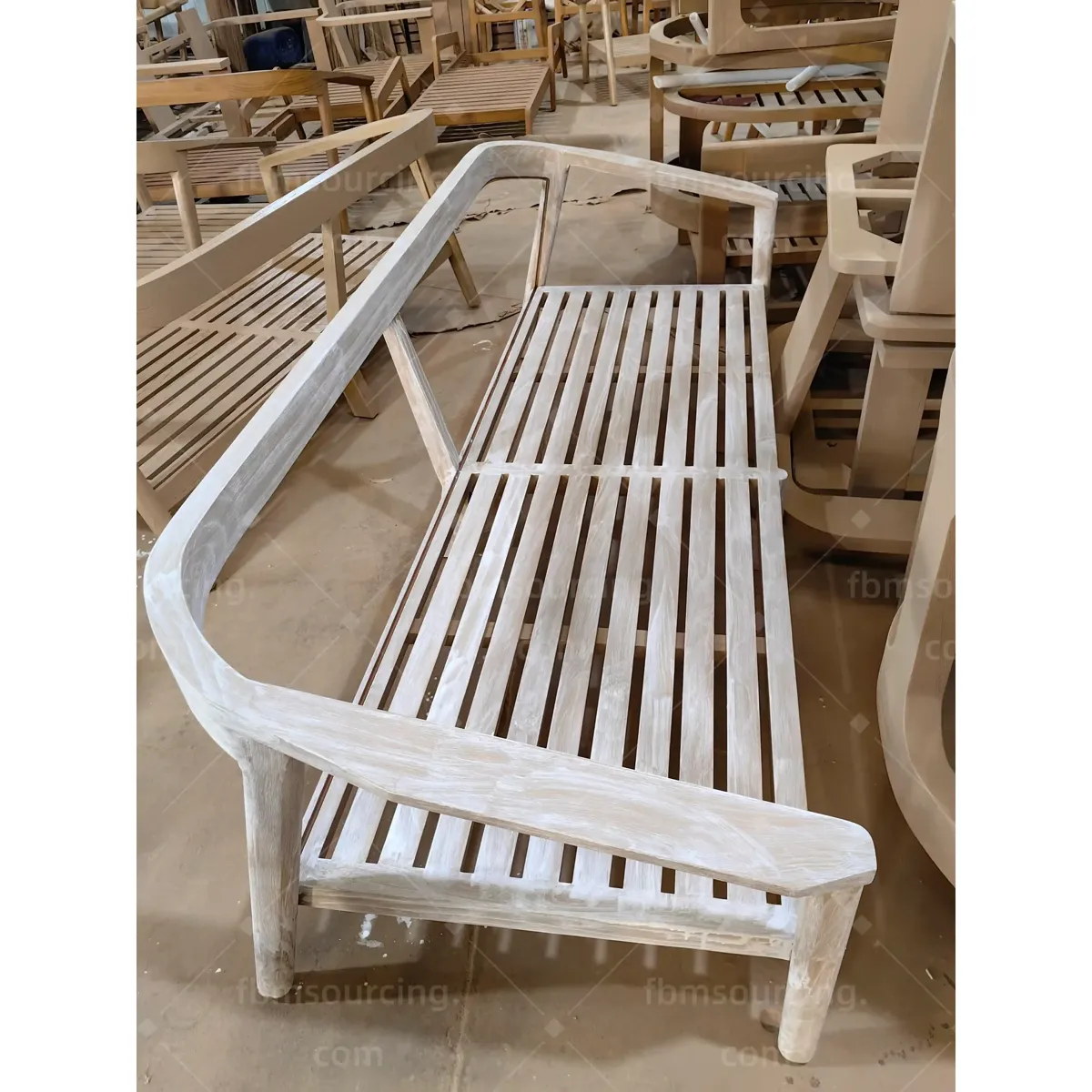
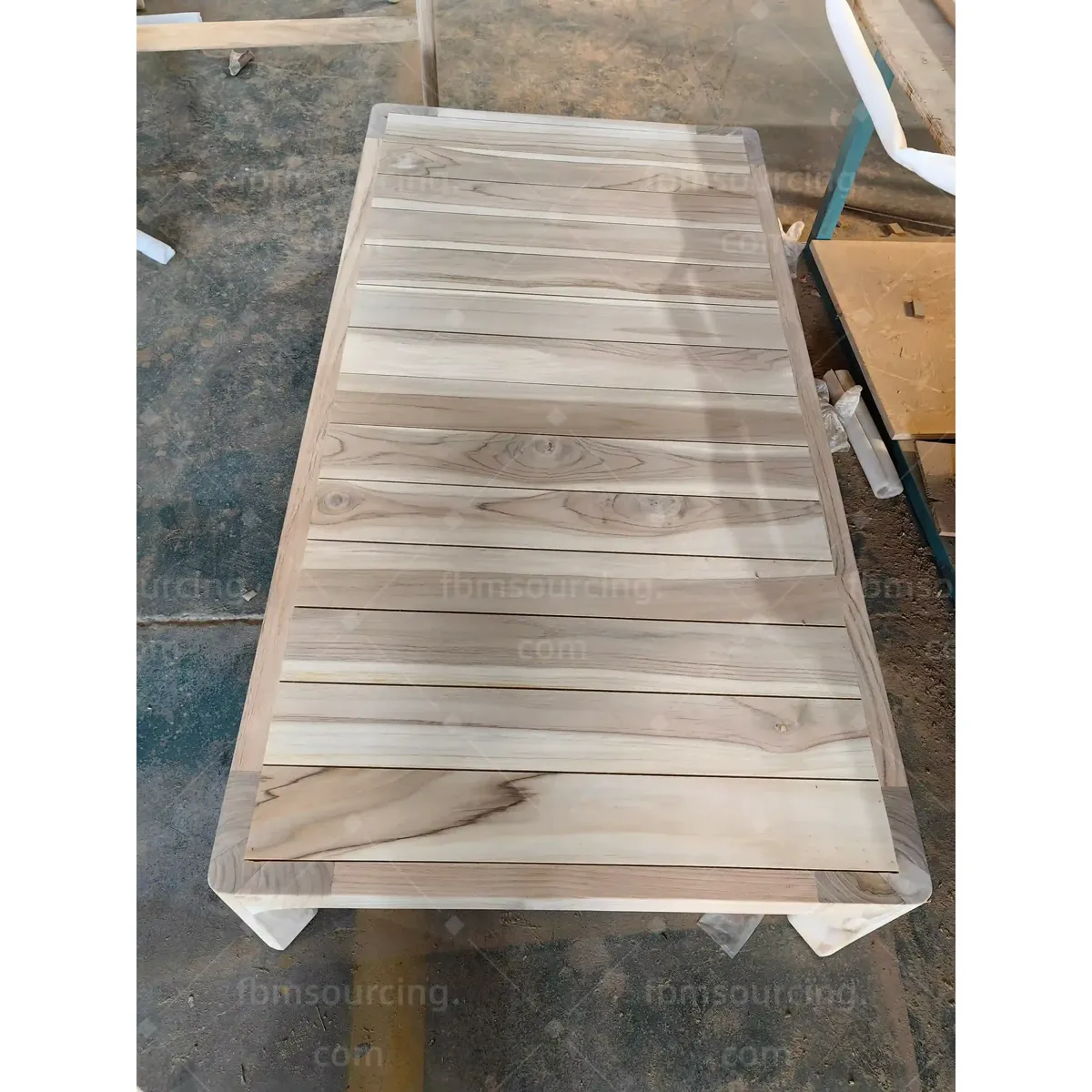
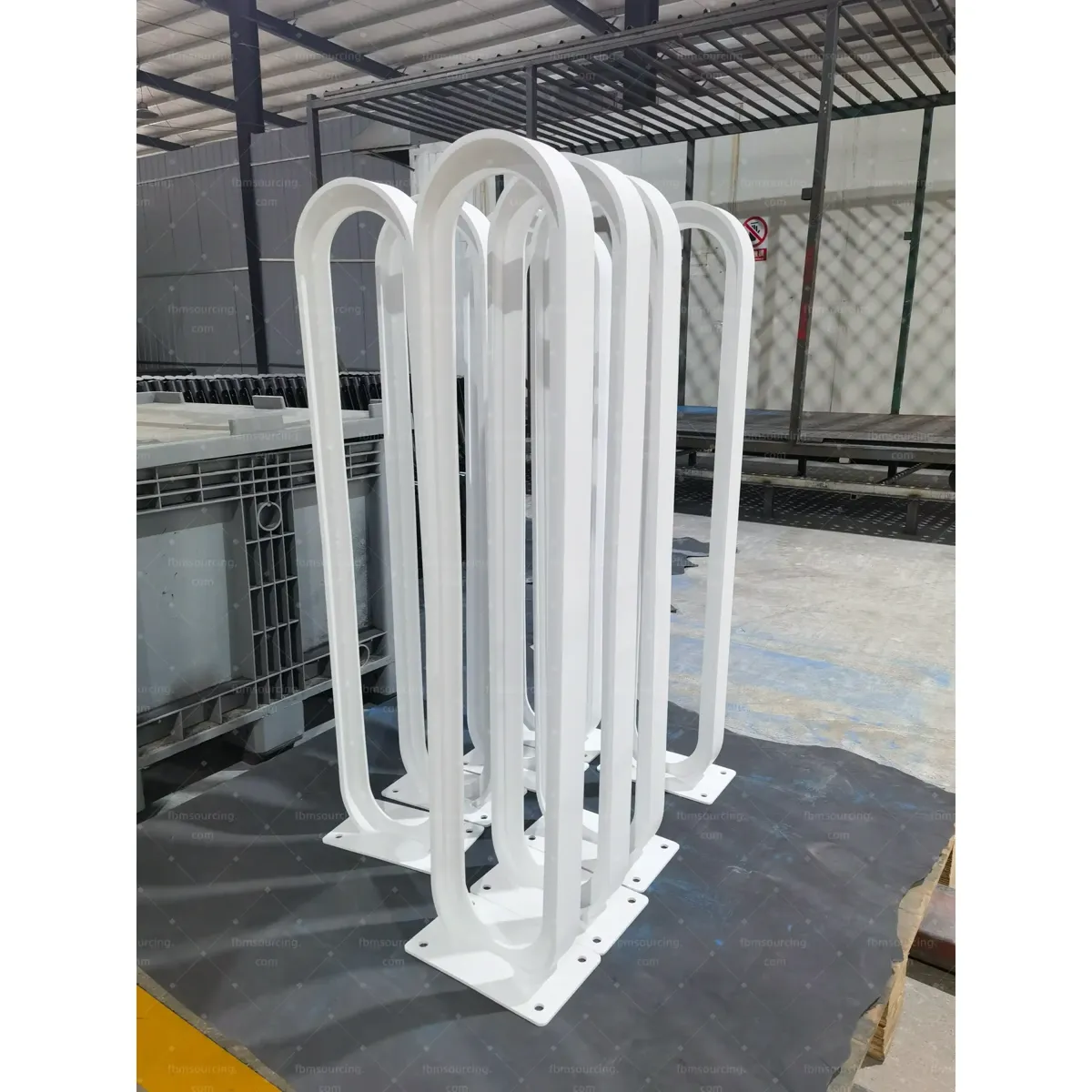
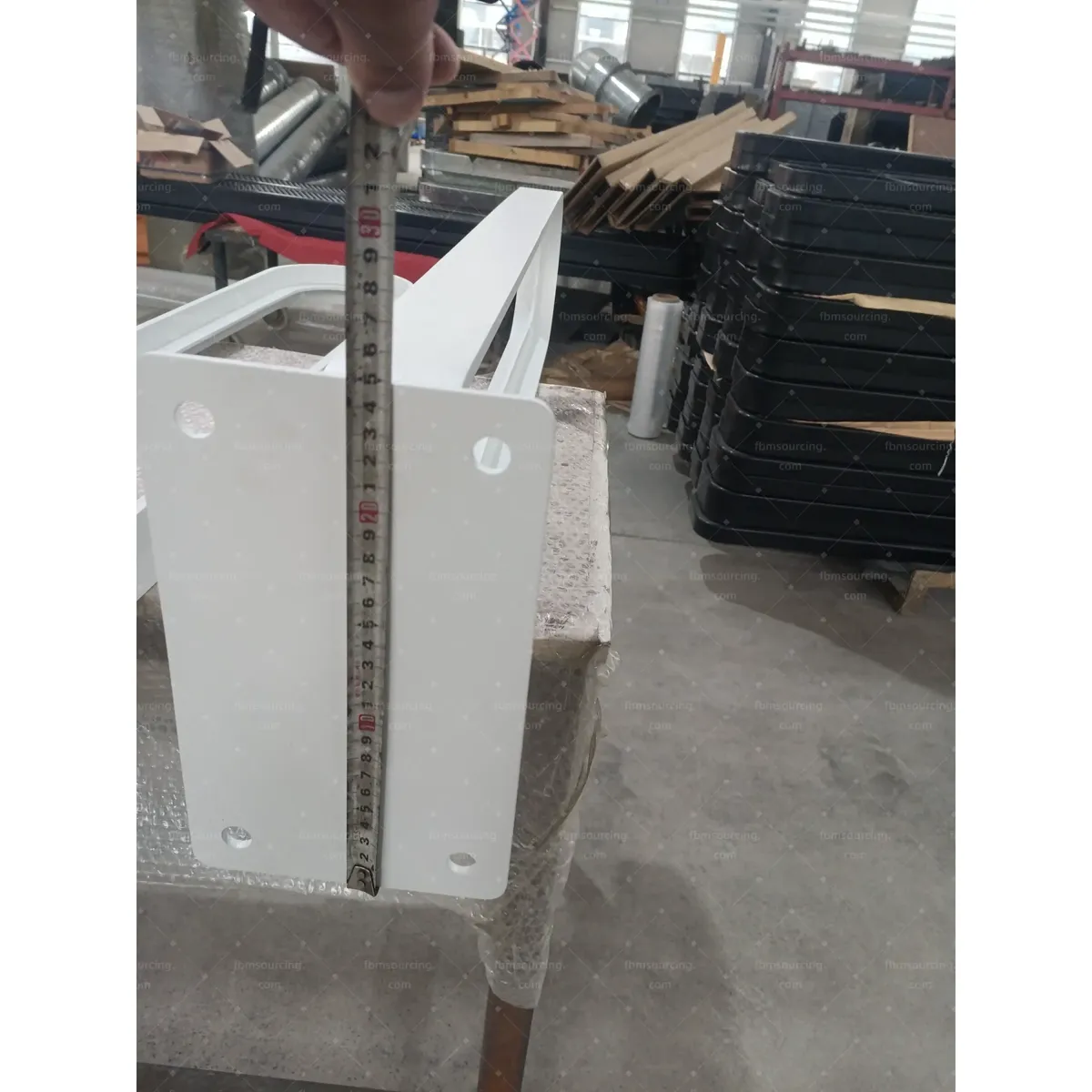
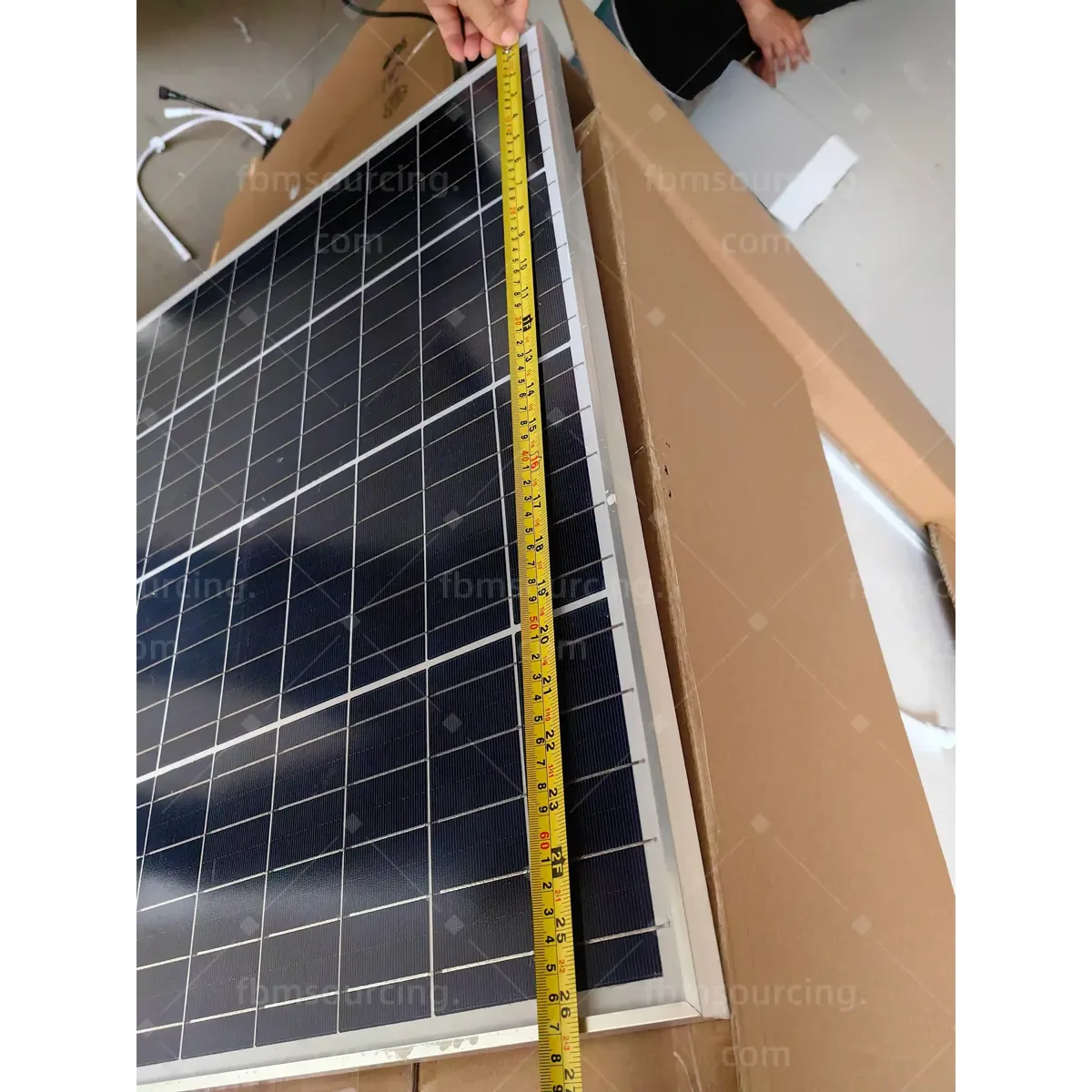
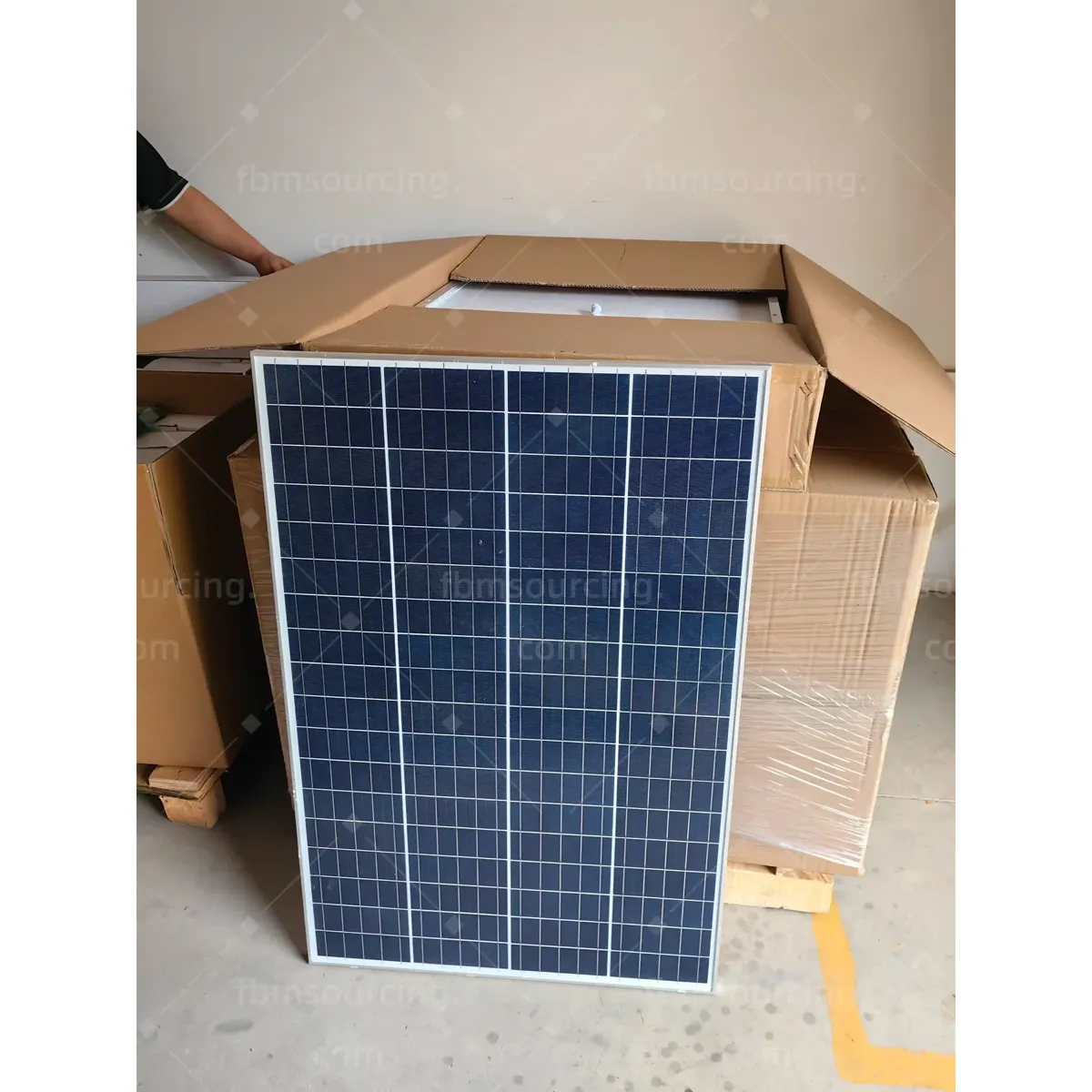
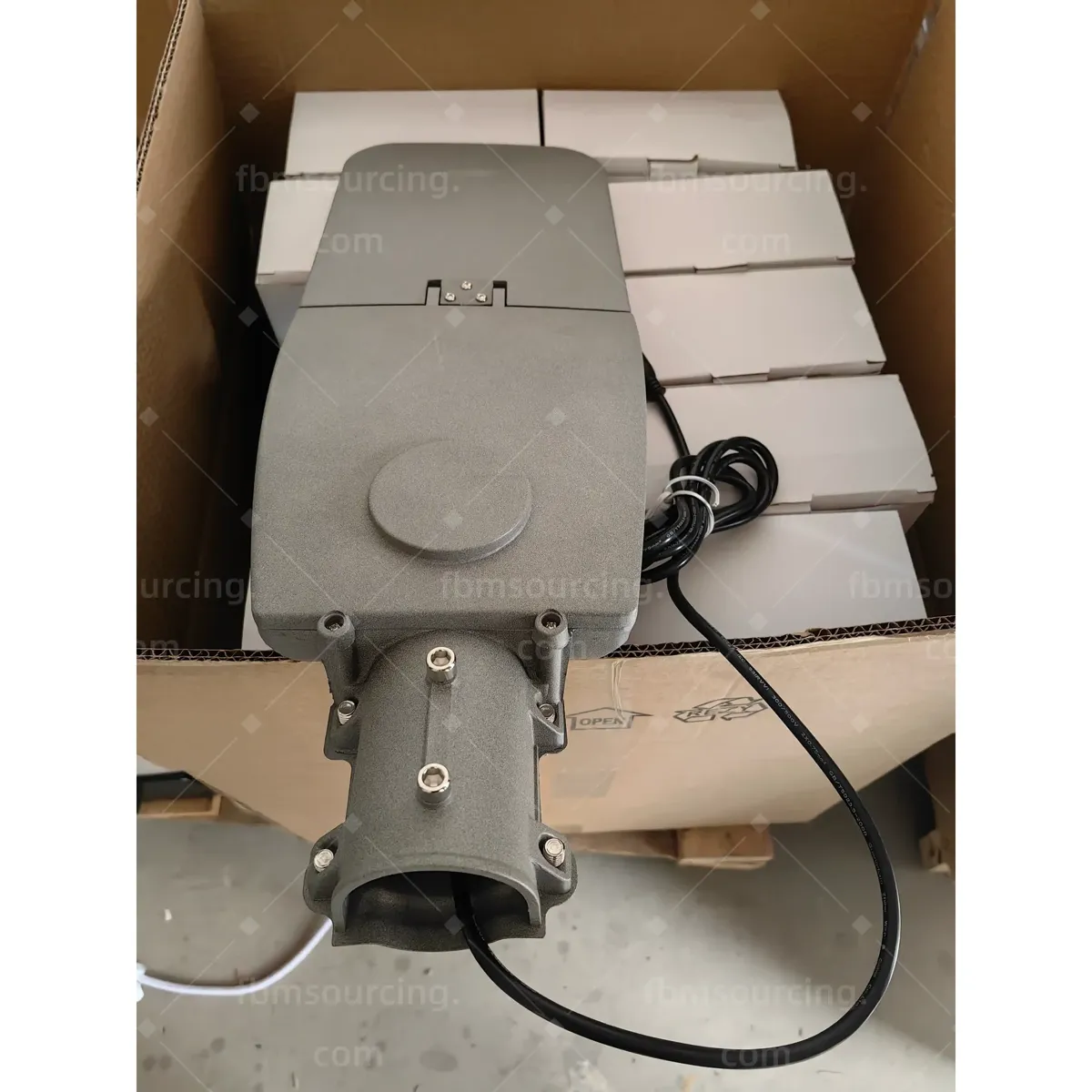
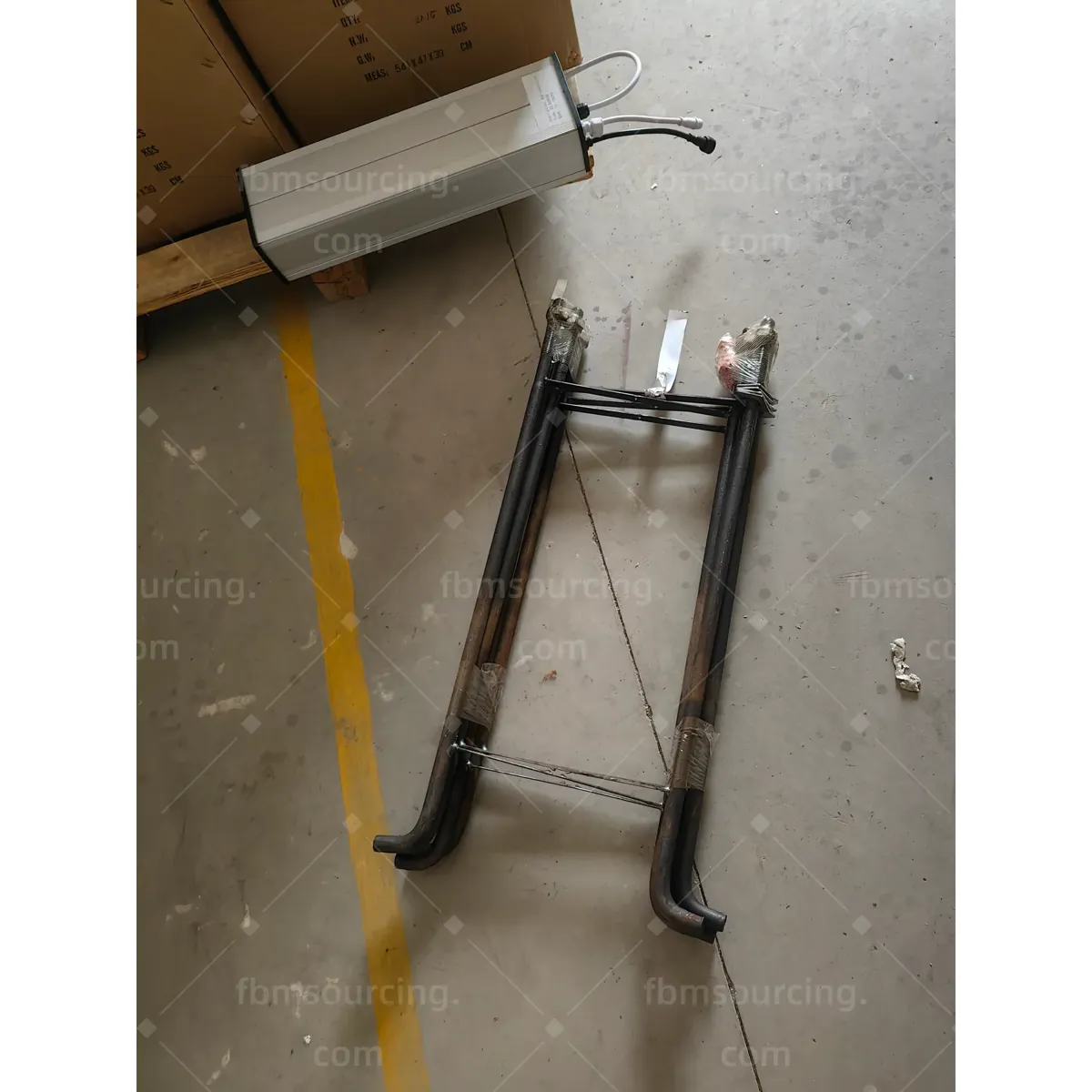
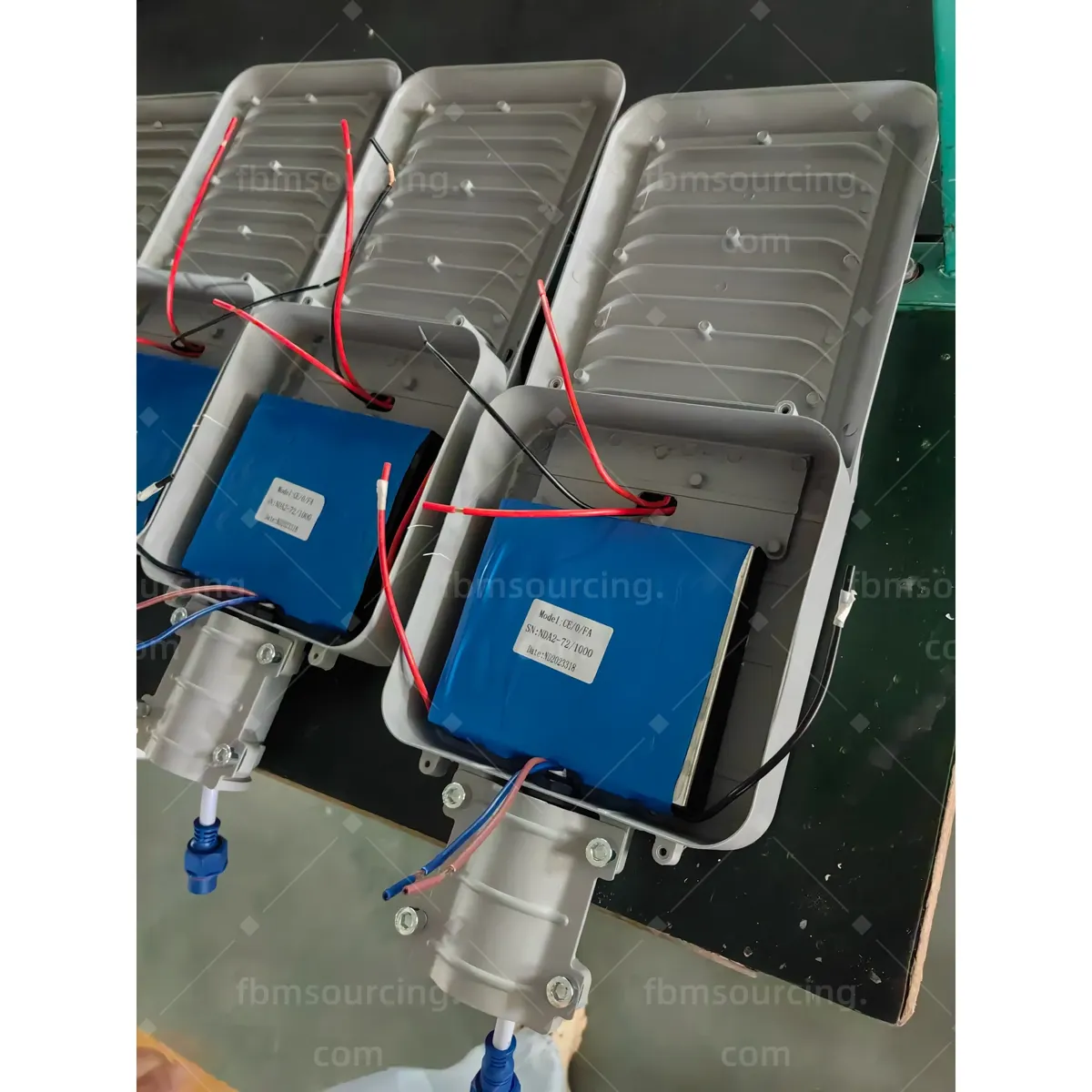
Pre-shipment inspection covered every product category with full-product views, measurements, structural checks, surface checks and packing verification. Teak furniture was checked for joinery, frame stability, finish quality and consistent dimensions across the batch. Park benches and litter bins were checked for weld quality, coating coverage, lid mechanisms and usable structure. WPC decking was measured for profile dimensions, wall thickness, length tolerance and colour-batch consistency, with clip systems test-fitted. Bicycle racks were verified against fixing-point drawings and stood for stability. Solar street lights were the most component-heavy item: panel dimensions and condition, battery packs, lamp bodies, brackets, poles and fastener kits were each checked for completeness and function.
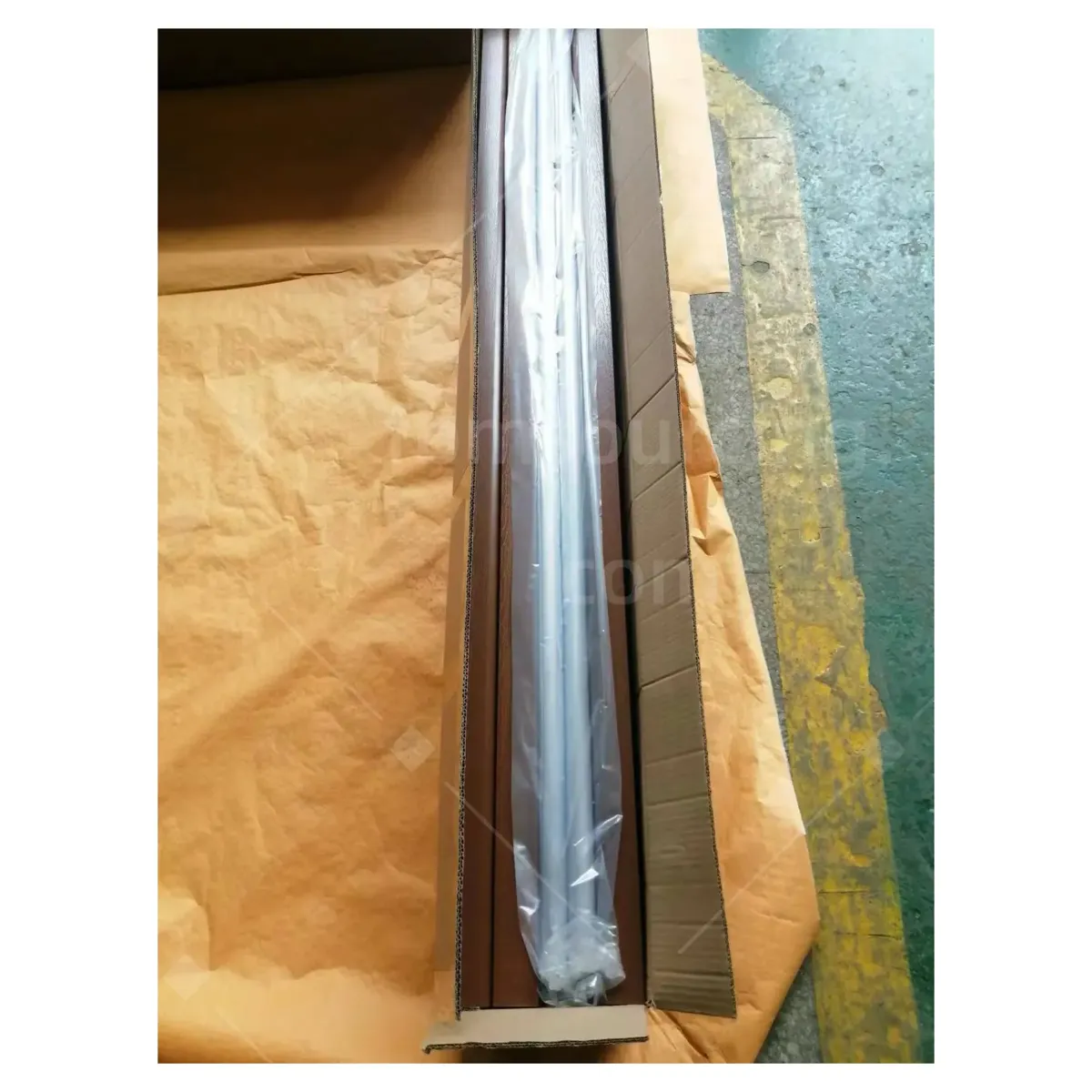
The QC gallery below is the record the client received: one image per checkpoint across all six categories, from whole-product views to caliper measurements. Catalogue images and quotation sheets are not evidence — a project buyer approving a shipment needs to see the actual goods that will arrive on site. The same discipline applies on every order: one inspection is carried out by our own team in the factory once bulk production is finished, documented in photos and video before shipment.
Inspection worked from the approved samples and drawings, not from memory. Dimensional checks used calipers and tape against the drawing tolerances shown in the gallery; visual checks covered finish, colour-batch and weld quality across the batch, not just the first row of products; function checks covered lids, brackets, clip systems and light operation. Where a defect was found, it was photographed, reported to the client, and reworked before the loading date — the client saw every finding with evidence, and nothing was shipped on the basis of a verbal assurance.
Container Loading and Shipment Control
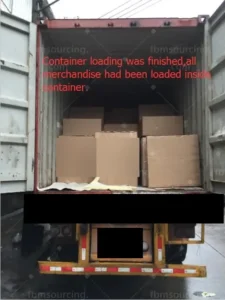
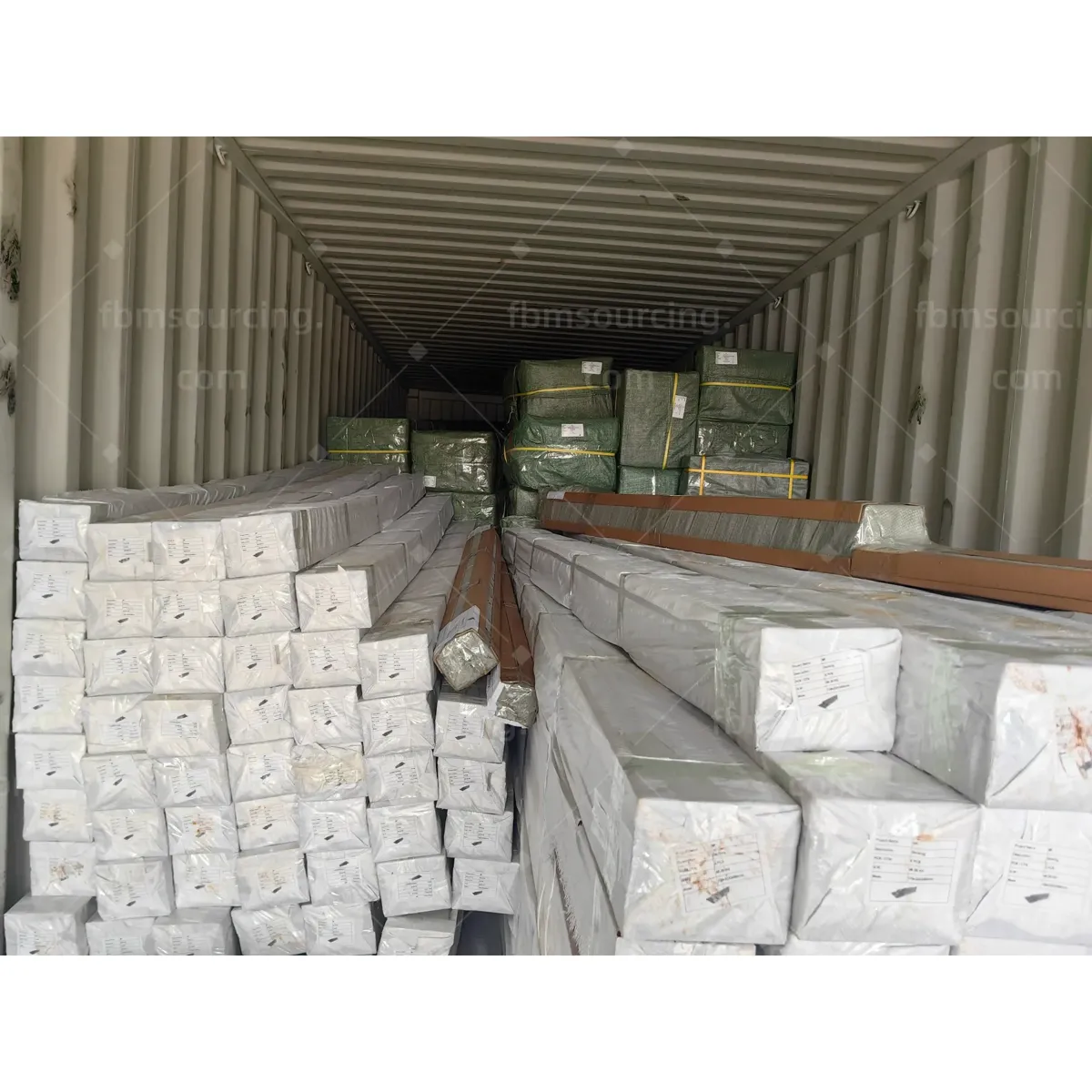
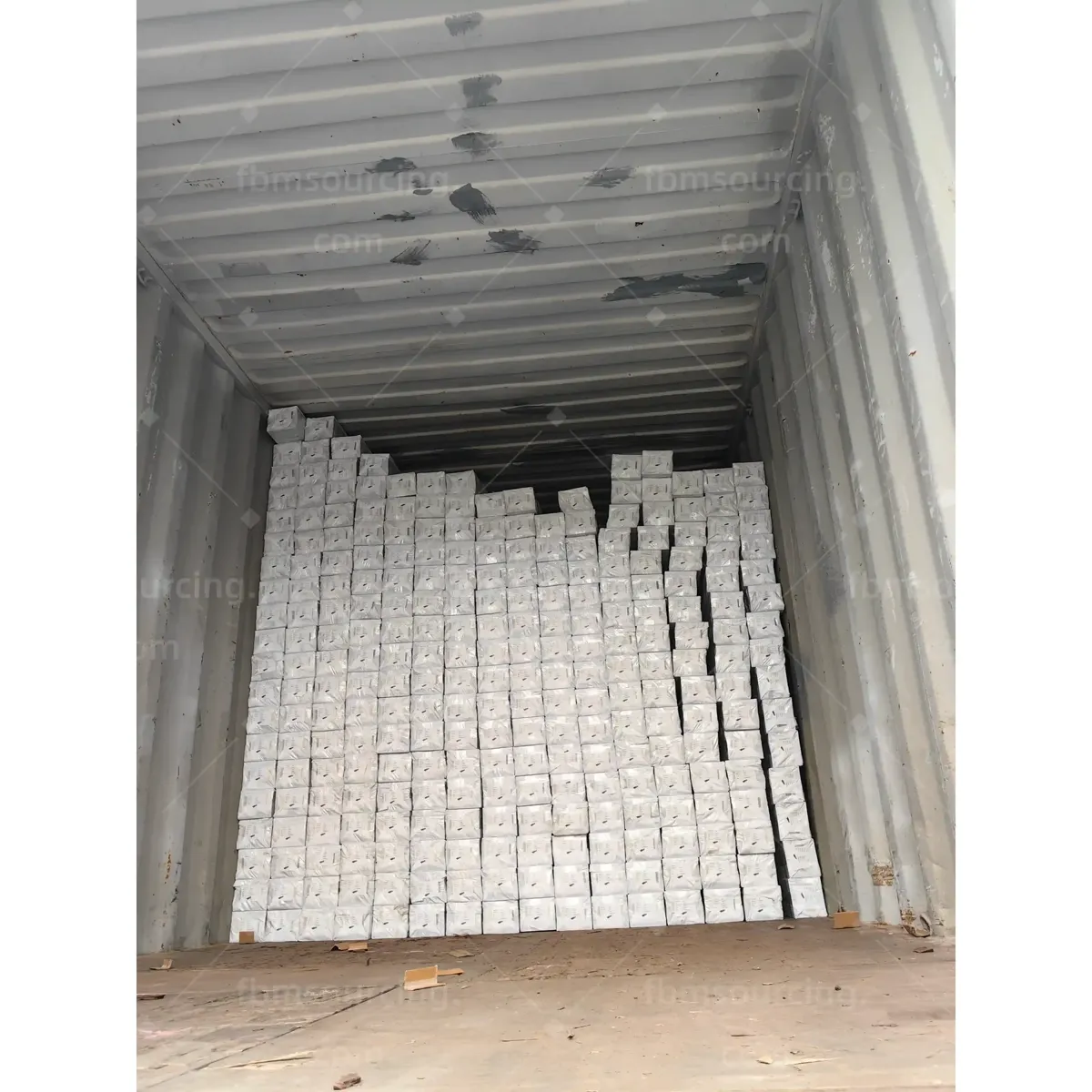
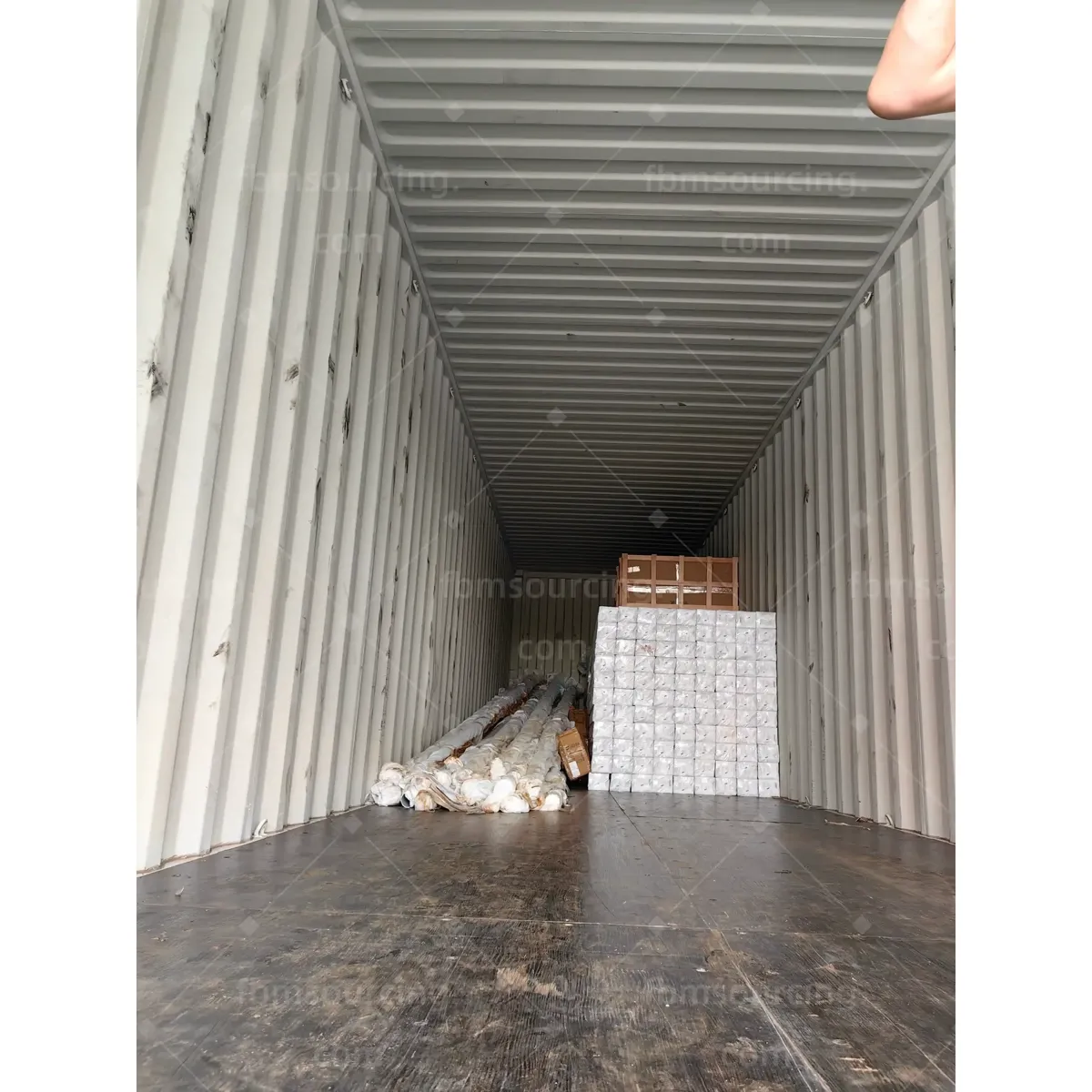
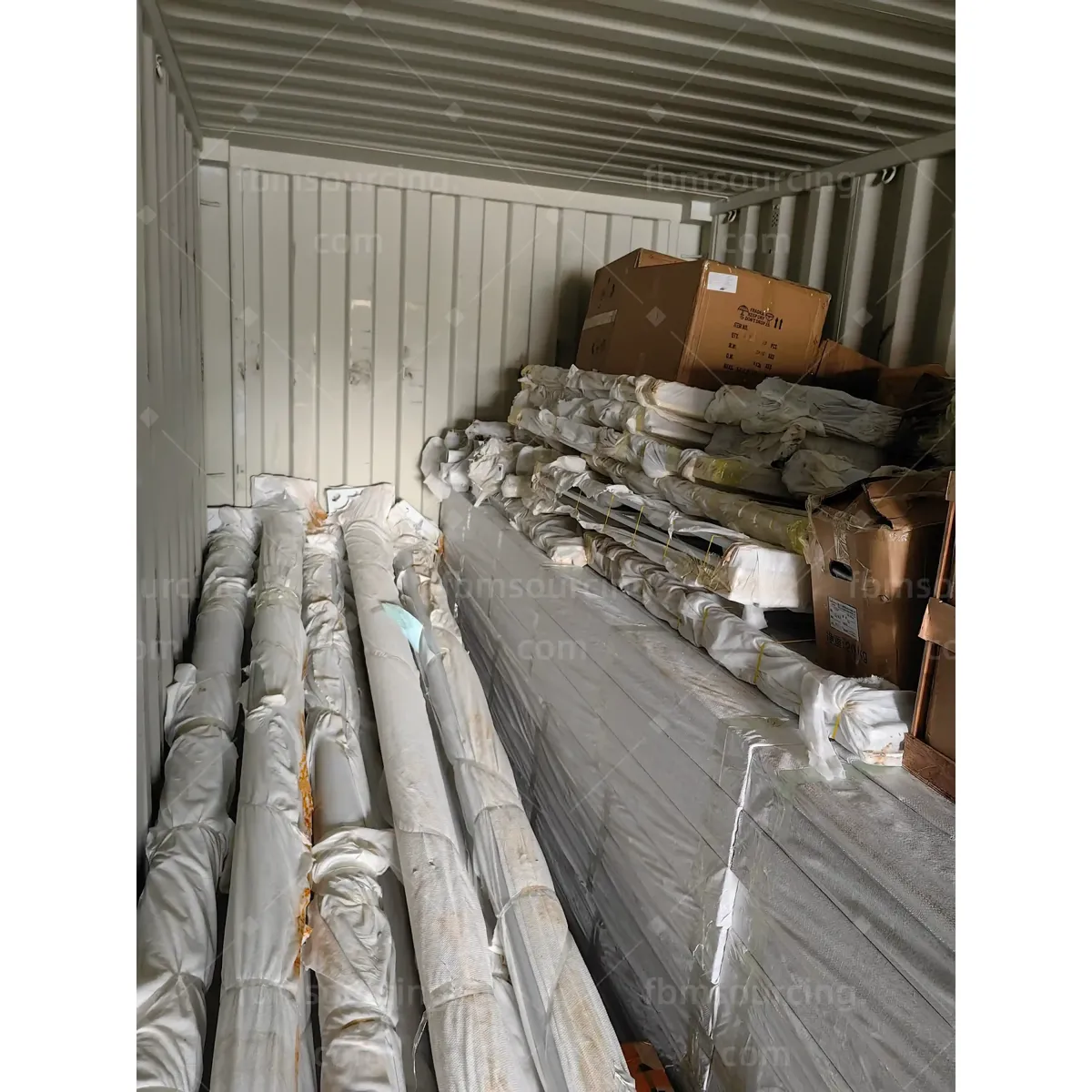
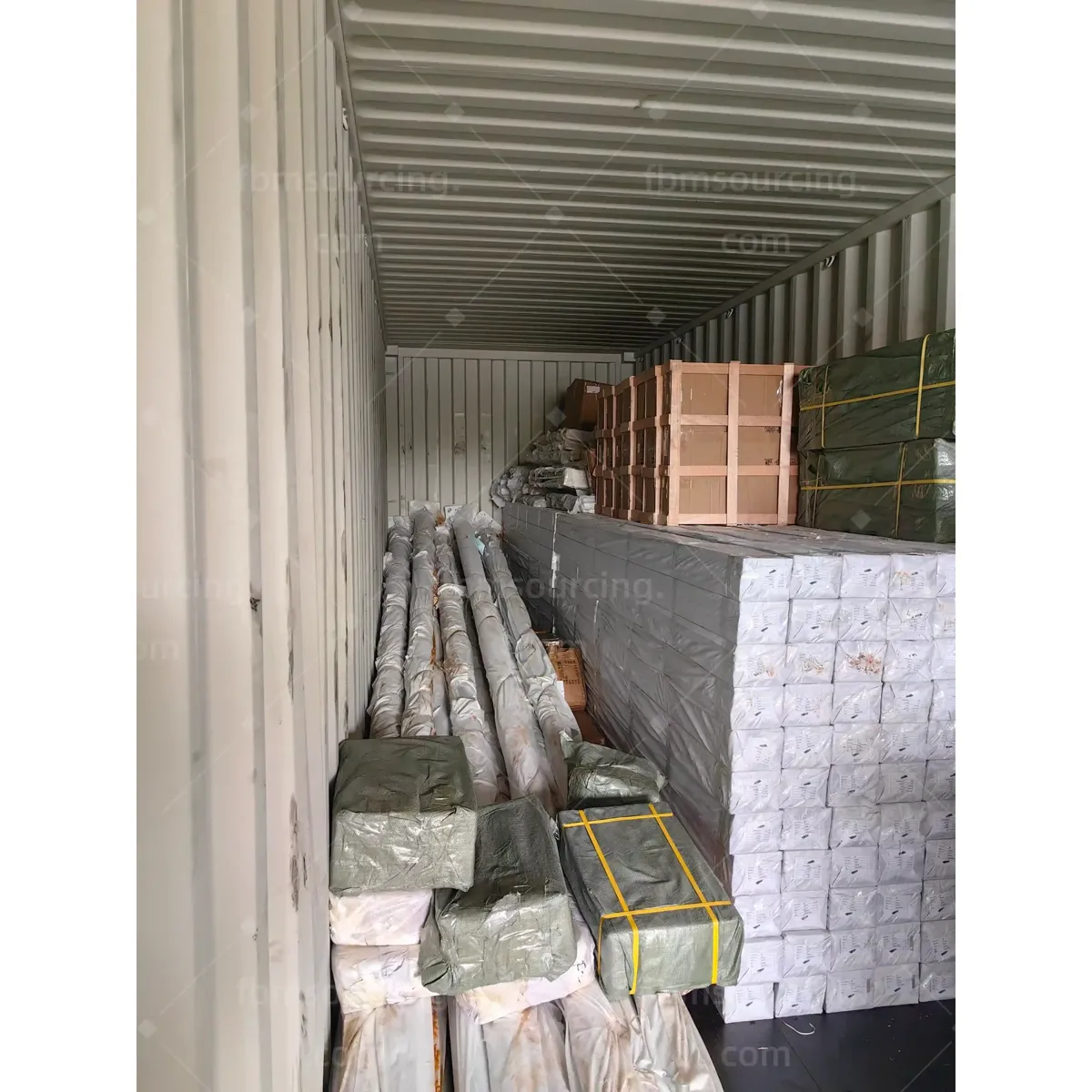
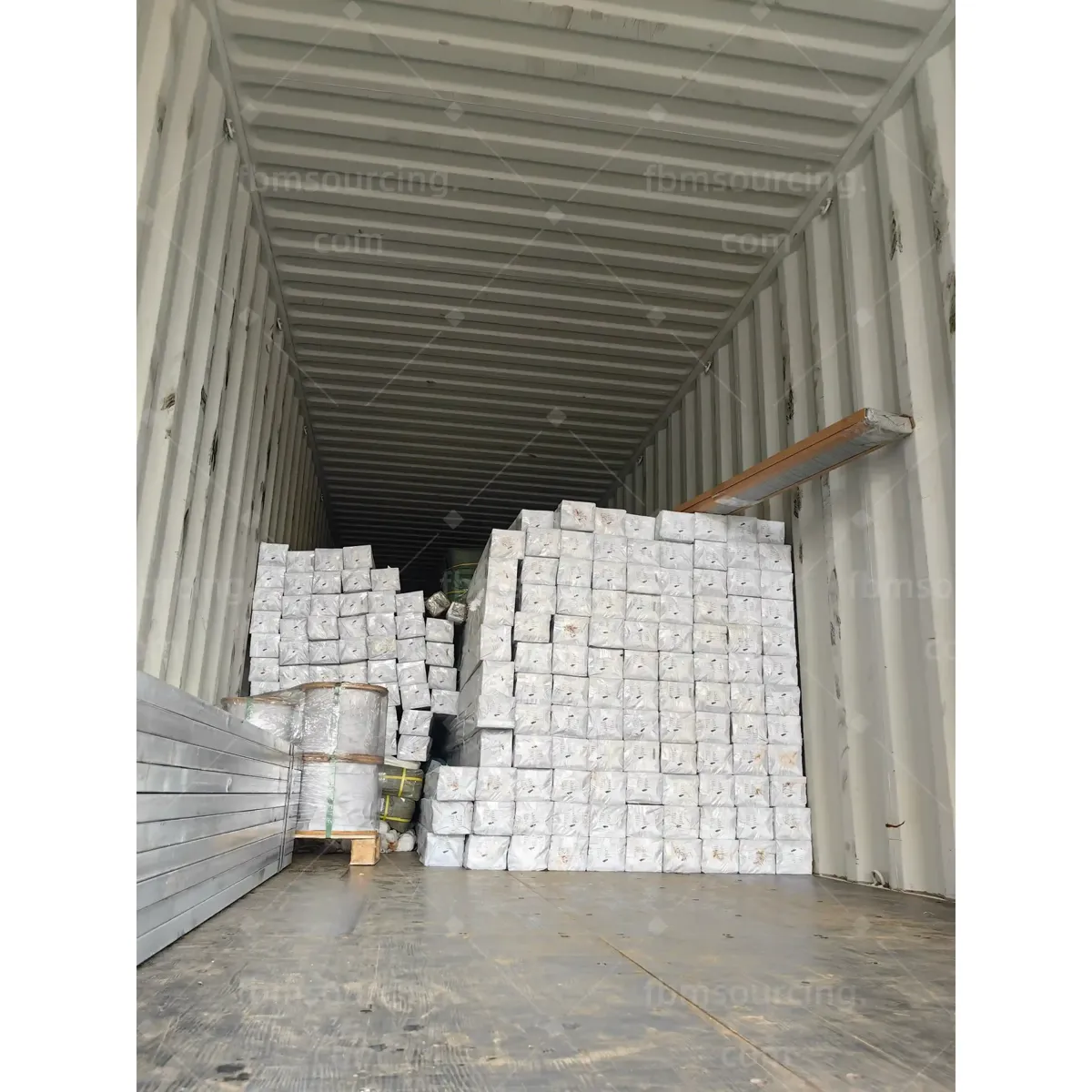
The order was loaded into 3 x 40HQ containers for shipment to the United States. Loading a mixed outdoor package is its own discipline: long WPC profiles, boxed hardware, wrapped poles and bulky furniture do not carry weight the same way, and poor placement produces pressure damage, carton confusion and slow unloading at the receiving end. Our team supervised the loading sequence — heavy decking bundles low and forward, poles wrapped and separated, furniture and component cartons stacked by category with fragile items protected — and recorded the interior condition and cargo placement of each container before sealing.
For the project owner, the loading record closes the procurement loop: it documents that what passed inspection is what physically left China, arranged so it arrives usable. The containers were shipped on schedule, and the receiving team unloaded by category directly against the packing list.
The outcome for the buyer: six product categories from six factories delivered as one controlled package — on one schedule, with one inspection record, and with every fixing kit accounted for at the destination. The project team installed directly from the containers against the packing list, with no missing-component claims raised after arrival. For a municipal developer or main contractor, that is the practical difference between buying products from China and running construction procurement through a China-side partner who owns the whole package.
Planning a park, streetscape or other municipal project? Send us your drawings, product list or BOQ — including mixed packages of furniture, site amenities and building materials — and our team will review your requirements and get back to you. Start from our China building materials & FF&E procurement page or view more municipal project cases.
Have a similar project on your desk?
Send us your BOQ, drawings or product list — our team will review it and get back to you. Every order is inspected by FBM Sourcing’s own team at the factory before shipment, with photo and video records.