
Buying commercial furniture from China for a project means engaging a furniture sourcing agent who manages factory matching, quotation, contract-grade specification checks, sample approval, in-factory quality control and full-container logistics on your behalf — it is a structured B2B procurement process, not a matter of browsing supplier catalogs the way a homeowner would furnish a house. For hotels, offices, schools, apartment buildings and other commercial buildings, the process typically runs from RFQ/BOQ submission through production and pre-shipment QC to container loading; please plan for about four months between deposit and shipment, depending on how much of the order is custom-made. FBM Sourcing manages the entire China procurement package for overseas construction projects, acting as a single sourcing partner so a developer, general contractor or FF&E buyer deals with one point of accountability instead of negotiating factory by factory.
Why Doesn’t Residential Furniture-Buying Advice Apply to a Commercial Project?
Furniture advice aimed at homeowners assumes you are buying one sofa or one dining set from a retail catalog, with no requirement beyond personal taste and a delivery address. A commercial project buyer is solving a different problem. A 200-room hotel needs 200 identical headboards that pass the same flammability test; a school district needs classroom seating built to survive years of daily institutional use, not a living room’s occasional guest; an office fit-out needs every workstation on a floor plan to arrive within the same delivery window so trades are not left idle. None of this is about personal style — it is about matching a Bill of Quantities or FF&E schedule to factories that can hold a specification across a full production run, document it, and load it onto the same containers as the rest of the project’s shipments.
Multi-phase projects add another layer residential buying never has to deal with: a hotel group opening a second property later, or a school district adding a wing, needs the same finish and frame matched again, plus enough spare parts and touch-up stock in the original order to cover the years in between. That kind of continuity depends on production records and approved samples being kept on file by whoever ran the original order — something a one-off retail purchase was never set up to provide.
That is also why a China sourcing agent’s role on a furniture order looks more like project coordination than shopping: reviewing drawings and finish schedules, confirming contract-grade certification requirements before quoting, negotiating factory-by-factory minimum order quantities down to a workable project-wide order, and standing behind the quality of what ships — not simply forwarding a factory’s catalog and hoping it fits.
What Kinds of Commercial Furniture Does This Cover?
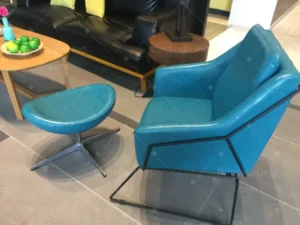
“Furniture” on a commercial project brief usually spans several distinct categories, each with its own factories and lead times, sourced together as one package rather than separately: casegoods (wardrobes, desks, reception counters), seating (dining chairs, lounge chairs, office task chairs), soft furnishings (upholstered sofas and banquettes, mattresses, headboards), tables, and outdoor or pool-area furniture for hospitality projects. A general furniture sourcing agent handling China-based production will typically coordinate all of these against one FF&E schedule, rather than treating each category as a separate purchase with its own timeline and its own shipping plan.
How Does the Commercial Furniture Sourcing Process Work, Step by Step?
A typical commercial furniture order from China, run through a sourcing agent, moves through the same core stages regardless of whether the project is a hotel, a school or an office tower:
- RFQ/BOQ review — drawings, finish schedules and quantities are checked against factory capabilities and realistic lead times before any quotation goes out.
- Factory matching and quotation — the agent shortlists factories that already produce at the required contract-grade specification, rather than starting from a blank supplier search.
- Sample and finish approval — physical samples or finish swatches are approved in writing before mass production starts, with timing confirmed by the factory.
- Production — lead time confirmed by the factory in writing for each order, depending on customization level and order volume, with production follow-up at key milestones.
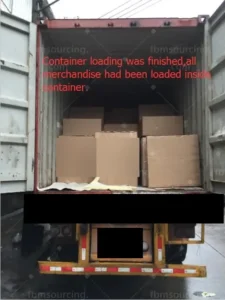
- Pre-shipment QC and container loading — the finished order is inspected on-site before it is packed, then loaded into full containers for ocean freight.
Each stage generates its own paper trail — approved samples, inspection records, packing lists — so a project’s furniture package stays auditable from quotation to delivery, which matters more on a commercial contract than on a household purchase.
What Does “Commercial-Grade” or Contract-Rated Furniture Actually Mean?
“Commercial-grade” — sometimes called contract-grade or contract furniture — is not a marketing term; it refers to furniture built and tested to standards that assume constant public or institutional use rather than occasional residential use. In practice this means heavier-gauge steel or aluminum frames instead of light residential tubing, higher-density foam and reinforced joinery that hold up under daily turnover, and mechanisms — recliners, casters, folding joints — rated for tens of thousands of duty cycles instead of a few thousand.
The test standards a factory can actually document matter more than how a piece looks in photos. For projects specifying to European standards, EN 16139 covers the strength, durability and safety of chairs and seating for contract use, typically at Level 2 for public and contract environments. US-market commercial furniture is commonly checked against ANSI/BIFMA structural and safety test methods, and upholstered furniture destined for hotels, offices or other public-occupancy buildings is often required to pass CAL 133, the stricter public-occupancy flammability test — not the lighter residential CAL 117 standard most home furniture is tested against. A sourcing agent’s job at this stage is confirming which of these a given factory can actually test and document, before it becomes a problem at final inspection. We go deeper into how commercial-grade and residential furniture differ, item by item, in our commercial-grade vs residential furniture guide.
Sourcing this for a commercial project?
FBM Sourcing works with project owners, developers, main contractors and FF&E contractors on hotel, apartment, school, office and other commercial building projects. Send us your BOQ, drawings or product list — our team will review it and get back to you.
What Are the MOQ Realities for a Commercial Furniture Order?
Individual factories quote minimum order quantities by SKU — a certain finish of headboard, a certain chair frame — and those numbers can look intimidating on a small order. What actually determines whether an order is workable is not any single factory’s MOQ in isolation, but how the sourcing agent consolidates the project’s full furniture package, and often other product categories from the same project, into container-ready volumes.
Sometimes, on a large project, the furniture alone fill full containers; sometimes the furniture share containers with the other product categories of the same project; and sometimes, in one batch, we combine a dozen or more product categories from several projects of the same client into a few containers — always full containers, and for us this is routine, well-practised work.
A well-planned commercial furniture order — case goods, seating and soft furnishings packed together — is loaded to fill each 40HQ container. Smaller orders are not turned away; they are combined into the next available container run rather than shipped part-loaded.
Custom-designed pieces — a reception counter to a specific drawing, a headboard in a bespoke fabric — carry higher per-SKU MOQs than catalog-adjacent designs a factory already tools up for, simply because of the setup cost involved. Where a project’s budget allows it, standardizing a handful of finishes across room types (rather than a unique spec per floor) is usually the single easiest way to bring per-SKU quantities down without changing the design intent.
What Quality Control Should You Expect Before Shipment?
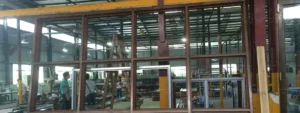
Quality control on a commercial furniture order happens on-site, before the goods ever leave the factory, and it is carried out once by the sourcing agent’s own team when production is finished; the buyer’s own project team is welcome to attend. A pre-shipment inspection typically checks dimensions and finish against the approved sample, structural joints and mechanism cycles, packaging strength for the specific freight route, and defect rates sampled against a standard such as AQL 2.5 for major and minor defects. Hardware and small fittings are usually shipped with a small allowance of spare units from the same production batch, agreed at order stage, so a missing screw or bracket on-site doesn’t stall installation.
Because FBM Sourcing’s QC team works the factory floor directly and reports back with photos and inspection records before loading, the buyer isn’t relying on a factory’s own word for what shipped — but accountability stays with one sourcing partner end to end, rather than being split across separate parties for sourcing, inspection and freight.
That inspection record becomes part of the same paper trail as the sample approval and the packing list, so if a piece arrives damaged or a finish looks off later in installation, there is a documented reference point to check it against — rather than a dispute with no record of what was actually approved.
Who Is Typically Involved in a Commercial China Furniture Order?
A commercial furniture order usually passes through more hands than a residential purchase, even though the sourcing agent is coordinating a single process on the buyer’s behalf. The architect or interior designer issues the FF&E schedule and finish specifications; the developer, general contractor or FF&E procurement company owns the budget and the delivery schedule; the sourcing agent turns that schedule into factory-ready specifications, manages quotation, sampling and QC, and consolidates shipping; the factories manufacture to the approved sample; and a freight forwarder handles the ocean leg once containers are loaded. Keeping that chain to as few separate points of contact as possible — ideally one sourcing partner handling everything between the approved FF&E schedule and the container arriving on-site — is usually what keeps a multi-category furniture package on schedule.
What’s a Typical Timeline for a Commercial Furniture Order from China?
Timelines vary with customization level and destination port, but a commercial furniture order from China generally follows this rhythm:
| Stage | Timing |
|---|---|
| Sample/finish approval | Confirmed by the factory for each sample |
| Production | About two months; confirmed by the factory in writing |
| Pre-shipment QC and loading | Scheduled once production is finished |
| Ocean freight (varies by destination) | Confirmed by the carrier at booking |
Most commercial buyers should plan for about four months between deposit and shipment, plus ocean freight to site, and build sample approval in as early as possible — it is the stage most likely to slip if drawings or finish schedules are still changing.
How Are Quotes and Invoices Structured on a China Furniture Order?
All quotations, invoices and shipping documents are issued by FBM Sourcing — you deal with us, and we carry the responsibility. For suppliers you nominate, we charge a 5% commission; for products we source for you, we quote a direct price.
How Do You Choose the Right Sourcing Route — This Guide or a Vertical Furniture Guide?
This page covers the process that applies to any commercial furniture order. Once you know your project type, the details worth checking — typical certifications, lead times and common pitfalls — differ enough by vertical that it’s worth reading the guide built for it:
- Hotel projects: Hotel Furniture Sourcing Agent in China: Buyer Guide
- Office fit-outs: Office Furniture Sourcing Agent in China: Multi-Floor Fit-Out Guide
- School and dormitory projects: Dormitory and Classroom Furniture Sourcing from China
- Dining and F&B areas: Dining Room Furniture from China: A Buyer’s Guide
- Apartment and guest room bedrooms: Bedroom Furniture from China: Cost, Lead Time and QC Guide
If your project spans several of these — a hotel needs guest room, lobby and restaurant furniture in the same order — working with one furniture sourcing agent in China who coordinates across all of them into a single shipment plan is usually more efficient than running separate vendor relationships per room type, which is exactly the role a sourcing partner plays on a mixed-use commercial order.
Whichever route you take — this generalist overview or one of the vertical guides above — the fastest way to get a real answer for your project is to send the actual drawings, finish schedule or BOQ rather than asking in the abstract. Factory-level MOQs, certification requirements and lead times all shift once specific quantities and finishes are on the table.
FBM Furniture
If you are an FF&E contractor, see furniture sourcing in China for FF&E contractors on fbmfurniture.com, the site of FBM Furniture, the furniture sourcing line of FBM Sourcing Limited.