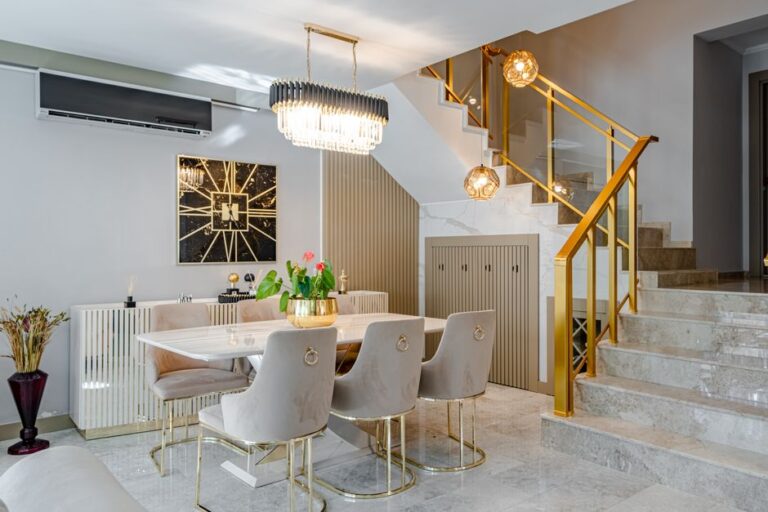
Dining room furniture rarely comes from a single factory. A dining set — table, chairs, and often a sideboard — usually draws on two or three specialist plants, and when a project needs the same set repeated across dozens of apartment units or a villa community, coordinating those factories on one delivery schedule becomes the real sourcing challenge. This guide covers what a developer, contractor, or FF&E procurement company should check before committing a dining furniture order to China, and where projects most often run into trouble. For a real example of a marble-top dining table and upholstered chairs bought as part of a full residential order, see our villa furniture procurement case in the Philippines. That is the role FBM Sourcing plays as a sourcing agent and sourcing partner on projects like this.
Why Dining Furniture Sourcing Is More Fragmented Than It Looks
A dining table and a dining chair are built by different types of factories even when they end up sold as one “set.” Solid wood and veneer table production is typically a casegoods specialty — cutting, joinery, and finishing large flat surfaces — while dining chairs, especially upholstered ones, come from frame-and-upholstery factories built around fabric cutting and foam work. Sideboards and buffets are casegoods again, but often a different plant than the table if the order is placed through a general trading company rather than a furniture sourcing agent managing the specification directly.
This matters because finish consistency across a dining set depends on all three factories matching the same stain formula, lacquer sheen, and color reference — something that happens reliably only when one party is managing samples and approvals across all three plants at once, rather than each factory working from its own interpretation of a color swatch.
What to Check Before Ordering Dining Room Furniture from China
Table Construction and Top Material
Confirm whether the table top is solid wood, veneer over engineered core, glass, or stone, and ask specifically about edge banding or edge profile on veneer tops — this is the most common point where a cheaper factory cuts corners in a way that is visible on delivery but hard to catch from photos alone. For extendable tables, confirm the extension mechanism is rated for the actual table weight and ask for the mechanism brand, since generic slides are the leading cause of extendable table failures after a year of household use.
Chair Frame and Upholstery Grade
Ask for the frame material (solid wood, engineered wood, or metal), the joinery method (dowel, mortise-and-tenon, or staple-and-glue — the last being the weakest and most common shortcut on budget chairs), and the fabric or leather grade with abrasion rating if the units will see hospitality-adjacent or short-term rental use. For upholstered dining chairs going into rental apartments or serviced units, a higher abrasion-rated fabric is worth the modest cost difference given the wear pattern of that use case.
Finish Matching Across the Set
Request one physical sample that includes the table and a full chair alongside any sideboard finish — not separate swatches reviewed independently — so color and sheen match can be judged as they will actually appear in a room. Finish drift between the table and chairs is the single most common defect we catch at pre-shipment inspection on dining orders, and it is essentially invisible until the full set is compared side by side.
Sourcing Process for a Multi-Unit Dining Furniture Order
For a project needing the same dining set across many units, the process starts with converting the interior schedule into a single buildable specification covering table, chair, and any casegoods, then shortlisting factories for each component against that specification. A pre-production sample of the complete set — not individual pieces reviewed in isolation — is approved before mass production starts. Production is then tracked against one delivery program across however many factories are involved, with goods consolidated at a warehouse before container loading so that complete sets ship together rather than table, chairs, and sideboards arriving in separate partial shipments that leave units unable to be handed over on schedule.
Sourcing this for a commercial project?
FBM Sourcing works with project owners, developers, main contractors and FF&E contractors on hotel, apartment, school, office and other commercial building projects. Send us your BOQ, drawings or product list — our team will review it and get back to you.
QC Criteria Specific to Dining Furniture
- Table top flatness and edge finish, checked under raking light to reveal veneer or lacquer defects invisible under normal lighting
- Chair joint strength tested under load, particularly on staple-and-glue construction where failure shows up after months of use, not immediately
- Extension mechanism function on expandable tables, cycled multiple times during inspection
- Finish color match verified across table, chairs, and sideboard as one visual comparison, not separate swatch checks
- Packing and corner protection on table tops, since surface marking from inadequate protection is a common transit damage cause
How Long Does a China Dining Furniture Order Take?
The time from confirmed specification to a factory-approved pre-production sample is confirmed by the factory for each set, depending on how many components are in the set and whether custom fabric or finish work is involved. Once the sample is approved, the mass-production lead time is confirmed by the factory in writing for each order, and sea freight transit time is confirmed by the carrier at booking. Buyers planning a fit-out schedule around dining furniture delivery should plan for about four months between deposit and shipment, plus ocean transit, and build in a buffer for at least one sample revision round, since finish-matching issues across table, chair, and casegood factories are the most common reason a first sample gets sent back.
Projects that compress this timeline by skipping the physical multi-component sample review — approving a table sample and a chair sample separately rather than together — routinely discover finish mismatches only after the full production run is complete, at which point correction means re-finishing hundreds of units rather than adjusting one sample.
Common Mistakes When Sourcing Dining Furniture from China
- Approving components separately instead of as a set: a table sample and chair sample can each look acceptable individually while failing to match once placed together in a room.
- Underspecifying chair joinery: many quotations do not state joinery method unless specifically asked, and staple-and-glue construction can be quoted at a similar price to dowel or mortise-and-tenon joinery despite a significantly shorter service life.
- Ignoring extension mechanism brand on expandable tables: generic slide mechanisms are the leading cause of warranty claims on expandable dining tables in multi-unit residential use.
- Ordering table and chairs from unrelated factories without a shared finish reference: without one party managing the specification across both factories, color and sheen matching is left to chance.
Consolidating Dining Furniture with the Rest of Your Furniture Package
Dining furniture is rarely ordered in isolation on a project of any scale — it typically ships alongside living room, bedroom, and home office furniture as part of one consolidated unit furniture package. Coordinating production schedules across these categories means the dining set does not sit waiting in a warehouse for slower-moving categories, or conversely, hold up faster categories while a dining component runs behind schedule. A china furniture sourcing agent managing the full package tracks each category against one delivery date and consolidates finished goods into shared containers, which is typically more cost-efficient on freight than shipping dining furniture as a standalone order.
Get a China Procurement Quote for Your Project
To prepare an accurate quotation for a dining room furniture package, send us your furniture schedule or drawings, unit count and dining set mix, finish preferences, destination port, and project timeline.
Submit your project requirements and our team will respond with a sourcing plan. For the full product specification and gallery, see our dining room furniture sourcing page, or explore related categories including living room furniture and the wider home furniture range.
Related reading