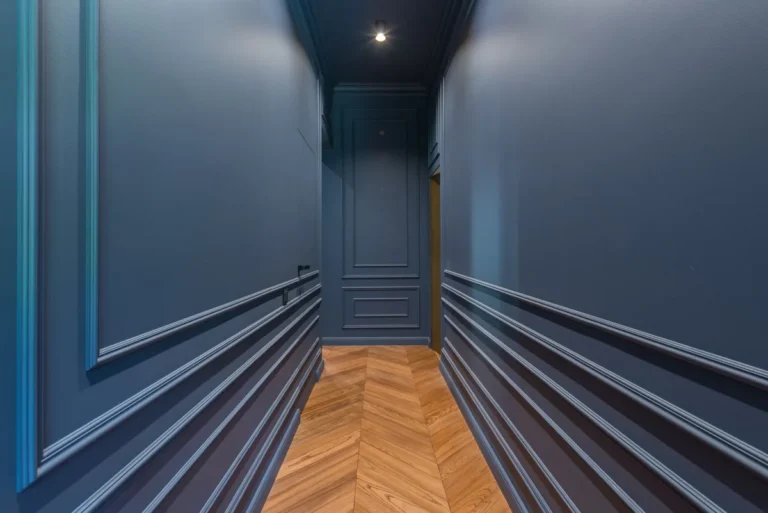
Decorative moulding and cornice manufacturers in China include gypsum and plaster cornice makers, solid wood and veneered moulding mills, MDF moulding lines, polyurethane and polystyrene moulding makers, and PVC and aluminium trim extruders. A moulding is a shaped linear element that finishes a wall, ceiling or opening, and each route supplies a different material, profile library and finish under the same word.
This guide sorts the supply side into five sourcing routes so a procurement team can send one brief to the right makers and compare the answers fairly. It is not a ranking. No factory is named or scored here, and no claim is made about the fire, moisture or impact performance of any moulding. The designer, the project specification and the local authority define those requirements, and each maker must show evidence for the exact profile it offers. For related products, see our guides to skirting boards and trim, ceiling and partition manufacturers and wall panels.
What should a moulding brief state?
A brief that says only “cornice, white, classic style” produces quotations that cannot be compared, because style names mean different profiles to different makers. State at least the following, copied from the interior drawings and the finishes schedule.
- Profile drawing: the section of each moulding at full size with the dimensions drawn, not a style name, with the drawing reference for each location.
- Location and use: cornice, picture rail, dado, architrave, panel moulding or ceiling rose, and the wall or ceiling it fixes to.
- Material: the material the specification names, and whether the moulding must be solid, hollow or foam-cored.
- Finish: primed, painted, veneered or foil-wrapped, with the colour reference and the sheen.
- Lengths and corners: standard lengths, cut lengths, and whether internal and external corner pieces and mitres are supplied.
- Fixing method: adhesive, nails, clips or screws, and who supplies the fixings and fillers.
- Environment: whether the moulding is used in wet areas, kitchens or exterior locations, as the project states it.
- Packing: how profiles are protected, because corners and edges are damaged in transit.
- Documents: the data sheets, finish samples and installation instructions the project requires.
Five sourcing routes for mouldings and cornices
1. Gypsum and plaster cornice makers
Plaster and gypsum cornices are cast or run in standard and custom sections, and some makers also supply ceiling roses. Ask for the section drawing, the reinforcement used, the length and the corner pieces, and approve a cast sample of each profile before bulk production. Ask how plaster profiles are packed and how breakage is handled. See our guide to gypsum ceilings for the ceiling system around it.
2. Solid wood and veneered moulding mills
Timber mouldings are machined from solid wood or wrapped in veneer over a core, in painted or natural finish. Ask for the species the specification names, the finish system, the moisture condition at shipping and a sample of each profile, and request the timber legality documents the destination requires. See our guide to timber legality documents.
3. MDF moulding lines
MDF mouldings are machined and primed or foil-wrapped in large volumes and suit painted interiors in dry areas. Ask for the board description, the primer or wrap system, the edge treatment and the packing, and check the formaldehyde requirement of the destination before you choose this route. Our comparison of plywood, MDF and particleboard explains the material trade-offs.
4. Polyurethane and polystyrene moulding makers
Moulded polyurethane and polystyrene profiles are made in carved and plain patterns, and some makers offer coated versions for exterior locations. Ask for the material description, the coating or primer, the fixing adhesive the maker recommends and a sample of a long length to check straightness, and confirm the reaction-to-fire requirement of the project in writing.
5. PVC and aluminium trim extruders
Extruded PVC and aluminium trims are made in long lengths with a standard range of edge, corner and transition profiles. Ask for the profile drawing, the wall thickness, the finish and the colour reference, and a sample of the corner and joint. See our comparison of melamine, PVC and lacquer finishes where the surface finish matters.
Sourcing this for a commercial project?
FBM Sourcing manages the entire China procurement package for overseas construction projects. We work with Developers · General Contractors · Builders · Commercial Project Owners · Interior Design & Construction Companies · FF&E Solution Providers. Send your BOQ, drawings or product schedule for review.
How to compare moulding quotations
- Profile: the drawing reference and dimensions on each line, so a cheaper line is read against what it contains.
- Material and core: solid, hollow or foam-cored, and the material named by the maker.
- Finish: primed, painted or veneered, and the coating system.
- Units: price per metre, per length or per piece, and whether corners are included.
- Corner pieces and accessories: listed with quantities, not included in a lump.
- Packing: protection of edges and the number of pieces in each carton.
- Exclusions and substitutions: any change of profile or material the maker proposes.
A quotation that is cheaper on one line may be thinner on another. Read the descriptions side by side before reading the totals.
Samples, approval and acceptance on delivery
Approve a sample of each profile, cut to show the section and a corner, before bulk production, and record the approval in writing against the drawing reference. Have the installer fit the sample against a wall or ceiling sample, because joints and mitres are where installation problems start. Keep the approved sample as the reference for the bulk order.
On delivery, open a sample of cartons against the order: profile, length, finish, corner pieces and quantity. Note any difference in writing on the day with photographs, so the maker can respond while the evidence is fresh.
What evidence to ask each route for
Evidence should be requested for the exact profile and finish, not for a product family. Ask for the following in writing and keep the answers with the quotation.
- Plaster makers: section drawing, reinforcement description and a cast sample.
- Timber mills: species statement, finish system, moisture condition and legality documents.
- MDF lines: board description, finish system and the formaldehyde evidence the destination requires.
- Polymer makers: material description, coating and written confirmation of the fire requirement.
- Trim extruders: profile drawing, wall thickness and finish samples.
Specification gaps to close before quotation
A quotation cannot answer the questions below for itself. Check that the brief answers these questions before it goes out.
- Is each profile drawn at full size with a drawing reference?
- Which material and finish does the schedule require for each location?
- Are corner pieces, mitres and ceiling roses in the package?
- Who supplies the adhesive, fixings and filler?
- Which areas are wet or exterior, as the project states them?
- What documents must arrive with each shipment?
Next steps for a moulding package
Send each maker the same brief and ask for answers in writing, line by line, with samples or documents before bulk production. FBM Sourcing manages China procurement packages for overseas projects; furniture-only packages are also run through FBM Furniture.
Questions buyers ask about mouldings and cornices from China
Can a moulding be ordered by style name?
It is risky. Style names map to different sections at different makers. Send the full-size section drawing and ask each maker to quote that profile, or to supply a cut sample for approval.
Which material suits a hotel corridor?
The specification and the local authority decide, based on the use and the fire requirement of the area. Name the requirement in the brief and ask each maker to show evidence for the exact profile and finish.
Are corner pieces included in the metre price?
Not necessarily. Ask for corners, mitres and ceiling roses on separate lines with quantities so that missing pieces appear before the order.
How should fragile mouldings be packed?
Ask the maker to describe the protection of edges and corners and the carton count, and open a sample of cartons on delivery to check the pieces against the order.
How does FBM Sourcing support this kind of package?
We review the brief, collect comparable quotations and manage the package for the project. For suppliers you nominate, we charge a 5% commission; for products we source for you, we quote a direct price. Our own team performs one inspection after bulk production is complete and before shipment, and the client’s project team is welcome to attend.
FBM Sourcing manages the entire China procurement package for overseas construction projects. We work with Developers · General Contractors · Builders · Commercial Project Owners · Interior Design & Construction Companies · FF&E Solution Providers.