For pools, gym changing rooms and school changing blocks, the difference between compact laminate (HPL), powder-coated steel and plastic lockers is decided where water sits: at cut edges, at the base, and at every hinge, lock and fixing hole. Compact laminate is the same material through its thickness, so a cut edge is not the weak point it is in coated steel; powder-coated steel depends on coating integrity and on how edges, welds and holes were treated before coating; plastic does not corrode at all, but moves the question onto reaction to fire, stiffness and fixing pull-out. No published standard behind these materials defines a wet-area service life, so specifying correctly means asking for the right reports and the right sample, not accepting a headline claim.
It is written for developers, general contractors, builders, commercial project owners, interior design and construction companies and FF&E solution providers specifying lockers for aquatic centres, sports halls, gyms, schools and staff changing areas, where the decision has to hold up in a room that is wet daily and cleaned nightly.
What Counts as a Wet Area for Locker Selection?
Not every changing room is a wet area, and the distinction changes the shortlist. Three conditions matter more than the label on the drawing:
- Standing water and wet floors. Where the floor is wet most of the day, whatever touches it fails first: the pool-deck and poolside changing case.
- Continuous humidity and steam. Shower-driven humidity attacks differently from splash: it condenses on cold surfaces and sits in joints and behind back panels.
- Chemical cleaning. Chlorinated or saline pool atmospheres plus nightly disinfectant cleaning are a chemical exposure as much as a moisture one, and the regime is usually set by the operator after the order is placed.
A school changing block sits between these: intermittent wetting, heavy abuse, long periods when a damp locker stays shut. A dry staff locker room is a different problem, covered in our guide to staff lockers from China and the note on end of trip facilities lockers and benches.
Compact Laminate (HPL): How It Behaves and What to Ask For
Compact laminate means high-pressure decorative laminate supplied as a solid board rather than a thin sheet bonded to a substrate. The European family covering it is EN 438. On the BSI Knowledge catalogue, BS EN 438-4:2016, Classification and specifications for compact laminates of thickness 2 mm and greater, is shown as not withdrawn, as is BS EN 438-6:2016 for exterior-grade compact laminates.
The part that matters in a wet-area conversation is BS EN 438-2:2016+A1:2018, Determination of properties, also shown as not withdrawn. Its scope states that it “specifies the methods of test for determination of the properties of high-pressure decorative laminates” and that these methods “are primarily intended for testing the sheets specified in EN 438-3, EN 438-4, EN 438-5, EN 438-6, EN 438-8, and EN 438-9”. Its clause list includes clause 12 Resistance to immersion in boiling water, clause 14 Resistance to water vapour, clause 15 Resistance to wet conditions (Exterior grade laminates), clause 18 Resistance to wet heat and clause 24 Resistance to crazing (Compact laminates).
That clause list is the point. “EN 438 compliant” says nothing on its own, because EN 438-2 is a menu of test methods and a supplier may have run three of them. The useful questions are which part the board is classified to, which clauses were tested, and whether the report exists. In China the corresponding standard is GB/T 7911-2024, listed in the SAMR national standards catalogue as current, issued 2024-03-15 and effective 2024-10-01; the 2013 edition is listed there as abolished.
Compact laminate handles water on faces and edges well; its weak points sit elsewhere, in the fixings, the leg or sub-frame system carrying the board, and any steel hardware buried in the carcass. A similar distinction appears in our comparison of HPL laminate and wood veneer on hotel casegoods.
Powder-Coated Steel: Where the Coating Actually Fails
A powder-coated steel locker is a coated substrate, so its wet-area performance is a question of coating integrity. The coating rarely fails in the middle of a flat door; it fails at cut edges, punched holes, welds, the bottom edge standing on a wet floor, and fixing points where a screw has broken the film. Pretreatment, and whether parts were cut and punched before or after coating, matter more than the coating chemistry on the quotation. Wider trade-offs are in our note on powder coating compared with anodised aluminium.
Salt spray is the most quoted and most misquoted test. ASTM B117, Standard Practice for Operating Salt Spray (Fog) Apparatus, states in its scope that it “covers the apparatus, procedure, and conditions required to create and maintain the salt spray (fog) test environment” and, in the next clause, that it “does not prescribe the type of test specimen or exposure periods to be used for a specific product, nor the interpretation to be given to the results”. A bare salt-spray hour figure is therefore not a pass against B117, because B117 sets no pass. It means something only when the specimen, the exposure period and the acceptance criterion are set by the specifier and the report shows what was assessed. The European counterpart method is BS EN ISO 9227:2022+A1:2024, listed on the BSI Knowledge catalogue as not withdrawn.
In China, GB/T 3325-2024, General technical requirements for metal furniture, is listed in the SAMR catalogue as current, issued 2024-10-26 and effective 2025-02-01, replacing GB/T 3325-2017, listed there as abolished. Most Chinese metal locker factories can speak to it; whether their evidence covers corrosion in a wet changing room is a separate question. The choice in drier rooms is covered in our comparison of steel and laminate office storage cabinets.
Plastic Lockers: What They Solve and What They Introduce
Plastic bodies, usually high-density polyethylene or a moulded polymer, remove the corrosion question outright: no coating to breach, no substrate to rust. That is why they appear in the wettest positions, including on a wet pool deck. They introduce three others.
The first is reaction to fire. In North American specifications the method cited is ASTM E84, and the current designation on the ASTM store at the time of checking is E84-26a, Standard Test Method for Surface Burning Characteristics of Building Materials, shown with an Active status. Its scope describes it as a “fire-test-response standard for the comparative surface burning behavior of building materials” that “is applicable to exposed surfaces such as walls and ceilings”, and notes that “Test Method E84 is a 10-min fire-test response method”. So an E84 result is a material result, not a locker result, and whether it is accepted for a freestanding item is for the authority having jurisdiction, not the factory. The suffix also matters: E84-26 and E84-26a are different documents, and the store shows one of them as historical, so ask for the full designation.
In Europe the route is BS EN 13501-1:2018, listed as not withdrawn, whose scope states that it “provides the reaction to fire classification procedure for all construction products” and that “products are considered in relation to their end use application”. That last phrase is the one to hold on to: a classification obtained for a material mounted one way does not transfer automatically to another use.
The second question is stiffness: a tall plastic door or shelf can bow under load or heat where steel or compact laminate would not, which shows on a full-height production sample long before it shows on a datasheet. The third is fixing pull-out at lock and hinge, where plastic lockers in schools are tested hardest. The relevant Chinese standard is GB/T 32487-2016, General technical requirements for plastic furniture, listed in the SAMR catalogue as current, issued 2016-02-24 and effective 2016-09-01.
Specifying lockers for a wet changing room?
Send us the room schedule and the changing-area conditions, and we will put the material comparison and the required test evidence in front of the factories before anyone quotes.
What Does a Locker Standard Actually Cover, and What Does It Leave Out?
The European furniture standard for this product type is EN 16121:2023, Non-domestic storage furniture. Requirements for safety, strength, durability and stability, shown on the BSI Knowledge catalogue as not withdrawn, with the British adoption dated 2025-04-30. Its scope states that it “specifies requirements for the safety, strength, and durability for all types of non-domestic storage furniture including office storage furniture”, and that it “does not apply to domestic storage, industrial storage, kitchen, catering equipment, retail storage, and industrial storage lockers”.
Then comes the sentence that decides how much weight an EN 16121 report should carry in a wet-area specification. The same scope states: “It does not include requirements for the resistance to ageing, degradation and flammability.”
So an EN 16121 report is a strength, stability and safety document. It should be requested, but it is silent on the properties a pool changing room attacks, so a supplier answering a wet-area question with “our lockers are tested to EN 16121” has answered a different question. One housekeeping point follows from the same source: the foreword of EN 16121:2023 states that it supersedes EN 16121:2013+A1:2017 and EN 14073-2:2004, and the BSI catalogue shows BS EN 16121:2013+A1:2017 as withdrawn on 2024-01-15, so a datasheet still citing EN 14073 is citing a superseded document.
Where Wet-Area Lockers Fail First
Across all three materials the failures cluster in the same places, and most are detail decisions:
- The base. A carcass flat on a wet floor wicks water; adjustable feet with a clear gap, a replaceable plinth, or wall-hung arrangements change the outcome.
- The top and the ventilation. A flat top collects water while a sloping top sheds it; wet kit in a sealed locker causes most odour and mould complaints.
- Hinges, locks and fixings. Steel in every locker whatever the carcass, they need their own specification line and usually corrode first in a chlorinated atmosphere.
- Back panel, sub-frame and cleaning access. Condensation reaches the parts nobody inspects, and gaps a mop cannot reach become a maintenance problem.
Comparing the Three Materials by Evidence, Not by Claim
The table below is not a score. It maps each material to the documents worth naming and what to check on a sample.
| Material | Standards worth naming | Document to request | What to examine on the sample |
|---|---|---|---|
| Compact laminate (HPL) | EN 438-4; EN 438-6 for exterior grade; EN 438-2 by clause; GB/T 7911-2024 in China | The classification the board is supplied to, plus the EN 438-2 report naming the clauses tested | A machined cut edge, a drilled fixing hole, the lock cut-out, how hardware anchors in |
| Powder-coated steel | ASTM B117 or EN ISO 9227 as the salt-spray method, with specimen and exposure set by the specifier; GB/T 3325-2024 in China | The coating specification including pretreatment, and the corrosion report showing specimen, duration and result | Cut edges, punched holes, the bottom edge, welds, coverage inside returns |
| Plastic (HDPE or moulded polymer) | ASTM E84 (current designation E84-26a) or EN 13501-1, per the project route; GB/T 32487-2016 in China | The fire test or classification report with the full designation and the end use it covers | Door and shelf deflection under load, fixing pull-out at hinge and lock, surface after cleaning |
Evidence to Request Before a Wet-Area Locker Package Is Approved
- The full designation and edition of every standard cited, with suffix or amendment (E84-26a, not E84; EN 438-2:2016+A1:2018, not EN 438).
- The test report itself rather than a summary line, showing the specimen, the conditioning and the clause used.
- For steel, the written coating specification: pretreatment, coating system, film thickness measurement method and cure record.
- Confirmation that the report came from an accredited laboratory whose scope of accreditation covers that method, not merely a number.
- A production sample with a cut edge, a fixing hole and the lock cut-out, the three places the material specification does not describe.
How a Wet-Area Locker Package Gets Sourced from China
FBM Sourcing works as the sourcing partner on the project side, which means the comparison above is resolved before any factory is approached, not after quotations arrive in three formats. In practice: fix the room-by-room condition first, write the standard references with full designations into the enquiry, and ask each shortlisted factory for reports rather than adjectives. Factories producing compact laminate, coated steel and plastic bodies are rarely the same, and that landscape is set out in our overview of locker manufacturers in China for gyms, schools and offices.
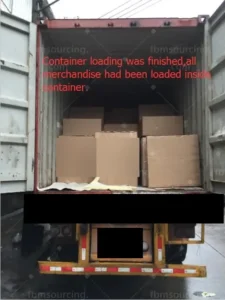
Inspection is carried out by our own team at the factory after bulk production is finished, before shipment, with photo and video records, and the inspection report goes to the client before the balance is paid. On a wet-area package that brief is written around the details above: edges, base, hardware finish and the hidden back panel.
Sometimes, on a large project, the lockers alone fill full containers; sometimes the lockers share containers with the other product categories of the same project; and sometimes, in one batch, we combine a dozen or more product categories from several projects of the same client into a few containers — always full containers, and for us this is routine, well-practised work.
Specifying lockers for a wet changing room?
Send us the room schedule and the changing-area conditions, and we will put the material comparison and the required test evidence in front of the factories before anyone quotes.
Frequently Asked Questions
Are compact laminate lockers always the right answer for a swimming pool?
Not automatically. Compact laminate handles direct water contact on faces and edges well, which is why it is common poolside, but the parts that usually fail in a pool hall are the hardware, the fixings and the support system, all specified separately from the board.
What does a salt spray hour figure prove about a powder-coated steel locker?
On its own, very little: ASTM B117 states in its scope that it does not prescribe the type of test specimen or exposure periods to be used for a specific product, nor the interpretation to be given to the results, so the specification must state the specimen, the exposure period and the acceptance criterion, and the report must show what was assessed at the end.
If a supplier says their lockers meet EN 16121, does that cover wet-area durability?
No. The scope of EN 16121:2023 states that it specifies requirements for safety, strength and durability for non-domestic storage furniture, and also states that it does not include requirements for the resistance to ageing, degradation and flammability; it should still be requested, but the moisture, corrosion and fire evidence has to come from the material standards and the coating specification.
Why does the ASTM E84 suffix letter matter?
Because E84-26 and E84-26a are two different published documents shown with different statuses on the ASTM store, where E84-26a is the one shown as Active at the time of checking; a report citing only “ASTM E84” leaves the reviewer unable to tell which was used.
Can one factory supply all three materials for a mixed school and sports package?
Occasionally, but it is uncommon, because compact laminate fabrication, sheet metal work with a powder coating line, and polymer moulding are three different processes with different equipment; on a mixed package it is usually more realistic to split across specialist factories and consolidate.
About FBM Sourcing
FBM Sourcing manages the entire China procurement package for overseas construction projects. Since 2014 we have worked with developers, general contractors, builders, commercial project owners, interior design and construction companies and FF&E solution providers across more than 20 countries and over 1,000 containers, as their sourcing partner in China — from the schedule or BOQ through factory selection, sampling, inspection by our own team before shipment, consolidation and shipping. All quotations, invoices and shipping documents are issued by FBM Sourcing, and sea freight is quoted to you before shipment. If you have a locker package to price, start at China building materials and FF&E procurement.