
Hotels buy their furniture through five supply routes: brand-approved supplier programmes, local dealers and contract showrooms, FF&E purchasing firms, direct orders placed with overseas factories, and a China-side sourcing partner working from the project’s FF&E schedule. The route is chosen less by taste than by four questions: who controls the specification, who signs the purchase contract, who carries the quality and delivery risk, and who handles the logistics and documents. Most hotel projects use more than one route at the same time.
This guide is written for the companies that place hotel furniture orders: hotel developers and owners, general contractors and builders carrying an FF&E scope, commercial project owners, interior design and construction companies delivering a hotel interior package, and FF&E solution providers buying on an owner’s behalf.
Why Does “Where Do Hotels Buy Their Furniture?” Have Five Answers Instead of One?
Three parties sit around every hotel furniture purchase: the brand sets the standard and approves the design, the owner or developer pays for the furniture and in most franchise structures buys it, and the design team writes the FF&E schedule that turns the standard into item codes, finishes and quantities. The five routes are five ways of dividing that work.
The hotel groups’ own annual reports describe the brand’s role in plain terms. Hilton’s Form 10-K for the 2025 fiscal year (filed February 2026) states: “For newly franchised hotels, including both new construction and conversions of existing hotels outside of our system, we approve the location, as well as the plans for the facilities, to ensure the hotels meet our brand standards.” Hyatt’s Form 10-K for the same year says: “We approve the plans for, and the location of, franchised hotels and review the operation of these hotels to ensure our standards are maintained.” Neither sentence says the brand buys the furniture. The brand approves the plan; the owner buys.
The owner’s side appears in the annual reports of hotel real estate companies. Host Hotels & Resorts’ Form 10-K for the 2025 fiscal year says of capital budgets: “We generally have approval rights over such budgets and expenditures, which we review and approve based on our manager’s recommendations and on our judgment.” The money and the purchase decision sit with the owner, inside a standard the brand controls.
The Four Dimensions That Separate the Routes
- Who controls the specification: whether the item is defined by the brand standard, the designer’s schedule, a dealer’s catalogue or a factory’s own range, and who can approve a substitution.
- Who signs the purchase contract: whose name is on the purchase order, whose quotation, invoice and shipping documents you hold, and therefore who you have recourse against.
- Who carries the quality and delivery risk: who approves samples and the model room, who inspects the finished goods, and who is exposed if the goods arrive wrong or late.
- Who manages the logistics and documents: who books the freight, consolidates the categories, prepares the export documents and deals with the destination side.
Route 1: Brand-Approved Supplier Programmes
Most hotel brands publish design and construction standards for each brand and region and, in practice, maintain lists of approved or pre-qualified suppliers for the items that define the brand experience: the bed, the guestroom casegoods set, the desk chair, the public-area seating. Some brands also run purchasing programmes a hotel can join. Hilton’s 2025 Form 10-K records: “Other revenues primarily includes revenues generated by our purchasing operations for our leased, managed and franchised properties, as well as from properties outside of our system that participate in our purchasing programs.” Choice Hotels’ Form 10-K for the same year states that the company creates “relationships with qualified vendors to: (i) make low-cost products available to our franchisees, (ii) streamline the purchasing process, and (iii) maintain brand standards and consistency.” The filings describe plan approval and purchasing programmes rather than the supplier lists themselves; which items are mandatory on a given project comes from that brand’s own standards manual.
- Specification: the brand. The approved product is often defined to model, finish and fabric, and substitution needs brand sign-off.
- Contract: the owner or franchisee signs with the approved supplier, unless the property joins a brand purchasing programme that places orders on its behalf.
- Risk: product-standard risk is largely settled by the brand’s qualification; delivery risk stays with the owner, who holds the opening date.
- Logistics and documents: depend on where the approved supplier manufactures: a domestic supplier delivers to site, one producing overseas ships in containers and leaves the import documents to its package or the owner’s forwarder.
Route 2: Local Dealers, Contract Showrooms and Distributors
Every hotel market has contract furniture dealers and distributors with a showroom, a local warranty and installation crews. Owners use them for small quantities, replacements after opening, items that must carry a locally issued compliance certificate, and pieces specified from a manufacturer that sells only through dealers.
- Specification: the dealer’s available lines. Where the schedule names a product the dealer carries, the match is exact; otherwise the dealer proposes an equivalent for the designer or brand to approve.
- Contract: the owner, general contractor or FF&E contractor signs with the dealer under local law, in local currency, usually delivered and installed.
- Risk: lowest of the five routes for any single item, because the dealer carries the warranty locally; higher in schedule terms when a large volume is needed from manufacturers producing to order for many clients at once.
- Logistics and documents: domestic delivery only, with no export or import documents and no container planning.
Route 3: FF&E Purchasing Firms
The third route is the hospitality purchasing firm, sometimes called a purchasing agent or procurement company, which takes the designer’s schedule, bids it to manufacturers, places the orders, expedites deliveries and coordinates freight, warehousing and installation. The model is described in our comparison of hospitality procurement companies and in the guide to what each hotel procurement model covers.
- Specification: the designer’s schedule, administered by the firm, which bids the item as specified and brings any alternative back to the designer and brand for approval.
- Contract: in the agency form, purchase orders are issued in the owner’s name and the owner pays the manufacturers; in the principal form, the firm buys and resells. The purchasing agreement says which applies, and so who has recourse against the manufacturer.
- Risk: managed by the firm through expediting, sample tracking and inspection arranged on the owner’s account; in the agency form the commercial risk of a late or non-conforming manufacturer stays with the owner, who gains one administrator for a package that may run to hundreds of line items.
- Logistics and documents: the firm coordinates the forwarder, the consolidation warehouse and the installer; documents are typically issued by manufacturers and forwarders to the owner as importer of record.
Which supply route is your hotel furniture package on?
Send us the FF&E schedule for your hotel project and we will quote the guestroom, public-area and banquet furniture item code by item code, with factory shop drawings for your designer’s review.
Route 4: Ordering Directly From Overseas Factories
The fourth route is the owner, general contractor or FF&E contractor placing orders directly with factories abroad, most often in China for guestroom casegoods, upholstered seating and banquet furniture. Our guide to hotel casegoods manufacturers in China for guestroom projects describes the factory types involved.
- Specification: the project team in theory, the factory’s drawing office in practice: each item is redrawn as a shop drawing in the factory’s own construction method, and approval of that drawing fixes the specification.
- Contract: the project team signs with each factory separately, often several factories in different provinces with their own payment terms, lead times and packing standards.
- Risk: fully with the project team: sample approval, model-room review, inspection before shipment and any defect found on site, across every factory in the package.
- Logistics and documents: also with the project team, which books shipments per factory or arranges its own consolidation and checks the commercial invoices, packing lists and certificates of origin.
Route 5: A China-Side Sourcing Partner
The fifth route is a sourcing partner based in China that receives the FF&E schedule, quotes each item code, manages the factories on the client’s behalf, inspects the finished goods and ships full containers. It differs from Route 4 in where the factory management sits, and from Route 3 in being on the same side of the ocean as the factories. Our article on who to use as a China sourcing agent for hotel FF&E covers when this route fits.
- Specification: the client’s designer and brand, held in the FF&E schedule. The partner quotes against the schedule as issued and sends factory shop drawings, finish samples and, where the project has one, a model-room set for approval. The schedule’s structure is explained in what an FF&E schedule contains: fields, item codes and approvals.
- Contract: the client holds one quotation, one invoice and one set of shipping documents from the sourcing partner for the whole package, rather than a document set from each factory.
- Risk: managed by the partner through sample and model-room confirmation before bulk production and one inspection by its own team at the factory after bulk production is finished, before shipment, with photo and video records.
- Logistics and documents: the partner consolidates the categories into full containers and issues the export documents, with sea freight quoted to the client before shipment. Destination duties and clearance are normally handled by the client or its customs broker, as with any import.
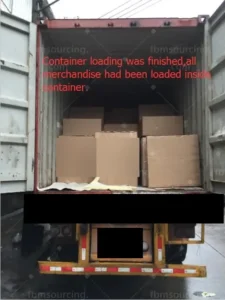
Sometimes, on a large project, the hotel furniture packages alone fill full containers; sometimes the hotel furniture packages share containers with the other product categories of the same project; and sometimes, in one batch, we combine a dozen or more product categories from several projects of the same client into a few containers — always full containers, and for us this is routine, well-practised work.
Side by Side: Who Holds What on Each Route
| Route | Specification | Contract | Quality and delivery risk | Logistics and documents |
|---|---|---|---|---|
| 1. Brand-approved supplier | The brand, via standards and approved products | Owner or franchisee, or a brand purchasing programme | Product risk settled by qualification; delivery risk with owner | Approved supplier or owner’s forwarder |
| 2. Local dealer or showroom | Dealer’s lines, equivalents approved by designer or brand | Owner, general contractor or FF&E contractor, locally | Dealer, via local warranty; schedule risk rises with volume | Dealer, domestic delivery, no import documents |
| 3. FF&E purchasing firm | Designer’s schedule, administered by firm | Owner (agency form) or firm (principal form) | Administered by firm; commercial risk follows contract form | Firm coordinates forwarder, warehouse and installer |
| 4. Direct order with overseas factories | Project team, fixed by each factory’s shop drawings | Project team, separately with each factory | Project team, across every factory | Project team, per factory or own consolidation |
| 5. China-side sourcing partner | Client’s designer and brand, held in the schedule | Client with the sourcing partner, one document set | Sourcing partner, via sample confirmation and one inspection before shipment | Sourcing partner, full containers, sea freight quoted before shipment |
Which Route Fits Which Part of a Hotel Package?
The practical answer is usually a split, decided item group by item group after the brand has approved the design.
- Brand-standard items with a named approved product stay on Route 1; the approved supplier already holds the test reports the brand asked for.
- Small-quantity, locally certified or fast-replacement items go to Route 2: a handful of lobby pieces, items needing a local flammability or electrical certificate, and post-opening replacements.
- A long and varied schedule with no in-house procurement team is the case for Route 3.
- High-volume categories made to drawing, above all guestroom casegoods, upholstered seating, dining and banquet furniture and outdoor furniture, are the natural scope of Route 4 for a team that already manages factories itself, or Route 5 for a team that wants factory management, inspection and container consolidation held by one partner in China.
Who installs also shapes the split. The division between owner-furnished and contractor-furnished items, set out in OFOI, OFCI and CFCI: who supplies and installs FF&E, decides whether furniture arriving in containers needs a receiving warehouse and installer under the owner’s contract or the general contractor’s.
How FBM Sourcing Works on Route 5
FBM Sourcing operates on Route 5 as a sourcing partner based in Guangzhou, one hour from Foshan, for hotel furniture and the building materials that travel with it. We quote against the FF&E schedule as issued, item code by item code, with factory shop drawings attached for the designer’s review. Samples, finish boards and, where the project has one, the model room are confirmed before bulk production starts. When bulk production is finished, our own team inspects the goods at the factory before shipment, with photo and video records, and the inspection report goes to the client. The goods are then consolidated and shipped in full containers, with sea freight quoted to the client before shipment, in a planned sequence against the site’s installation programme.
Which supply route is your hotel furniture package on?
Send us the FF&E schedule for your hotel project and we will quote the guestroom, public-area and banquet furniture item code by item code, with factory shop drawings for your designer’s review.
Frequently Asked Questions
Where do hotels buy their furniture?
Hotels buy furniture through five routes: brand-approved supplier programmes for brand-standard items, local contract dealers and showrooms for small quantities and replacements, FF&E purchasing firms that administer a full schedule, direct orders with overseas factories for high-volume categories, and a China-side sourcing partner that quotes, manages, inspects and ships the package from the FF&E schedule. Most projects combine two or three routes.
Does the hotel brand supply the furniture?
Generally no. The brand approves the plans and sets the standards while the owner or franchisee funds and buys the furniture; Hyatt’s 2025 Form 10-K states that the company depends on “third-party owners or franchisees to comply with these requirements by maintaining and improving properties through investments, including investments in furniture, fixtures, amenities, and personnel.” Some brands run purchasing programmes, but the purchase is still the owner’s.
What is the difference between an FF&E purchasing firm and a China sourcing partner?
A purchasing firm administers the designer’s schedule from the owner’s side of the ocean: it bids items to manufacturers, issues or arranges purchase orders, expedites and coordinates freight and installation. A China-side sourcing partner works from the same schedule on the factory side: it quotes the item codes, manages the factories, confirms samples and the model room, inspects the finished goods before shipment and consolidates full containers, and the client holds one set of documents from the partner.
Can a hotel project use more than one furniture supply route at once?
Yes, and most do. A typical split keeps brand-standard items on the approved supplier programme, sends small or locally certified items to a local dealer, and places the high-volume made-to-drawing categories such as guestroom casegoods, seating and banquet furniture with overseas factories, either directly or through a sourcing partner.
Who pays for hotel furniture, the brand or the owner?
The owner. Hotel real estate companies describe renewal and replacement of furniture as owner capital expenditure funded from FF&E reserves held at each hotel; Host Hotels & Resorts’ 2025 Form 10-K describes such projects as “primarily funded through the FF&E reserves established at each hotel.” The brand approves the plans and enforces the standard; it does not fund the furniture.
About FBM Sourcing
FBM Sourcing manages the entire China procurement package for overseas construction projects. Since 2014 we have worked with developers, general contractors, builders, commercial project owners, interior design and construction companies and FF&E solution providers across more than 20 countries and over 1,000 containers, as their sourcing partner in China — from the schedule or BOQ through factory selection, sampling, inspection by our own team before shipment, consolidation and shipping. All quotations, invoices and shipping documents are issued by FBM Sourcing, and sea freight is quoted to you before shipment. If you have a hotel furniture package to price, start at China building materials and FF&E procurement.