A foam line in a contract seating specification needs four separate things, not one: a density, a hardness, a resilience or fatigue requirement, and the fire performance the destination country demands. Density is measured to ISO 845:2006, hardness to ISO 2439:2008, resilience by ball rebound to ISO 8307:2018 and fatigue by constant-load pounding to ISO 3385:2014, while ISO 5999:2013 is the specification standard for load-bearing polyurethane foam. Naming a property without naming the method and edition is the most common reason two factories quote the same words and deliver two different cushions.
This article is for developers, general contractors, builders, commercial project owners, interior design and construction companies and FF&E solution providers pricing or approving an upholstered seating package made in China, who need the foam line of the specification to be enforceable rather than decorative.
Why Does Density Alone Tell You So Little?
Density is mass per unit volume: not firmness, not comfort, not durability. ISO 845:2006 specifies a method for determining the apparent overall density and the apparent core density of cellular plastics and rubbers, and that distinction matters more than most specifications acknowledge: a moulded foam part carries a denser skin, so measuring the whole part gives the overall density while a cut core sample gives the core density. Two reports on the same cushion can differ for that reason alone.
A soft foam and a firm one can share a density. Write the density with its method reference beside it, state whether it is overall or core, and write the other properties as separate lines. Publicly verifiable minimum density figures for contract seating do not exist in any standard we could source to an original document, so this article publishes none; the number comes from your specifier or from the grade table inside ISO 5999:2013.
Hardness, Resilience and Fatigue: Three Different Questions
Hardness answers how much force it takes to push the foam in. ISO 2439:2008 is the fourth edition, published December 2008, and ISO records it as last reviewed and confirmed in 2026, so it remains current. It specifies four methods, A to D, for indentation hardness, plus method E for compressive deflection coefficient and hysteresis loss rate. Method A determines the 40 %/30 s indentation hardness index, a single measurement for laboratory purposes; Method B determines the 25 %-40 %-65 %/30 s hardness characteristics and gives the shape of the hardness-indentation curve; Method C is a 40 % hardness check suited to quality control; and Method D is a 25 %/20 s low hardness index suited to inspection. All apply only to open-cell latex, urethane and PVC foam.
A hardness value quoted without its method letter is ambiguous, because A, B, C and D do not produce interchangeable numbers. The standard also states that results relate only to the test conditions specified and cannot, in general, be used directly for design purposes — hardness is a control tool, not a comfort guarantee.
Resilience answers how much energy the foam gives back. ISO 8307:2018 specifies a method for determining the resilience by ball rebound of flexible cellular polymeric materials, and is the current edition; ISO 8307:2007 is withdrawn, so a report citing the older reference is worth a question.
Fatigue answers what happens after tens of thousands of sittings, which decides whether contract seating still looks acceptable in year three. ISO 3385:2014 specifies a method for determining loss in thickness and loss in hardness of flexible cellular materials intended for load-bearing applications such as upholstery, and ISO calls it a means of assessing service performance for load-bearing upholstery. ISO 24999:2008 is the companion constant-strain method. ISO 1856:2018 covers compression set with three methods. The fatigue line is the one most often missing and the most predictive of complaints: foam can pass density and hardness on day one and still lose thickness quickly.
Is There a Standard That Sets the Grades, or Only Standards That Measure Them?
Both exist. ISO 5999:2013 is a specification, a third edition published September 2013 and recorded by ISO as confirmed in 2024. It specifies requirements for flexible load-bearing polyurethane foam of the polyether type, applying to foam in block, sheet and strip form, in moulded and fabricated shapes, and as reconstituted material, but excluding carpet backing and underlay; ISO states it primarily relates to the quality of polyurethane foam used for comfort cushioning. It replaced ISO 5999:2007 and the 1982 first edition, both withdrawn, and its grade tables sit inside the purchased standard.
In the United States the reference is ASTM D3574-25, “Standard Test Methods for Flexible Cellular Materials—Slab, Bonded, and Molded Polyurethane Foams”, which ASTM lists as active. ASTM’s own note records that there is no known ISO equivalent to the standard as a whole, although certain methods within it have similar or equivalent ISO standards. The previous designation was D3574-17, so state the edition.
Because the seating is made in China, a third reference matters. The current Chinese national standard for general flexible polyurethane foam is GB/T 10802-2023, a recommended national standard issued on 7 September 2023 and in force from 1 April 2024, listed as current in the national standards information service; it replaced GB/T 10802-2006, listed as abolished. Chinese foam suppliers often quote grades against GB/T 10802 because that is their domestic reference. That is not a problem, but a specification written against ISO or ASTM and a report written against GB/T are two different languages, and the translation must happen before the order is placed.
What Should the Foam Line of the Specification Actually Say?
| Property | What it answers | Named reference to cite |
|---|---|---|
| Density, stated as overall or core | How much polymer is in the cushion | ISO 845:2006 |
| Indentation hardness, with method letter | How firm it is, on which curve | ISO 2439:2008, Method A, B, C or D |
| Resilience by ball rebound | How much energy the foam returns | ISO 8307:2018 |
| Fatigue, as loss in thickness and hardness | How it looks after heavy use | ISO 3385:2014 or ISO 24999:2008 |
| Compression set | Whether it recovers after sustained load | ISO 1856:2018 |
| Foam grade, where one is specified | Which quality class applies | ISO 5999:2013, or ASTM D3574-25 for US test methods |
| Fire performance of the composite | Whether the seat is legal where it lands | TB 117-2013 with 16 CFR 1640 in the US; BS 7176:2007+A1:2011 with BS 5852 or BS EN 1021 for UK non-domestic seating |
Evidence to request, for each foam in the package: a current test report from an accredited laboratory naming the standard and its edition, stating whether density is overall or core and which ISO 2439 method produced the hardness figure; the composite fire test report naming the exact cover and interliner tested, not the foam alone; and, for US-bound seating, confirmation of whether compliance comes from the foam itself or from a barrier construction. For the cover decisions alongside this, see our comparisons of fabric versus vinyl upholstery for commercial seating and contract-grade upholstery fabric for hotel furniture.
Need the foam line of your seating specification made enforceable?
Send us the seating schedule and the destination country, and we will turn the foam requirement into named standards, editions and test reports a Chinese factory can actually quote against.
Which Fire Rules Reach the Foam Itself?
For the United States, 16 CFR part 1640 and its permanent label are covered in our article on the federal SOFFA label and 16 CFR 1640 for contract upholstered seating from China. The part reaching the foam is the Section 3 Resilient Filling Material Test in California Technical Bulletin 117-2013, which that regulation adopts. A mock-up specimen fails if it continues to smolder after the 45 minute test duration, if a vertical char length of more than 1.5 inches (38 mm) develops on the cover fabric, or if it transitions to open flaming. The design-relevant clause is the route the bulletin writes in itself: resilient fillings that fail the Section 3 test can be used in upholstered furniture if a barrier, or interliner, material that passes Section 2 is used between the cover fabric and the filling materials, and where a barrier is required it must cover all sides and top of the seating cushion or cushions. That is why much US-market contract seating uses ordinary foam plus a compliant barrier, and why the first question is which construction the factory proposes, not whether the foam passes.
In the United Kingdom the picture differs in a way that catches project teams out. The Furniture and Furnishings (Fire) (Safety) Regulations 1988 define furniture as furniture of any description ordinarily intended for private use in a dwelling, plus outdoor furniture also suitable for use in a dwelling and component collections for either. Those Regulations carry the foam ignitability tests: Schedule 1 Part I covers polyurethane foam in slab or cushion form, tested to BS 5852: Part 2 with an ignition source 5 crib, and Parts II and III cover crumb and latex rubber foam with ignition source 2. Schedule 7 carries the permanent label, which begins with the words “CARELESSNESS CAUSES FIRE” and requires a description of all the filling and covering materials in the article.
For seating not ordinarily intended for private use in a dwelling, the reference is BS 7176:2007+A1:2011, which BSI lists as current. Its scope specifies requirements for the resistance to ignition of upholstered furniture used for seating when tested to BS 5852, BS EN 1021-1 or BS EN 1021-2 as appropriate, states the ignition resistance levels were set after careful consideration of the fire risk of the particular end-use environment, and confirms that seating for domestic use and transport is not covered. The mapping of hazard categories to particular premises sits in the notes to Table 1 inside the purchased standard, so the category for your building comes from the standard or your fire engineer, not from a factory’s summary.
One edition trap is worth recording. BS 5852:2006 is the current BSI publication and replaced BS 5852:1990, now withdrawn, yet BS 5852-1:1979 and BS 5852-2:1982 are both still listed by BSI as current, because the 1988 Regulations direct that references to those parts are construed as they had effect on 30 November 1979 and 31 August 1982 respectively. A report citing “BS 5852 Part 2” is therefore not automatically obsolete. Separately, the Furniture and Furnishings (Fire) (Safety) (Amendment) Regulations 2025 removed the display-label requirement by omitting regulation 10 and Schedules 6 and 8, while the permanent label in Schedule 7 remains.
BS EN 1021-1:2014 and BS EN 1021-2:2014 cover the smouldering cigarette and small flame ignition sources respectively, and both are current. Both carry the caution most often ignored when a factory sends a certificate: the test measures only the ignitability of a combination of materials used in upholstered seating, and not the ignitability of a particular finished item of furniture incorporating these materials. A pass belongs to a composite — a specific foam with a specific cover and, where used, a specific interliner — so change the cover and the pass does not travel with it.
How Does This Work on a Package Made in China?
Chinese upholstered furniture factories do not usually pour their own foam. They buy it, cut it and build it, so your foam line has to survive being passed down one more level: named standards with editions, the method letter where one exists, whether the fire requirement is met by the foam or by a barrier, and which composite the fire report must cover. As your sourcing partner in China, FBM Sourcing does that translation and asks the factory for the matching reports from an accredited laboratory before the order is confirmed. Inspection is a single event: our own team inspects at the factory after bulk production is finished and before shipment, with photo and video records, and an inspection report goes to the client before the balance is paid. For seating, it covers what can only be checked on the finished piece: permanent label content, the presence of the interliner where the fire strategy depends on one, and consistency of cushion firmness across the run.
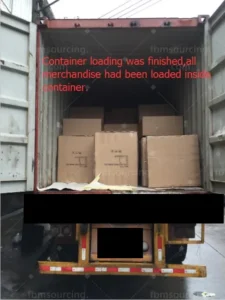
On volume and shipping the pattern is straightforward. Sometimes, on a large project, the upholstered seating pieces alone fill full containers; sometimes the upholstered seating pieces share containers with the other product categories of the same project; and sometimes, in one batch, we combine a dozen or more product categories from several projects of the same client into a few containers — always full containers, and for us this is routine, well-practised work.
Construction changes the question again for restaurant booth and banquette seating manufacturers in China, where foam is cut to a joinery frame rather than a cushion pattern. The factory types that build contract upholstery are set out in commercial upholstered furniture manufacturers in China for hospitality projects.
Need the foam line of your seating specification made enforceable?
Send us the seating schedule and the destination country, and we will turn the foam requirement into named standards, editions and test reports a Chinese factory can actually quote against.
Frequently Asked Questions
Does a higher foam density always mean a longer-lasting seat?
Not by itself. Density, measured to ISO 845:2006, describes how much polymer is present, while behaviour under repeated use is measured separately as fatigue under ISO 3385:2014 or ISO 24999:2008 and as compression set under ISO 1856:2018. A density figure with no fatigue requirement leaves the durability question unanswered.
What does ISO 2439:2008 Method A actually give me?
ISO describes Method A as the determination of the 40 %/30 s indentation hardness index, a single indentation measurement for laboratory test purposes. B gives the 25 %-40 %-65 %/30 s hardness characteristics and the shape of the curve, C is a 40 % check suited to quality control, and D a 25 %/20 s low hardness index suited to inspection. Because they are not interchangeable, the method letter must appear alongside the value.
If the foam fails the US smolder test, is the seating out of the project?
No. California TB 117-2013 states in Section 3 that resilient filling materials which fail that test can be used in upholstered furniture if a barrier or interliner material passing Section 2 is used between the cover fabric and the filling materials, and that where a barrier is required it must cover all sides and top of the seating cushion or cushions. The compliant answer may therefore be a barrier construction rather than a different foam.
Do the UK furniture fire regulations cover hotel and restaurant seating?
The Furniture and Furnishings (Fire) (Safety) Regulations 1988 define furniture as furniture of any description ordinarily intended for private use in a dwelling, plus outdoor furniture also suitable for use in a dwelling and component collections for either. For seating outside that definition, BSI publishes BS 7176:2007+A1:2011, which sets ignition resistance levels tested to BS 5852, BS EN 1021-1 or BS EN 1021-2; the hazard category for your building comes from Table 1 of that standard or from your fire engineer.
Why do Chinese factories quote foam grades we do not recognise?
Because their domestic reference is usually GB/T 10802-2023, the current Chinese national standard for general flexible polyurethane foam, issued on 7 September 2023 and in force from 1 April 2024, replacing GB/T 10802-2006. A grade quoted against GB/T is not a lower grade, it is a different naming system; the fix is to put ISO or ASTM method references into the purchase specification.
About FBM Sourcing
FBM Sourcing manages the entire China procurement package for overseas construction projects. Since 2014 we have worked with developers, general contractors, builders, commercial project owners, interior design and construction companies and FF&E solution providers across more than 20 countries and over 1,000 containers, as their sourcing partner in China — from the schedule or BOQ through factory selection, sampling, inspection by our own team before shipment, consolidation and shipping. All quotations, invoices and shipping documents are issued by FBM Sourcing, and sea freight is quoted to you before shipment. If you have an upholstered seating package to price, start at China building materials and FF&E procurement.