Cyclone rated windows for northern Australia are windows and glazed doors designed, tested and installed for a cyclonic wind class — C1, C2, C3 or C4 — rather than the N1 to N6 classes used in non-cyclonic regions. The wind region comes from the map, but the wind class belongs to the individual site, so the same window can be adequate on one lot and wrong on the next. A C-class window is not simply a stronger N-class window: cyclonic design assumes higher internal pressures, windborne debris and repeated gust loading, and the evidence has to say so.
This guide is for developers, general contractors, builders and commercial project owners pricing an aluminium window and door package from China for a site in Queensland, the Northern Territory or northern Western Australia. It does not reproduce values from AS/NZS 1170.2, AS 4055 or AS 2047, which are paid standards; the project’s structural engineer and those standards remain the authority on them.
Where Is Region C, and Who Decides a Site’s Wind Class?
Wind regions are defined in AS/NZS 1170.2 and mapped in the ABCB Housing Provisions (Figure 2.2.3). Public sources describe the cyclonic belt:
- Queensland: the Queensland Reconstruction Authority’s Cyclone Resilient Building Guidance for Queensland Homes (December 2019) states that coastal areas north of Bundaberg are classified as Wind Region C, and that cyclones are strongest in Central and North Queensland within 50 kilometres of the coastline.
- Northern Territory: the Department of Infrastructure, Planning and Logistics titles its structural requirements for cyclonic Region C as covering areas up to 50 km from the coastline.
- Western Australia: Building and Energy Industry Bulletin 147 (November 2022) explains the WA variations for wind Regions B and D, including Region D north of the Tropic of Capricorn.
The QRA guidance states that homes in Region C designed using AS 4055 are classed C1, C2, C3 or C4 depending on local features: proximity to large bodies of water or open country, whether the site is on a hill, and whether it is surrounded by other buildings. The WA version of the AS 4055 site classification table, published in the NCC, shows Region C sites ranging from C1 to C4 with terrain category, shielding, topography and distance from the coast.
AS 4055 is a housing tool, limited to buildings within the geometric limits of its clause 1.2. For apartments, hotels and commercial buildings under NCC Volume One, clause B1D3 determines wind actions through AS/NZS 1170.2, and the engineer works out design wind pressures rather than a single C class. Either way, the class or the pressures are set by the design team and shown on the drawings.
What Do C1, C2, C3 and C4 Mean in Practice?
The QRA guidance links each cyclonic class to a design site wind speed. The figures below are as the guidance tabulates them:
| Wind classification | Design site wind speed (Vh), m/s | Design site wind speed (Vh), km/h | Exposure described in the guidance |
|---|---|---|---|
| C1 | 50 | 180 | Less exposed sites |
| C2 | 61 | 220 | Less exposed sites |
| C3 | 74 | 267 | More exposed (open) sites |
| C4 | 86 | 310 | More exposed (open) sites |
The same guidance states that homes in Region C are designed to resist a cyclone with winds of 250 kilometres per hour, which the Bureau of Meteorology classifies as a mid-category four. Two cautions: the table is from 2019 guidance, while NCC 2022 references the 2021 editions of AS/NZS 1170.2 and AS 4055, so the edition in force governs; and a wind speed is not a window rating, which comes from the window’s own test report.
The Housing Provisions glossary defines a “high wind area” as a region subject to a design wind speed of more than N3 or C1, so every C2, C3 or C4 site is a high wind area.
Why Is a C-Class Window Not Just a Stronger N-Class Window?
The 2025 Housing Provisions glossary sets the classes in parallel columns, with N1 to N3 beside C1 and N4 to N6 beside C2 to C4. That is not an equivalence:
- Internal pressure. A 2011 university post-event engineering report on Tropical Cyclone Yasi notes that N3 and C1 share the same design velocity, “but the internal pressure used in C1 should be significantly more than that in N3.”
- Openings are assumed. AS/NZS 1170.2 clause 5.3.2, as reproduced in the NCC’s Western Australian variation, states that for ultimate limit states below 25 m in Regions B2, C and D, normally closed doors and windows are regarded as openings, with an area equal to the greater of the full element, where it has not been demonstrated to resist the applied wind pressures, or the opening that results from debris impact.
- Repeated loading. Technical Report 57 describes the intent of AS/NZS 1170.2 that cladding systems which may deteriorate under load and unload cycles should be tested under simulated cyclonic loading.
- WA experience. Industry Bulletin 147 explains that after Tropical Cyclone Seroja the main cause of severe structural damage was a combination of large roof suction and a rapid increase in internal pressure, and that WA now requires the cyclonic (C) classification instead of the non-cyclonic (N) classification in wind Region B, including Region B2.
For procurement the consequence is simple: a test report or certificate stating an N rating is not evidence for a C-class site, even where the numbers look similar.
What Does the NCC Say About Windows and Doors in Cyclonic Areas?
The clauses below were read in the NCC 2025 text on the ABCB’s NCC Online. Queensland and the Northern Territory had not adopted NCC 2025 at the time of writing, so confirm the edition in force; see NCC 2025 adoption dates by state. The NCC 2022 wording of H1D8 is the same.
Houses and Class 10 buildings (Volume Two)
- H1D8(1) requires windows, framed sliding and swinging glazed doors, adjustable louvres and window walls with one-piece framing in an external wall to be designed and constructed in accordance with AS 2047.
- Installation must comply with AS 2047, and with Part 8.2 of the Housing Provisions only where the building is within the AS 4055 geometric limits and in a wind class of not more than N3. No cyclonic class meets that condition.
- The glass-thickness tables in Housing Provisions Part 8.3 are published for wind classes not exceeding N1, N2 and N3; the explanatory note refers glazing in high wind areas to Part 2.2.
- Housing Provisions 2.2.4 requires garage doors and other large access doors in openings not more than 3 m high, in wind regions B2, C or D, to comply with AS/NZS 4505.
Apartments, hotels and commercial buildings (Volume One)
- B1D4 requires windows, framed glazed doors, adjustable louvres, shopfronts and window walls with one-piece framing in an external wall to comply with AS 2047; frameless doors and one-off site-built windows not design tested to AS 2047 fall to AS 1288.
- B1D4 also applies AS/NZS 4505 to garage doors and large access doors in openings not more than 3 m high in wind region C or D.
The edition matters
The 2022 Housing Provisions glossary treated Regions C and D as cyclonic; NCC 2025 reads Regions B2, C and D, and Western Australia had already varied NCC 2022 to treat Region B as cyclonic.
Pricing a window and door package for a cyclonic site?
Send us the window schedule and the site wind classification from the drawings, and we will source factories whose test evidence matches that class.
How Should Windborne Debris Be Handled in the Package?
Technical Report 57 recorded window glass broken by roof-tile impact, and also glass that failed under pressure alone, including behind undamaged security screens. The drawings should say which protection applies to each opening:
- Debris-rated glazing assemblies, where the window or door itself carries the debris test evidence.
- Debris screens, which the QRA guidance describes as open, grid-like elements that lessen the chance of glass breaking but do not prevent wind-driven rain. The guidance stresses that debris screens differ from sun screens and security screens, and that effective ones are rated by testing.
- Shutters, described in the same guidance as solid plates that absorb some debris energy and reduce the water reaching the opening.
Some owners write stricter criteria into their own specifications. The Northern Territory Department of Infrastructure, Planning and Logistics specification for Importance Level 4 buildings in cyclonic Region C (Doc ID 3.19, version 2024.03, 20 February 2024) states that “evidence of debris testing for compliance is required” for external doors, windows, louvres, dampers and roller shutters. Its horizontal debris criterion is a 100 mm by 50 mm piece of timber of 4 kg impacting end-on at 0.4 times V10,000, tabulated as 29 m/s, and it requires no uncontrolled water penetration when tested to AS 2047 at 630 Pa. Those figures belong to that owner’s IL4 buildings, not to every project, but they show why a debris test report should name the standard and edition it was carried out to.
Water, Hardware and Corrosion: What a Rating Label Does Not Show
Technical Report 57 found that buildings designed and built to the requirements introduced in the 1980s performed well under wind load, with the exceptions of roller doors, tiled roofs and water entry, and concluded that with current design requirements water ingress through the building envelope is inevitable at wind speeds near the ultimate limit state. It also noted that, under the window rating scheme in use at the time, water resistance was tested at serviceability pressure differentials rather than at cyclonic ultimate limit state winds.
- Water resistance is chosen, not assumed. The QRA guidance recommends considering the water penetration performance of different windows with the required wind rating, including seals and the type and configuration of weep holes.
- Hardware is structural. Technical Report 57 records latches, bolts and hinges failing so that closed doors and windows became openings, and says these items “are crucial to the satisfactory performance of the building envelope.” The QRA guidance adds that standard entrance door locks may not withstand cyclonic loads, particularly on double doors, and that bolts into the floor and door head may be required.
- Anchorage is part of the window. The same report shows window frames lost because their connection to the building frame was inadequate. Fixing details must match what the engineer approves.
- Coastal exposure changes the materials. The QRA guidance recommends components and connections with higher corrosion resistance close to seawater, so finish, hardware and fastener materials should be specified for the exposure rather than left to a factory’s standard range.
In the Technical Report 57 street surveys, fewer than 3% of post-1980s houses sustained significant roof damage, compared with 6% of sectional doors and 29% of roller doors damaged.
What Should a Window Schedule for a Cyclonic Site Contain?
The QRA guidance puts it directly: when ordering doors or windows, it is necessary to indicate the wind classification and whether the window or door will be close to a corner of the building, because wind pressures are higher near corners. Before a package goes out for pricing, the schedule should carry:
- The site wind classification, or the engineer’s design pressures by elevation, level and corner zone.
- The debris strategy for each opening, with the test standard and edition the evidence must reference.
- Water resistance requirements and sill and drainage details.
- Hardware: locking points, bolts on double doors, hinge type and material.
- Frame finish and hardware material for the coastal exposure.
- Glass make-up per opening, with safety glazing locations.
- Installation and fixing details approved by the engineer.
- Large access doors listed separately against AS/NZS 4505.
Our guide on turning a window and door schedule into an order sheet covers the format, and AS 2047 testing and certification for windows from China explains how test reports and certificates differ.
How FBM Sourcing Handles Cyclone-Rated Window and Door Packages
The first question we ask on any northern Australian window package is the site wind classification shown on the drawings, before any conversation about certificates. A certificate is only useful if it matches the class, window type and size range on the schedule.
Once it is, FBM Sourcing asks each shortlisted factory for the test report or certificate that corresponds to that classification for the window and door types on the schedule. Factories with established ranges for Australia are a starting point; see our aluminium window and door manufacturers in China for Australian projects. The client, with the project’s engineer and certifier, makes the compliance decision; our role as sourcing partner is to put the right evidence in front of them.
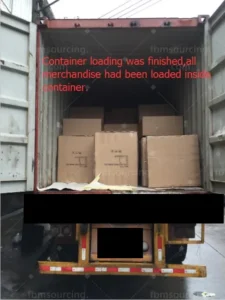
Before shipment, the order is inspected by our own team at the factory, with photo and video records, and an inspection report goes to the client before the balance is paid. Sometimes, on a large project, the windows and doors alone fill full containers; sometimes the windows and doors share containers with the other product categories of the same project; and sometimes, in one batch, we combine a dozen or more product categories from several projects of the same client into a few containers — always full containers, and for us this is routine, well-practised work.
Is Region C the Same as a US Hurricane Zone?
No. Australian cyclonic classification runs through AS/NZS 1170.2, AS 4055, AS 2047 and the NCC. A report written to a US protocol states a US rating, not an Australian cyclonic classification. Our article on impact-rated hurricane windows from China covers the US system; the two should not be mixed on one schedule.
Pricing a window and door package for a cyclonic site?
Send us the window schedule and the site wind classification from the drawings, and we will source factories whose test evidence matches that class.
Frequently Asked Questions
What are cyclone rated windows in Australia?
They are windows and framed glazed doors made to AS 2047 and rated for a cyclonic wind class (C1 to C4) or the engineer’s cyclonic design pressures, with evidence that states the cyclonic rating for the types and sizes used.
Is a C1 window the same as an N3 window?
No. The same 2011 post-Yasi engineering report notes that N3 and C1 share the same design velocity but that the internal pressure used for C1 should be significantly higher, so an N3 rating is not evidence for a C1 site.
Who decides whether a site is C1, C2, C3 or C4?
The design team, usually the structural engineer, classifies the site and records the class or the design pressures on the drawings; the factory works to that figure.
Do windows in Region C have to resist windborne debris?
The design has to account for debris, because the AS/NZS 1170.2 openings clause, as reproduced in the NCC’s WA variation, can treat windows below 25 m as openings; the drawings should state whether each opening relies on a debris-rated assembly, a screen or a shutter.
Does the Housing Provisions installation Part cover cyclonic sites?
No. NCC H1D8 allows installation to Part 8.2 of the Housing Provisions only within the AS 4055 geometric limits and in wind classes of not more than N3, so on a cyclonic site the installation has to comply with AS 2047 without that fallback.
About FBM Sourcing
FBM Sourcing manages the entire China procurement package for overseas construction projects. Since 2014 we have worked with developers, general contractors, builders, commercial project owners, interior design and construction companies and FF&E solution providers across more than 20 countries and over 1,000 containers, as their sourcing partner in China — from the schedule or BOQ through factory selection, sampling, inspection by our own team before shipment, consolidation and shipping. All quotations, invoices and shipping documents are issued by FBM Sourcing, and sea freight is quoted to you before shipment. If you have a window and door package to price, start at China building materials and FF&E procurement.