The gypsum board manufacturers in China that matter for commercial projects fall into three groups: large gypsum board groups that also roll-form steel framing, light steel framing specialists, and processors that turn plain board into perforated acoustic and decorative panels. The only listed company named here is Beijing New Building Materials (BNBM, Shenzhen Stock Exchange 000786), which reports the largest share of China’s domestic gypsum board market. Whichever type you buy from, the result on site depends on buying board, framing and jointing materials as one tested system to the destination market’s standards.
This guide is written for developers, general contractors, builders, commercial project owners, interior design and construction companies and FF&E solution providers carrying partition, lining and ceiling scope on hotels, offices, schools, healthcare and multi-residential buildings. It skips ceiling styles and stud gauges and concentrates on buying the drywall system as a package.
What Is Included in a Gypsum Board and Drywall System Package?
On a drawing, a partition or a plasterboard ceiling is one wall type or ceiling type. In procurement it is four product families, often from different plants, that only perform as designed when they match the system that was tested:
- Gypsum boards by function: regular, moisture-resistant, fire-resistant, controlled-density or high-strength, hard-surface, and perforated acoustic board made by reprocessing plain board.
- Light steel framing: studs and tracks for partitions; furring channels, carriers, hangers and connectors for ceilings; edge and corner profiles.
- Jointing materials: jointing compounds and paper or glass-mesh tape, including the specific compound named in fire test evidence.
- Fixings and accessories: drywall screws, access panels, sealants, insulation infill and acoustic backing for perforated boards.
Pricing these lines separately and assembling the cheapest combination is how a wall ends up matching no tested design. That thread runs through everything below.
How This List Is Organised
We name only companies whose stock exchange listing and code we have checked and that remain listed, and we describe their role from their own published annual report. Every other entry is a manufacturer type, with the industry facts that shape it and the evidence to request from any plant of that type. There is no scoring and no ranking; the order follows a drywall package from board to framing to finishing.
Gypsum Board and Drywall System Manufacturers in China, by Type
Beijing New Building Materials Public Limited Company (BNBM)
- Listing: Shenzhen Stock Exchange, stock code 000786. Its controlling shareholder is China National Building Material Company Limited.
- Role in the category: a gypsum board group whose 2025 annual report states it ranks first by market share in China’s domestic gypsum board industry, with board brands including Longpai (Dragon), Taishan and Mengpai.
- Scale disclosed: effective gypsum board capacity of 3.663 billion square metres and light steel framing capacity of 491,300 tonnes, alongside separate waterproofing and coatings businesses.
- System relevance: the report describes supply of full product series and application solutions around its boards, highlights the light steel framing and gypsum board system for sound insulation, and lists production bases in Tanzania, Uzbekistan and Thailand.
- Evidence to request: destination-standard test evidence for the exact board grades and thicknesses ordered, the producing plant for each grade, and fire resistance test and classification reports for the complete wall or ceiling system to be built.
Regional gypsum board producers
- What they make: paper-faced gypsum board in regular, moisture-resistant and fire-resistant grades, often with laminated ceiling tiles as a second line.
- Industry facts: BNBM’s annual report explains that industrial by-product gypsum is now the main raw material for board, so plants cluster near large coal-fired power stations that generate it and close to the markets they serve, with a reasonable transport radius of about 300 to 500 kilometres. Citing the gypsum building materials branch of the China Building Materials Federation, the same report puts national paper-faced gypsum board capacity at about 6.05 billion square metres at the end of 2025, against sales of about 3.07 billion, and describes three tiers of producer: large companies with internationally comparable equipment, mid-range medium-sized plants and small low-end plants.
- What this means for a buyer: capacity is rarely the constraint. Grade consistency across batches, and evidence to your destination standard rather than only to China’s national standard, are.
- Evidence to request: test reports to EN 520, ASTM C1396/C1396M or AS/NZS 2588 for each grade and thickness, board marking and batch identification on samples, and water absorption results for moisture-resistant grades.
Light steel framing roll-forming specialists
- What they make: studs, tracks, furring channels, carriers, hangers and connectors roll-formed from galvanised coil.
- Industry facts: China’s domestic product standard for steel furring for buildings is GB/T 11981-2024, which replaced the 2008 edition in May 2025. Export profiles have to follow the destination standard or the sections named in the tested system, so a domestic catalogue section should never be assumed to fit.
- Evidence to request: section drawings with base-metal thickness and coating designation, coil mill certificates, evidence to EN 14195 or ASTM C645 as applicable, and confirmation that sections match those described in the fire and acoustic test reports.
Perforated acoustic and decorative board processors
- What they make: perforated and slotted acoustic gypsum panels with acoustic backing, laminated ceiling tiles, and edge-profiled or printed boards made from plain board.
- Industry facts: in European standards this is reprocessing, covered by EN 14190:2014, whose scope includes cutting, perforating, edge profiling, decorating and laminating boards. China’s industry standard for perforated gypsum board for sound absorption is JC/T 803-2007.
- Evidence to request: sound absorption test reports for the exact perforation pattern, backing and plenum depth ordered, the source board’s own test evidence, and reaction-to-fire evidence for the finished laminated or backed product rather than the plain board.
Jointing compound, tape and accessory producers
- What they make: jointing compounds, paper and glass-mesh tapes, corner beads and drywall screws.
- Industry facts: these are low-value lines on a drywall order, which is exactly why they get substituted. In Europe jointing compounds and paper tapes are covered by EN 13963:2014; in the United States joint compounds, paper tape and glass-mesh tape are covered by ASTM C475/C475M-17(2022).
- Evidence to request: test evidence to the destination standard, the compound named in any fire test report, and storage conditions and shelf life for the voyage.
Pricing a gypsum board and drywall system package from China?
Send your wall and ceiling types, fire and acoustic requirements and destination market, and our team will match board, framing and jointing materials to one documented system.
Which Product Standards Apply in Each Destination Market?
A plant can make one board to several standards; the evidence must name the one your project uses. The current editions we checked:
| System part | European and UK projects | United States projects | Australia and New Zealand projects | China domestic reference |
|---|---|---|---|---|
| Gypsum board | EN 520:2004+A1:2009 | ASTM C1396/C1396M-24 | AS/NZS 2588:2018 | GB/T 9775-2025 |
| Reprocessed board (perforated, laminated) | EN 14190:2014 | Test evidence for the finished product | Test evidence for the finished product | JC/T 803-2007 (perforated acoustic board) |
| Steel framing | EN 14195:2014 | ASTM C645-24 | Sections named in the tested system | GB/T 11981-2024 |
| Jointing materials | EN 13963:2014 | ASTM C475/C475M-17(2022) | Products named in the tested system; application and finishing to AS/NZS 2589:2017 | Not covered here |
| Fire resistance of the element | Walls tested to EN 1364-1:2015, classified to EN 13501-2:2023 | Assemblies tested to ASTM E119-24 | Elements tested to AS 1530.4:2014 | Not covered here |
Three notes belong in the purchase order. EN 520 and EN 14190 are harmonised European standards, so boards for EU projects need declarations against them, while UK projects need the equivalent evidence under the UK regime; our comparison of UKCA and CE marking for building materials covers that split. GB/T 9775-2025 took effect on 1 January 2026 and describes domestic quality, but a report to it does not demonstrate compliance with EN 520, ASTM C1396/C1396M or AS/NZS 2588. For Australian projects, compliance is assessed under the National Construction Code, set out in our guide to NCC and BCA compliance for building materials from China.
Why Is a Fire Rating a System Result, Not a Board Property?
Board standards classify the board: EN 520 defines Type F as gypsum plasterboard with improved core adhesion at high temperature. That is a board characteristic. A 60-minute wall is something else: a result earned by building a complete specimen of framing, board layers, fixings, joints and any insulation, and exposing it in a furnace.
- Europe and the UK: non-loadbearing walls are tested to EN 1364-1:2015 and classified under EN 13501-2:2023, for example as EI 60, where E is integrity and I is insulation. The classification report names the specimen that earned it.
- United States: walls and partitions are tested as assemblies to ASTM E119-24, and the rating applies to the assembly design as tested.
- Australia and New Zealand: AS 1530.4:2014 gives a fire resistance level in minutes for structural adequacy, integrity and insulation of the element of construction tested.
Three substitutions quietly take a wall outside its evidence: a lighter or differently shaped stud than the specimen, a board of the same nominal grade from a different plant or formulation, and jointing compound or screws other than those described in the report. The working rule is to start from the fire test or classification report, list every component in the specimen description, and buy to that list; where one supplier cannot provide every item, substitutes need written confirmation from the report holder or the project’s fire engineer. Our overview of fire rating standards for building materials and finishes explains how reaction to fire differs from fire resistance.
Matching Board Grades to Rooms
| Board function | EN 520 designation | ASTM C1396/C1396M product | Typical commercial locations |
|---|---|---|---|
| Regular | Type A | Gypsum wallboard | Dry partitions and linings in offices, guest rooms and corridors |
| Moisture-resistant | Type H1, H2 or H3 (reduced water absorption) | Water-resistant gypsum board, primarily a base for tile | Tiled bathroom and kitchen walls, back-of-house wet zones |
| Fire-resistant | Type F (improved core adhesion at high temperature) | Confirm the fire-resistant designation named in the tested assembly | Rated partitions, shafts, corridor walls, rated ceilings |
| Density, strength, hardness or ceiling span | Type D (controlled density), Type R (enhanced strength), Type I (enhanced surface hardness) | Gypsum ceiling board, for framing not more than 610 mm on centre | School and healthcare corridors, high-traffic walls, ceilings |
| Perforated acoustic | Reprocessed product under EN 14190 | Test evidence for the finished product | Meeting rooms, restaurants, classrooms, lobbies |
One EN 520 board can meet several types at once, so order by the full type designation, not by facing colour alone.
How Do You Keep Gypsum Board Dry and Unbroken Between Factory and Site?
Gypsum board is heavy for its value and is damaged by the two things a sea voyage supplies: moisture and edge impact. Moisture-resistant grades reduce water absorption; they do not make a wet pallet usable. The controls that work are written into the packing specification:
- Pallets: board supported along its full length, protectors on edges and corners, and top boards to spread strapping pressure.
- Wrapping: complete wrap over top and sides, with the base protected from floor condensation.
- Identification: a label on every pallet with grade, thickness, edge type and the wall or ceiling type it serves, so moisture-resistant and fire-resistant boards never mix with regular board on site.
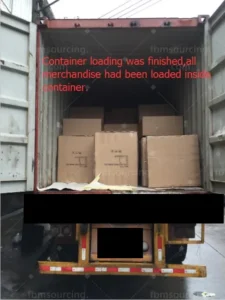
- Loading: containers planned to payload weight rather than volume, board loaded flat, framing bundles and compound cartons kept off the board, and desiccants for humid routes. Our guide to 40ft container loading limits by volume and weight covers the weight side.
Sometimes, on a large project, the drywall system components alone fill full containers; sometimes the drywall system components share containers with the other product categories of the same project; and sometimes, in one batch, we combine a dozen or more product categories from several projects of the same client into a few containers — always full containers, and for us this is routine, well-practised work. How dense board and lighter categories share a load is explained in consolidating goods from multiple factories into one container.
Evidence to Request Before Ordering a Drywall System
These product documents tie what arrives to the drawings and the fire, acoustic and moisture requirements.
- Board test evidence to the destination standard for each grade and thickness, identifying the producing plant.
- Fire resistance test and classification reports for each rated wall and ceiling type, with the full specimen description: framing sections and spacing, board grade and layers, screw type and spacing, joint treatment and insulation.
- Framing documents: section drawings, base-metal thickness, coating designation and coil mill certificates.
- Jointing material data to EN 13963 or ASTM C475/C475M, including the compound named in any fire report.
- Acoustic evidence: sound insulation reports for partition build-ups and sound absorption reports for perforated panels in the pattern and backing ordered.
- Packing specification and loading plan agreed before the order is released.
As a sourcing partner, FBM Sourcing collects this evidence against the wall and ceiling types, matches board, framing and jointing materials to the tested systems, and carries out inspection by our own team at the factory before shipment, with photo and video records. The sampling logic is explained in pre-shipment inspection and AQL sampling.
Pricing a gypsum board and drywall system package from China?
Send your wall and ceiling types, fire and acoustic requirements and destination market, and our team will match board, framing and jointing materials to one documented system.
Frequently Asked Questions
Can gypsum board and steel studs from different Chinese factories be used in one fire-rated wall?
Only if the combination still matches the fire test or classification report for that wall. The rating belongs to the tested assembly, so board grade, stud section, screws and joint treatment must correspond to the specimen description, or the substitution needs written confirmation from the report holder or the project’s fire engineer.
Which standard should a Chinese gypsum board factory produce to for a European project?
Plain board should carry evidence to EN 520:2004+A1:2009, perforated or laminated board to EN 14190:2014, steel framing to EN 14195:2014 and jointing materials to EN 13963:2014, with fire resistance of the finished wall classified under EN 13501-2:2023.
Which gypsum board standards apply to projects in Australia and New Zealand?
The product standard is AS/NZS 2588:2018 for gypsum plasterboard, with AS/NZS 2589:2017 covering application and finishing, and fire resistance levels for walls and ceilings come from testing the element of construction to AS 1530.4:2014.
Does a Chinese GB/T 9775 test report prove compliance for an export project?
No. GB/T 9775-2025, in force since 1 January 2026, is China’s national standard for gypsum plasterboard and a useful indication of domestic quality, but export projects need evidence to the standard named in their own specification, such as EN 520, ASTM C1396/C1396M or AS/NZS 2588.
How is gypsum board protected against moisture during sea freight?
Through the packing specification: full-length pallet support, edge protectors, complete wrapping including the pallet base, desiccants in the container and loading that keeps framing and cartons off the board. Packing is then checked at the pre-shipment inspection.
About FBM Sourcing
FBM Sourcing manages the entire China procurement package for overseas construction projects. Since 2014 we have worked with developers, general contractors, builders, commercial project owners, interior design and construction companies and FF&E solution providers across more than 20 countries and over 1,000 containers, as their sourcing partner in China — from the schedule or BOQ through factory selection, sampling, inspection by our own team before shipment, consolidation and shipping. All quotations, invoices and shipping documents are issued by FBM Sourcing, and sea freight is quoted to you before shipment. If you have a gypsum board and drywall system package to price, start at China building materials and FF&E procurement.