Top LED Mirror & Hotel Bathroom Mirror Manufacturers in China (2026)
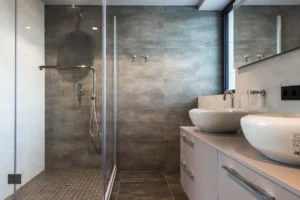
A hotel bathroom mirror is three products pretending to be one. There is the silvered glass itself, which is made by a handful of large float-glass companies and is the only part of the package with genuinely listed, verifiable manufacturers. There is the mirror fabrication — cutting, edging, bevelling, safety backing, demister pads, sandblasted or printed borders — done by private glass processors, mostly in Guangdong and Zhejiang. And there is the electrical assembly: the LED module, driver, touch sensor, dimming circuit and sometimes a Bluetooth speaker or a mirror TV, which turns the mirror into a light fitting and puts it under the destination country’s electrical rules. Projects that buy a mirror and receive a luminaire are the ones that get stopped on site.
This guide is written for developers, project owners, main contractors, interior design and construction companies and FF&E contractors delivering hotel, apartment, student accommodation, office and healthcare projects. It sets out the manufacturer types behind an LED and bathroom mirror package, the certification and test evidence each type has to produce, and why the mirror schedule — not the mirror drawing — decides whether the order works.
Why the Mirror Schedule Decides the Package
Mirrors are ordered late, priced by the piece and installed by whoever is on site that week. That combination is why mirror packages generate more snags per dollar than almost any other FF&E line.
A workable mirror schedule lists, for every mirror position: the room type and quantity, the finished size and shape, the glass thickness, the edge treatment, whether the mirror is illuminated and by what — front-lit, back-lit, edge-lit or perimeter-sandblasted — the colour temperature and whether it is switchable, the demister requirement, the IP rating required for the position, the switching method and where the switched live arrives, the fixing method and the wall construction it fixes to, and the mounting height. The last three are the ones that get left off, and they are the reason mirrors arrive that cannot be hung on the wall that actually exists.
Two schedule facts matter more than the rest. First, an illuminated mirror needs a power supply at a defined position behind the mirror; if the electrical drawings were never coordinated with the mirror drawings, the cable comes out in the wrong place and the mirror gets re-drilled on site, which voids the safety backing. Second, mirror sizes should be confirmed against the as-built tiling, not the design tiling — a mirror sized to a 600 mm tile module will not centre on a wall that was set out at 598 mm.
Publicly Listed Manufacturers a Buyer Can Verify
We name only companies whose listing and disclosures are public and checkable. All of them sit upstream of the mirror fabrication trade — they make the glass or the wider bathroom product range, not the finished illuminated mirror.
- CSG Holding (南玻集团), Shenzhen Stock Exchange: 000012 (B share 200012). Established 1984 and among the earliest listed companies in China, CSG is the country’s largest architectural glass manufacturer, with float glass, coated and energy-saving glass, electronic and display glass, solar glass — and silvered mirror — in its product chain. Role note: a glass and mirror substrate manufacturer, not a mirror fabricator. Relevant when a project wants to specify the mirror glass itself rather than accept whatever the fabricator has in stock. Evidence to request: the silvering specification (copper-free or copper-backed), the mirror standard the product is made to, and the corrosion test result behind it.
- Xinyi Glass Holdings (信義玻璃), Hong Kong Stock Exchange: 868. Founded 1988, headquartered in Hong Kong, one of the larger integrated glass groups covering float glass, automotive glass and energy-saving architectural glass. Role note: again a substrate producer. Relevant to the glass specification and to toughened safety glass where a mirror doubles as a glazed panel. Evidence to request: the toughening certification for any mirror that is also a safety-glazing position.
- Huida Sanitary Ware (惠達衛浴), Shanghai Stock Exchange: 603385. Founded 1982, based in Tangshan, Hebei, listed on the A-share main board in April 2017, with a large sanitary ware and bathroom furniture operation. Role note: a bathroom product group — sanitary ceramics, bathroom furniture and mirror cabinets — rather than a specialist illuminated-mirror maker. Relevant when the mirror is part of a vanity-and-mirror-cabinet package. Evidence to request: which items are made in-house and which are bought in, because a group catalogue and a group factory are not the same thing.
- Arrow Home Group (箭牌家居), Shenzhen Stock Exchange: 001322. Founded 1994, one of the larger architectural and sanitary ceramics manufacturers in China, with production centres in Foshan, Lecong, Gaoming and Shaoguan in Guangdong plus Dezhou in Shandong and Jingdezhen in Jiangxi. Role note: broad bathroom range including mirror cabinets and bathroom furniture. Evidence to request: the same in-house versus bought-in split, and the electrical certification route for any illuminated item.
Everything else in the illuminated-mirror market is privately held. A numbered ranking of private mirror fabricators would be an opinion presented as a finding, so the rest of this guide is written as manufacturer types with the evidence to request from each. FBM Sourcing works as a sourcing partner on the buyer’s side of that conversation: we hold the schedule, run the technical exchange and manage the package, and the factory names stay with us.
The Manufacturer Types That Make a Mirror Package
1. Float glass and mirror substrate producers
- Where: national scale — Guangdong, Hebei, Jiangsu, Anhui, with the listed groups above operating multiple float lines.
- What they make: float glass, silvered mirror in sheet form, low-iron and coated glass.
- Evidence to request: the mirror standard. In Europe, mirrors made from float glass for internal use are covered by EN 1036; in North America the reference for silvered flat glass mirror is ASTM C1503. Ask which one the product is declared to and ask for the corrosion result — the meaningful number is hours in a salt-spray test to ASTM B117 or the equivalent copper-accelerated acetic acid salt spray, because that is what predicts black-edge creep in a wet room.
- Common failure: buying a mirror described only as “5 mm silver mirror” with no standard and no corrosion data, then seeing edge deterioration in guest bathrooms inside two years.
2. Mirror fabricators and processors
- Where: Guangdong, principally Foshan, Guangzhou and Shenzhen, with a second cluster in Zhejiang around Hangzhou and Shaoxing.
- What they make: cut-to-size mirrors, bevelled and polished edges, sandblasted and printed patterns, shaped and arched mirrors, safety-backed mirrors, demister pads laminated to the back.
- Evidence to request: the safety backing specification. A bathroom mirror should carry a backing film so that a broken mirror is held together rather than dropped into a bath; ask for the film type and the standard the backed mirror is tested to. Where the mirror also functions as safety glazing — a full-height mirror on a door, or a mirror below a critical height — ask for toughened glass to EN 12150 and, for North America, impact classification to ANSI Z97.1 or the federal safety glazing rule at 16 CFR 1201.
- Common failure: a beautiful mirror with no backing film in a position that the destination code treats as safety glazing.
3. Illuminated mirror assemblers
- Where: Guangdong, heavily concentrated around Foshan, Zhongshan and Shenzhen, where the mirror trade and the LED trade overlap.
- What they make: front-lit and back-lit LED mirrors, edge-lit and perimeter-sandblasted mirrors, touch and infrared switching, colour-temperature-switchable mirrors, dimming, demister, magnifying inserts, mirror TVs, Bluetooth audio.
- Evidence to request: this is the critical one. A mains-powered LED mirror is a luminaire, and it has to be certified as a finished fitting, not as a collection of certified parts. For North America that means a UL or ETL listing on the completed mirror — a CE declaration on the LED strip is not a substitute and will not satisfy an inspector on a 120 V job. For the EU and UK, ask for the conformity route covering the Low Voltage Directive and electromagnetic compatibility, and the product standard for luminaires, typically the IEC/EN 60598 series. Ask for the IP rating of the finished mirror for its actual position: a mirror over a basin is normally treated as being in the splash zone and IP44 is the usual minimum, while a mirror inside a shower enclosure needs more. Ask for the driver brand and its own certification, and for a lumen-maintenance figure rather than a headline brightness.
- Common failure: the mirror, the LED module and the driver each carry a certificate, but the assembled mirror has never been assessed as one product. That distinction is exactly what gets checked.
4. Vanity and mirror-cabinet manufacturers
- Where: Guangdong and Zhejiang, overlapping with the bathroom furniture trade covered in hotel bathroom vanity manufacturers in China.
- What they make: mirror cabinets with integrated lighting, shaver sockets, internal shelving, soft-close hinges, and matched vanity units.
- Evidence to request: the carcass material and its moisture performance, the hinge and runner cycle rating, the socket type and its certification for the destination, and — where the cabinet has a socket inside a bathroom — whether that socket arrangement is permitted at the destination at all, because several markets restrict it.
- Common failure: specifying a European-style mirror cabinet with an internal socket for a market whose wiring rules do not allow it in that zone.
Sourcing this for a commercial project?
FBM Sourcing works with project owners, developers, main contractors and FF&E contractors on hotel, apartment, school, office and other commercial building projects. Send us your BOQ, drawings or product list — our team will review it and get back to you.
The Evidence Pack a Mirror Order Should Produce
Before a mirror package goes into production, a project should hold the following, and should hold it per item rather than per catalogue:
- Mirror standard and corrosion data — EN 1036 or ASTM C1503 as applicable, plus salt-spray hours to ASTM B117 for the silvering.
- Safety backing statement — film type and the test the backed assembly was subjected to.
- Safety glazing certification where the position requires it — EN 12150 toughening, or ANSI Z97.1 / 16 CFR 1201 classification.
- Electrical listing on the finished mirror — UL or ETL for North America; LVD and EMC conformity plus the EN 60598 luminaire standard for Europe and the UK. Certificates are issued per model, so a certificate for a 600 mm mirror does not cover the 1200 mm version. The same per-model logic runs across the whole bathroom package — see sanitaryware certification routes for cUPC, WaterMark, WRAS and CE.
- IP rating for the installed position, stated for the completed mirror.
- Driver and control details — brand, wattage, dimming protocol, and whether the driver is accessible for replacement once the mirror is on the wall.
- A production sample signed off before the run — for mirror, the sample must include the edge finish, the lit appearance at the specified colour temperature, and the back of the mirror, because the back is where the shortcuts live.
Packing, Breakage and Container Planning
Mirror is the one FF&E category where packing specification is a commercial decision rather than a detail. Two practical rules hold across projects.
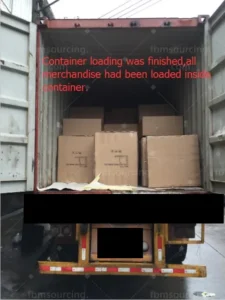
First, mirrors travel on edge, never flat, in vertical A-frame or crate packing with foam corner protection and a moisture barrier; flat-stacked mirror in a 40 ft container arrives cracked at the centre of the stack. Second, order a spare allowance rather than planning to replace breakages later: a 2–3% spare allowance on mirror quantities costs far less than a single air-freighted replacement and a delayed room handover, and for shaped or oversized mirrors the sensible allowance is higher. Spares should be the same batch, because silvering and tint vary between batches in a way that is invisible until two mirrors hang on the same wall.
On volume: mirror packages are dense and light rather than bulky, so a mirror order rarely fills a container on its own. In practice a hotel mirror package ships consolidated with the vanity, sanitaryware or wider bathroom scope, and our minimum order commitment is a full container load rather than part-load consolidation, because splitting fragile goods across groupage handling is where breakage actually happens.
How the Quality Control Works
All inspection on FBM Sourcing packages is carried out by our own team at the factory before shipment, with photo and video records. For mirrors, packing is what the pre-shipment inspection watches most closely, because it is the single largest determinant of arrival condition and it is the last thing anyone looks at. Test reports and certificates issued by the manufacturer’s own laboratories or by certification bodies are reviewed as documents in their own right, checked for scope, model coverage and expiry rather than accepted as a logo on a PDF.
Frequently Asked Questions
Do I need UL certification for LED mirrors going to the United States?
For a mains-powered illuminated mirror, yes in practice. The finished mirror is a luminaire and is normally expected to carry a UL or ETL listing as a complete fitting. A CE mark or a certificate covering only the LED module or the driver does not transfer to the assembled product, and on a 120 V job an inspector will look for the listing mark on the mirror itself.
What IP rating does a hotel bathroom mirror need?
It depends on the position, not on the room. A mirror above a basin is generally treated as a splash-zone position and IP44 is the usual minimum; a mirror inside a shower enclosure or within the direct spray zone needs a higher rating. Ask for the IP rating of the completed mirror, because the rating of an LED strip inside it is not the rating of the product.
What is the difference between copper-free and copper-backed mirror?
Both are silvered mirrors; the difference is the protective layer behind the silver. Copper-free constructions were developed to remove copper and lead from the process and are commonly specified for wet areas, but the meaningful comparison is not the label — it is the corrosion test result. Ask for salt-spray hours to ASTM B117 or the equivalent accelerated test for both options and compare the numbers.
Can mirrors be shipped with the rest of the bathroom package?
Yes, and they usually should be. Consolidating mirrors with vanities and sanitaryware keeps one delivery, one set of documents and one QC pass. Where the bathroom is delivered as a prefabricated bathroom pod, the mirror is fitted in the pod factory instead, and the schedule has to reach the pod maker rather than the site. The practical constraint is packing: mirrors must travel on edge in dedicated crates inside the container rather than being loaded flat under heavier goods.
How far ahead do mirror sizes need to be fixed?
Before tiling is complete, not after. Mirror sizes derived from the design tile setting-out routinely miss the as-built setting-out. Where the mirror is intended to centre on a tile module or sit between two features, confirm the finished dimensions against the as-built wall before releasing the mirror for production.
Sourcing this for a commercial project?
FBM Sourcing works with project owners, developers, main contractors and FF&E contractors on hotel, apartment, school, office and other commercial building projects. Send us your BOQ, drawings or product list — our team will review it and get back to you.
Get a China Procurement Quote for Your Project
FBM Sourcing has managed China procurement packages for commercial building projects since 2014, across more than 20 countries and over 1,000 containers. We manage the entire China procurement package on the buyer’s side: we hold the mirror schedule, run the technical exchange with manufacturers, check the electrical and safety evidence before production rather than after, inspect with our own team and consolidate the package for shipment.
Send your mirror schedule, bathroom drawings or FF&E product list with quantities and destination port, and we will review it and come back to you with a route through the manufacturer types above. More on how a full package is put together: China building materials and FF&E procurement.