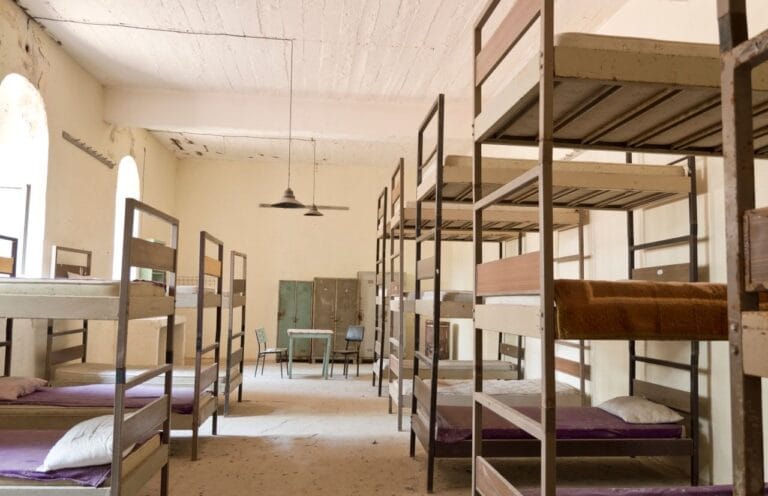
Budget group accommodation is not a cheaper hotel. It is a different product with a different failure mode, and the FF&E procurement logic that works for a mid-scale hotel actively damages it. In a hotel, each room is used by one party and furniture wears at a predictable rate. In a hostel, a single room is used by strangers simultaneously, turned over constantly, and subjected to a level of handling that a hotel room never sees — while the revenue per square metre that has to pay for the furniture is a fraction of a hotel’s.
That combination — higher abuse, lower budget — is why budget accommodation projects fail on FF&E more often than any other hospitality segment. This guide is for hostel operators, PBSA and co-living developers, budget hotel groups and the contractors delivering them, and sets out how the procurement actually has to be structured to survive.
The three items that decide whether the project works
Most of a hostel’s FF&E budget is uncontroversial. Three items carry nearly all of the risk, and they deserve a disproportionate share of the specification effort.
The bunk or bed frame
This is the single most important item in the building, and it is the one most commonly bought on price. A dormitory bunk is a structural product carrying dynamic loads applied by people who did not read the instructions, climbed rather than used the ladder, and sat on the guardrail. Frame material and gauge, weld quality at the joints, the guardrail height and fixing, and the ladder attachment method are what separate a bunk that lasts a decade from one that develops a wobble in a year — and a wobble in a dormitory bunk is both a complaint generator and a liability.
Specify the tube wall thickness rather than the tube diameter, ask how the joints are made, and ask for the test evidence on the model quoted. Where a jurisdiction has a specific bunk bed safety standard covering guardrail heights, gap dimensions and ladder requirements, that standard governs and should be named in the specification.
The mattress
Turnover rate makes hostel mattresses a hygiene product as much as a comfort product. The specification decisions that matter are the cover — whether it is a fixed cover, a removable washable cover, or a wipeable waterproof construction — and the fire performance required by the jurisdiction. Comfort is a secondary consideration in this segment, and buyers who optimise for it at the expense of cleanability get an operating problem that recurs weekly for the life of the asset.
The storage locker
The lock is the product. A locker with a failed or picked lock is worse than no locker because the guest trusted it. Decide early between a mechanical lock, a key lock, an operator-issued combination and an electronic lock, because each implies a different operational burden: electronic locks need power and battery management, key locks need a key management system, and combination locks need a reset procedure between guests. Our overview of hotel lock and access control manufacturers covers the technology choice in more detail.
Sourcing this for a commercial project?
FBM Sourcing works with project owners, developers, main contractors and FF&E contractors on hotel, apartment, school, office and other commercial building projects. Send us your BOQ, drawings or product list — our team will review it and get back to you.
Why is standard hotel FF&E the wrong starting point?
Three structural differences make the hotel template a poor fit, and understanding them prevents a whole class of expensive substitutions.
Density changes the unit of procurement. A hotel buys per room; a hostel buys per bed, and a room might hold eight. The quantities per item are therefore much higher for a given building size, which changes what a factory will quote and makes bulk tooling or custom fabrication viable where it would not be for a hotel of the same footprint. Buyers who price a hostel package using hotel logic systematically underestimate their own negotiating position.
Durability requirements are higher, not lower. This is counter-intuitive and it is where most of the damage is done. Budget positioning is about the guest’s price, not the product’s service life. A hostel bed frame is handled by far more people than a hotel bed frame; specifying down to hit a budget produces replacement costs that arrive during the operating period rather than the capital period, which is the worst possible place for them.
The public areas carry the product. A hostel’s commercial proposition is largely the shared space — kitchen, lounge, workspace, laundry. These areas take continuous heavy use and are what guests photograph and review. Under-investing in the shared space to protect the dormitory budget is the wrong trade, because the shared space is what drives the rate and the occupancy.
For adjacent segments with overlapping requirements, see our guides to serviced apartment and aparthotel FF&E procurement and to student accommodation furniture procurement, which faces nearly identical durability economics.
How the package should be structured
The efficient structure for this segment is a small number of high-quantity items rather than a wide catalogue. Every additional SKU adds a sample round, an inspection scope and a spare-parts stream, and in a budget project the administrative cost of variety exceeds the benefit of it.
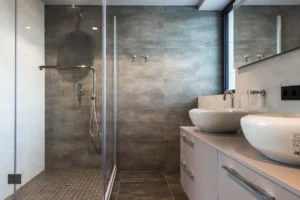
A workable structure is four groups. Sleeping: bed frames, mattresses, mattress protection, bedside power and light. Storage: lockers, hooks, luggage racks. Shared space: dining tables and seating, lounge seating, kitchen fit-out, work surfaces. Sanitary: the bathroom package, where shared facilities mean commercial-grade fittings rather than residential ones.
Group one and two are usually best sourced from the same metalwork-capable supplier, because bunks and lockers are the same trade. Group three splits between furniture and joinery. Group four is a building materials package rather than an FF&E one, and is often better handled with the main construction procurement — our guide to apartment development furniture and building materials procurement covers how that division is usually drawn.
The budget question, answered honestly
We do not publish per-bed FF&E cost figures, and it is worth explaining why rather than leaving it as an omission. The number is driven by the specification, the quantity, the destination, the shipping route and the exchange rate at the time of order, and each of those moves the figure enough that a published number would be misleading for most readers. A figure quoted without its specification is not information.
What we can say structurally: in this segment, the ratio of shared-space cost to sleeping-space cost is much higher than in a hotel, and buyers consistently underestimate it. Budget allocation that mirrors a hotel’s — heavy on the room, light on the public areas — produces a project that is over-specified where nobody notices and under-specified where everybody does. Our guide to FF&E budget as a percentage of project cost covers how the overall allocation is usually framed.
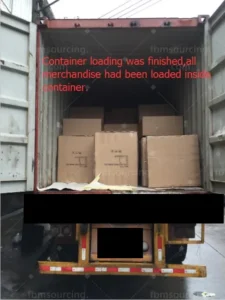
The second structural point is that this segment consolidates unusually well. High quantities of a small number of items is the most container-efficient profile in hospitality procurement, and a hostel package frequently fills containers more completely than a hotel package of similar bed count. Our note on mixed container consolidation covers how the loading is planned.
What to verify before ordering
- Bunk test evidence against the standard named in your specification, covering the model quoted rather than a similar one.
- Mattress fire performance to the requirement of the destination jurisdiction, evidenced on the construction supplied.
- A physical sample of the bed frame, assembled, inspected for weld quality, guardrail fixing and ladder attachment — not a photograph.
- Locker lock cycle testing and the key or code management procedure that comes with it.
- Spare parts availability for the items that will need them: ladder brackets, guardrail fixings, locker locks. In a segment with this much handling, spares are not optional and should be ordered with the original shipment.
For general pre-shipment practice, see our guide to furniture inspection in China before shipping.
Sourcing this for a commercial project?
FBM Sourcing works with project owners, developers, main contractors and FF&E contractors on hotel, apartment, school, office and other commercial building projects. Send us your BOQ, drawings or product list — our team will review it and get back to you.
Frequently asked questions
Can a hostel FF&E package reach full container load quantities?
Usually yes, and more easily than buyers expect, because bed count rather than room count drives the quantities. A project of even modest room count carries a high item count, and bunks, lockers and mattresses are all bulky. FBM Sourcing works on full-container-load orders, and this segment typically reaches that threshold comfortably.
Should bunk beds be metal or timber?
Metal is the default in commercial dormitory use for serviceability and fire performance reasons, and because a metal frame can be repaired in place. Timber is specified where the design proposition requires it and is entirely workable with the right construction, but it changes the maintenance regime. The relevant comparison is set out in our guide to steel versus wood frame furniture.
How many spare parts should be ordered with the original shipment?
Enough to cover the wear items for the first operating period, which in practice means locker locks, ladder and guardrail fixings, and any proprietary connector used in the bed frame. The cost of carrying these is negligible against the cost of sourcing a single replacement part internationally after opening.
Is it worth customising bunk beds or should we buy a catalogue model?
Customisation is more viable in this segment than in most, because the quantities justify it — integrated power, reading lights, privacy curtains and personal storage can be built into a bespoke frame rather than added to a standard one. The trade-off is that a bespoke frame needs its own test evidence, which a catalogue model with existing certification already has.
What is the most common procurement mistake in this segment?
Specifying the bed frame down to protect the budget. It is the item with the highest handling load, the highest liability exposure and the highest replacement disruption, and it is where the saving is smallest relative to the risk. If something has to give on budget, it should not be the frame.
Worker and staff housing on large construction and resources projects uses the same bunks, lockers and shared washrooms at far higher occupancy and for years at a stretch; see this guide to worker accommodation furniture and the finishes that hold up to hard use.
Working with FBM Sourcing on a budget accommodation package
FBM Sourcing has been sourcing building materials and FF&E from China since 2014, and has shipped more than 1,000 containers for project buyers in over 20 countries. On budget accommodation projects our role is to hold the durability specification against budget pressure, verify test evidence on the structural items, keep the SKU count low enough to manage, and inspect before shipment.
If you have a hostel, co-living or student accommodation project coming up, send the room schedule and bed count through our project procurement enquiry page and we will review it and come back to you.