Hotel locks are the only FF&E line item that is simultaneously a piece of ironmongery, a fire-safety component, an IT system and a source of ongoing licence cost — and the Chinese supply base for them is almost entirely private, so a buyer cannot resolve it by looking up companies. There is one publicly listed Chinese company with a disclosed access-control business a project buyer can verify. Everything else in this category — including the best-known hotel lock brands coming out of Guangdong and Zhejiang — is privately held with no public disclosure. This guide sets out the supplier types, what the one verifiable listed company actually does, and the evidence a hospitality project must obtain before a single lock is ordered.
What is actually being bought when you buy “hotel locks”?
The purchase order usually says locks. What arrives is four things that fail in four different ways:
- The lock body and latch. Mechanical hardware. On a fire door this is a certified fire-rated assembly component, and it is the part an inspector cares about.
- The reader and escutcheon. The visible product, and the one the designer selected. Finish and profile are a design decision; the reader technology inside it is not.
- The credential and encoding system. RFID card, mobile key or both. This determines whether the property is locked into one supplier for the life of the building.
- The management software and its licence. Front-desk encoding, audit trail, staff access levels and PMS integration. This is where recurring cost lives, and it is almost never in the FF&E budget line.
A quotation that compares only the first two is not a comparison. Two locks that look identical on the schedule can differ by the entire cost of a software licence and a PMS integration, and that difference does not show up until commissioning. The same failure mode appears across the wider ironmongery package, which is why a complete door hardware schedule has to exist before anyone requests a China quote.
The publicly listed company a project buyer can verify
We name only companies whose listing and disclosures are public and checkable. In this category there is one.
- ZKTeco (熵基科技), Shenzhen Stock Exchange ChiNext: 301330. Incorporated December 2007, registered in Tangxia, Dongguan, Guangdong, and listed on ChiNext in August 2022. Its disclosed business scope is the research, production and sale of biometric identification equipment — fingerprint, facial, iris and vein recognition — together with the associated software, security screening equipment and office electronics. Role note: this is an access control and biometrics company, not a hotel lock specialist; the overlap with hospitality is in access control for back-of-house, staff areas and perimeter rather than in guest room locksets. Evidence to request: which product family is proposed for which door type, whether the guest room lockset is its own product or a partner’s, and what the software licensing model is over ten years.
Listed status confirms scale and disclosure obligations. It does not confirm suitability for a guest-room lockset, and it is not a substitute for the fire and cycle evidence set out below.
Why we have not published a list of named hotel lock factories here
We searched for publicly verifiable listed entities whose disclosed core business is hotel locking, and there are none beyond the access-control company named above. The best-known Chinese hotel lock and smart lock brands are private companies. Their capability may well be genuine, but nothing about them can be checked by an overseas buyer from public records: not revenue, not headcount, not whether the entity signing your contract is the entity that owns the plant.
Publishing a Top 10 of names we cannot verify would be a worse service than publishing none. We would rather tell you exactly what to demand from whichever supplier you are already talking to — and the list below is that. It is the same position we take on every category where the verifiable tier is thin.
Sourcing this for a commercial project?
FBM Sourcing works with project owners, developers, main contractors and FF&E contractors on hotel, apartment, school, office and other commercial building projects. Send us your BOQ, drawings or product list — our team will review it and get back to you.
The supplier types that make up the market
- Dedicated hotel lock manufacturers. Build guest room locksets and the encoding and management software as one system. This is the mainstream route for a hotel, and the reason is integration, not price. Evidence to request: the PMS integrations already in production with the specific PMS your operator uses, named by property.
- Residential smart lock manufacturers moving into hospitality. Very large domestic volumes, strong on electronics and finish, weaker on the hotel-specific requirements — emergency master key hierarchy, staff audit trail, mechanical override, fire door certification. Evidence to request: the fire test evidence for the lockset on a certified door assembly, and the master key hierarchy documentation.
- Architectural ironmongery makers. Own the mechanical lock case, latch and cylinder, and increasingly supply the mechanical half of an electronic lockset. Evidence to request: cycle testing to EN 12209 or ANSI/BHMA A156 grades, and fire certification covering the assembly rather than the component.
- Access control and biometrics companies. Strongest for back-of-house doors, lifts, car parks and staff time and attendance. Evidence to request: whether guest room hardware is their own product or resold, and who supports the software.
- Trading intermediaries. Broker between the buyer and one of the above. Evidence to request: the producing factory, and whether the intermediary will place its own name on the documents and carry responsibility for a firmware defect discovered in year two.
Which route fits which hospitality project?
| Project scenario | Shortlist from this list | Why it fits | What would change the answer |
|---|---|---|---|
| Branded hotel under an operator agreement | Only suppliers already approved on the brand standard | The operator brand standard normally names permitted lock systems and PMS integrations | An unbranded or independent property, which reopens the field |
| Independent hotel or serviced apartments | Dedicated hotel lock manufacturer | Integration and a ten-year spares path matter more than unit price | A property already committed to a building-wide access control platform |
| Student accommodation or co-living | Access control company, or hotel lock with mobile credential | Turnover of occupants makes credential management the dominant cost | A local fire authority requiring mechanical override on every door |
| Back-of-house, plant rooms, staff areas | Access control and biometrics company | Audit trail and role-based access are the actual requirement | Union or privacy rules restricting biometric capture of staff |
| Refurbishment of an occupied hotel | Supplier that can retrofit the existing door preparation | Door replacement cost dwarfs lock cost, so the existing mortice prep governs | Doors being replaced anyway, which removes the constraint |
What evidence must be in hand before ordering hotel locks?
- Fire certification for the assembly, not the lock alone. On a fire-rated guest room door the certification that matters covers the doorset with that lock, that latch, those hinges and that closer, tested together. A certificate for the lock in isolation does not demonstrate the doorset complies. Where the doors themselves are also coming from China, the assembly question is set out in how to specify fire-rated door sets from China.
- Cycle testing to a recognised grade. ANSI/BHMA A156 grades in North America, EN 12209 in Europe. Ask for the report, the grade achieved and the laboratory.
- Escape and egress compliance. Single-action egress from inside the room without a key, and compliance with the applicable code — NFPA 101 in much of the United States, the relevant national requirement elsewhere. This is a design question the lock must not defeat.
- The master key hierarchy in writing, including emergency master, floor master, housekeeping and maintenance levels, and what happens when a master card is lost.
- PMS integration evidence. Not “we can integrate”. Ask for properties in production with the same PMS and the same version, and who pays for the integration work.
- Battery and firmware policy. Expected battery life at the specified traffic, low-battery behaviour, mechanical override method, and how firmware is updated across several hundred doors without pulling every escutcheon.
- Ten-year spares and licence commitment, in writing: the price of a replacement escutcheon in year seven, whether encoders remain supported, and whether the management software licence is perpetual or recurring.
- Radio compliance for the destination market — FCC in the United States, RED in the EU, ACMA in Australia — for any lock with a wireless credential or online capability.
On any project with public funding or a government end-user, confirm the applicable supply-chain and procurement restrictions with the project’s counsel before shortlisting connected hardware. These rules turn on the funding source and on entity lists that change, and they are a legal question for the specific project rather than a product specification question.
The cost that is not on the quotation
Three costs routinely sit outside the FF&E line and appear later as a variation:
- Encoders and workstations. Front desk encoders, a back-office encoder and spares are a distinct cost item in their own right, and the count depends on the front desk layout, not the door count.
- Software licences and support. Annual or per-door, and often quoted for the first year only.
- Commissioning attendance. Someone has to be on site to commission several hundred doors against the room list, and the cost of a specialist attending is a real number that should be agreed before the order, not after.
None of these is a reason to avoid a Chinese supplier; they are a reason to make the comparison at package level rather than at unit price. This is the same discipline that applies across a whole hotel package, described in what a whole-hotel FF&E and building materials package covers.
Why this list has no scores, ratings or supplier links
We publish no score column and no outbound links to the companies named. A score would imply we had audited every company against the same criteria in the same period, which we have not. We also publish no prices for locks: unit price moves with reader technology, finish, credential type, software model and quantity, and a number published today would mislead a reader next year.
About FBM Sourcing
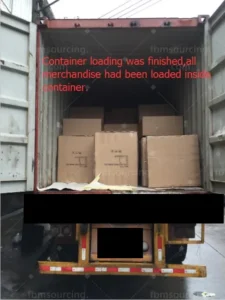
FBM Sourcing manages the entire China procurement package for overseas construction projects. Sourcing since 2014, we have shipped 1,000+ containers to project sites in 20+ countries, working with project owners, developers, main contractors and FF&E contractors on hotels, apartment buildings, schools, offices and other commercial buildings. All quotations, invoices and shipping documents are issued by FBM Sourcing — you deal with us, and we carry the responsibility. For suppliers you nominate, we charge a 5% commission; for products we source for you, we quote a direct price.
If you have a locking and access control package for a hospitality project, send us the door schedule, the operator brand standard if there is one, and the PMS in use at https://fbmsourcing.com/china-building-materials-ffe-procurement/.
Frequently asked questions
Are there listed Chinese hotel lock manufacturers?
Not as such. ZKTeco (301330, Shenzhen ChiNext) is a listed company whose disclosed business covers biometric identification and access control equipment, which overlaps with back-of-house and perimeter access on a hotel. The well-known Chinese hotel lock and smart lock brands are private companies with no public disclosure, which is why this guide describes supplier types and evidence rather than publishing a ranked list of names.
Does a hotel lock certificate cover the fire door it is fitted to?
No. On a fire-rated doorset the certification that matters covers the complete assembly — leaf, frame, hinges, closer and that specific lock — tested together. A fire certificate for the lock alone does not demonstrate that the doorset complies, and inspectors normally ask for the assembly evidence.
What is the biggest hidden cost in a hotel lock package?
The software. Front-desk encoders, the management platform, PMS integration work and the licence model are frequently quoted for the first year only or left out of the FF&E line entirely. Ask for a ten-year cost including licences, spares pricing and support before comparing unit prices.
Should guest room locks use cards or mobile keys?
Most properties specify both, because a mobile-only deployment still needs a physical fallback for guests without a compatible phone and for staff. The decision that matters more is whether the credential and encoding system locks the property into one supplier for the life of the building, so ask what happens if you change lock supplier in year eight.
What is the minimum order for hotel locks from China?
We do not handle loose freight. The practical minimum is a full container load consolidated for one client; locks are compact and normally travel with the other product categories of the same project rather than in a container of their own.