Here is the mismatch nobody flags at tender stage: your construction contract almost certainly holds retention and runs a defects liability period of twelve months or more after practical completion, but a Chinese factory is paid in full before the container leaves the port. There is no retention mechanism in an international supply order, and no Chinese manufacturer will hold five per cent of an invoice unpaid for a year against defects that may appear on a building site on the other side of the world.
That gap is real, it is structural, and it is carried by whoever sits between the two contracts — usually the main contractor or the FF&E contractor. Understanding it early is what separates a manageable risk from a surprise in month fourteen. This page sets out what actually happens, and the five mechanisms project buyers use to bridge it.
Why does retention not exist in a China supply order?
Retention is a construction contract device. It works because the contractor remains on site, remains subject to the same legal system, and has ongoing commercial exposure to the employer. None of those conditions apply to an overseas manufacturer:
- Enforcement is impractical. Pursuing a retention claim against a factory in another jurisdiction, years later, for a sum measured in single-digit percentages, costs more than it recovers.
- The factory has no site presence. A manufacturer cannot return to remedy a defect; it can only supply a replacement part, which is a fundamentally different obligation.
- Standard trade practice does not accommodate it. International orders are settled against shipping documents. Payment is structured so that the goods are released once payment is confirmed — the factory does not ship goods it has not been paid for, and the buyer does not pay in full for goods it has not seen documented.
- Working capital. A factory running on production-cycle margins will not fund a retention pool across dozens of export orders.
FBM Sourcing works on TT 50/50 terms — a deposit to start production, the balance against shipping documents — and full-container orders only. There is no version of that structure that holds money back for twelve months, and any supplier claiming otherwise is worth a second look. Our page on payment terms Chinese factories accept for commercial project orders covers the mainstream structures, and deposit and balance payment terms explained works through the mechanics.
So who actually carries the defects liability?
The party that signed the construction contract. If a main contractor accepts a twelve-month defects liability period on an FF&E package procured from China, that contractor holds the obligation for twelve months regardless of what its supply order says. The supply chain upstream will be paid and closed long before the DLP expires.
This is not a reason to avoid direct procurement — the cost advantage usually far exceeds the exposure — but it is a reason to price the exposure rather than ignore it. The three questions worth answering before signing are: what is realistically likely to fail in the first two years, what would it cost to replace, and can that replacement be obtained without a new production run.
Sourcing this for a commercial project?
FBM Sourcing works with project owners, developers, main contractors and FF&E contractors on hotel, apartment, school, office and other commercial building projects. Send us your BOQ, drawings or product list — our team will review it and get back to you.
Five mechanisms that actually bridge the gap
1. Buy the spares with the original order
This is the single most effective measure, and the one most often left out. Ordering replacement components with the original consignment — seat mechanisms, gas lifts, castors, cartridges, handles, hinges, glides, a percentage of tiles and panels, spare fabric from the same dye lot — costs a fraction of the order value and removes the hardest problem in the defects period: matching a product that has since been discontinued or a finish that has since drifted.
The quantity is a judgement call by category, but the principle is not: anything that is a wear part, anything with a dye lot, and anything with a finish that cannot be re-matched should be over-ordered at the outset. A defects liability period is much cheaper to service from a store cupboard than from a new purchase order.
2. Move the quality gate forward, because it is the only gate you control
Once a container ships, the practical leverage over a factory drops sharply. Everything that can be verified before shipment should be verified before shipment. Our quality control scope runs up to and including pre-shipment inspection — that is deliberately where the effort is concentrated, because it is the last point at which a problem is the factory’s to fix rather than yours.
What that means in practice: check the finish, the dimensions, the hardware, the assembly and the packing against the approved sample and the specification while the goods are still in the factory. Handling defects and rework before the container ships covers how that process runs.
3. Get the warranty documented at order stage, not at claim stage
Chinese manufacturers do offer warranties, and on reputable factories they are honoured — but a warranty is only useful if its terms are written down before the order, not negotiated after a failure. What needs to be explicit: the duration, what is covered, whether it covers parts only or parts and freight, what evidence is required, and who the claim is made to. Our page on warranties from Chinese manufacturers sets out what is realistically obtainable and how enforceable it is.
The realistic expectation is replacement parts shipped at the factory’s cost or shared cost, on a subsequent consignment. It is not a service engineer arriving on your site.
4. Align the downstream contract with the upstream reality
Where you have any influence over the construction contract wording, the defects liability obligation on imported goods should be drafted as what it actually is: a supply-and-replace obligation, not a return-to-site-and-remedy obligation. Distinguish between installation defects, which the installing contractor owns, and manufacturing defects, which are a product replacement question. Confusing the two is what turns a chipped worktop into a contractual dispute.
Contract terms that protect project buyers ordering from China covers the supply-side wording that supports this.
5. Time the replacement window before the supply chain closes
There is a period after handover — realistically the first few months — when the factory still has your tooling set up, your fabric on the shelf and your job in recent memory. A replacement ordered in that window is straightforward. The same replacement ordered eighteen months later may require a minimum production run, a new sample approval and a fresh dye lot.
Practically, this means front-loading the defects inspection: walk the building and log every product issue in the first sixty to ninety days rather than waiting for the end-of-DLP inspection. The list will be shorter and the remedies will be cheaper.
What about goods that arrive already damaged?
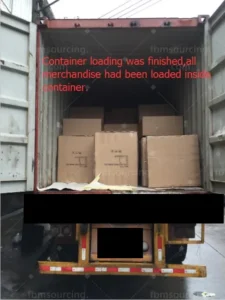
Transit damage is a different question from a defects liability claim, and it is governed by insurance and the carrier’s liability rather than by the factory’s warranty. It has its own timeline — notice periods for cargo claims are short and unforgiving — and its own evidence requirements, principally photographs taken at the point of unloading before the goods are moved. What happens if hotel FF&E arrives damaged covers claims, replacements and spares in that scenario.
Keeping the two separate matters. A defect that existed at manufacture is a supplier question; damage that occurred in transit is an insurance question; damage that occurred during installation or storage on site is the contractor’s. Establishing which one you are dealing with, with photographic evidence at unloading, is what makes any of them recoverable.
A practical checklist before you sign a package with a DLP attached
- Identify the wear parts and dye-lot-sensitive items in the package, and price a spares allocation for each.
- Confirm the pre-shipment inspection scope in writing, and what constitutes a rejection.
- Get the warranty terms in the purchase order: duration, coverage, freight, evidence, claim route.
- Confirm approved samples are retained — by you and by the factory — so a later dispute has a reference point.
- Record batch, dye lot and production date information at shipment, so a replacement can be matched.
- Draft the downstream defects obligation as supply-and-replace, not return-to-site.
- Schedule a product defects walk at sixty to ninety days after handover, not at month eleven.
None of these eliminate the structural mismatch between a construction contract and an international supply order. Together they reduce it to something that can be budgeted rather than something that arrives as a surprise.
Sourcing this for a commercial project?
FBM Sourcing works with project owners, developers, main contractors and FF&E contractors on hotel, apartment, school, office and other commercial building projects. Send us your BOQ, drawings or product list — our team will review it and get back to you.
Frequently asked questions
Will a Chinese factory accept retention on a project order?
Generally no. Retention is a construction contract device that depends on the contractor remaining on site and within the same legal system, and neither applies to an overseas manufacturer. International supply orders are settled against shipping documents — FBM Sourcing works on TT 50/50 terms, deposit to start production and balance against documents. A supplier offering to hold retention for twelve months is unusual enough to be worth investigating.
Who carries the defects liability on imported FF&E?
The party that signed the construction contract — usually the main contractor or FF&E contractor. The supply chain upstream will have been paid and closed long before the defects liability period expires, so the obligation sits downstream regardless of what the supply order says.
What is the best way to cover the defects period on a China order?
Order spares with the original consignment. Replacement components, spare fabric from the same dye lot, and a percentage of tiles and panels cost a fraction of the order value and remove the hardest problem in the defects period: matching a product that has been discontinued or a finish that has drifted.
Do Chinese manufacturers honour warranties?
Reputable manufacturers do, but only against terms agreed before the order rather than negotiated after a failure. The realistic outcome is replacement parts shipped at the factory’s or shared cost on a subsequent consignment — not a service engineer attending your site. Duration, coverage, freight responsibility, evidence requirements and the claim route should all be written into the purchase order.
When should the defects inspection happen?
Sixty to ninety days after handover rather than at the end of the defects liability period. In that window the factory still has the tooling set up and the materials on hand, so replacements are straightforward. Eighteen months later the same replacement may need a minimum production run, a new sample approval and a fresh dye lot.
Is transit damage covered by the defects liability period?
No. Transit damage is a cargo insurance and carrier liability question with short notice periods, and it needs photographic evidence taken at unloading before the goods are moved. A manufacturing defect is a supplier question; damage during installation or site storage is the contractor’s. Establishing which one applies, with evidence at unloading, is what makes any of them recoverable.
About FBM Sourcing
FBM Sourcing is a China procurement partner for commercial building projects. We manage the entire China procurement package for project owners, developers, main contractors and FF&E contractors — supplier selection, technical review against your specification, order management, pre-shipment quality control and full-container consolidation. Our quality control scope runs up to and including pre-shipment inspection, which is deliberately where the effort is concentrated — it is the last point at which a problem is the factory’s to fix rather than yours.
If you have a project package to price, start here: China building materials and FF&E procurement.