A hotel FF&E spec book for China procurement should include eight core sections: a room-by-room product schedule, dimensioned drawings or CAD files for every custom item, material and finish specifications, fabric grades with fire-certification requirements such as CAL 117 or BS 7177, exact quantities plus attic stock, packaging and labelling instructions, the destination port with the required on-site date, and sample or mock-up approval requirements. The more complete the spec book, the fewer assumptions Chinese factories have to make — and assumptions are where hotel FF&E budgets and schedules go wrong. In our experience as a china sourcing agent, a complete hotel FF&E spec book cuts quotation time from around three weeks to five to seven working days, because factories can price directly from the documents instead of sending question lists back and forth.
This guide breaks down each section of the spec book, what level of detail Chinese factories actually need, and how a sourcing agent uses the document once procurement starts. If you already know what goes into the wider scope, see our overview of the hotel FF&E package from China — this article covers the specification document itself.
Why Does a Spec Book Matter More for China Procurement Than Domestic Buying?
When you buy FF&E domestically, the vendor often works in your regulatory environment, knows your fire codes, and can visit the site. When you procure from China, the spec book replaces all of that context. The factory quoting your guest room casegoods has never seen your project, does not know whether your jurisdiction requires CAL 117 foam or Crib 5 fabric, and will default to its standard construction unless your documents say otherwise.
The commercial consequence is direct: every gap in the spec book becomes either a pricing assumption or a change order. A factory that assumes melamine board where you needed HPL will quote low and then re-quote after sampling. A factory that assumes standard foam where your jurisdiction requires certified fire-retardant foam will quote a price you cannot actually build at. As a planning rule, change orders raised after production starts typically add 10 to 20 days each to the schedule, because they interrupt material purchasing and machine scheduling that has already been sequenced.
A complete spec book is also what makes competitive bidding meaningful. If three factories quote against three different sets of assumptions, the price comparison tells you nothing. If they quote against one complete document, the spread between quotes reflects real cost and capability differences — which is exactly what a furniture sourcing agent needs to negotiate from.
The 8 Sections Every Hotel FF&E Spec Book Should Contain
Before going deeper on the technical sections, here is the full checklist:
- Product schedule — every item by room type, with item codes, quantities per room, and total counts
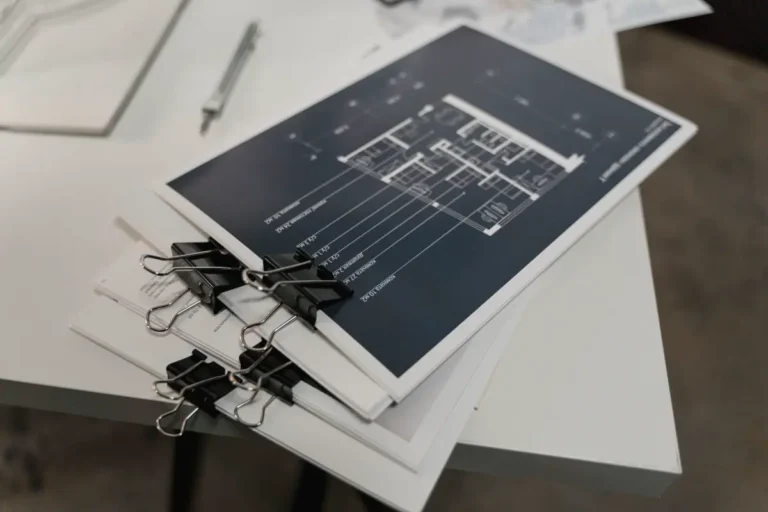
- Drawings and CAD files — dimensioned drawings for all custom casegoods, millwork and metalwork
- Materials and finishes — board grades, veneer species, stone types, metal finishes, edge details
- Fabric and fire certification — fabric specifications with the exact standards required (CAL 117, BS 7177, Crib 5, IMO for coastal or marine-adjacent projects)
- Quantities and attic stock — order quantities plus the spare percentage for each category
- Packaging and labelling — carton marking, room-by-room labelling, floor sequencing for installation
- Destination and timeline — destination port, Incoterms, and the date FF&E must be on site
- Sample and mock-up requirements — which items need pre-production samples and whether a mock-up room gates bulk production
Most spec books we receive as a building material sourcing agent are strong on the first three sections and weak on the last five. The sections buyers skip — certification, attic stock, labelling, timeline — are precisely the ones that cause disputes later, because they are invisible in a quotation and very visible on site.
How Detailed Should Drawings and CAD Files Be?
Chinese factories can produce a budget quotation from PDF drawings with overall dimensions, but they cannot produce furniture from them. For custom casegoods — headboard walls, vanities, wardrobes, desks — the working sequence is: your design drawings, then the factory’s shop drawings, then your approval, then production. Plan for 10 to 14 days of shop-drawing development and approval before any custom item enters production, and build that into the master schedule alongside the stages in our hotel FF&E procurement timeline.
What the drawings must show, at minimum:
- Overall dimensions and critical internal dimensions (drawer clearances, TV niche sizes, minibar cavities)
- Section details for joinery construction and edge treatment
- Hardware callouts — hinges, slides, locks — by type, not brand-generic “soft close”
- Power and data cutouts, with positions dimensioned from a fixed edge
- Fixing method: freestanding, wall-fixed, or built-in, since this changes both construction and packing
Native CAD files (DWG) are better than PDFs because the factory’s engineers can develop shop drawings directly from them instead of redrawing. If your designer will not release DWG files, dimensioned PDFs at a readable scale are workable — but expect one extra revision cycle in the shop-drawing stage.
Fire Certification and Compliance Requirements to Specify
This is the section that most exposes a project when it is missing. Fire and safety standards are jurisdiction-specific, and the factory will not infer them from your delivery address. The spec book should state the exact standard, per product category, that the finished goods must meet. The common ones for hotel projects:
- CAL 117 (TB 117-2013) — flammability standard for upholstered seating foam and cover fabrics on US projects
- BS 7177 / BS 5852 (Crib 5) — mattress and contract upholstery flammability for UK and many Commonwealth-influenced markets
- CARB Phase 2 / TSCA Title VI — formaldehyde emission limits for composite wood panels on US projects
- EN 12150 — tempered safety glass for mirrors, shower screens and glass shelving in European-standard projects
- AS/NZS standards — Australian projects should list the specific AS/NZS references their certifier will ask for at handover
Two practical points. First, specify that the factory must provide the test reports and certificates with the shipment documents — a verbal “yes we comply” is not something your fire certifier can file. Second, certified materials change the quotation: fire-rated foam and Crib 5 fabrics carry a real cost premium over standard grades, so a spec book that names the standard up front gets you a real price instead of a low one that collapses later.
Sourcing this for a commercial project?
FBM Sourcing works with project owners, developers, main contractors and FF&E contractors on hotel, apartment, school, office and other commercial building projects. Send us your BOQ, drawings or product list — our team will review it and get back to you.
Quantities, Attic Stock and Container Planning
The product schedule should show quantities two ways: per room type, and as project totals including attic stock. Attic stock — the spare inventory the hotel holds for future repairs and replacements — must be ordered with the main production run, because matching finishes and fabric dye lots later is difficult and slow from any factory. Typical planning ratios are around 2% extra for casegoods, 5% for upholstery seating, and up to 10% by area for fabrics and wallcoverings; our guide to attic stock for hotel FF&E covers the category-by-category logic.
Total quantities also drive shipping planning. A 40ft high-cube container holds roughly 65 to 68 cubic metres of cargo, and whether your package fills three containers or thirteen changes the loading plan, the delivery sequence and the freight line in your budget. A spec book with accurate totals lets the sourcing agent produce a realistic container estimate at quotation stage rather than after production — see hotel FF&E container planning for how those calculations work.
State the destination port and the required on-site date in the same section. Factories quote lead times from deposit, but your schedule runs backwards from opening day; the spec book is where those two calendars meet. Production for a typical hotel casegoods package runs 45 to 60 days after shop-drawing and sample approval, and ocean transit adds roughly 30 to 40 days to the US East Coast or 14 to 20 days to Australia — so the on-site date in your spec book determines the latest possible order date, not the other way around.
Packaging, Labelling and Delivery Instructions
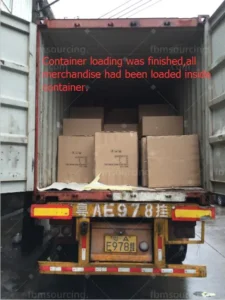
Packaging is the spec book section almost every project skips, and it is the one the installation crew will judge the whole procurement by. The default factory behaviour is to pack by product: all desks in one run of cartons, all headboards in another. That is efficient for the factory and miserable for the site, where goods need to move by room and by floor. The spec book should state the labelling logic you want — typically project code, room number, item code and carton count (“FBM-0412 / Room 512 / DSK-01 / 2 of 3”) — and require the packing list to follow the same structure so cartons can be checked off as they leave the container.
Specify carton construction as well: five-ply export cartons with corner protection for casegoods, edge protectors on stone and glass, and moisture barriers for veneer and upholstery on longer transits. Damage claims are far easier to avoid than to argue, and packing standards written into the spec book give the QC team something objective to check at loading. If the site has physical constraints — no loading dock, a single service lift, restricted delivery hours — write them into this section too, because carton size limits and delivery windows are factory-side and freight-side decisions that cannot be retrofitted at the port.
Samples, Mock-Up Rooms and Approval Gates
The final section of the spec book should state what must be approved before bulk production: material samples, finish samples, pre-production samples of key items, and — for most hotel projects of 80 rooms or more — a full mock-up room before bulk FF&E production. Writing the approval gates into the spec book matters because it makes them contractual: the factory schedules production around them instead of treating them as optional courtesies. A mock-up room typically adds three to four weeks to the front of the programme and routinely pays for itself by catching dimension clashes, finish mismatches and hardware issues while they are still cheap to fix.
Specify who signs off at each gate — designer, operator, owner — and in what timeframe. Approval cycles that drift by two weeks push production by two weeks; the spec book is the right place to make response times explicit on both sides.
How a China Sourcing Agent Uses Your Spec Book
Once the spec book is complete, it becomes the working document for the entire procurement. As a sourcing agent, FBM uses it to shortlist factories against the actual construction and certification requirements, to run quotations on identical terms so prices are genuinely comparable, and to negotiate from a position where scope cannot quietly shrink. During production, the spec book is the inspection baseline: our own QC team checks goods in the factory against the specified materials, dimensions, finishes and certifications, and documents every inspection stage with photos and video so the project team overseas can verify progress without flying in.
The spec book also anchors the commercial structure. FBM works on a transparent agency fee of 5–8% of procurement value, so the specification document — not a marked-up price list — defines what you are buying and what it should cost. If your spec book is still in progress, we can review the draft against the checklist above and flag the gaps that will cost time later.
Get a China Procurement Quote for Your Project
If you are preparing a hotel FF&E spec book for China procurement — or already have one ready to price — send it to us with your quantities, destination port and project timeline. FBM Sourcing manages China building materials and FF&E procurement for hotel, apartment and commercial building projects across the USA, Australia, Europe and the Caribbean: factory shortlisting, quotation, in-factory quality control by our own team, container planning and delivery to your port or site. Submit your drawings, quantity schedule, destination port and timeline, and our team will review your requirements and get back to you.
Related reading: How project buyers should evaluate and choose a sourcing agent in China
Written by Spring Dan · Founder, FBM Sourcing
Sourcing building materials and FF&E in China for commercial construction projects since 2008. About Spring · LinkedIn