Every buyer searching for a wooden door supplier in China faces the same statistical problem: thousands of factories claim to export engineered wood doors, and perhaps one in ten can actually hold dimensions, finish quality and delivery dates across a 300-leaf commercial order. The gap between a wooden door supplier’s showroom and its production line is where projects lose money. This guide sets out the factory vetting sequence we run as a china sourcing agent and sourcing partner before any wooden door order is placed — the same checks that separate a genuine wood door manufacturer from the trading companies that resell around them.
Understand What Kind of Wooden Door Supplier You Are Talking To
The Chinese wooden door market has three layers, and pricing only makes sense once you know which layer is quoting. Genuine manufacturers own hot presses, CNC machining lines and finishing booths; their strength is repeatable volume on defined specifications. Semi-manufacturers build leaves but outsource finishing or frames — common, and workable if you know it is happening. Trading companies own photographs. All three will describe themselves as a factory, and all three will offer a video tour if pressed; the difference shows up in the questions below, not in the marketing.
Where the Real Factories Are
Export-grade wood door manufacturing concentrates in Guangdong — Foshan and the Pearl River Delta — with additional clusters in Zhejiang and Shandong serving different price bands. The Guangdong cluster matters for project buyers because it sits beside the wider interiors ecosystem: the same region behind our wooden door sourcing from China program can consolidate wardrobes, vanities and skirting into the same containers.
The Six Factory Checks We Run Before You Shortlist
1. Business License and Export Record
Match the company name on the license to the name on the quotation — mismatches usually mean a trader fronting for an unknown factory. Ask for export shipment records to your market; an interior door supplier in China with genuine US or Australian project history will show packing lists, not just certificates.
2. Core Construction, Verified by Cutting
Specification sheets say solid particleboard core, laminated timber stiles, engineered rails. The only verification that means anything is a sample leaf cut in half. We cut samples at the factory, photograph the section and file it as the reference standard the production batch must match at inspection.
3. Formaldehyde and Compliance Documentation
For US projects, ask for CARB Phase 2 / TSCA Title VI compliant core documentation; for Australia, E0/E1 ratings with test reports from recognized laboratories. A wooden door manufacturer in China that exports seriously holds current reports and hands them over in one email. Hesitation here is disqualifying.
4. Finishing Line, Not Finishing Promises
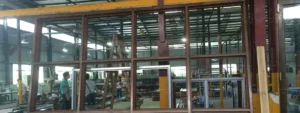
Lacquer and veneer quality is decided by the spray booth, sanding sequence and curing discipline. On the factory audit we look for dust-controlled booths, consistent film-thickness measurement and packed finished leaves awaiting export — evidence the factory finishes at volume, not just for samples.
5. Hardware Prep Capability
Commercial orders need machine-consistent hinge mortises, lock preps and closer reinforcements matched to a hardware schedule. Ask to see the CNC line running and request a first-article leaf fitted with your actual hardware before mass production — the thirty-minute test that prevents the most expensive site carpentry there is.
6. Production Capacity Against Your Program
A factory running high daily volumes for domestic developers may still struggle with your finish standard. Capacity questions should be specific: leaves per day at your specification, current order book, and what happens to your program during peak season.
Sourcing this for a commercial project?
FBM Sourcing works with project owners, developers, main contractors and FF&E contractors on hotel, apartment, school, office and other commercial building projects. Send us your BOQ, drawings or product list — our team will review it and get back to you.
Pricing Signals That Should Trigger Questions
Export-grade engineered wooden doors for commercial projects are priced per project on a firm quotation, and the price depends on core, veneer species, finish system and fire rating. Quotes far below the rest of the comparison usually mean a hollow-core substitution, a finish that will not survive the container, or a trader who has not yet asked a factory. Quotes need line-item transparency: leaf, frame, architrave, hardware prep and packing priced separately, so substitutions have nowhere to hide.
From Shortlist to Delivered Order
These factory checks produce a shortlist; discipline produces delivered doors. Lock the specification in a submittal, approve cut samples, inspect the finished doors before packing, and containerize by installation zone. Wooden doors rarely travel alone on our projects — they share containers with the balcony line from sliding door sourcing from China and the rest of the opening schedule on our door sourcing from China page. For the hotel-specific version of this process, see our guide to sourcing wooden doors from China for hotel projects.
The Sample Approval Protocol That Protects the Order
The factory checks narrow the field; the sample protocol locks the standard. On wooden door orders we run three sample stages, each with a specific job. The first is the cut sample — a leaf sectioned at the factory to expose core, stile and rail construction, photographed and filed as the construction reference. The second is the finish sample: an A4-size veneer or lacquer panel approved by the design team, sealed and signed, one copy held by the factory and one by the inspection team. The third is the first-article leaf — a complete production door with frame and the project’s actual hardware fitted, checked for prep positions, gap tolerances and finish quality before mass production is released. Every dispute that arises later in the order resolves against these three physical references. Orders that skip them resolve disputes against emails, and the buyer loses those.
What Gets Inspected Before Shipment
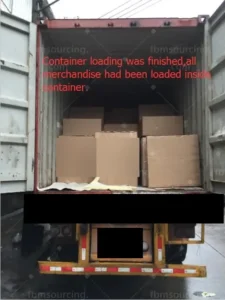
Inspection is carried out by our own team at the factory, as one inspection once bulk production is finished, before shipment. It samples finished leaves per AQL, checks finish film thickness and color against the sealed sample, verifies hardware preps with gauge blocks, and audits packing: corner protection, face protection, carton labeling by opening number. On fire-rated leaves the inspection also photographs every certification label. The site-repair cost of the defects it catches runs to multiples of the inspection cost.
Realistic Lead Times for Wooden Door Orders
Production starts from approved shop drawings, and the lead time is confirmed by the factory in writing for each order: fire-rated leaves and complex veneer work take longer than repetitive painted leaves. Sampling and approval come first, and take longer when the specification is incomplete. Sea freight comes on top, where transit time is confirmed by the carrier at booking, plus destination clearance. On FBM Sourcing projects we allow around four months from deposit to shipment: roughly two months for drawings and two months for production; repeat orders with approved samples move faster because drawings and samples are already signed off. Buyers working backwards from a site-installation date should treat the sample stage as the schedule risk, not the production line — approval loops with design teams consume more calendar time than hot presses do.
Get a China Procurement Quote for Your Door Package
FBM Sourcing manages door and window procurement from factory shortlist to container loading for hotels, apartments, schools and commercial buildings in the USA, Australia, Europe and the Caribbean. Send us your door schedule, drawings, quantities, destination port and project timeline, and our team will review your requirements and get back to you. Submit your project requirements here.
Related reading