
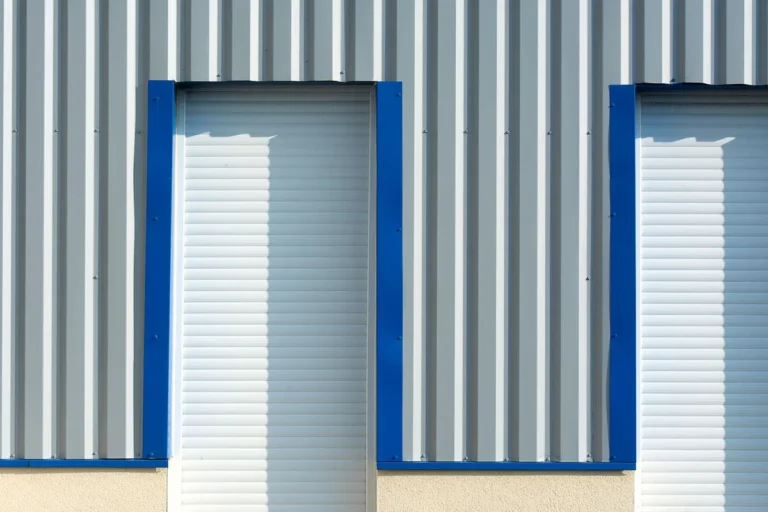
Sandwich panel manufacturers in China include metal-faced insulated panel lines for walls and roofs, mineral wool cored panel makers, expanded polystyrene cored panel makers, cold room and hygienic panel makers, and envelope contractors that supply panels together with framing and installation. A sandwich panel is a core held between two facings, and each route builds a different combination of core, facing and joint under the same name.
This guide sorts the supply side into five sourcing routes so a procurement team can send one brief to the right makers and compare the answers fairly. It is not a ranking. No factory is named or scored here, and no claim is made about the thermal, fire or structural performance of any panel. The project specification and the local authority define those requirements, and each maker must show evidence for the exact panel build it offers. For related products, see our guides to building insulation manufacturers, metal roofing sheet manufacturers and wall panels. If the destination is Australia, read our note on the asbestos import prohibition and the document file an importer should hold before you finalise the brief.
What should a sandwich panel brief state?
A brief that says only “insulated wall panel, white, 50 mm” produces quotations that cannot be compared, because thickness says nothing about what is inside. State at least the following, copied from the specification and the envelope drawings.
- Application: external wall, roof, internal partition, cold room or clean room, with the drawing reference for each area.
- Core type: the insulating core the specification names, written as the specifier writes it, not as the maker’s catalogue calls it.
- Facings: the metal or other facing material, the coating system and colour reference, and whether the two faces differ.
- Panel size and thickness: the panel width, thickness and maximum length per area, and whether lengths are cut to the drawing.
- Joint and fixing system: the side joint and end joint the designer draws, the fixings and the sealing method, and who supplies them.
- Reaction to fire and other requirements: the fire classification, thermal value or structural span the project asks for, with the standard and edition named by the project. These are decided by the project and the authority, not by the maker.
- Accessories: flashings, corners, trims, doors and windows set into the panels, and whether they are in the panel package or quoted apart.
- Packing and handling: protective film, edge protection, stacking and unloading method at site.
- Documents: the data sheets, test reports and installation instructions the project requires, with the product they refer to.
Five sourcing routes for sandwich panels
1. Metal-faced insulated panel lines for walls and roofs
Continuous or discontinuous lines produce factory-made panels with steel or aluminium facings and a foamed or bonded core, in standard widths and cut lengths. Ask for the panel build sheet that lists the core, the facing material and coating and the joint profile, and request a cut sample that shows the joint. These makers suit regular wall and roof packages where the project accepts a catalogue profile and approves the colour and coating on a sample.
2. Mineral wool cored panel makers
Where the project specification requires a non-combustible or mineral core for fire or acoustic reasons, the panel is made by lines that bond mineral wool to metal facings. Ask which core the maker uses, how the bonding is controlled and which test reports apply to the exact build, and request a sample with the joint. Do not accept a report for a different thickness or facing as a substitute. See our guide to acoustic panel manufacturers where the panel also has an acoustic role.
3. Expanded polystyrene cored panel makers
EPS cored panels are made on lighter lines and are common in simple enclosures and temporary or site buildings. Ask the maker for the core description, the facing and the joint, and confirm in writing that the build matches what the project specification allows in that location. Check the destination’s fire requirement for the use before you choose this route, and, for Australia, hold the document file described in our note on the asbestos import prohibition.
4. Cold room and hygienic panel makers
Panels for cold stores, kitchens, food areas and clean rooms are made with facings and joints suited to washing and sealing, and are often supplied with doors and cove profiles. Ask for the joint and sealing detail, the finish on the washable face, the door and frame package and the installation instructions, and approve a joint sample that shows how the panels meet the floor and ceiling.
5. Envelope contractors supplying panels with framing and installation
Some companies supply the panels with the supporting steel, flashing and installation crews. This puts one party in charge of the interface between panel, frame and building, but ask the contractor to price the panels, the framing and the installation as separate lines, and to name the panel maker whose product is used so that evidence can be checked. See our guide to ACP facade cladding manufacturers for a neighbouring cladding route.
Sourcing this for a commercial project?
FBM Sourcing manages the entire China procurement package for overseas construction projects. We work with Developers · General Contractors · Builders · Commercial Project Owners · Interior Design & Construction Companies · FF&E Solution Providers. Send your BOQ, drawings or product schedule for review.
How to compare sandwich panel quotations
- Panel build: core, facing material, coating and thickness stated on each line, so a cheaper line is read against what it contains.
- Units: whether the price is per square metre of panel, per piece or per linear metre, and whether it includes cutting to length.
- Joints and fixings: whether the joint profile, fixings and sealants are included or quoted apart.
- Accessories: flashings, trims, corners and closures listed separately with their quantities.
- Evidence: which test reports are offered for the exact build, with the date and the body that issued them.
- Packing: film, edge protection and stacking, and the number of pieces in each package.
- Exclusions and substitutions: any change of core, facing or coating the maker proposes.
A quotation that is cheaper on one line may be thinner on another. Read the descriptions side by side before reading the totals.
Samples, approval and acceptance on delivery
Approve a cut sample of each panel build, showing the core, the facings and the joint, before bulk production, and record the approval in writing against the drawing reference. Have the installer look at the joint and the fixing detail on the sample, because that is where installation problems start. Keep the approved sample as the reference for the bulk order.
On delivery, check a sample of packages against the order: panel type, thickness, length, facing colour, protective film and quantity of each accessory. Note any difference in writing on the day with photographs, so the maker can respond while the evidence is fresh.
What evidence to ask each route for
Evidence should be requested for the exact build, not for a product family. Ask for the following in writing and keep the answers with the quotation.
- Insulated panel lines: the build sheet with core, facing and joint, and a cut sample.
- Mineral wool panel makers: the test report that matches the thickness and facing, and a sample with the joint.
- EPS panel makers: the core description and written confirmation that the build matches the specification.
- Cold room and hygienic panel makers: the joint and sealing detail and a sample showing the junctions.
- Envelope contractors: the name of the panel maker, separate price lines and the installation method statement.
Specification gaps to close before quotation
A quotation cannot answer the questions below for itself. Check that the brief answers these questions before it goes out.
- Which core does the specification require, and in which standard is it described?
- What fire classification and what thermal or structural value does the project ask for, and for which area?
- Which facing and coating system is approved, and is there a colour sample?
- Is the joint profile drawn, and who supplies the fixings and sealants?
- Are flashings, doors and windows in the package?
- What documents must arrive with each shipment?
Next steps for a panel package
Send each maker the same brief and ask for answers in writing, line by line, with samples or documents before bulk production. FBM Sourcing manages China procurement packages for overseas projects; furniture-only packages are also run through FBM Furniture.
Questions buyers ask about sandwich panels from China
Is panel thickness enough to compare two quotations?
No. Thickness does not tell you what the core is or how the panel performs. Compare the core, the facing, the coating and the joint on each line, and ask for the test report that matches the exact build.
Who decides which core is acceptable?
The project specification and the local authority decide, based on the use of the building and the location of the panel. Name the requirement and its edition in the brief and ask each maker to show evidence for the exact build.
Can panels be supplied cut to length?
Many makers cut to the lengths on the drawing. State lengths per area, ask whether cutting is included in the price and confirm how cut panels are packed to avoid edge damage.
Should accessories be quoted with the panels?
Quote them on separate lines even when one maker supplies both, so that missing flashings and closures appear before the order and not on site.
How does FBM Sourcing support this kind of package?
We review the brief, collect comparable quotations and manage the package for the project. For suppliers you nominate, we charge a 5% commission; for products we source for you, we quote a direct price. Our own team performs one inspection after bulk production is complete and before shipment, and the client’s project team is welcome to attend.
FBM Sourcing manages the entire China procurement package for overseas construction projects. We work with Developers · General Contractors · Builders · Commercial Project Owners · Interior Design & Construction Companies · FF&E Solution Providers.





