Aluminium composite panel (ACP) and facade cladding is the one building material category where a sourcing decision can become a life-safety and insurability issue, so the supplier question is inseparable from the core question. China has two publicly listed groups whose disclosed business includes facade panels or facade contracting, and a very large private tier of coil coaters, panel laminators and aluminium sheet fabricators that no overseas buyer can verify from public records. This guide sets out the supplier types, the two verifiable listed companies, the manufacturing clusters, and the fire-performance evidence a project buyer must obtain before any panel is ordered.
What is actually being bought when you buy “cladding” from China?
The word covers at least four different products with different factories behind them:
- Aluminium composite panel (ACP/ACM) — two thin aluminium skins bonded to a core. The core material is the entire fire story: polyethylene (PE), fire-retardant (FR) and mineral core (A2) are three different products from the same-looking sheet.
- Solid aluminium panel (aluminium sheet cladding) — a single folded aluminium sheet, typically 2.5–4 mm, with no combustible core at all.
- Aluminium honeycomb panel — aluminium skins over an aluminium honeycomb core, used where flatness over large spans matters.
- Rainscreen sub-frame and fixings — often bought from a different supplier again, and often the part that fails a system test even when the panel passes.
A quotation that says “cladding, aluminium, 4 mm” without naming core type, alloy, coating system and system test reference is not a comparable quotation. This is the single most common reason two Chinese facade quotes differ by a large margin and the buyer cannot see why.
Publicly listed companies a project buyer can verify
We name only companies whose disclosures are public and checkable. Everything else in this guide is written as a supplier type.
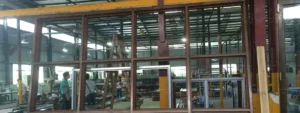
- Fangda Group (方大集团), Shenzhen Stock Exchange: 000055 (B-share 200055). Founded in Shenzhen in 1991 and listed since 1995, with a disclosed business scope covering curtain wall systems and materials alongside rail transit equipment and solar. It operates production bases in Shenzhen, Shanghai, Chengdu, Nanchang, Dongguan and Foshan. Evidence to request: which base will produce your panels, the core type and coating line at that base, and the specific fire test reports covering the exact build-up quoted.
- Jangho Group (江河集团), Shanghai Stock Exchange: 601886. Originally Beijing Jangho Curtain Wall, founded 1999 and listed on the SSE main board; building decoration — principally curtain wall and interior fit-out — accounts for the large majority of revenue. Important role distinction: Jangho is a facade design-and-build contractor, not a panel mill. Buying from a facade contractor is a different transaction from buying panels: you are buying an engineered system with responsibility for performance. Evidence to request: project references in your destination market, the panel supplier they intend to use, and the system test evidence they will warrant.
Listed status confirms scale and disclosure obligations. It does not confirm that a given panel line is right for your project, and it never substitutes for the test evidence described below.
The supplier types that make up the rest of the market
- Coil coaters. Own the PVDF/FEVE coating line and sell coated aluminium coil to panel makers. They control the coating warranty, which is often the longest-dated document in the package. Evidence to request: coating film thickness and adhesion test records, and the coating supplier’s warranty document naming the coil batch.
- Panel laminators (ACP mills). Bond skins to core. This is where core type is decided. Evidence to request: core supplier, core classification report, and a cut sample from the production batch — not a showroom sample.
- Solid aluminium panel fabricators. CNC folding, welding and stiffener work on sheet. Usually the right route where a project has banned combustible cores outright. Evidence to request: alloy and temper certificate, sheet thickness measurement, and welding procedure for corner returns.
- Facade contractors. Engineer, supply and sometimes install the system. Appropriate for complex or high-rise facades where responsibility for performance needs to sit with one party. Evidence to request: system test reports in the buyer’s jurisdiction and a named engineer of record.
- Trading companies and brand assemblers. Buy panels and resell. Can be competent, but the core question is whether they will disclose the mill. Evidence to request: mill name and address in writing, plus a substitution clause requiring written approval.
Sourcing this for a commercial project?
FBM Sourcing works with project owners, developers, main contractors and FF&E contractors on hotel, apartment, school, office and other commercial building projects. Send us your BOQ, drawings or product list — our team will review it and get back to you.
What fire evidence should you demand before ordering cladding?
This is the section to read twice. Cladding fire performance is regulated differently in every market and the terminology does not translate cleanly between them.
- Reaction-to-fire classification (Europe and many markets that reference it): EN 13501-1 gives a class such as A2-s1,d0 or B-s1,d0. A mineral-core ACP is typically classified A2-s1,d0; a fire-retardant core is typically B; a polyethylene core is not suitable for most facade applications. Ask for the classification report, not a “certificate” summary, and check it covers the same thickness and skin gauge you are buying.
- Surface burning characteristics (United States): ASTM E84 gives flame spread and smoke developed indices, but on its own it is not sufficient for exterior walls on many building types.
- Full-scale system tests: NFPA 285 in the United States and BS 8414 with BR 135 criteria in the United Kingdom test the assembly — panel, insulation, cavity, barriers and fixings — not just the panel. A panel classification alone does not demonstrate system compliance. If your project requires a system test, the report must cover a build-up that matches what will be installed.
- Local restrictions: several jurisdictions have banned or heavily restricted combustible cores on buildings above given heights or of given uses since 2017. Confirm the current rule at the destination with the project’s fire engineer before comparing prices, because the rule determines which products are even eligible.
Our overview of fire rating standards for building materials and finishes explains how these test families relate to each other across markets.
Two practical warnings. First, a report is only evidence if the report number can be verified with the issuing laboratory — treat an emailed PDF as a claim until it is checked. Second, insist that the classification covers the core grade actually being supplied; substituting an FR core for an A2 core is visually undetectable on site and is the failure mode that matters most.
Which clusters in China make facade panels?
- Guangdong (Foshan, Guangzhou, Dongguan, Zhaoqing). The densest concentration of aluminium extrusion, coil coating and panel fabrication, with the deepest export experience.
- Shandong (Linqu, Zibo) and Henan (Gongyi). Large aluminium sheet and coil capacity feeding panel laminators.
- Jiangsu and Shanghai. Facade contracting, engineering and higher-specification unitised work; closer to the design and testing ecosystem.
- Sichuan and Jiangxi. Inland production bases established by larger groups, generally serving domestic demand but increasingly export-capable.
If your facade package also includes glass, note that the glass and panel supply chains rarely sit in the same plant. Our guides to curtain wall and architectural glass manufacturers and to curtain wall versus window wall systems cover that side, and facade shading systems covers the shading layer that often sits in front of the cladding. Where the design mixes materials, our stone cladding sourcing guide covers the natural stone alternative.
How does facade cladding ship on a project?
Panels are cut to size and folded to a cassette or tray before shipping, which means the packing list is effectively a piece-by-piece manifest tied to the facade setting-out drawings. Damage on one panel does not stop installation; a missing panel type does.
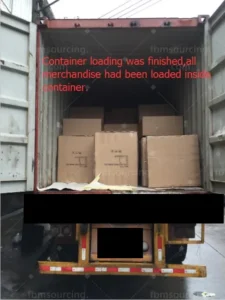
Sometimes, on a large project, the cladding panels alone fill full containers; sometimes the cladding panels share containers with the other product categories of the same project; and sometimes, in one batch, we combine a dozen or more product categories from several projects of the same client into a few containers — always full containers, and for us this is routine, well-practised work.
Order the sub-frame and fixings with the panels wherever possible. Splitting them across suppliers and shipments is the most common cause of a facade package sitting on site incomplete.
Why this list has no scores, ratings or supplier links
We publish no score column and no outbound links to the companies named. A score would imply we had audited every company against the same criteria in the same period. What we do instead is state what is publicly verifiable, describe supplier types honestly, and set out the evidence to request — the judgement stays with the project team and its fire engineer.
We also publish no prices for cladding. Panel price moves with alloy, thickness, core grade, coating system and quantity, and a number published today would mislead a reader next year.
About FBM Sourcing
FBM Sourcing manages the entire China procurement package for overseas construction projects. Sourcing since 2014, we have shipped 1,000+ containers to project sites in 20+ countries, working with project owners, developers, main contractors and FF&E contractors on hotels, apartment buildings, schools, offices and other commercial buildings. All quotations, invoices and shipping documents are issued by FBM Sourcing — you deal with us, and we carry the responsibility. For suppliers you nominate, we charge a 5% commission; for products we source for you, we quote a direct price.
If you have a facade package to price, send us the elevations, the panel schedule and the fire requirement at https://fbmsourcing.com/china-building-materials-ffe-procurement/.
For a Gulf project, composite panel is approved as a system rather than as a panel, and full-scale facade testing is not currently available at a China-located laboratory on the relevant registers — a programme fact worth settling early. See fire safety approvals for a Gulf project.
Frequently asked questions
Are there listed Chinese companies in facade cladding?
Yes. Fangda Group (000055, Shenzhen Stock Exchange, B-share 200055) discloses curtain wall systems and materials among its business segments, and Jangho Group (601886, Shanghai Stock Exchange) is a listed facade design-and-build contractor. Most ACP laminators and coil coaters are private companies without public disclosure.
What is the difference between PE, FR and A2 core ACP?
They differ in the core material and therefore in reaction to fire. Under EN 13501-1, a mineral core panel is typically classified A2-s1,d0, a fire-retardant core typically falls in class B, and polyethylene core is not suitable for most facade applications. Always confirm the classification report covers the exact panel build-up quoted.
Does a panel fire classification prove the facade complies?
No. Classifications such as EN 13501-1 or ASTM E84 describe the panel or its surface. Many jurisdictions require a full-scale system test — NFPA 285 in the United States or BS 8414 assessed to BR 135 in the United Kingdom — covering the whole assembly including insulation, cavity barriers and fixings.
Can I buy panels and sub-frame from different suppliers?
You can, but it moves system responsibility onto the buyer and complicates any system-test claim. On facades where a system test is required, buy the tested build-up from one responsible party.
What is the minimum order for facade cladding from China?
We do not handle loose freight. The practical minimum is a full container load consolidated for one client; cladding can share containers with the other product categories of the same project.