The leading commercial roller blind manufacturers in China fall into three groups: shading-fabric mills such as Shandong Yuma, Zhejiang Xidamen and Ningbo Xianfeng New Material; finished-blind and motorized-systems factories such as Guangdong Chuangming and Shanghai SUNC; and tubular-motor makers such as Ningbo Dooya and A-OK. Which group you should buy from depends on whether your specification is driven by fabric performance, by integrated motorized systems, or by control-side compatibility. This guide profiles seven verified Chinese factories for hotel, office and apartment projects — and shows how a China sourcing partner matches each type of factory to a project specification.
Scope note: this ranking covers interior roller blinds and motorized interior shading. If you are specifying exterior aluminium shading for a facade, see our list of top sunshade and louver manufacturers in China. If you are still deciding which window treatment to specify, start with blackout curtains vs roller blinds vs motorized shades for hotel projects. And for facade-mounted exterior systems, see motorized sunshade systems sourcing from China.
Where Are China’s Roller Blind Manufacturers Clustered?
The industry is geographically concentrated. Shading and blackout fabrics come mainly from Zhejiang and Shandong: the Keqiao district of Shaoxing hosts China Textile City, a market and production cluster of more than 20,000 textile enterprises that produces roughly a quarter of the world’s fabric output, with dedicated markets for blackout and window-screen materials. Tubular motors and controls come largely from Ningbo and the Pearl River Delta in Guangdong, and finished-blind assembly factories are spread across Guangdong, Zhejiang and Shanghai.
For context: several well-known international brands — Hunter Douglas and Coulisse from the Netherlands, TOSO from Japan, Somfy from France on the motor side — are active in the Chinese market, and some manufacture in China. They are not Chinese manufacturers, so they are not ranked below; this list covers Chinese-owned factories only.
A project-grade motorized roller blind package is made up of five components:
- Shading fabric — solar screen (1%, 3% or 5% openness), dimout, or coated 100% blackout fabric
- Aluminium tube and brackets — sized around standard 25 mm, 35 mm or 45 mm tubular motors
- Tubular motor — hardwired 230V/110V AC or rechargeable DC, from motor factories such as Ningbo Dooya or A-OK
- Controls — wall switch, RF remote, or Zigbee/Wi-Fi integration with the guest-room control system
- Fascia, cassette and side channels — required where the spec calls for full blackout performance
What Should You Specify Before Approaching Manufacturers?
Three specification decisions determine which factory type you need. First, fabric: openness factor is the percentage of the weave that is physically open — a 1% solar screen blocks around 99% of UV and gives maximum glare control, 3% blocks around 97% and is the most common office choice, and 5% preserves more outward view. Second, fire performance: the flame-retardancy standards most often named in commercial specifications are NFPA 701 for the United States, BS 5867 Part 2 Type B for the United Kingdom and EN 13773 for the European Union, and the test report must be issued for the exact fabric line quoted. Third, drive: tubular motors are sized to tube diameter, with 25 mm and 35 mm motors covering most interior roller blinds and 45 mm motors reserved for oversized or heavy-duty applications.
With those three decisions written down, the seven factories below sort themselves quickly.
Top Shading Fabric Mills in China (1–3)
1. Shandong Yuma Sun-Shading Technology
Yuma, based in Shouguang, Shandong, is one of China’s largest shading-fabric makers, with weaving, dyeing and finishing, and functional coating all in-house. Its catalogue runs to roughly a thousand fabric varieties across sunscreen, dimout and blackout categories, and the company was an early mass producer of zebra (dual-layer) blind fabrics in China.
Yuma fabrics are exported to more than 100 countries, and the company is publicly listed on the Shenzhen Stock Exchange (300993) — useful for buyers who want audited financials behind a fabric nomination on a multi-year hotel program.
- Location: Shouguang, Shandong
- Established: fabric business dating back to 1991; listed entity SZSE 300993
- Classification: Shading-fabric mill (roller, zebra, sunscreen, blackout)
- Key products: Solar screen, dimout and blackout roller fabrics; zebra and Shangri-La fabrics
- Certifications: Publicly listed; request current FR test reports (NFPA 701 / BS 5867 / EN 13773) for the specific fabric line
Verdict: a strong fabric nomination when one hotel or office program needs many fabric types — screen, dimout and blackout — held to one consistent quality system.
2. Zhejiang Xidamen New Material
Xidamen sits in the Keqiao district of Shaoxing — inside China’s main shading-fabric production region — and has been making functional sunshade fabrics since 1997. It produces sunscreen, zebra, Shangri-La and blackout roller fabrics, and unlike most mills it also makes ready-made blinds, which it markets specifically for hotels, office buildings, libraries and public projects.
The company listed on the Main Board of the Shanghai Stock Exchange (605155) in 2020 and exports to around 70 countries. For a project buyer, the fabric-plus-made-up-blind combination can shorten the chain when the specification is fabric-led.
- Location: Keqiao, Shaoxing, Zhejiang
- Established: 1997; listed SSE 605155 (2020)
- Classification: Shading-fabric mill with ready-made blind production
- Key products: Sunscreen, zebra, Shangri-La and blackout fabrics; finished roller blinds
- Certifications: Publicly listed; confirm current FR test reports per fabric line and destination market
Verdict: a good fit for hotel and public-building projects that want fabric and made-up blinds from one factory in the heart of the Keqiao cluster.
3. Ningbo Xianfeng New Material
Xianfeng New Material, based in Ningbo, specialises in polymer composite sunshade materials — the glass-fibre and polyester yarn-coated fabrics used in solar screens — for both interior and exterior shading. Its core lines are sunshine (screen) fabrics and coated blackout fabrics, and it is a publicly listed company.
Because its strength is the engineered screen fabric itself, Xianfeng is typically nominated at fabric level for office towers and other glazing-heavy commercial buildings where solar-control performance drives the specification.
- Location: Ningbo, Zhejiang
- Established: long-established; exact founding year not independently verified — confirm in due diligence
- Classification: Shading-fabric mill (polymer composite screen and coated fabrics)
- Key products: Solar screen fabrics in standard openness factors; coated blackout fabrics
- Certifications: Publicly listed; request current FR and performance test reports per fabric line
Verdict: suits screen-heavy office and apartment specifications where openness factor, UV blocking and glare control are the numbers that matter.
Sourcing this for a commercial project?
FBM Sourcing works with project owners, developers, main contractors and FF&E contractors on hotel, apartment, school, office and other commercial building projects. Send us your BOQ, drawings or product list — our team will review it and get back to you.
Finished Blind and Motorized Shading Systems Factories (4–5)
4. Guangdong Chuangming Sun-Shade Technology
Chuangming, established in 1997 in Guangdong, is one of China’s best-known finished window-covering factories, integrating R&D, production and project service for both interior and exterior products. Its range covers roller, zebra, honeycomb and venetian blinds alongside curtain systems, with OEM and ODM production for export markets under its WINTOM brand.
The factory positions itself on complete solutions for hotels, commercial buildings, schools and public places, which in practice means it can take a mixed interior shading schedule — guestroom blackout roller blinds, screen blinds for corridors and meeting rooms, motorized units for high glazing — and deliver it as one manufactured package.
- Location: Guangdong (Guangzhou area)
- Established: 1997
- Classification: Finished-blind factory, interior and exterior, manual and motorized
- Key products: Roller, zebra, honeycomb and venetian blinds; motorized ranges; OEM/ODM
- Certifications: Request current product test reports and FR certificates per range
Verdict: a solid choice when a hotel or office project needs the whole interior blind schedule manufactured and motorized by one factory.
5. Shanghai SUNC Intelligence Shade Technology
SUNC, established in 2008 in Shanghai, works at the systems end of the market: intelligent interior window shading and engineering sunshade products, including motorized roller systems supplied on a project basis rather than as catalogue goods.
Its engineering orientation makes it relevant where the shading package must be coordinated with the building — motor wiring, control integration and installation detail — rather than simply delivered in boxes. For overseas projects that coordination burden is real, which is where an experienced sourcing partner earns its keep on drawings review before the order is placed.
- Location: Shanghai
- Established: 2008
- Classification: Motorized shading systems and engineering-project factory
- Key products: Intelligent interior shading systems; motorized roller systems; engineering sunshade products
- Certifications: Request current product and motor certifications per system quoted
Verdict: suits projects that need engineered, control-integrated motorized shading with project support, rather than commodity blinds.
Tubular Motor and Control Manufacturers (6–7)
6. Ningbo Dooya Mechanic & Electronic Technology
Dooya, based in Ningbo, is China’s best-known tubular motor maker and one of the largest in the world, producing AC and DC tubular motors, curtain motors, venetian drives and control systems. The company holds more than 300 patents and its motors carry CE, VDE, TUV, UL, FCC and RoHS approvals under an ISO 9001 quality system.
On commercial projects, Dooya matters because most Chinese finished-blind factories offer Dooya as their standard motor option — so naming the motor brand in your order is an easy way to fix the quality of the moving part without changing factories.
- Location: Ningbo, Zhejiang
- Established: founding year not independently verified; long-standing industry leader
- Classification: Tubular motor and control-system factory
- Key products: AC/DC tubular motors, curtain motors, venetian drives, remote and smart-home controls
- Certifications: CE, VDE, TUV, UL, FCC, RoHS; ISO 9001
Verdict: the default motor specification for project-grade motorized roller blinds — name it in the order rather than leaving the motor choice open.
7. A-OK Technology Grand Development
A-OK, a Guangdong-based motor maker with operations in Shenzhen, has produced tubular motors since 1998 and added its own control units in 2003. Its range covers 25 mm and 35 mm tubular motors for roller blinds and zebra shades through to larger motors for shutters and awnings, with Wi-Fi and Zigbee smart-control integration and IP55-rated models.
A-OK is the most common alternative to Dooya on Chinese motorized blinds and supports OEM and ODM production, which makes it a practical second source when a project standardises its control protocol first and selects motors to suit.
- Location: Guangdong (Shenzhen)
- Established: motor production since 1998; control units since 2003
- Classification: Tubular motor and control-system factory
- Key products: 25 mm/35 mm tubular motors, shutter and awning motors, Wi-Fi/Zigbee controls
- Certifications: IP55-rated ranges; confirm CE/UL status per motor model and destination market
Verdict: a credible second motor source, especially where the building’s smart-control protocol drives the selection.
Comparison Table: All Seven Manufacturers at a Glance
| # | Manufacturer | Base | Classification | Best fit for |
|---|---|---|---|---|
| 1 | Shandong Yuma Sun-Shading Technology | Shouguang, Shandong | Shading-fabric mill (listed, SZSE 300993) | Programs needing many fabric types under one quality system |
| 2 | Zhejiang Xidamen New Material | Keqiao, Shaoxing | Fabric mill + ready-made blinds (listed, SSE 605155) | Hotel and public projects wanting fabric and made-up blinds together |
| 3 | Ningbo Xianfeng New Material | Ningbo, Zhejiang | Polymer composite screen-fabric mill (listed) | Screen-led office and apartment specifications |
| 4 | Guangdong Chuangming Sun-Shade Technology | Guangdong | Finished-blind factory, manual and motorized | Whole interior blind schedules from one factory |
| 5 | Shanghai SUNC Intelligence Shade Technology | Shanghai | Motorized systems and engineering projects | Control-integrated, engineered shading packages |
| 6 | Ningbo Dooya | Ningbo, Zhejiang | Tubular motors and controls | Default motor nomination on project orders |
| 7 | A-OK Technology Grand Development | Guangdong (Shenzhen) | Tubular motors and controls | Second motor source; protocol-led selection |
Which Type of Factory Fits Your Project?
The practical rule: if your specification leads with fabric performance — openness factor, blackout rating, FR certificate — nominate the fabric mill and let a finished-blind factory make it up. If your specification leads with systems — motorized operation, control integration, coordinated installation — start from the finished-blind or systems factory and nominate the motor brand inside its offer. Office towers tend to be fabric-led; hotels tend to be system-led, because guestroom blackout, corridor screening and lobby motorization arrive as one package alongside the rest of the complete hotel FF&E package from China.
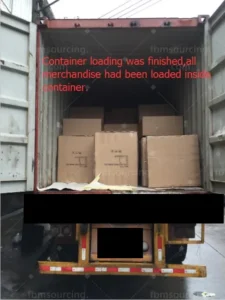
This is exactly the coordination work a China sourcing agent exists to do. FBM Sourcing manages the entire China procurement package for overseas construction projects. For window shading, that means matching the fabric mill, motor maker and assembly factory to your drawings, checking the FR test reports against your destination market, and having our own team inspect the goods at the factory before shipment, with photo and video records. Roller blinds rarely travel alone on our projects: for reference, a 40HQ container holds roughly 68 m³ and a 20GP roughly 28 m³. Sometimes, on a large project, the roller blinds alone fill full containers; sometimes the roller blinds share containers with the other product categories of the same project; and sometimes, in one batch, we combine a dozen or more product categories from several projects of the same client into a few containers — always full containers, and for us this is routine, well-practised work. Window shading is one line of the broader China building material manufacturers directory we buy against every month.
Frequently Asked Questions
Should hotels specify motorized or manual roller blinds?
Standard guestrooms are often specified with manual chain-operated roller blinds because they are simple to maintain and have no wiring requirement. Motorized operation is usually specified for high or oversized windows, meeting rooms, lobbies and any glazing above safe manual reach. For motorized guestroom blinds, decide early between hardwired 230V/110V AC motors, which need conduit coordination with the electrical contractor, and rechargeable DC battery motors, which avoid wiring but add a charging routine for housekeeping.
What fire standards apply to commercial window shading?
The most commonly specified flame-retardancy standards for interior window shading are NFPA 701 in the United States, BS 5867 Part 2 Type B in the United Kingdom and EN 13773 in the European Union, with hospitals and care settings in the UK often requiring the stricter Type C. Always confirm the standard named in your local building code and ask the factory for a current test report issued for the exact fabric being quoted, not for the brand in general.
What does openness factor mean on solar screen fabric?
Openness factor is the percentage of a screen fabric’s surface that is physically open weave, commonly offered at 1%, 3% and 5%. A 1% fabric blocks around 99% of UV and gives the strongest glare control for west-facing glazing and screen-based workplaces, while 3% is the most common office specification and 5% preserves more outward view. Lower openness means better glare and heat control but a darker interior.
Can one Chinese factory make the complete motorized roller blind?
Usually not alone. In China the fabric typically comes from a shading-fabric mill, the tubular motor from a dedicated motor factory, and the assembly from a finished-blind factory that integrates both into tubes, cassettes and side channels. Finished-blind factories routinely fit motors from Ningbo Dooya or A-OK, so one factory can deliver the complete blind — but the fabric brand, motor brand and warranty terms should each be named in the order.
Get a China Procurement Quote for Your Project
If interior roller blinds or motorized shading appear on your project — a hotel, office, apartment block or school — send us the window schedule and we will map it to the right combination of fabric mill, motor maker and assembly factory. Submit your drawings, quantities, destination port and timeline, and FBM Sourcing will come back with a factory-matched proposal for the shading package alongside any other product categories on your BOQ.