Commercial project buyers sourcing building materials and furniture from China are generally choosing between two structurally different models. One is the manufacturer-run showroom: a single operation with its own factories and a large in-house catalogue, selling directly from its own inventory. The other is the owner-side procurement agent — sometimes called a China sourcing agent or sourcing partner — an independent firm that holds no inventory, has no product range of its own, and sources, compares and manages delivery of whatever the project’s BOQ actually calls for. This page is not about which model is cheaper. It is about which model’s incentives, pricing structure and accountability actually match the buyer’s.
- One-stop showroom supplier: sells its own factory output or stocked catalogue; one packaged, unbundled price; sample approval and bulk-order QC controlled by the same operation that sold you the goods.
- Owner-side procurement agent: holds no inventory; a direct price for products it sources, 5% commission for suppliers you nominate; FBM Sourcing’s own pre-shipment inspection, with the inspection record delivered to the buyer.
- Neither model’s headline savings claim is independently verifiable — what can actually be checked is the structure behind the price, not the price itself.
- For a hotel, apartment, school or office project, this structural difference compounds as BOQ size and category count grow.
Two Different Starting Points: Showroom Supplier vs Procurement Agent
A one-stop showroom supplier is, structurally, a seller. It operates its own factories or works with a fixed pool of manufacturing partners, displays a wide catalogue spanning many product categories under one roof, and quotes a single packaged price for whatever the buyer selects from that catalogue. Its commercial incentive is to sell what it already makes or stocks.
An owner-side procurement agent is structurally the opposite. FBM Sourcing does not manufacture, does not hold inventory and has no product range of its own — it acts on the buyer’s behalf: reading the BOQ, sourcing each line item from the factory best suited to it, running quality control, and managing consolidation and shipping. Because the agent has no product range of its own, its commercial incentive is to find the right factory for each item on the BOQ — not to move its own stock.
Three Questions That Reveal the Structural Difference
Whatever the sales presentation looks like, three questions cut through to the actual structure of a deal, because the two models answer them differently by design — not because one company happens to be better run than another.
Who does the project manager work for?
In a showroom model, the person managing an order is an employee of the operation selling the product — their role is to move that operation’s own catalogue, however professionally they do it. Under an owner-side agent, the project manager has no product line of their own to be loyal to. This is the practical meaning of “buyer-side” versus “sell-side”: whose payroll, and whose product catalogue, the person coordinating your project actually answers to.
How are they paid?
A showroom quotes one packaged number for whatever is selected from its own range. FBM Sourcing works differently: All quotations, invoices and shipping documents are issued by FBM Sourcing — you deal with us, and we carry the responsibility. For suppliers you nominate, we charge a 5% commission; for products we source for you, we quote a direct price.
Sourcing this for a commercial project?
FBM Sourcing works with project owners, developers, main contractors and FF&E contractors on hotel, apartment, school, office and other commercial building projects. Send us your BOQ, drawings or product list — our team will review it and get back to you.
Get a Project Quote
WhatsApp +86 135 6007 5057
Email [email protected]
Six Structural Differences Between the Two Models
Zooming out from the three questions above, the same structural gap shows up in six concrete places where a commercial project buyer actually interacts with each model.
1. Who can recommend products with a clean incentive
Because a showroom supplier profits from what it already manufactures or stocks — a wide catalogue spanning many product categories under one roof — it has a structural incentive to steer a BOQ toward its own range, even where a different factory would fit better. An owner-side agent has no product line to protect, which is what keeps a factory recommendation tied to fit for the BOQ line, not to what happens to be on the showroom floor.
2. Whether comparison is actually independent
A showroom visit can feel like comparison shopping, especially when a large operation presents multiple teams or divisions to talk to. Structurally, comparing quotes gathered within one operation is still comparing that operation against itself, not the market. An owner-side agent runs it the other way: for every BOQ line, FBM Sourcing tenders across genuinely independent factories and compares quality, price and compliance like for like.
3. Who verifies that bulk production matches the sample
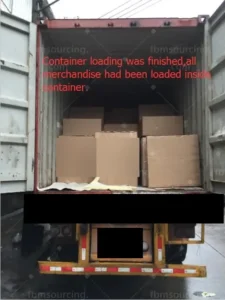
In a showroom model, the party that approved the sample and the party producing the bulk order sit inside the same commercial operation — the inspector and the seller are effectively one and the same, a structural conflict regardless of how carefully any individual team works. FBM Sourcing’s own QC team inspects every order against the approved sample and the project specification before it ships, and the inspection record — photos and video — goes to the buyer, not just a sign-off.
4. Whether the BOQ is checked against destination-market certification
Showroom catalogues are generally built around what is already in stock or in production — a display-and-sell logic that does not automatically check each item against the destination market’s certification and code requirements. A BOQ-driven process runs the other way: FBM Sourcing aligns specifications and destination-market certification requirements against the BOQ, line by line, before production starts, rather than after a container has already been packed.
5. Whose project this actually is
Who is accountable for a specific project has a structural answer, not a personal one. Inside a showroom operation, accountability runs toward the operation’s own sales and its own product range, because that is what the business model is built to protect. Inside an owner-side agency, accountability runs toward the buyer’s BOQ, timeline and destination requirements — because that is the only thing the agent is paid to manage.
6. Whether each line maps to the BOQ
A showroom’s packaged quotation is typically presented as one number for the whole selection. FBM Sourcing quotes every line against the BOQ it was built from, so each line can be read against the specification it answers.
Where This Framework Comes From
None of this is a framework FBM Sourcing invented for marketing purposes: separating who manufactures from who manages the buyer’s package is how commercial FF&E procurement is organised on Western hospitality projects, and FBM Sourcing applies the same separation to Chinese factories, BOQs and container logistics.
For a hotel, apartment development, school or office project, this structural difference matters more as project size and category count grow. FBM Sourcing manages the entire China procurement package for overseas construction projects, on the buyer-side model described above. For what a single procurement contract actually covers on a hotel project — and where responsibility sits if it is split across suppliers instead — see our companion breakdown of what “one contract” actually covers on a hotel FF&E package.
Frequently Asked Questions
What is the core structural difference between a one-stop showroom supplier and an owner-side procurement agent?
A showroom supplier is a seller: it profits from moving its own factory output or stocked catalogue, so it cannot compare its own products against competing factories with a neutral incentive. An owner-side agent such as FBM Sourcing holds no inventory and has no range of its own, so its incentive is to source the right item for the BOQ, not to sell from its own range.
Who does a procurement agent’s project manager actually work for?
Accountability runs to the buyer’s BOQ, timeline and destination-market requirements. In a showroom model, the order manager is part of the operation selling the product, and is structurally accountable to that operation’s own sales and range.
Is FBM Sourcing’s commission disclosed?
Yes. All quotations, invoices and shipping documents are issued by FBM Sourcing — you deal with us, and we carry the responsibility. For suppliers you nominate, we charge a 5% commission; for products we source for you, we quote a direct price.
Does a one-stop showroom model allow independent, cross-factory comparison?
Not structurally. Even when a showroom operation presents multiple teams or divisions, comparing quotes gathered within that one operation is still comparing it against itself. An owner-side agent tenders each BOQ line across genuinely independent factories.