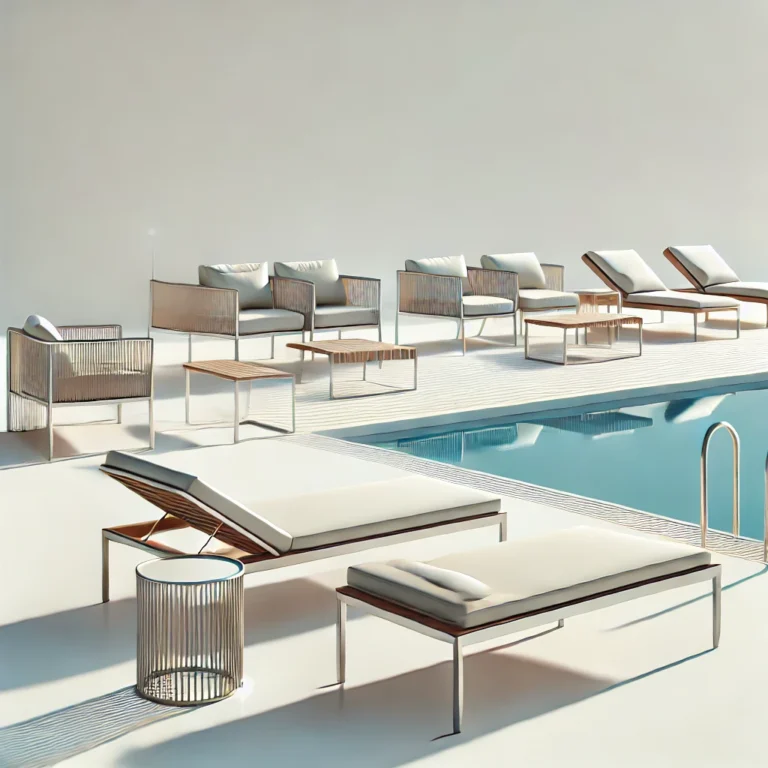
Outdoor and patio furniture for hotels and resorts is procured from China as a specified commercial package: powder-coated aluminium or teak frames, synthetic rattan or rope weaves, solution-dyed acrylic fabrics and quick-dry foams, selected against the property’s climate and maintenance regime rather than against catalogue photos. The procurement path is the same as any project FF&E category — specification, sampling, production, inspection, container planning — but the specification logic is different, because outdoor furniture fails in the sun and the rain, not in the showroom. This guide covers the material decisions, the weather-performance specifications worth writing into the purchase order, and how the timeline and container maths work for pool decks, rooftop terraces, resort villas and restaurant exteriors. FBM Sourcing acts as your sourcing partner from specification through to shipment.
It is written for project buyers — hotel and resort developers, operators, main contractors and FF&E contractors. If you are shortlisting production sources first, start with our ranked review of the top outdoor furniture manufacturers in China for hotel and resort projects.
Which Frame Material Should Your Project Specify?
Frame material is the first decision, and climate makes it for you more than aesthetics do:
Powder-coated aluminium is the commercial default: light, corrosion-resistant, and produced at enormous scale in China. For contract use, specify frame wall thickness of 1.5–2.0mm and a powder-coat film of 60–80 microns; for coastal and poolside properties, require a salt-spray-tested coating system and 316-grade stainless fixings, because standard fasteners are where rust appears first.
Teak suits resort and premium positioning — specify grade-A kiln-dried stock and accept that it silvers naturally unless the operator commits to oiling. It is heavy in freight terms and priced accordingly.
Synthetic rattan (HDPE wicker) and rope weaves deliver the resort look over aluminium sub-frames; the specification point is the weave material itself — virgin HDPE with UV stabiliser, not cheaper PVC blends that crack within 2–3 seasons in strong sun.
Powder-coated steel is stronger per section but corrodes at any coating breach, so restrict it to covered or inland applications.
The decision rule: coastal or chlorinated-pool environments push you to aluminium with marine-grade fixings; covered terraces open up steel and mixed materials; premium resort positioning justifies teak. For humidity-heavy destinations, our guide to moisture-resistant furniture for hotels and coastal projects covers the adjacent indoor-outdoor categories.
What Fabric and Cushion Specs Survive a Pool Deck?
Cushions fail before frames on almost every outdoor project, so the textile specification carries as much weight as the frame specification:
- Solution-dyed acrylic fabric is the contract standard — the colour is in the fibre, not printed on it, so it resists UV fade through thousands of hours of exposure where piece-dyed polyester fades in a single season. Specify solution-dyed explicitly; “outdoor fabric” alone is not a specification.
- Quick-dry foam with an open-cell structure and drainage mesh underside, so cushions shed rain and pool splash instead of holding it against the fabric.
- Water-repellent finish and sealed seams on scatter cushions, and zips in marine-grade plastic rather than metal.
- Removable covers as an operational requirement — housekeeping replaces covers, not cushions, over an 8–10 year furniture life.
Ask for the fabric mill’s UV performance data with the quotation, and approve fabric on physical swatches under daylight — outdoor colours read differently in sun than in a showroom.
How Do You Match the Specification to Climate and Maintenance Reality?
The most common outdoor procurement error is specifying for the design render and ignoring who maintains the furniture afterwards. Three questions settle the specification level:
What is the exposure? A rooftop bar in Dubai, a monsoon-belt resort pool deck and a covered Melbourne terrace are three different duty cycles. Salt air, chlorine, UV index and rainfall each eliminate certain materials before design preference enters the discussion.
What will the operator actually do? Teak oiling schedules, cushion storage in storm season, cover rotation — if the honest answer is “minimal maintenance,” specify aluminium frames, HDPE weave and solution-dyed fabric, which degrade slowest when neglected.
What is the replacement model? Outdoor furniture at a busy resort works harder than lobby furniture. Order a small allowance of spare stock on seating and cushions with the main production run, agreed at order stage, because matching a weave colour or fabric batch two years later is rarely possible.
Sourcing this for a commercial project?
FBM Sourcing works with project owners, developers, main contractors and FF&E contractors on hotel, apartment, school, office and other commercial building projects. Send us your BOQ, drawings or product list — our team will review it and get back to you.
What Does the Procurement Timeline Look Like?
Outdoor furniture follows the standard project FF&E sequence, with one seasonal twist — properties want it installed before their high season, which concentrates demand into the same production window every year. A realistic programme:
- Quotation: issued once drawings, quantities, fabric references and destination are fixed — quotations are only comparable when frame spec, weave material, fabric grade and packing standard are identical line by line
- Sampling: frame, weave and fabric samples, with sample timing confirmed by the factory for each item; sit-test loungers and dining chairs physically, because comfort cannot be judged from photographs
- Production: lead time for a full resort package is confirmed by the factory in writing for each order, after sample sign-off
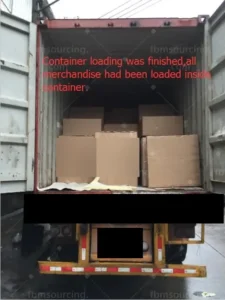
- Inspection and loading: final inspection before each container closes, then supervised loading
- Ocean freight: transit time is confirmed by the carrier at booking, plus clearance and site delivery
Counting backwards from a high-season opening, please plan for about four months between deposit and shipment, plus ocean transit, clearance and site delivery. Consolidating outdoor furniture with the project’s other categories — indoor FF&E, lighting, sanitaryware, doors — into shared containers is standard practice; the mechanics are in our guide to consolidating multiple factories into one container.
Why Does Container Planning Matter More for Outdoor Pieces?
Outdoor furniture cubes out fast: loungers, deep-seat sofas and dining sets are volume, not weight. How much furniture fits inside a 40ft high-cube container depends heavily on three packing decisions made at order stage — whether loungers stack, whether dining tables ship with legs detached, and whether cushions ship vacuum-compressed in cartons separate from frames. Stackable and knock-down configurations can cut container count noticeably versus fully assembled shipping, which matters because ocean freight is charged per box regardless of what is in it. Ask the factory for the carton dimensions and a loading plan with the quotation, not after the deposit — the same discipline shown in our Dubai chain-restaurant outdoor and lounge furniture procurement case.
How Is Quality Controlled Before Shipment?
Outdoor defects are slow-burn defects — a coating breach or a PVC-blend weave looks fine at handover and fails a year later — so inspection focuses on what will fail, not what shows. On FBM Sourcing projects, quality control is performed by our own team inside the factories, with samples approved before production and a full inspection once production is finished, before loading, all documented in photo and video records delivered to the client. The outdoor-specific inspection points:
- Weld and frame quality: ground welds, no coating gaps at joints, frames square and stable on a flat surface
- Coating verification: film thickness checked against the 60–80 micron specification; coating system documentation matched to the salt-spray requirement for coastal projects
- Weave material: HDPE verified against approved samples — the substitution to cheaper blends is invisible to the eye
- Fabric and cushion conformity: solution-dyed fabric batch matched to the approved swatch; foam type and drainage construction opened and checked on random cushions
- Hardware: 316 stainless fixings confirmed where specified; folding and reclining mechanisms cycled
- Packing: carton strength, corner protection and stacking configuration checked against the loading plan
If the property is in Australia, the specification also has to cover biosecurity import conditions for rattan, bamboo and timber components and coastal coating evidence; see our shortlist of outdoor furniture manufacturers in China for Australian commercial and hospitality projects.
Get an Outdoor Furniture Package Quote for Your Project
Send your outdoor area layouts, item schedule with quantities, climate and exposure notes, reference images, destination port and target install date. As a China procurement agent for hotels and apartment developments working on a 5% commission for suppliers you nominate (products we source for you are quoted at a direct price), FBM Sourcing comes back with a material recommendation matched to your climate, comparable factory quotations, a container plan and a production schedule counted backwards from your season opening.