China is the world’s largest producer of ceramic and porcelain tile, and one of the largest exporters of engineered wood flooring, luxury vinyl tile (LVT) and stone flooring products, which is why most large-scale commercial flooring packages — hotel corridors, apartment lobbies, school classrooms, office floorplates — end up sourced from a small number of manufacturing clusters concentrated in a handful of provinces. Understanding where each flooring category is actually made, and what that means for lead time and consolidation, is the difference between a flooring schedule that ships on time and one that becomes the bottleneck on a project’s finishing trades.
Where China’s Flooring Manufacturing Clusters Are
Flooring manufacturing in China is not evenly spread across the country — it is concentrated in a small number of industrial clusters, each specializing in a different flooring category:
- Foshan, Guangdong — the largest ceramic and porcelain tile manufacturing base in China, producing the majority of the tile that ships to Australia, the Middle East and Southeast Asia. Foshan factories range from large-format porcelain slab producers to standard-format wall and floor tile lines.
- Jinjiang and Nanan, Fujian — a second major ceramic tile cluster, along with a significant stone processing and export base for granite and marble slabs and tiles.
- Zhejiang and Jiangsu — a concentration of engineered wood flooring and laminate flooring manufacturers, many of them exporting under CARB Phase 2 or E1 formaldehyde-emission compliance for the US and European markets.
- Shandong — a growing LVT (luxury vinyl tile) and SPC (stone plastic composite) rigid-core flooring manufacturing base, a category that has expanded quickly for hospitality and multifamily corridor use because of its water resistance and click-lock installation.
Flooring Categories and What They’re Typically Used For
Ceramic and Porcelain Tile
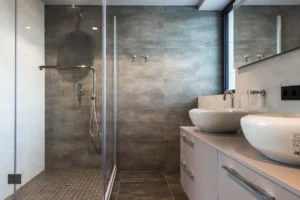
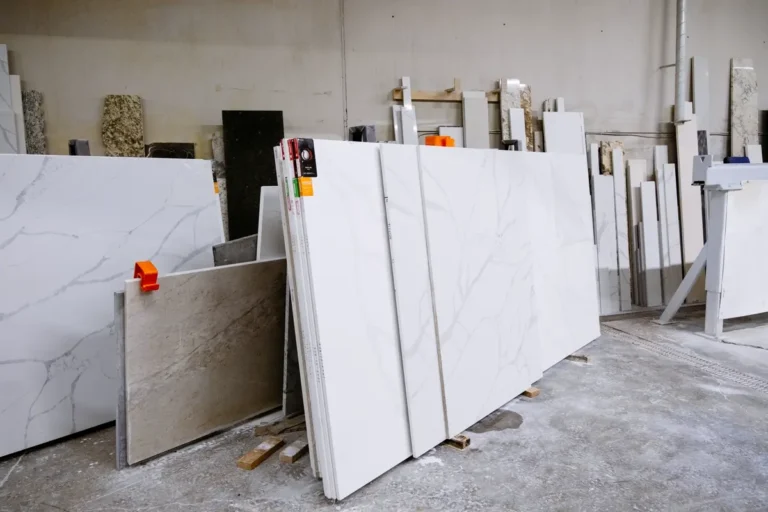
The largest category by export volume, used across hotel bathrooms and public areas, school and hospital corridors, and commercial lobbies. Large-format porcelain slabs (often 1200x2400mm or larger) have become common on hotel and retail lobby floors and feature walls, while standard-format tile remains the default for guest bathrooms and back-of-house areas.
Engineered Wood and Laminate Flooring
Specified where a timber look is required with better dimensional stability than solid wood — hotel guest rooms, apartment units, and office floorplates. US-bound engineered wood flooring needs CARB Phase 2 / TSCA Title VI compliance documentation for the wood composite core; EU-bound product falls under the REACH limit of 0.062 mg/m³ for furniture and wood-based articles placed on the EU market after 6 August 2026.
LVT and SPC Rigid-Core Flooring
The fastest-growing category for hospitality and multifamily corridor and common-area use, because of water resistance, wear-layer durability, and lower installed cost than tile in large-format runs. Wear layer thickness and click-lock system quality vary significantly between manufacturers and are worth verifying against project traffic levels.
Natural Stone (Granite, Marble)
Sourced primarily through the Fujian processing cluster (even where the raw block originates elsewhere), used for hotel lobby feature floors, reception desks and high-end public areas where a natural stone specification is called for over engineered alternatives.
What Buyers Consistently Get Wrong About Sourcing Flooring from China
| Common assumption | What’s more accurate |
|---|---|
| “Foshan tile” is a single quality tier | Foshan hosts thousands of factories ranging from budget standard-format tile to premium large-format porcelain slab producers — the location tells you almost nothing about quality tier on its own |
| One factory can supply tile, wood flooring and LVT for the same project | These are different manufacturing clusters and different factory specializations; a single-factory flooring package across categories is uncommon and usually means one category is subcontracted without disclosure |
| Sample color/finish will match the bulk production batch exactly | Natural stone and some tile glazes have batch-to-batch shade variation; specifying a shade/lot tolerance and requesting bulk-batch samples before full production reduces on-site mismatch disputes |
Sourcing this for a commercial project?
FBM Sourcing works with project owners, developers, main contractors and FF&E contractors on hotel, apartment, school, office and other commercial building projects. Send us your BOQ, drawings or product list — our team will review it and get back to you.
How Flooring Fits into a Container Consolidation Schedule
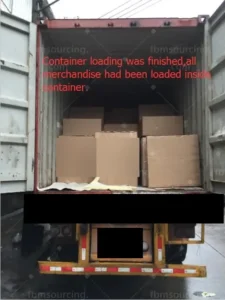
Flooring is dense and heavy relative to its container volume, which means a flooring order alone can sometimes fill a container on its own for a large project, and on other projects it shares container space with lighter categories like furniture or lighting to make full use of the container’s weight and volume limits together. Sometimes, on a large project, the flooring alone fills full containers; sometimes flooring shares containers with the other product categories of the same project; and sometimes, in one batch, we combine a dozen or more product categories from several projects of the same client into a few containers — always full containers, and for us this is routine, well-practised work.
Coordinating which cluster supplies which flooring category, verifying the compliance documentation each destination market requires, and scheduling everything to consolidate efficiently is the kind of cross-category work a sourcing agent and sourcing partner handles day to day rather than a project team managing four separate factory relationships across three provinces on their own.
For a closer look at how the tile clusters themselves compare, see Where Are Ceramic and Porcelain Tiles Made in China? Foshan vs. Other Manufacturing Clusters Explained.
Frequently Asked Questions
Where is most of China’s ceramic tile manufactured?
Foshan in Guangdong province is the largest ceramic and porcelain tile manufacturing cluster in China, with Jinjiang in Fujian as a significant second cluster.
What compliance documentation should I ask for on engineered wood flooring bound for the US?
Ask for CARB Phase 2 and TSCA Title VI compliance documentation for the wood composite core, which governs formaldehyde emissions from composite wood products sold into the US market.
Can tile, wood flooring and LVT be consolidated into the same shipment?
Yes — even though they typically come from different manufacturing clusters and different factories, a sourcing agent can schedule production across all three so they are ready to consolidate into the same container shipment rather than arriving on separate uncoordinated timelines.
Is large-format porcelain slab more expensive to ship than standard tile?
Large-format slabs require reinforced crating and more careful palletizing to prevent breakage in transit, which affects packing method and container loading density, though the flooring itself is priced on a per-square-meter basis like standard tile.
Planning a flooring package for a commercial project? Send us your BOQ and destination port and our team will review it.