
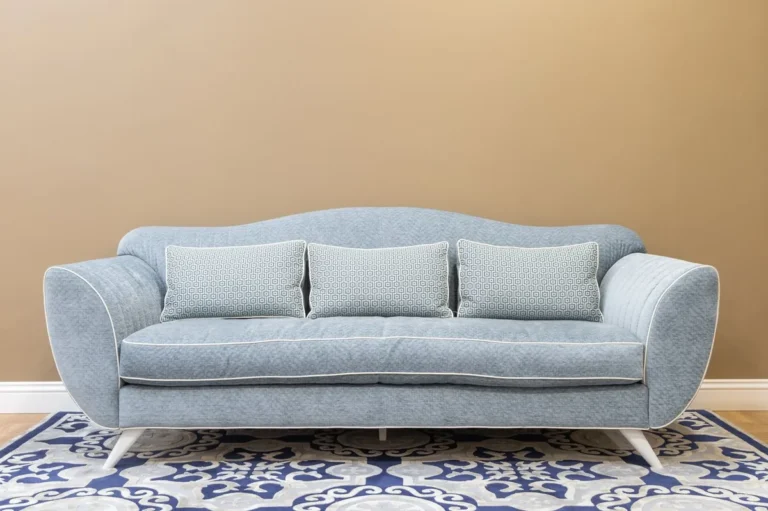
Canada has anti-dumping and countervailing measures on “upholstered seating for domestic purposes” from China and Vietnam, case code UDS at the Canada Border Services Agency (CBSA). The words “for domestic purposes” decide which seating is covered, so a hotel or condominium buyer needs to know how the CBSA reads them. This guide reads the CBSA’s measures-in-force page and its published statement of reasons to show what they say, and where they say nothing.
It is a reading guide, not legal advice or a customs ruling. The measures-in-force page showed a modification date of 15 September 2026 when we read it on 5 October 2026, and the statement of reasons we quote is the one the CBSA published for its final decisions in 2021. Measures and reviews change, so confirm the current position with a Canadian customs broker before you order, and do not rely on any supplier’s statement that a product is outside the measures.
What do the Canadian measures cover?
The CBSA’s product definition covers upholstered seating for domestic purposes originating in or exported from China and Vietnam, whether motion (including reclining, swivel and other motion features) or stationary, upholstered in leather (full or partial), fabric (including leather substitutes) or both. It lists sofas, chairs, loveseats, sofa beds, day beds, futons, ottomans, stools and home theatre seating as examples, and says the definition includes seating with metal or wood frames and seating produced as sectional items. Read the CBSA measures-in-force page.
The page lists the exclusions. They include stationary seating upholstered only with fabric (rather than leather) in the form of dining table chairs or benches made for dining room end-use, upholstered stools with a seating height greater than 24 inches (commonly bar stools or counter stools), foldable seating for outdoor use, bean bag seating, and foldable or stackable seating. It also records that on 2 September 2021 the Canadian International Trade Tribunal (CITT) excluded specialized reclining massage chairs, medical lift chairs and height-adjustable ergonomic gaming chairs from its finding.
The page records the key dates: initiation of investigations on 21 December 2020, preliminary determinations on 5 May 2021, final determination on 3 August 2021 and the CITT finding on 2 September 2021 (reference NQ-2021-002). It also lists later normal value reviews, expedited reviews and administrative reviews for named exporters. The page lists six tariff classification numbers under which the goods are usually classified, and warns that these numbers may also apply to goods not subject to the measures, so the product definition is the authoritative test.
What does the CBSA say “for domestic purposes” means?
The statement of reasons for the CBSA’s final decisions says subject goods are intended for domestic (that is, residential) purposes and use. It says “for domestic purposes” in the product description is defined in the same way as under Chapter 94 of the Customs Tariff Schedule and in accordance with CITT jurisprudence. Read the CBSA statement of reasons for the final decisions.
The statement adds three points that matter to project buyers. First, goods primarily intended by producers and retailers for residential use may be occasionally used in commercial establishments, and that occasional use does not take them outside the measures. Second, to decide whether goods are primarily intended for domestic purposes, the CBSA says factors including the design, characteristics, marketing and pricing of the goods must be considered. Third, it describes a key distinction: goods intended for commercial use are generally built to a higher specification in materials such as urethane quality and fabric durability, and producers and retailers market the subject goods as intended for home rather than business use, at lower prices relative to goods intended for business use.
The statement then says goods clearly designed and marketed for non-domestic (commercial) use, such as in offices, business reception areas, restaurants, studios, airports, concert halls and other non-residential applications, are not covered by the investigations. This is the passage buyers often quote, so read it with the three points above: the test is the design, characteristics, marketing and pricing of the goods, not simply where they end up.
What the documents do not say about hotels and condos
The statement of reasons we read does not mention hotels. We searched the full text for the word and found no match. It also does not say that hotel guestroom seating is inside or outside the measures. Anyone who tells you hotel seating is automatically excluded, or automatically covered, is going beyond what these two documents say.
For a condominium project, the question is different again. Seating that is residential in design, marketing and pricing, and is fitted in residential units, looks like the kind of goods the statement describes as intended for domestic use. Whether a particular lobby, amenity-room or unit sofa falls inside the measures depends on the goods themselves, so ask your customs broker, and if needed the CBSA, to review the actual product description and specification.
Seating that appears on the exclusion list, such as qualifying dining chairs or bar stools above the stated height, is handled by the written exclusion, not by the commercial-use passage. Check the wording of the exclusion carefully, because several exclusions depend on the covering material and the end-use.
Sourcing this for a commercial project?
FBM Sourcing manages the entire China procurement package for overseas construction projects. We work with Developers · General Contractors · Builders · Commercial Project Owners · Interior Design & Construction Companies · FF&E Solution Providers. Send your BOQ, drawings or product schedule for review.
What evidence helps a commercial-use position?
The statement points to design, characteristics, marketing and pricing, so the evidence a buyer can collect follows those four headings. None of this guarantees an outcome; it is the material a customs broker will want to see.
- Design and characteristics: the project specification, the material and component descriptions, and any commercial-grade requirements such as contract-grade covering and foam stated in the schedule. See our guide to upholstery foam in contract seating.
- Marketing: the maker’s catalogue or product sheet showing the product as a contract or hospitality line, kept with the order file.
- Pricing: quotations that show the commercial specification being priced, kept with the order file.
- Project documents: the FF&E schedule or purchase specification naming the room or area where each item will be used.
- Product description for customs: a precise description of each item for the broker, including covering, motion function, height and frame.
How to brief makers and your broker
- Ask each maker whether the item is a contract or hospitality line, and ask for the product sheet in writing.
- Ask whether the maker or its exporter appears in the CBSA normal value tables for this case, and ask your customs broker how that affects duty for your shipment. The duty tables on the CBSA page are organised by exporter.
- Give the broker the item list with the covering, motion function, dimensions and intended room before you place the order.
- Ask the broker whether the six tariff classification numbers on the CBSA page could apply to the items.
- Keep the specification, quotation and product sheet together as the order file.
Next steps for a Canadian hotel or condo package
Send each maker the same brief, including your intended use for each item, and take the broker’s view on the duty position before you commit. For other duty and import topics, see our guides to Section 232 tariffs on upholstered seating for the US side and to the certificate of origin and import duty for project buyers. FBM Sourcing also runs FBM Furniture’s contract seating pages for furniture-only packages.
Questions buyers ask about the Canadian duties on upholstered seating
Does the Canadian anti-dumping case cover commercial seating?
The CBSA’s statement of reasons says goods clearly designed and marketed for non-domestic use, such as in offices, business reception areas, restaurants, studios, airports and concert halls, are not covered. It also says occasional commercial use of goods primarily intended for residential use does not take them outside the measures.
Are hotel guestroom chairs and sofas covered?
The statement of reasons we read does not mention hotels, so it gives no direct answer. The test it describes looks at design, characteristics, marketing and pricing. Ask a customs broker to review the actual item.
Which countries does the case cover?
The CBSA measures cover upholstered seating for domestic purposes originating in or exported from China and Vietnam. Duty depends on the exporter and the product, so confirm the current position before ordering.
Are bar stools and dining chairs covered?
The CBSA page excludes stationary seating upholstered only with fabric when it is dining table chairs or benches made for dining room end-use, and upholstered stools with a seating height greater than 24 inches. Read the exact wording on the page.
How does FBM Sourcing support a seating package?
We review the brief, collect comparable quotations and manage the package for the project. For suppliers you nominate, we charge a 5% commission; for products we source for you, we quote a direct price. Our own team performs one inspection after bulk production is complete and before shipment, and the client’s project team is welcome to attend.
FBM Sourcing manages the entire China procurement package for overseas construction projects. We work with Developers · General Contractors · Builders · Commercial Project Owners · Interior Design & Construction Companies · FF&E Solution Providers.





