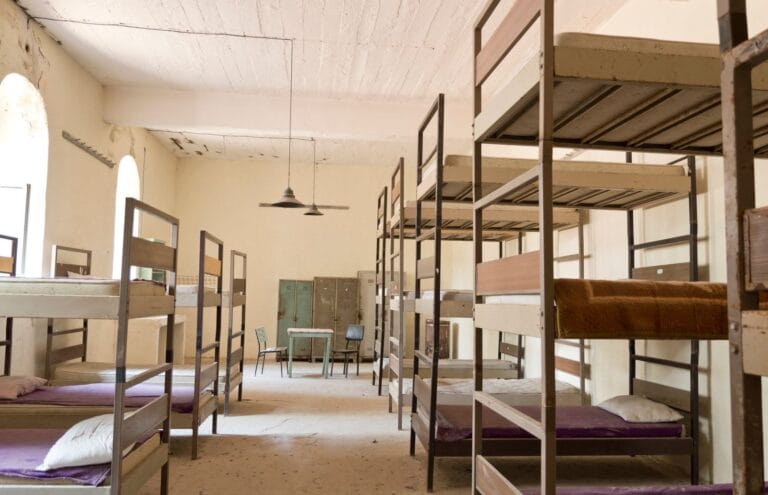
Metal bunk beds for worker camps, staff housing and student accommodation in China are made mainly by privately held steel furniture factories, and as of 25 September 2026 FBM Sourcing could not verify a single Chinese listed company that reports bunk beds or steel beds as a product line in its own annual report. So this is not a ranked list of named factories. It sets out the types of manufacturer that quote steel bunk beds, where China’s steel furniture industry is concentrated, which bunk bed standards currently apply in Europe, the United States, Australia and China, and the product evidence to request before a bed is approved.
It is written for developers, general contractors, builders, commercial project owners, interior design and construction companies and FF&E solution providers furnishing worker accommodation, remote staff housing, purpose-built student accommodation and university residences — projects where identical beds are ordered in volume and must survive years of daily use.
Why We Have Not Published a List of Named Factories Here
Our rule for manufacturer round-ups is narrow. We name a Chinese company only when we have checked its exchange listing ourselves, confirmed that the stock code is still trading and not under a risk warning, and found the product category in the main business by product or by segment section of that company’s own most recent annual report. Anything less is an assertion nobody can verify.
Metal bunk beds fail the test. When this topic was planned, the annual reports of the listed Chinese furniture companies returned no hits for the Chinese terms for bunk bed and iron-frame bed. On 25 September 2026 we re-ran the check as a full-text search of Shanghai and Shenzhen listed-company disclosures on the official disclosure platform, for the Chinese terms for bunk bed, iron-frame bed, apartment bed and steel-and-wood bed. Every match was incidental: sustainability reports citing a bunk bed standard, a patent list, an enterprise standard for timber bunk beds, consumer bed ranges and many unrelated filings. None came from a company whose main business by product includes steel bunk beds.
Steel bunk beds are made mostly by privately held factories that publish no audited product data. Promoting a listed mattress or home furniture company into a bunk bed manufacturer because its range sits nearby would be worse than naming nobody, so this article describes the supply base by type.
What Types of Manufacturer Quote Metal Bunk Beds in China?
The same search term returns companies from five different layers of the supply chain. Knowing which one is quoting tells you who controls the tube, the welding and the coating. Each entry ends with the evidence to request.
1. Steel furniture specialists
- What they make: steel office furniture, filing cabinets, lockers, shelving and school steel furniture, with beds as one product family among many.
- Typical setup: tube cutting and bending, welding, sheet metal and in-house powder coating lines.
- Where they fit: large runs of a standard steel bunk, often with lockers from the same plant.
- Evidence to request: a dimensioned drawing of the exact bed model showing tube sections and wall thickness, a test report against the bunk bed standard your specification names issued for that model, and coating test reports for adhesion and salt spray.
2. Dormitory and school furniture houses
- What they make: complete room sets — beds, loft beds over desks, study desks, wardrobes, chairs — for schools, universities and student accommodation.
- Typical setup: steel frame production combined with a panel line for desks and wardrobes, so steel-and-wood combinations can come from one factory.
- Where they fit: student rooms where the bed, desk and storage are designed as one repeating unit.
- Evidence to request: a test report for the combined bed-and-desk unit, not only the bed, since EN 747-1 notes that where a table or storage furniture is included in a bunk bed or high bed, the European standards for those products could apply in addition; and panel emission test reports for desk and wardrobe components.
3. Heavy-duty institutional bed makers
- What they make: welded or heavily bolted steel beds with thicker tube and fewer removable parts, sold to camps, hostels and institutional operators.
- Where they fit: worker camps and remote staff housing, where a bed may be moved, climbed without a ladder and repaired in place for years.
- Evidence to request: the declared load and durability test basis for the model, weld and joint details on the drawing, and whether the model has been tested in the configuration you will use, for example with or without a ladder.
4. Modular building and camp suppliers quoting furnished units
- What they offer: container houses and modular accommodation blocks quoted with beds, lockers and basic furniture included.
- Typical setup: the building is their product; loose furniture is usually bought in from a furniture factory.
- Where they fit: camps where speed matters more than furniture choice. Our round-up of modular building and container house manufacturers for worker camps covers the building side.
- Evidence to request: the name of the plant that actually makes the bed, and that plant’s drawings and test reports for the model.
5. Trading companies without production
- What they offer: wide catalogues covering beds, mattresses and room furniture from several factories.
- Where they fit: small mixed orders; with no tube, welding or coating line of their own, they do not control the weld or the paint.
- Evidence to request: the same drawings and test reports as above, traceable to one production plant and one bed model.
For a wider view of room furniture for student projects, our earlier round-up of student accommodation furniture manufacturers looks at complete room packages rather than the bed alone.
Where Is Steel Furniture Made in China?
One well-documented steel furniture cluster is Pangcun, in Luoyang, Henan province. The China National Furniture Association lists Pangcun among its industrial clusters and describes it as a steel furniture cluster centred on Pangcun town that has expanded from office furniture into civilian, medical, school, archive, banking and other steel furniture, with product families that include steel filing cabinets, school equipment, office furniture and household furniture.
The association’s description does not mention beds by name, so the cluster label does not tell you that any particular workshop there makes bunk beds, and steel beds are also made by furniture factories elsewhere. Where a factory sits matters less than whether its own drawings and test reports cover the model being quoted.
Pricing metal bunk beds for a worker camp or student residence?
Send us the room schedule, BOQ or bed drawing and we will hold one specification for tube, joints, guardrails and coating across every factory that quotes.
Which Standards Apply to a Metal Bunk Bed on an Accommodation Project?
Bunk bed standards differ by market in one respect that matters to accommodation projects: some cover domestic and non-domestic use alike, while the United States federal rule carves out beds made only for institutional use. The table records the versions we verified on 25 September 2026.
| Market | Standard or rule | What the official source states |
|---|---|---|
| Europe and UK | EN 747-1:2024 (requirements) and EN 747-2:2024 (test methods) | Both recorded as current by BSI; BS EN 747-1:2024 supersedes BS EN 747-1:2012+A1:2015, now withdrawn. Covers the safety, strength and durability of bunk beds and high beds for domestic and non-domestic use, with an internal length greater than 1 400 mm, a maximum bed base width of 1 200 mm and an upper bed base surface 600 mm or more above the floor. It does not apply to bunk beds and high beds used for special purposes, including but not limited to prisons, the military and fire brigades. |
| United States | 16 CFR Part 1513 and 16 CFR Part 1213 | Apply to all bunk beds, except those manufactured only for institutional use, made in or imported into the United States on or after 19 June 2000; facilities intended for use by children under age 6 are not considered institutions. Part 1513 covers bunk beds intended for children, Part 1213 those not intended for children, and the two are stated to be substantively identical. |
| Australia and New Zealand | AS/NZS 4220:2026, Bunk beds and other elevated beds | Published by Standards Australia (announced 7 July 2026), superseding the 2010 edition, with updated requirements for guardrails, access systems, structural integrity, stability, product markings and consumer information. |
| China | GB/T 24430-2023, Test method for bunk bed structure safety | Recommended national standard, current, published 7 September 2023 and implemented 1 April 2024. The earlier mandatory GB 24430.1-2009 for household bunk bed safety is recorded as abolished. |
| China | GB/T 47491-2026, Bunk beds and high beds | Recommended national standard published 30 April 2026, due to be implemented on 1 November 2026. |
The United States text shows what a guardrail specification looks like. For each bed whose foundation underside is more than 30 inches (760 mm) from the floor, it requires at least two guardrails, one on each side; one guardrail must be continuous between the end structures, with any gap no more than 0.22 inches (5.6 mm); and the upper edge of the guardrails must be no less than 5 inches (130 mm) above the top surface of the mattress when a mattress of the maximum thickness in the manufacturer’s instructions is on the bed. That last clause is why mattress thickness belongs on the bed drawing, not only on the mattress schedule.
Whether a residence or camp counts as institutional use under the United States rule, or as special-purpose use outside EN 747-1, is a question for the project’s code consultant, not the factory. Procurement should name one standard in the specification and require test evidence against it.
What Should the Drawing Fix Before a Factory Quotes?
Two factories quoting the same photograph can differ in tube wall thickness, joint design and coating, and none of that shows in a sample photograph. Fixing these points on the drawing makes quotations comparable.
- Tube sections and wall thickness for posts, side rails and guardrails, stated as dimensions rather than as a strength description.
- Joint design: which joints are welded and which are bolted, the fastener type, and whether locking fasteners and a spare fixing kit are included. Our guide to furniture and finishes for worker accommodation and staff housing covers anti-loosening detail and bed base choices for hard use.
- Guardrails and ladder: heights, gaps and fixing method, written to the standard the specification names, and the side on which the ladder sits.
- Bed base: steel mesh, perforated deck or slats, and the mattress size it must take.
- Maximum mattress thickness, because guardrail height is measured from the mattress surface. Beds and mattresses are often sourced from different factories; our mattress manufacturers round-up for student accommodation and build-to-rent covers that side.
- Coating: colour code, film thickness and the test methods for the coating, for example the cross-cut adhesion test in EN ISO 2409:2020 and the salt spray test in EN ISO 9227:2022+A1:2024, with the required results set by the specification.
- Packing: knocked-down or assembled, carton marking by bed type, and hardware bags labelled per bed.
Steel against timber is a separate decision taken before any of this; our comparison of steel and wood frame furniture for school and university projects sets out that trade-off.
How Do Worker Accommodation and Student Accommodation Beds Differ?
The frame technology is the same; the brief is not. For worker accommodation, check whether the host country’s worker housing rules set limits on bed tiers, bed size or spacing before the room layout is fixed, since the bed drawing follows from the layout. Beds are climbed and moved constantly and replacement parts may be a sea shipment away, which pushes the specification towards welded end frames, fewer removable parts and spare fixings.
Student accommodation more often uses single beds, loft beds over desks and bed-and-wardrobe combinations designed as a repeating room unit, and the specification is shared with desks, chairs and storage. Panel emissions and the finish on exposed steel carry more weight, and the named standard has to cover the combined unit as sold. Our guide to sourcing dormitory and classroom furniture from China covers the wider school and residence package.
How Does FBM Sourcing Handle a Metal Bed Package?
As your sourcing partner in China, FBM Sourcing starts from the room schedule or BOQ and the bed drawing. We turn the points above into one specification that every factory quotes against, so the quotations can be compared on the same basis. We shortlist factories whose own drawings and test evidence match the model and arrange samples of the bed and its hardware for approval.
Inspection is carried out once, by our own team at the factory, after bulk production is finished and before shipment, with photo and video records, checking the beds against the approved sample, the drawing and the packing list. The inspection report goes to the client before the balance is paid.
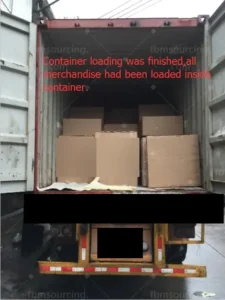
Beds usually travel with mattresses, lockers, wardrobes and the rest of the room package. Sometimes, on a large project, the metal bunk beds alone fill full containers; sometimes the metal bunk beds share containers with the other product categories of the same project; and sometimes, in one batch, we combine a dozen or more product categories from several projects of the same client into a few containers — always full containers, and for us this is routine, well-practised work.
Pricing metal bunk beds for a worker camp or student residence?
Send us the room schedule, BOQ or bed drawing and we will hold one specification for tube, joints, guardrails and coating across every factory that quotes.
Frequently Asked Questions
Are there listed Chinese companies that make metal bunk beds?
As of 25 September 2026, FBM Sourcing could not verify any Chinese listed company that reports bunk beds or steel beds as a product line in its own annual report, so metal bunk beds in China come mainly from privately held steel furniture and dormitory furniture factories.
Where are steel furniture factories concentrated in China?
One well-documented cluster is Pangcun in Luoyang, Henan, which the China National Furniture Association lists as a steel furniture cluster covering office, school, household and other steel furniture; the association does not name beds specifically, so each factory’s own drawings and test reports have to confirm the bed model.
Which European standard covers bunk beds for accommodation projects?
EN 747-1:2024 sets the safety, strength and durability requirements and EN 747-2:2024 the test methods for bunk beds and high beds for domestic and non-domestic use; both are recorded as current by BSI, and EN 747-1 does not apply to beds for special purposes such as prisons, the military and fire brigades.
Does the US federal bunk bed rule apply to institutional beds?
16 CFR Parts 1513 and 1213 apply to all bunk beds made in or imported into the United States on or after 19 June 2000 except those manufactured only for institutional use, and facilities intended for children under age 6 are not treated as institutions, so the project’s code consultant should settle whether it qualifies.
What evidence should a metal bunk bed supplier provide?
Ask for a dimensioned drawing of the exact model with tube sections and wall thickness, a test report against the bunk bed standard named in your specification for that model and configuration, coating adhesion and salt spray test reports, and the maximum mattress thickness the guardrail height was designed for.
About FBM Sourcing
FBM Sourcing manages the entire China procurement package for overseas construction projects. Since 2014 we have worked with developers, general contractors, builders, commercial project owners, interior design and construction companies and FF&E solution providers across more than 20 countries and over 1,000 containers, as their sourcing partner in China — from the schedule or BOQ through factory selection, sampling, inspection by our own team before shipment, consolidation and shipping. All quotations, invoices and shipping documents are issued by FBM Sourcing, and sea freight is quoted to you before shipment. If you have a metal bunk bed package to price, start at China building materials and FF&E procurement.