Top Commercial Laundry Equipment Manufacturers in China for Hotel & Healthcare Projects
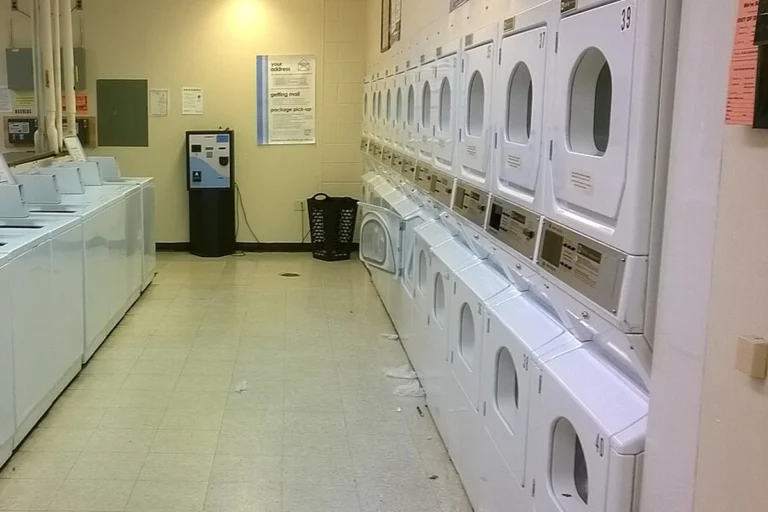
An on-premise laundry is the one room in a hotel or hospital where the FF&E package meets the building services package, and it is usually the room where neither side has taken responsibility. The equipment is bought as loose items on an OS&E schedule rather than an FF&E schedule, but it needs three-phase power at a specific voltage and frequency, steam or gas at a specific pressure, drainage at a specific rate, a floor that can take the dynamic load of a machine spinning at several hundred G, and — in healthcare — a wall that physically separates dirty from clean. Order the machines before those are fixed and the machines arrive correct and unusable.
This guide is written for developers, project owners, main contractors, hotel operators, healthcare estates teams and FF&E and OS&E contractors. It sets out the manufacturer types that supply commercial laundry equipment from China, the certification and performance evidence each has to produce, and the utility and sizing decisions that have to be settled before any enquiry goes out.
Sizing Comes Before Selection
Most laundry packages are specified by copying an equipment list from a previous project. The result is either a laundry that cannot keep up or a laundry with a machine that never runs.
Sizing starts from linen throughput, not from room count. Work out the kilograms of linen generated per day at design occupancy, add the pool, spa, food and beverage and uniform loads, decide how many hours a day the laundry will run and how many days a week, and only then size the washer-extractors. A useful discipline is to size for a normal week rather than a peak day and to plan for the peak with extended running hours, because a laundry sized entirely for peak sits idle most of the year and still fails when one machine is down.
Three structural rules follow from the sizing:
- Never specify a single washer. Two smaller machines beat one large machine of the same total capacity, because a single machine out of service stops the laundry entirely.
- Match drying capacity to washing capacity with headroom. Drying is the slower process; a dryer capacity equal to washer capacity produces a bottleneck at the dryer, and the usual working assumption is more drying capacity than washing capacity, not the same.
- Decide flatwork finishing early. Whether sheets are ironed on a flatwork ironer or tumble-dried and folded changes the room layout, the power load and the labour model, and it cannot be changed after the room is built.
Publicly Listed Manufacturers a Buyer Can Verify
We name only companies whose listing and disclosures are public and checkable. In Chinese laundry equipment, the listed companies are large appliance groups whose strength is at the light-commercial and on-premise end rather than at the heavy industrial end.
- Midea Group (美的集團), Shenzhen Stock Exchange: 000333. Headquartered in Beijiao, Shunde District, Foshan, Guangdong, and listed on the Shenzhen Stock Exchange since 2013, Midea is the world’s largest appliance manufacturer by volume and holds a substantial share of global laundry appliance volume. Its laundry manufacturing is organised through dedicated subsidiaries, including Hefei Midea Laundry Appliance, and the group owns the Little Swan laundry brand. Role note: strongest on domestic and light-commercial laundry; relevant to apartment communal laundries, small hotel OPLs, staff accommodation and student housing rather than to a hospital’s central laundry. Evidence to request: the certification held for the specific commercial model and destination voltage, and whether the model is a commercial-rated machine or a domestic machine sold into a commercial setting.
- Haier Smart Home (海爾智家), Shanghai Stock Exchange: 600690. One of the largest home appliance groups in China and a leading producer of washing machines and refrigeration. Role note: as above — an appliance group with a light-commercial range, with international service infrastructure that is genuinely relevant to an overseas hotel operator. Evidence to request: the service and spare-parts route in the destination country, in writing, naming who holds parts and what the response arrangement is.
The heavy end of the market — high-G soft-mount washer-extractors, barrier washers, tunnel washers, industrial flatwork ironers and folders — is supplied in China by privately held specialist manufacturers, concentrated in Jiangsu, Zhejiang, Shanghai and Guangdong. A numbered ranking of those private manufacturers would be an opinion presented as a finding, so the rest of this guide is written as manufacturer types with the evidence to request from each. FBM Sourcing acts as the buyer’s sourcing partner across those types: we hold the schedule and the utility data, run the technical exchange, and keep the manufacturer relationship on our side of the table.
The Manufacturer Types That Supply a Laundry Package
1. Washer-extractor manufacturers
- Where: Jiangsu, Zhejiang, Shanghai and Guangdong.
- What they make: hard-mount and soft-mount washer-extractors, typically from around 15 kg to over 100 kg dry load, electric, steam or hot-water heated.
- Evidence to request: G-force at extraction and the mounting type, because these two decide the building work. A hard-mount machine transmits its out-of-balance load into the structure and requires a substantial concrete plinth with anchor bolts, which effectively confines it to a ground-floor slab. A soft-mount machine carries its own suspension, typically extracts at a higher G-force, and can be installed on an upper floor with far less structural provision. Higher extraction G means less residual moisture leaving the washer, which directly reduces dryer time and energy — this is the single biggest lever on laundry running cost. Also request the safety conformity route: for the EU, machinery conformity and the industrial laundry machinery safety series EN ISO 10472; for North America, a listing on the commercial machine to the relevant UL standard rather than a certificate on a component.
- Common failure: a hard-mount machine specified for a first-floor laundry, discovered when the structural engineer sees the dynamic loading figures.
2. Tumble dryer manufacturers
- Where: same clusters as washer-extractors, often the same factories.
- What they make: electric, steam and gas-heated tumble dryers, single and stacked, with reversing drums on larger sizes.
- Evidence to request: the heating source and its certification for the destination. A gas dryer is a gas appliance and has to be certified for the destination’s gas family and supply pressure — a machine set for one gas type is not usable on another without a conversion kit and a recertification path, and in several markets a gas appliance must carry a destination-specific approval before it can legally be connected. Ask for the airflow and make-up air requirement in cubic metres per hour: dryers fail more often from inadequate make-up air than from any fault in the machine, and the laundry room ventilation has to be designed around that number. Ask for the lint filtration arrangement and the duct run limit.
- Common failure: a gas dryer ordered without the destination gas approval, or an electric dryer sized correctly but starved of make-up air in a sealed plant room.
3. Flatwork ironer and finishing equipment manufacturers
- Where: Jiangsu and Zhejiang.
- What they make: chest-heated and roller ironers, feeders, folders and stackers.
- Evidence to request: the working width against the largest item in the linen specification, the heating source, and the throughput figure with the moisture retention it assumes. An ironer throughput quoted at one residual moisture level and operated at another will not achieve the stated rate. Ask for the guarding and emergency-stop arrangement explicitly, because finishing equipment is the highest-risk equipment in the room.
- Common failure: an ironer whose working width cannot take the project’s king sheet, discovered after installation.
4. Barrier washer manufacturers for healthcare
- Where: a smaller group, mostly in Jiangsu and Shanghai — a narrower field than the wider healthcare furniture manufacturer base.
- What they make: two-door pass-through barrier washer-extractors that load on the dirty side and unload on the clean side through a physical wall.
- Evidence to request: the thermal disinfection cycle and the machine’s ability to record it. Healthcare laundry guidance in several markets is built around a validated disinfection stage — for example holding the load at a defined temperature for a defined time, with the commonly cited combinations being around 71 °C for three minutes or 65 °C for ten minutes, measured at the coolest part of the load — and the machine has to be able to hold, verify and log that. Ask whether the controller produces a cycle record that can be retained for audit, and ask for the interlock arrangement that prevents both doors opening at once. Ask how the machine is sealed into the barrier wall, because that detail is builder’s work and has to be on a drawing before the wall goes up.
- Common failure: buying a standard washer-extractor with a hygiene cycle name and discovering it cannot evidence the disinfection stage.
Sourcing this for a commercial project?
FBM Sourcing works with project owners, developers, main contractors and FF&E contractors on hotel, apartment, school, office and other commercial building projects. Send us your BOQ, drawings or product list — our team will review it and get back to you.
The Utility Sheet That Has to Exist Before You Order
This is the document that prevents the most expensive laundry mistakes, and it is the one most projects do not produce. For every machine, it should state:
- Electrical supply — voltage, phases, frequency and full load current. This is the most common failure on imported laundry equipment. China’s standard supply is 380–415 V three-phase at 50 Hz; much of the Americas runs 208, 240 or 480 V at 60 Hz. A 50 Hz motor on a 60 Hz supply does not simply run slightly faster — it changes drum speed, extraction G and heating behaviour. Specify the destination supply in the enquiry, in writing, and require the factory to confirm the machine is built for it.
- Steam — pressure and consumption, if steam-heated, plus condensate return.
- Gas — gas family, supply pressure and connection size, if gas-heated.
- Water — hot and cold flow rate, pressure and connection size; hardness matters for both chemistry and machine life.
- Drainage — peak discharge rate and drain size. A washer-extractor dumps its wash water fast; a drain sized for average flow floods the room.
- Ventilation — extract volume and make-up air volume, and the heat gain into the room.
- Floor loading — static and dynamic, with the plinth detail for hard-mount machines.
- Access route — the machine’s crated dimensions against the door, corridor and lift it has to pass through. A laundry in a basement with a lift smaller than the washer is a solved problem only if it is solved before delivery.
Spares, Service and the Orphan Machine Problem
The real risk on imported laundry equipment is not the purchase — it is year three. A machine with no local service route and no parts holding becomes an orphan, and an orphan washer in a 200-room hotel is a daily operational problem.
Three things to settle in the order, not after it: a commissioning spares package shipped with the machines covering the wear items — belts, seals, door gaskets, valves, contactors and control boards; a documentation set including wiring diagrams, parts lists with part numbers, and service manuals in the language the maintenance team reads; and a written statement of who provides technical support in the destination country and how. Where the manufacturer has no presence in the destination, a named local mechanical contractor trained at commissioning is a workable substitute, but it has to be arranged rather than assumed.
How the Quality Control Works
All inspection on FBM Sourcing packages is carried out by our own team at the factory before shipment, with photo and video records. For laundry equipment, the pre-shipment inspection confirms the electrical and heating configuration against the utility sheet, records a run test on the actual machines, and checks crating, shock protection and the completeness of the spares and documentation cartons. Manufacturer test certificates and laboratory reports are reviewed for scope, model coverage and validity rather than accepted at face value.
Frequently Asked Questions
Can Chinese laundry machines be built for 60 Hz supplies?
Generally yes, but it has to be specified and confirmed in writing before production, and it is not a field adjustment. Frequency affects motor speed, and therefore drum speed and extraction G-force, as well as the sizing of heating and control components. State the destination voltage, phases and frequency in the enquiry and require written confirmation on the order acknowledgement.
What is the difference between a hard-mount and a soft-mount washer-extractor?
A hard-mount machine is bolted rigidly to the floor and transmits its out-of-balance forces into the structure, so it needs a substantial plinth and is practically restricted to a ground slab. A soft-mount machine has an internal suspension, extracts at a higher G-force and can usually be installed on an upper floor without special structural provision. The higher extraction also removes more water before drying, which shortens dryer cycles.
Do healthcare projects need barrier washers?
Where the laundry handles infectious or clinical linen, most healthcare guidance expects physical separation of the dirty and clean sides and a validated thermal disinfection stage. A two-door barrier washer built into the separating wall is the standard way of achieving both. Confirm what the destination’s health authority expects before selecting, because the requirement drives the room layout, not just the machine.
Should the laundry equipment ship with the FF&E package?
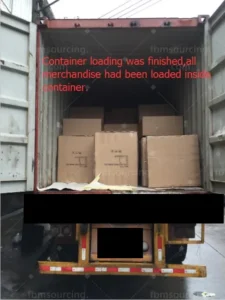
It usually can, and consolidating keeps one shipment and one set of documents — see what a whole-hotel FF&E and building materials package covers. Our minimum order commitment is a full container load. The practical constraints are that laundry machines are heavy point loads that need correct positioning in the container, and that the machines should arrive at the site after the plant room is built and before the finishes go in, which is rarely the same window as the guest room FF&E.
What should be in the spares package?
At minimum the wear items that stop a machine: door gaskets and seals, drive belts, water inlet and drain valves, contactors, heating elements where electric, drive bearings for the larger machines, and at least one spare control board per machine type. Ship it with the equipment, list it as its own line on the packing list, and store it in the destination rather than in the plant room.
Sourcing this for a commercial project?
FBM Sourcing works with project owners, developers, main contractors and FF&E contractors on hotel, apartment, school, office and other commercial building projects. Send us your BOQ, drawings or product list — our team will review it and get back to you.
Get a China Procurement Quote for Your Project
FBM Sourcing has managed China procurement packages for commercial building projects since 2014, across more than 20 countries and over 1,000 containers. We manage the entire China procurement package on the buyer’s side: we build the utility sheet with you, run the technical exchange with manufacturers, confirm the electrical and heating configuration before production rather than at commissioning, inspect with our own team and consolidate the package for shipment.
Send your laundry room drawing, linen throughput assumptions and destination utility data, and we will review them and come back to you with a route through the manufacturer types above. More on how a full package is put together: China building materials and FF&E procurement.