Furniture in China is not made everywhere — it is made in a small number of dense regional clusters, each with its own specialty. The ones that matter most to commercial project buyers are Foshan in Guangdong (the largest all-round cluster: casegoods, upholstery, custom panel furniture, hotel FF&E), Nankang in Ganzhou, Jiangxi (China’s biggest solid wood furniture base), Dongguan in Guangdong (high-end, office and export-focused production), Anji in Zhejiang (the office chair belt), Xianghe in Hebei (the northern hub) and the Chengdu area in Sichuan (panel furniture for western China). Knowing which cluster makes what decides where your factory shortlist, audits and container consolidation should happen. FBM Sourcing works as your sourcing agent and sourcing partner throughout this process.
This guide is a manufacturing map, not a shopping guide. If you want to walk showrooms, our Foshan furniture market guide for project buyers covers that. And if you are comparing sourcing cities for building materials rather than furniture, see our Foshan vs Guangzhou vs Yiwu comparison — this article stays on the factory side of the furniture industry.
Foshan, Guangdong: The Largest and Most Complete Furniture Region
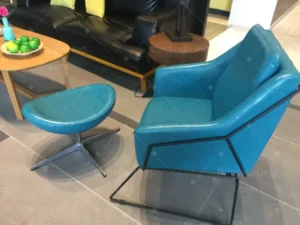
If the question is where is furniture made in China, the first answer is Foshan. The city sits in the Pearl River Delta, about 30 km from Guangzhou and roughly 120 km by road from the deep-water ports of Shenzhen, and it is commonly credited with around one third of China’s total furniture output. More importantly for a project buyer, it is the only cluster where a full FF&E package — beds, casegoods, sofas, dining sets, fixed joinery, mattresses — can realistically be produced within one metro area.
Three districts do most of the work:
Shunde: hotel and residential furniture at scale
Shunde is the industrial heart of the cluster, with large factories producing upholstered furniture, beds, casegoods and hotel FF&E for both export and domestic brands. Typical production lead time for a hotel casegoods order here is 30–45 days after sample approval, which is the benchmark most project schedules in China are built around. Many of the workshops on our list of Foshan furniture manufacturers for hotel and apartment projects are Shunde-based.
Lecong: where manufacturing meets distribution
Lecong town is best known for its furniture trading district — showroom complexes stretching along several kilometres of road with more than 3 million square metres of display space. For manufacturers, Lecong is the front window: factories from across Guangdong keep showrooms here, which makes it an efficient first stop for shortlisting before factory visits.
Longjiang: custom and panel furniture workshops
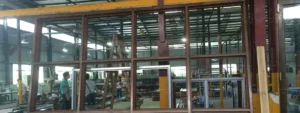
Longjiang, officially designated a national furniture manufacturing town, is packed with small and mid-size workshops doing panel furniture, custom wardrobes, sofa frames and components. This is where custom fixed furniture for apartment and hotel projects — built-in wardrobes, vanities, TV panels — usually gets made, often by factories too small to export on their own but well suited to a consolidated project order.
Best fit: hotels, serviced apartments, multi-unit residential, any project that needs mixed loose and fixed furniture from one region.
Nankang, Ganzhou: China’s Solid Wood Furniture Capital
Nankang district in Ganzhou, Jiangxi province, about 450 km north-east of Foshan, is the largest solid wood furniture cluster in China, with more than ten thousand furniture enterprises concentrated in one county-level district and an industry output value above RMB 280 billion a year (Ganzhou municipal government, 2026). The cluster grew around imported timber — Ganzhou runs a dedicated inland port that clears imported logs and sawn timber directly into the district — so the supply chain from kiln-dried lumber to finished furniture sits within a few kilometres.
Nankang’s strength is price-competitive solid wood: bed frames, dining tables and chairs, wardrobes and children’s furniture in rubberwood, ash, oak and pine. Finishing quality ranges widely, from bare domestic-market product to export-grade lines, which is exactly why factory audits and pre-shipment inspection matter more here than in Foshan. Our own team inspects every Nankang order before shipment, with photo and video records, because the gap between the best and worst workshop in the same street is real.
Best fit: projects with a heavy solid wood specification — resort and lodge furniture, school desks and chairs, restaurant tables, apartment dining sets — where solid timber at volume matters more than designer finishes.
Dongguan, Guangdong: High-End, Office and Export-Focused Manufacturing
Dongguan sits between Guangzhou and Shenzhen, roughly 60–90 minutes by road from Foshan, and historically built its furniture industry on export orders for Western brands. Towns like Houjie and Dalingshan house factories that run higher-spec production lines: veneered casegoods, upholstery to US and European flammability standards, office desking systems and contract-grade seating. Many factories here are used to working from CAD drawings and shop drawings rather than catalogue selection, and to third-country compliance paperwork — a Dongguan export factory will typically be comfortable producing to standards such as BIFMA X5.1 for office seating or ANSI/BIFMA durability cycles.
The trade-off is minimums and formality: Dongguan export factories tend to want larger, better-documented orders than Longjiang workshops. For a project buyer, that makes Dongguan the right cluster when specification and documentation weigh more than unit cost.
Best fit: office fit-outs, branded hotel projects with strict FF&E specifications, and buyers who need factories fluent in Western compliance standards.
Sourcing this for a commercial project?
FBM Sourcing works with project owners, developers, main contractors and FF&E contractors on hotel, apartment, school, office and other commercial building projects. Send us your BOQ, drawings or product list — our team will review it and get back to you.
Anji, Zhejiang: The Office Chair Belt
Anji county in Zhejiang, about 200 km inland from the port of Shanghai, is the most extreme example of Chinese furniture specialisation: one county that local authorities describe as producing one in every three chairs made in China. The entire supply chain for a task chair — gas lifts, castors, mesh, nylon bases, armrests, mechanisms — exists within the county, which is why chair pricing and lead times out of Anji are hard to match anywhere else. A standard container order of task seating from Anji typically ships 20–30 days after order confirmation.
Anji factories rarely make anything except seating, so for an office project the practical pattern is: chairs from Anji, desking and storage from Dongguan or Foshan, consolidated at the port side.
Best fit: office fit-outs, call centres, schools and training facilities, auditorium and conference seating at volume.
Xianghe, Hebei and Chengdu, Sichuan: The Northern and Western Hubs
Xianghe: North China’s furniture centre
Xianghe county in Hebei, around 60 km east of Beijing and roughly 100 km by road from Tianjin port, is North China’s largest furniture manufacturing and distribution hub, mixing regional factories with a large trading market that supplies Beijing, Tianjin and the north-east. Export volume is smaller than the southern clusters; its relevance to international project buyers is mostly for projects with China-north logistics logic or northern-style solid wood product.
Chengdu: the western panel furniture base
The Chengdu area — particularly Xindu district and surrounding counties — is the manufacturing base for western China, dominated by panel furniture, wardrobes and domestic-market bedroom sets. Sitting about 1,700 km from the nearest major seaport, it serves China’s inland market far more than export, so unless your project logic runs through China–Europe rail or a western China destination, Chengdu rarely enters an international FF&E shortlist.
Best fit: niche cases — northern China logistics, rail-freight destinations, or buyers benchmarking domestic-market pricing.
Why Do Manufacturing Clusters Matter to a Project Buyer?
The Chinese furniture industry map is not trivia — it changes how a project purchase is structured. Three mechanics do the work:
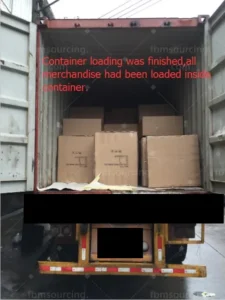
- Consolidation radius. Factories in the same cluster can feed one container. A 40ft high-cube holds about 65–68 m³, and a typical guest-room FF&E set runs 3–5 m³ per room packed — so one container often carries product from three or four factories, but only if they are close enough to truck to one loading point cheaply.
- Component radius. Hardware, foam, fabric, glass and stone tops are sourced within the cluster, usually inside a 50 km radius in Foshan. That is what keeps lead times at 30–45 days instead of stretching while a factory waits on parts.
- Audit efficiency. Inside a cluster, candidate factories sit minutes apart. A well-planned day in Shunde or Nankang covers 5–6 factory audits; the same shortlist spread across provinces would take a week of travel.
This is also why splitting an order across clusters has a real cost: separate inspections, separate trucking, and either separate containers or an extra consolidation leg. How that consolidation works in practice is covered in our guide to combining multiple factories into one container.
Cluster Comparison Table
| Cluster | Core products | Nearest major port | Best-fit projects |
|---|---|---|---|
| Foshan, Guangdong (Shunde / Lecong / Longjiang) | Full range: casegoods, upholstery, beds, mattresses, custom fixed furniture | Shenzhen / Guangzhou (~120 km) | Hotels, apartments, mixed FF&E packages |
| Nankang, Ganzhou, Jiangxi | Solid wood: beds, tables, chairs, wardrobes | Via Ganzhou inland port to Shenzhen | Resorts, schools, restaurants, solid-timber specs |
| Dongguan, Guangdong | High-end casegoods, office systems, contract seating | Shenzhen (~60 km) | Offices, branded hotels, strict-spec FF&E |
| Anji, Zhejiang | Office chairs, task and conference seating | Shanghai (~200 km) | Office fit-outs, schools, call centres |
| Xianghe, Hebei | Northern-style furniture, regional distribution | Tianjin (~100 km) | North China logistics, niche sourcing |
| Chengdu, Sichuan | Panel furniture, wardrobes, bedroom sets | Inland; China–Europe rail option | Western China projects, rail-freight destinations |
Should You Source From One Cluster or Several?
Start from your bill of quantities, not from the map. If 80% or more of your FF&E list can be produced in one cluster — which is true of most hotel and apartment packages in Foshan — single-cluster sourcing wins: one audit trip, one inspection round, one trucking radius, straightforward container planning. The usual threshold where a second cluster earns its overhead is a product category worth at least a container of its own, or a spec the primary cluster genuinely does not make well — solid wood volume (add Nankang) and task seating volume (add Anji) are the two most common triggers.
What you should avoid is spreading a mid-size order across three or four regions because each line item looked marginally better somewhere else. Every added cluster adds an inspection trip, a trucking leg and a coordination failure point; on a 2–3 container project those costs eat whatever the line items saved. A foshan sourcing agent based inside the main cluster typically handles this trade-off for you — producing what Foshan does best locally, placing the genuinely cluster-specific items in Nankang or Anji, and consolidating everything before shipment. As a china sourcing agent working across these regions, our default is one primary cluster plus at most one satellite.
Get a China Procurement Quote for Your Project
If you are specifying furniture for a hotel, apartment building, school, office or other commercial development and want to know which manufacturing cluster your package should come from, send us your drawings, quantities, destination port and timeline. FBM Sourcing audits factories across Foshan, Nankang, Dongguan and Anji, manages sampling and production, and inspects every order before shipment with our own team, with photo and video records. Start with our China building materials and FF&E procurement page, or message us directly — we will map your BOQ to the right clusters and come back with a sourcing plan.
For a step-by-step look at this specific topic, see our guide: our directory of China building material manufacturers by category.