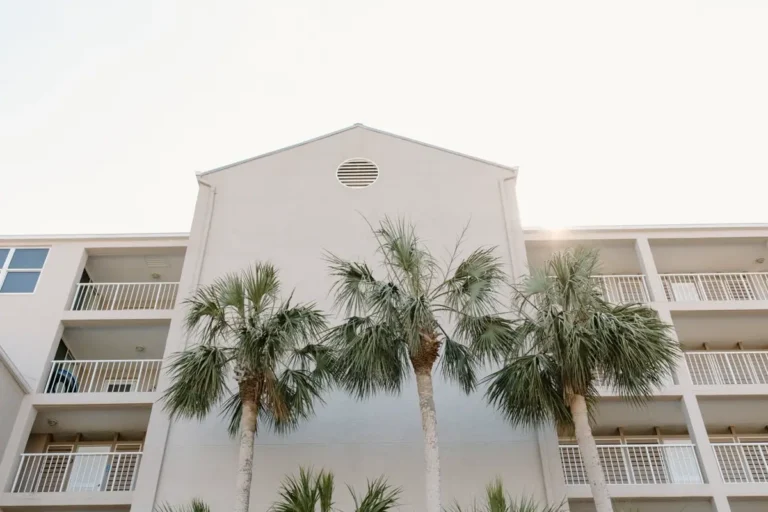
On a hotel, resort or apartment project in the Caribbean or on the US Gulf and Florida coast, you have to specify two separate things, not one. The first is a structural wind rating, expressed as a design pressure in psf and derived from the wind loads your engineer calculates. The second is a windborne debris impact rating, proven by testing to ASTM E1886 and ASTM E1996, or to the Miami-Dade TAS 201, TAS 202 and TAS 203 protocols in a High-Velocity Hurricane Zone. A product that passes one does not automatically pass the other, and the rating always belongs to the complete assembly — frame, glass, interlayer, hardware and anchors — never to the glass on its own. FBM Sourcing acts as your sourcing partner from specification through to shipment.
That second point is where most cost overruns and most handover disputes on coastal projects come from. The specification says impact rated, the factory quotes laminated glass, and nobody notices until the building official or the insurer asks for the approval number that the window as built was never a tested assembly.
Wind Load and Impact Resistance Are Two Different Ratings
Design pressure is a structural question. Your engineer derives positive and negative pressures from the code wind speed, exposure category, building height, risk category and facade zone — corners and parapet zones always take more suction than the field of the wall. The fenestration then has to carry that pressure without permanent deformation or failure of frame, glass or anchors. Under North American fenestration practice the structural load test is run at 1.5 times the rated design pressure, so a DP-rated product is proven with a margin over its published number.
Impact resistance is an envelope question. If flying timber, a roof tile or unsecured site material breaches a window on the windward face, the interior pressurises. That internal pressure adds to the external suction on the roof and leeward walls, and the failure escalates from one broken window to a lost roof deck. It is a total-loss issue, not a glazing preference, which is why insurers weight it so heavily.
Specify both. A schedule that says “impact rated” with no design pressure is unbuildable, and a schedule with a design pressure and no missile level will get you laminated glass with no impact approval behind it.
What Test Standards Sit Behind an Impact Rating?
ASTM E1886 and ASTM E1996
These two work as a pair and are constantly confused. ASTM E1886 is the test method: how the missile is launched at the specimen and how the specimen is then cycled under positive and negative pressure differentials. ASTM E1996 is the performance specification: which missile applies, at what level, how many impacts, and where they land, based on the wind zone and the building classification.
The Large Missile levels in ASTM E1996, including Large Missile Level D and Level E, use a nominal 9 lb (4.1 kg) 2×4 timber missile, with Level E reserved for the higher-speed impacts required of essential facilities and the most exposed zones. Small missile levels, using steel balls, generally apply to openings more than 30 ft (9.1 m) above grade, where large debris is less likely to reach. After impact the specimen goes through several thousand pressure cycles, roughly 4,500 inward and 4,500 outward, and it passes only if the envelope stays closed: no tear longer than 5 in (127 mm) forms in the interlayer, and no opening forms through which a 3 in (76 mm) solid sphere can pass.
TAS 201, TAS 202 and TAS 203
The Miami-Dade protocols are the High-Velocity Hurricane Zone equivalents, and many Caribbean specifications reference them directly because the documentation is easy to verify. TAS 201 is large missile impact, using a 9 lb 2×4 timber missile at 50 ft/s. TAS 202 is uniform static air pressure, the structural test. TAS 203 is cyclic wind pressure loading, run after the impact. HVHZ in the Florida Building Code means Miami-Dade and Broward counties specifically, but the protocols are widely used as a benchmark outside those two counties.
AAMA / WDMA / CSA 101/I.S.2/A440
This is NAFS, the North American Fenestration Standard, and it sets the baseline performance class and grade for a window or door: air leakage, water penetration resistance, structural performance, forced-entry resistance and operating force. Performance classes run R, LC, CW and AW, with AW the heaviest duty and the one most commercial hotel and apartment projects should be asking for on operable units. NAFS on its own contains no impact requirement, so a product with an impressive NAFS grade may still have zero debris impact rating.
Miami-Dade NOA and Florida Product Approval Are Approvals, Not Tests
A Miami-Dade Notice of Acceptance (NOA) and a Florida Product Approval (FL number) are two separate product approval systems. Neither is a test standard. Each is a document issued after review of the underlying test reports, and it locks down exactly what was approved: maximum tested width and height, glass make-up, frame series and alloy, hardware, anchor type, anchor spacing and edge distance, and the substrate the anchors go into. Both carry an expiry date and have to be renewed, so an approval PDF a factory sends you from three years ago may already be dead.
Across the Caribbean the picture is mixed and you have to check it project by project. Some jurisdictions work from codes derived from the International Building Code and the Florida Building Code, some work from the Caribbean regional codes, and some territories with British ties work from British Standards and Eurocode wind provisions. On top of that, the owner property insurer frequently imposes requirements stricter than the code. The honest answer is that the governing documents are the building code of the jurisdiction the project actually sits in plus the insurer requirements in the policy, and the procurement spec has to be written from those two, not from a generic hurricane clause.
Why Impact-Rated Glass Alone Does Not Make an Impact-Rated Window
This is the single most common misunderstanding on coastal projects, and it is worth being blunt about. Impact-rated glazing is laminated glass, two or more lites bonded to a polymer interlayer, either PVB or a stiffer ionoplast such as SentryGlas. Ordinary laminated safety glass typically uses a 0.030 in (0.76 mm) PVB interlayer. Hurricane laminates are much thicker, commonly 0.090 in (2.28 mm) PVB or a 0.060 in (1.52 mm) ionoplast interlayer, because the interlayer is what holds the shattered glass together and keeps the envelope closed after the missile strike.
But the interlayer only works if it stays attached to the frame. That is the job of the glazing bite and the structural glazing sealant: once the glass is broken, the interlayer carries wind load like a membrane and transfers it into the frame through the sealant and the glazing pocket. If the bite is short, the sealant is the wrong product, or the pocket detail differs from the tested one, the cracked lite blows out of the frame intact and the building is breached anyway. In an insulating glass unit the laminated lite is normally the inboard one, and the make-up of both lites is part of the approval.
Replacing the glass in a standard window with impact laminate therefore does not produce an impact-rated window. The frame, glazing method and hardware all have to be the tested ones. Price any change like this as a full assembly change and run it back through the shop drawing approval cycle with the factory rather than as a glass swap.
Sourcing this for a commercial project?
FBM Sourcing works with project owners, developers, main contractors and FF&E contractors on hotel, apartment, school, office and other commercial building projects. Send us your BOQ, drawings or product list — our team will review it and get back to you.
Hardware and Anchorage: the Approval Is for the Whole Assembly
Product approval is assembly-level, not component-level. This is the core fact on this entire topic. The multipoint lock, the number and model of hinges, the roller and track on a sliding door, the anchor type and diameter, the embedment depth, the anchor spacing, the edge distance and the substrate the anchor goes into — concrete, filled CMU, or a treated wood buck — are all named in the approval document, and all of them were part of the specimen that passed the test.
Change any one of them and the rating is void. A cheaper lock cylinder, a hinge count dropped from three to two on a tall leaf, or an installer opening anchor spacing beyond the specified centres to save labour all take the assembly outside its approval. On sliding doors the failure mode is usually the panel disengaging from the track under negative pressure, not the glass breaking. And if the opening was formed with a buck detail that differs from the approved one, no window can fix it.
Write the hardware and anchor requirements into the enquiry from the start. A complete RFQ package that names the tested configuration is also what makes quotes comparable, because a factory pricing an unapproved configuration will always look cheaper than one pricing the tested one.
Corrosion: What Marine Air Does to Hardware and Finishes
A hurricane rating is worthless in year eight if the hardware has seized or the anchors have corroded. On ocean-front and near-shore buildings, specify 316 stainless steel for all exterior fasteners, hinges, lock components, rollers, tracks and balustrade fittings. 316 contains molybdenum, which is what resists chloride pitting; 304 does not, and it pits and weeps rust in salt-laden air even where it performs fine inland. Detail galvanic isolation where stainless fixings meet aluminium.
For aluminium extrusions, specify the finish by standard, not by adjective. Organic coatings are graded AAMA 2603, 2604 and 2605 in ascending durability. Coastal commercial work should be AAMA 2604 minimum and AAMA 2605 where the facade is directly exposed; 2605 requires ten years of South Florida exterior exposure testing against five years for 2604, plus longer humidity and salt-spray exposure. Anodised finishes fall under AAMA 611, where Class I is the thicker coating and the one to specify on the coast. Salt-spray performance is measured by ASTM B117 — ask for the hours actually achieved rather than accepting “salt-spray tested” as a phrase.
It Is Not Just Windows and Doors
Hurricane specification failures on hotel and resort projects are rarely in the glazing package, because the glazing package gets the attention. They show up in the scopes nobody assigned an owner to.
| Component | Performance to specify | Test / approval document | Common pitfall |
|---|---|---|---|
| Windows and sliding doors | Design pressure (+/-), missile level, air and water performance | ASTM E1886 + E1996, TAS 201/202/203, NAFS 101/I.S.2/A440, Miami-Dade NOA or Florida FL number | Tested specimen smaller than the actual opening; approval expired |
| Entrance doors, storefront, curtain wall | Design pressure, missile level, lock and hinge schedule | ASTM E330 structural, ASTM E1886/E1996 impact, approval drawings | Hardware substituted after award, voiding the assembly rating |
| Rolling shutters, coiling and sectional doors | Design pressure, impact rating, guide and anchor detail | ANSI/DASMA 108 structural, ANSI/DASMA 115 windborne debris impact | Door rated but guides anchored to an unrated substrate |
| Roof assembly and edge metal | Wind uplift resistance of the whole assembly, edge and parapet fixing | UL 580, UL 1897, ASTM E1592, FM approval for the assembly | Membrane rated, perimeter edge detail not; edge failure starts most roof losses |
| Cladding, soffit, screens | Negative pressure capacity, fixing centres, 316 fixings | ASTM E330, coating to AAMA 2604/2605, ASTM B117 | Soffits sucked off first, then wind enters the roof void |
| Louvres and plant screens | Impact resistance and wind-driven rain performance | AMCA 540 impact, AMCA 550 high-velocity wind-driven rain | Treated as an MEP item and never given a hurricane spec at all |
| Shading: pergolas, umbrellas, cabanas | Retractable or demountable in storm season, plus base anchorage | Structural calculation for the fixed frame; documented stow procedure | Fixed fabric canopies that cannot be struck become sails |
| Exterior and pool-deck furniture | Stackability, storage volume, tie-down or anchor points, 316 fixings | No impact standard applies; specify a storm stowage plan and store volume | Nowhere to put 400 loungers in 12 hours, so they become the debris |
The last row is not a joke. On resort projects the debris that breaks the guest room glazing is very often the property own outdoor furniture, and the storage room to hold it was value-engineered out at design stage.
What Documents Should You Ask a Factory For?
This is the evidence-to-request list. Ask for all of it before placing the order, not at handover.
- The full test report, not the summary page — including the test specimen description: frame series and extrusion wall thickness, glass make-up, interlayer type and thickness, hardware used, anchor type and spacing, and the tested specimen dimensions.
- The product approval number and its current status — the Miami-Dade NOA or Florida FL number, its expiry date, and the approved configuration drawings that come with it.
- Glazing and anchorage details — a dimensioned glazing section showing bite and sealant type, and an anchorage detail giving anchor type, diameter, embedment, spacing, edge distance and approved substrate.
- The hardware schedule — lock points, hinge model and quantity, roller and track model, all with manufacturer part numbers and material grades.
- Material certificates — aluminium alloy and temper, coating certificate to AAMA 2604 or 2605 (or AAMA 611 for anodised), 316 stainless mill certificates for exterior hardware and fixings, and the laminated glass certificate.
Two things to check the moment those arrive. First, does the tested specimen size cover the largest unit on your schedule? A report on a 1,200 x 1,500 mm specimen does not qualify a 2,400 mm tall guest room slider. Second, does the configuration in the report match what you are actually ordering — same interlayer, same lock, same anchor — or has something drifted between the tested sample and the production drawing?
Insurance and Handover
Windstorm insurance is the commercial reason this matters to an owner. Property insurers writing Caribbean and Florida coastal risk price the envelope directly: whether openings are impact rated, whether the roof assembly has a documented uplift rating, and whether the evidence is on file. From an underwriter point of view, an impact-rated envelope with no paperwork behind it is an unrated envelope.
Build the handover pack as a procurement deliverable, not an afterthought: product approval documents, full test reports, manufacturer installation instructions, as-installed anchorage details, hardware schedules and material certificates, filed by scope package. Insurers and building officials in these markets ask for approval numbers and anchorage details, not photographs of a finished facade.
Where a Sourcing Agent Fits on This Scope
The gap on coastal projects is almost never manufacturing capability — Chinese aluminium and glazing factories build to these standards routinely for export. The gap is translation and verification: turning the standard numbers written in a consultant specification into a product a factory can match, then checking that what comes back really covers what you are buying.
That is the work. Reading the spec and separating code-mandated clauses from insurer-driven ones and from preference. Checking that the test report configuration and tested specimen size cover the real schedule of openings rather than a smaller sample. Catching value-engineering drift between the approved sample and the production run, particularly on hardware. Inspecting before shipment against the approval document — extrusion wall thickness, glass and interlayer thickness, hardware part numbers, coating and fastener grade — with photo and video records, carried out by our own team at the factory. And planning the shipping: sea freight from main Chinese ports to the principal Caribbean ports usually involves transshipment, with transit time is confirmed by the carrier at booking, so glazing crates, A-frames and stowage have to be planned around a longer and less forgiving transit than a direct US West Coast run.
If you are early in the process, our overview of sourcing FF&E and building materials for Caribbean hotel and resort projects covers the wider package and logistics picture; this article is the certification layer underneath it. For the wider fit-out scope see how we work as a China procurement agent for hotel and apartment projects, and for the delivery terms that determine who carries the risk on a long transshipped route, read the comparison of FOB, CIF and DDP for building materials from China.
Get a China Procurement Quote for Your Project
Send us the window and door schedule, the facade and roofing specification sections, the drawings and the BOQ, together with quantities, your destination port and the project programme. Tell us the jurisdiction the project sits in and any requirements your insurer has already imposed, because those two determine which approvals the products need to carry.
Our team will review the scope with you, identify which items need impact approvals and which do not, and come back with matched factory options and the evidence pack that goes with them. If you want to see how we normalise pricing across bidders on a package like this, read our note on comparing factory quotes on a like-for-like basis before you issue the enquiry.