Serviced apartment FF&E procurement combines a hotel-style guest room package with a fully working kitchen and laundry in every unit, so each unit carries roughly 50–80 FF&E line items compared with 30–50 for a standard hotel room. The package is procured and delivered as repeatable unit kits: one approved mock-up unit sets the standard, factories produce in unit multiples, and goods are packed so that each apartment can be fitted out floor by floor. For a typical 60–150 unit aparthotel sourced from China, allow 60–90 days of production after mock-up sign-off plus 30–45 days of ocean transit to most destination markets.
The essentials at a glance:
- Scope per unit: casegoods, beds and seating (hotel scope) plus kitchen cabinets, worktops, appliances, wardrobes and laundry provision (residential scope) in one coordinated package.
- One mock-up unit approved before bulk production — it locks finishes, dimensions and installation details for every repeated unit type.
- Production window: 60–90 days for a full unit-kit package after sample and shop-drawing approval.
- Packing logic: goods grouped by unit type and floor, not by product category, so site installation follows the handover sequence.
- Durability spec: contract-grade construction throughout — average stays are longer than hotels, but usage intensity is still commercial, not domestic.
What Makes Serviced Apartment FF&E Different from Hotel FF&E?
A serviced apartment or aparthotel unit is sold as a place to live for weeks or months, not a room to sleep in for two nights. That changes the FF&E schedule in three structural ways. First, the kitchen: every unit needs a compact but complete kitchen — cabinets, worktop, sink, tapware, cooktop, extractor, refrigerator and usually a washer or washer-dryer. On a 100-unit project that alone adds well over 1,000 additional items to purchase, coordinate and install compared with an equivalent hotel.
Second, storage volume roughly doubles. Guests staying a month bring more than a suitcase, so wardrobes are wider, drawer counts higher, and most operators specify a full-height wardrobe of 1.2–1.8 m per bedroom instead of the 0.9–1.2 m typical in hotels. Third, the soft-goods package shifts: dining tables and chairs, sofa beds in studio formats, and residential-feel lighting replace some of the decorative layers a hotel would carry.
For buyers, the practical consequence is that a serviced apartment package spans more factory types than a hotel package — casegoods, kitchen cabinet, appliance, sanitary ware and lighting production rarely sit under one roof in China. A china sourcing agent coordinating multiple specialist factories into one consolidated delivery is the standard model for this project type.
What Goes into a Serviced Apartment Unit Kit?
Most operators define 2–4 repeating unit types (studio, one-bed, two-bed, accessible) and procurement is organised around those types. A complete unit kit sourced from China typically covers:
- Casegoods and joinery: bed base and headboard, bedside tables, wardrobe, desk or dining table, TV unit, kitchen cabinets and worktop.
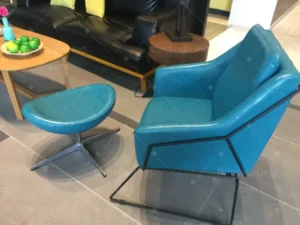
- Seating and soft furniture: sofa or sofa bed, dining chairs, lounge chair, mattress.
- Kitchen and laundry equipment: cooktop, extractor, refrigerator, microwave or oven, washer-dryer — specified to the destination market’s voltage and certification (UL/ETL for the US, CE/UKCA for Europe and the UK, RCM for Australia).
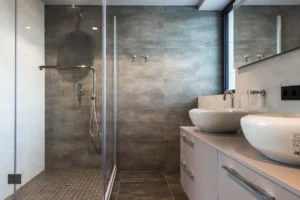
- Bathroom package: vanity, mirror, sanitary ware and brassware, often shared with the building’s base-build procurement.
- Lighting and accessories: ceiling and task lighting, window treatments, artwork and mirrors.
Because kitchens and appliances sit inside the FF&E budget rather than the base build on many aparthotel projects, the FF&E contractor or operator carries certification responsibility for electrical items — a point worth settling in the RFQ stage. The mechanics are the same as for a multi-unit apartment development package, with the hotel-style public areas added on top: lobby, lounge, co-working corners, gym and breakfast area.
Sourcing this for a commercial project?
FBM Sourcing works with project owners, developers, main contractors and FF&E contractors on hotel, apartment, school, office and other commercial building projects. Send us your BOQ, drawings or product list — our team will review it and get back to you.
How Are Unit Kits Produced, Packed and Delivered?
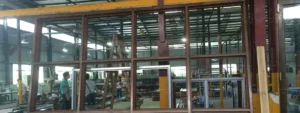
Production starts from one physical mock-up unit. The factory group produces a full sample set for a single unit, it is reviewed against the interior design intent, and every correction — a drawer runner, a worktop edge, a fabric change — is recorded before bulk production of the remaining units begins. Skipping the mock-up to save 3–4 weeks is the most expensive shortcut on this project type, because any error repeats across every unit.
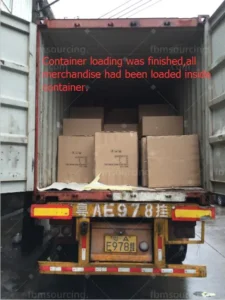
Packing then follows installation logic. Goods are labelled and grouped by unit number or unit type, so containers can be unloaded floor by floor as the building is handed over. A one-bed unit kit typically occupies 12–18 m³ packed, which means a 40HQ container (about 65–68 m³) carries roughly 4–5 complete units including kitchens and appliances. On a 100-unit project that translates to about 20–25 containers, usually shipped in 2–4 waves matched to the fit-out programme rather than in one block.
All pre-shipment inspection is carried out by FBM’s own team at the factories before goods leave China, with photo and video records delivered to the client — on unit-kit projects the inspection is organised per unit type, checking one assembled reference unit plus statistical sampling across the production run. Sequencing across multiple factories follows the same logic covered in our guide to FF&E lead times and order sequencing.
Can You Mix Hotel-Grade and Residential-Grade Specifications in One Project?
Yes — and most successful aparthotel budgets do exactly that, deliberately. High-touch, high-wear items stay contract-grade: mattresses, seating frames, worktops, drawer hardware and flooring should be specified to commercial durability standards, because a serviced apartment still turns over guests year-round. Lower-wear decorative items — occasional tables, lamps, artwork, soft accessories — can be specified at quality residential grade, which typically reduces cost on those lines by 20–30% without visible difference over the asset’s refurbishment cycle.
The line to hold is structural: anything a guest sits on, sleeps on, or opens daily belongs on the contract-grade side. Chinese factories serving export hotel programmes routinely produce both grades, so the split is a specification decision, not a supplier change. The same logic applies to senior living FF&E packages, where durability and residential feel must coexist in the same unit.
What Lead Time Should a Serviced Apartment Project Allow?
Working backwards from handover: 30–45 days ocean freight to North America, Europe or Australia, preceded by 60–90 days of bulk production, preceded by 3–5 weeks of mock-up production and approval, preceded by 2–4 weeks of quotation and factory selection once drawings are complete. In total, a realistic programme from approved design to goods on site is 6–8 months — and projects with custom joinery or non-standard kitchen layouts should hold the longer end. Appliance certification for the destination market is the most common hidden delay: confirm certification documents at ordering, not at shipping.
What About Public Areas and OS&E?
The unit kits are the volume, but aparthotel positioning is won in the shared spaces — and they ride on the same procurement programme. A typical serviced apartment property carries a compact public-area package: reception desk and lobby seating, a lounge and co-working zone, breakfast or communal kitchen fit-out, gym equipment surrounds, and corridor treatments. In container terms this is small — usually 2–4 containers on a 100-unit property — but it is joinery-heavy and design-specific, so it needs the longest sampling runway. Order public-area joinery first, not last.
OS&E (operating supplies and equipment) is the second layer buyers under-plan: kitchenware packs per unit, crockery and cutlery counts, linen ratios of 2–3 sets per bed, housekeeping and back-of-house equipment. Because OS&E is bought per unit in hundreds of small SKUs, it consolidates poorly on its own; folding it into the final FF&E container wave is the standard way to avoid a separate LCL shipment at disproportionate freight cost. A combined FF&E + OS&E schedule also gives the operator one document to sign off — which matters when a franchise brand audits the property against its standard.
Get a China Procurement Quote for Your Serviced Apartment Project
FBM Sourcing manages complete FF&E and building material packages for serviced apartment, aparthotel and hotel projects — from factory selection and mock-up units through pre-shipment inspection and consolidated, unit-sequenced delivery. As a building material and furniture sourcing agent working on a transparent 5–8% service fee, we quote from your actual unit schedule. Send your drawings, unit mix and destination port through our project procurement page and our team will come back with a sourcing plan for your project.
Written by Spring Dan · Founder, FBM Sourcing
Sourcing building materials and FF&E in China for commercial construction projects since 2008. About Spring · LinkedIn