FF&E procurement for senior living and assisted living projects runs through five stages: a care-specific spec book that defines every item, fabric and compliance requirement; pre-production samples for sign-off; a manufacturing window of roughly 45–60 days for custom furniture; factory inspection before shipment; and consolidated containers delivered in phases by floor or wing. What separates senior living FF&E procurement from standard hotel work is the safety and compliance layer — ANSI/BIFMA X5.4 durability, CAL TB 117-2013 flammability, cleanable healthcare-grade upholstery, anti-tip stability and ADA-suitable dimensions — applied across the whole package. Most overseas operators and developers run the China side of this process through a furniture sourcing agent and sourcing partner, who coordinates the specialist factories, quality control and shipping. For suppliers you nominate, we charge a 5% commission; for products we source for you, we quote a direct price.
What Does FF&E Cover in a Senior Living or Assisted Living Project?
A senior living FF&E package is broader than most first-time buyers expect. Beyond the obvious furniture, it usually spans four groups of items, each with its own specification logic:
- Resident rooms: beds and headboards, wardrobes, dressers, nightstands, desks, task chairs, lounge seating, mirrors and window treatments.
- Common areas: lounge sofas and armchairs, occasional tables, bookcases, reception desks, activity-room tables and decorative lighting.
- Dining areas: dining chairs with arms, dining tables with accessible knee clearance, servery counters and buffet units.
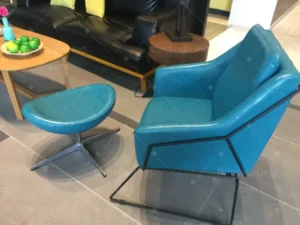
- Care-specific items: high-seat lounge chairs, armchairs with full-length armrests for sit-to-stand support, and upholstery in wipeable, fluid-resistant healthcare-grade fabrics.
Fabric specification carries more weight here than in almost any other commercial project type. Healthcare-grade vinyl and solution-dyed polyester upholstery are normally specified at 100,000+ double rubs on the Wyzenbeek abrasion test, versus the 30,000–50,000 double rubs accepted for general commercial lounge furniture, and the face fabric must tolerate repeated wipe-downs with hospital-grade disinfectants without cracking or color loss. Moisture barriers under the seat upholstery are standard for resident-room and dining seating.
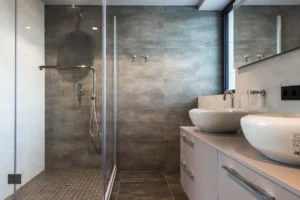
Many developers also bundle building materials into the same order — slip-resistant vinyl flooring, corridor handrails, bathroom fittings, doors and lighting — which is why senior living projects are often handled as combined China building materials and FF&E procurement rather than as furniture-only purchases. Consolidating both scopes under one coordinator keeps finishes consistent and reduces the number of separate shipments.
Which Compliance Standards Apply to Senior Living Furniture From China?
Four frameworks appear on nearly every North American senior living or assisted living project, and export-oriented Chinese factories that serve the healthcare and aged-care market build to them as a matter of routine:
- ANSI/BIFMA X5.4 — durability and stability testing for lounge and public seating, covering cyclic load, drop and stability tests.
- CAL TB 117-2013 — smolder resistance for upholstered furniture components; required in California and treated as the de facto national baseline in the US.
- TSCA Title VI / CARB Phase 2 — formaldehyde emission limits for composite wood: 0.05 ppm for hardwood plywood and 0.11 ppm for MDF used in casegoods.
- ADA suitability — accessible dining and activity tables need at least 27 inches of knee clearance, and circulation-friendly furniture layouts start at the FF&E spec stage.
UK and Australian projects substitute their own flammability regimes — BS 5852 (Crib 5) ignition testing in the UK and the relevant AS/NZS standards in Australia — so the destination country must be fixed before fabrics and foams are ordered, not after. For casegoods, wardrobes and vanities, formaldehyde compliance paperwork matters at customs and at handover: the practical mechanics are covered in our guide to CARB Phase 2 / TSCA Title VI compliance. A competent agent collects the factory test reports for each product family and delivers them with the shipping documents, so the operator holds a complete compliance file at licensing time.
How Is Senior Living FF&E Different From Standard Hotel FF&E?
If you have bought hotel FF&E before, the process will feel familiar — but the product engineering is different in ways that affect drawings, sampling and QC checkpoints:
- Seat height and support: lounge and dining seating is specified at 19–21 inches seat height with firm, high-resilience foam, versus the 16–18 inches common in hotel lounge furniture, so residents can stand up without assistance.
- Sit-to-stand geometry: armrests run the full depth of the seat to the front edge, because residents push down on them when rising; frames and joints are engineered for that repeated load.
- Stability and anti-tip design: chairs must not tip when a resident leans on one armrest or the backrest; wider stances, deeper back legs and weighted bases are standard, verified against BIFMA stability tests.
- Safety detailing: rounded corners and eased edges on casegoods, no low-level protrusions, matte finishes to reduce glare, and higher color contrast between seat and floor for residents with impaired vision.
- Heavy-duty ratings: bariatric seating options rated to 500 lb (227 kg) are typically included for a portion of common-area seating.
None of these features are exotic for factories that regularly export aged-care furniture, but they must be written into the spec book explicitly. A hotel-grade armchair and a care-grade armchair can look identical in a rendering; the difference lives in the frame, the foam, the fabric and the geometry — exactly the things a drawing review and a physical sample are for.
Sourcing this for a commercial project?
FBM Sourcing works with project owners, developers, main contractors and FF&E contractors on hotel, apartment, school, office and other commercial building projects. Send us your BOQ, drawings or product list — our team will review it and get back to you.
What Does the Senior Living FF&E Procurement Process Look Like Step by Step?
Whether the buyer is a developer, an operator or an FF&E contractor, the China-side process follows the same five steps:
- 1. Spec book and BOQ: every item gets a code, drawing or reference image, dimensions, materials, fabric, compliance requirements and quantity per floor or wing.
- 2. Factory allocation and sampling: items are split across specialist factories; pre-production samples and fabric cuttings typically take 7–15 days per item family.
- 3. Production: custom furniture runs on a 45–60 day manufacturing window after sample approval.
- 4. Pre-shipment quality control: finished goods are checked against approved samples and drawings before anything is packed.
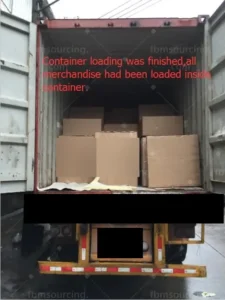
- 5. Consolidation and phased shipping: goods from multiple factories are consolidated into containers scheduled around the site’s fit-out sequence.
The spec book is the single highest-leverage document in the whole process. The structure used for hospitality projects transfers directly — our breakdown of what a hotel FF&E spec book should include applies to senior living with the addition of the care-specific columns: seat height, weight rating, flammability standard and cleanability spec per item.
Factory allocation is where an experienced coordinator earns their fee. Casegoods, metal-frame seating, upholstered lounge furniture and dining tables come from different specialist factories, and the aged-care segment has its own cluster of capable exporters — see our review of healthcare and aged care furniture manufacturers in China for how that landscape looks. Samples are approved against the spec book, and any correction happens at the sample stage, where it costs days instead of weeks.
For the wider picture of how a full FF&E procurement China package is structured — who holds the specification, how categories are grouped across factories, and where the sequencing risk sits — our main guide covers the whole process end to end.
On quality control, the working arrangement is straightforward: all inspections are carried out by FBM’s own team at the factory before shipment, with photo and video records delivered to the client. For a senior living package the checklist concentrates on dimensions against drawings, seat height and stability, fabric and finish match against the approved sample, moisture-barrier installation, edge detailing and export packaging. Cartons are then labeled by item code and by wing or floor, so site crews can distribute deliveries room by room without opening boxes to find out what is inside.
What Are Typical Lead Times, and How Should Delivery Be Phased?
Plan around a 45–60 day production window for custom furniture after sample sign-off, then add ocean transit: roughly 14–20 days to the US West Coast, 28–35 days to the US East Coast, 28–35 days to Europe, and 14–25 days to Australia. Allowing for sampling, booking and customs clearance, a realistic end-to-end timeline from approved spec book to first on-site delivery is four to five months. Certain categories run longer than the average and should be released first — see which FF&E items have the longest lead times for the sequencing logic.
Two calendar factors deserve a line in every senior living procurement schedule. Chinese factories close for two to four weeks around Chinese New Year, in late January to mid-February, and production slots on either side of the holiday fill up early; the National Day holiday in the first week of October causes a shorter but similar squeeze. If your commissioning date lands in the first quarter of the year, the spec book realistically needs to be signed off before November so the 45–60 day production window clears the shutdown instead of straddling it.
Senior living projects rarely open all at once. Communities are typically commissioned wing by wing or floor by floor, and the shipping plan should mirror that: fabrics and finishes are ordered in one batch at the start so every phase matches, while production and containers are released per wing. A 40-foot high-cube container holds roughly 65–68 m³ of packed furniture, which makes per-wing container planning a simple volume exercise once the spec book quantities are fixed. The floor-by-floor delivery logic is the same one used in apartment development furniture and building materials procurement: each release matches the fit-out sequence so furniture never sits in site storage for months.
Why Use a China Sourcing Agent for Senior Living FF&E Procurement?
A single senior living community can involve six to ten specialist factories across casegoods, seating, upholstery, dining furniture, lighting and building materials. Managing that spread from another time zone — sampling rounds, compliance paperwork, production schedules, inspections and container consolidation — is a full-time job, which is why most overseas operators route assisted living furniture procurement through a china sourcing agent rather than buying factory-direct. The agent model keeps one contract, one point of accountability and one consolidated shipping plan across all factories; for suppliers you nominate, we charge a 5% commission; for products we source for you, we quote a direct price.
For healthcare FF&E from China specifically, the coordination points that matter most are compliance documentation per product family, sample discipline before production release, pre-shipment inspection with photo and video evidence, and phased container scheduling that tracks the commissioning plan. These are exactly the failure points when a project team tries to manage a dozen factories directly alongside construction.
Consolidation also has a direct commercial effect. Without a coordinator, six factories mean six part-loaded shipments on different schedules; consolidated, the same goods travel as full containers released per wing. And because senior living furniture has a longer replacement horizon than hotel FF&E, operators typically add 2–3% attic stock of upholstery fabric and high-wear seating in the initial buy, then keep the spec book item codes on file — a building material sourcing agent or furniture agent who holds the complete spec file can rerun replacement orders from the same drawings years later without re-specifying anything.
Get a China Procurement Quote for Your Project
FBM Sourcing works with senior living and assisted living developers, operators, main contractors and FF&E contractors on commercial building projects — we take on project-scale orders, typically one 20-foot container and above, rather than single-item or residential purchases.
To get a quotation started, send us your drawings or spec book, item quantities or BOQ, destination port and target timeline. Our team will review the package and come back with a sourcing plan covering factory allocation, sampling, production, quality control and consolidated shipping. Reach us through the quote form or on WhatsApp at +86 135 6007 5057.