Sourcing from China in 2026 is defined less by any single tariff number than by volatility: duty rates on furniture and building materials now change faster than a construction project’s procurement cycle, so experienced buyers have stopped asking “what is the tariff” and started modelling landed cost per HS code at the date of order, with decision gates built into the schedule. Production lead times and ocean freight, by contrast, have largely normalised — and China’s industrial clusters still hold a depth in certified, project-grade products that no alternative origin matches at commercial-project scale. On projects like this, FBM Sourcing works as your dedicated sourcing partner.
Here is what has structurally changed for project procurement, what has not, and the specific adjustments developers, contractors and FF&E teams are making this year.
- Tariff schedules are revised more frequently than in any recent period, and rates diverge sharply between HS codes that sit side by side on the same BOQ.
- Production windows are stable: 15–30 days for tiles and sanitary ware, 30–45 days for project furniture, 30–60 days for engineered window systems after shop-drawing approval.
- Typical ocean transit: 14–20 days to the US West Coast, 28–35 to the US East Coast, 30–40 to Europe, 12–18 to Australia.
- Duty is one line in landed cost, alongside product cost, freight, insurance, destination charges and delivery — the headline rate is not the cost impact.
- Compliance documentation per batch (fire, formaldehyde, structural test reports) is now checked more often at destination, not less.
What’s Changed with Tariffs — and What Hasn’t
The structural change is tempo and granularity. Tariff measures now arrive, adjust and expire on political timelines rather than trade-cycle timelines, and they attach to specific HS codes: two products on the same container — say, a vanity cabinet and the ceramic basin that sits in it — can carry very different duty treatments. Publishing a specific rate in a guide like this would date it within months, which is precisely the point: any fixed number you read about tariffs, treat as a snapshot, not a plan.
What hasn’t changed is the arithmetic that matters. Duty is calculated on customs value and stacks with freight, insurance, destination port charges and inland delivery to form landed cost — and for US-bound projects the operating rule is simple: the headline tariff rate is not your landed cost. The impact depends on the actual HS classification, the customs value basis, and the rest of the cost stack. We model this per line item, per HS code, at current rates as part of any project assessment — before the buyer commits, not after. The baseline mechanics are unchanged from our guide to how to import furniture from China.
Meanwhile the underlying trade volumes tell their own story: official customs data shows China’s furniture and building material exports to developed markets remain at scale — see the numbers in our 2026 customs data review for furniture and building material sourcing.
Are Lead Times from China Longer in 2026?
No — production lead times are one of the most stable variables in the whole equation, and planning against them is straightforward:
- Tiles, sanitary ware, hardware: 15–30 days for production-run items; stocked export lines can move faster.
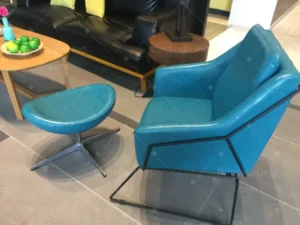
- Project furniture (casegoods, seating): 30–45 days after prototype and finish approval.
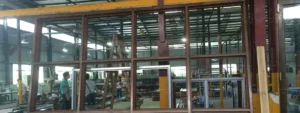
- Engineered products (window systems, curtain wall components, custom joinery): 30–60 days after shop drawings are signed off — the drawing approval, not the factory, is usually the critical path.
Ocean freight has settled into predictable ranges as well: 14–20 days to the US West Coast, 28–35 days to the US East Coast, 30–40 days to Northern Europe on current routings, and 12–18 days to Australian east-coast ports. The planning risk is not the average but the tail — vessel bunching, port congestion windows, pre-holiday booking crushes around Chinese New Year and Golden Week — so the working rule for project cargo is to hold a 2–3 week buffer between scheduled arrival and site-required date, and to book space 3–4 weeks ahead in peak season.
Sourcing this for a commercial project?
FBM Sourcing works with project owners, developers, main contractors and FF&E contractors on hotel, apartment, school, office and other commercial building projects. Send us your BOQ, drawings or product list — our team will review it and get back to you.
Is “China Plus One” Replacing China for Project Procurement?
For consumer goods, multi-country sourcing is now routine. For commercial construction procurement, the picture is different, and buyers should be clear-eyed about why: project-grade products are certification-heavy and specification-locked. A fire-rated door set, a tested aluminium window system, a CARB/TSCA-documented cabinet program or a contract furniture package with destination flammability compliance requires not just a factory but an ecosystem — testing laboratories, component suppliers, finishing lines and engineering teams that can hold one specification across phases.
That ecosystem depth is what China’s clusters still uniquely offer at scale: tiles and sanitary ware in Foshan, furniture across the Pearl River Delta, windows and curtain wall in Guangdong, engineered flooring in the east — mapped in our buyer’s map of China’s furniture and building material manufacturing hubs. Where alternative origins do enter a project realistically, it is as a hybrid: individual lines moved for duty or program reasons while the specification anchor stays with the Chinese cluster. Some manufacturers themselves now operate plants in several countries, which lets a buyer re-origin a line without changing the engineering relationship.
What Should Project Buyers Do Differently in 2026?
The buyers navigating this year well have made five concrete adjustments:
- Lock specifications earlier. Volatility punishes open specs: a finalized BOQ can be re-quoted and re-modelled in days when conditions change; a half-open one cannot.
- Add an HS review gate before ordering. Classify every BOQ line properly, model landed cost at current rates, and let the model — not the headline — drive the order decision.
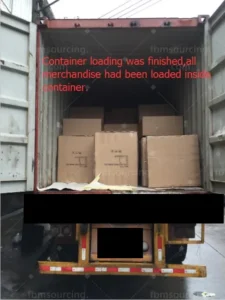
- Consolidate to full containers. Fewer, fuller boxes cut both freight exposure and handling risk; see full container consolidation for building material projects.
- Build the compliance file per batch. Fire, formaldehyde and structural test reports assembled at production time, matched to shipment batches, so destination checks never stall the cargo.
- Put one accountable party on the ground. A building material sourcing agent working on a 5% commission for suppliers you nominate (products we source for you are quoted at a direct price) coordinates factories, holds specifications across phases, and executes inspections — at FBM Sourcing, all inspections are performed by our own team at the factory before shipment, with photo and video records delivered to the client.
None of these steps depends on predicting policy. They convert an unpredictable environment into a sequence of dated, documented decisions — which is all a construction program actually needs.
How Are Buyers Structuring Orders and Payments Now?
Order structure has quietly become a risk tool. The standard factory payment rhythm in project procurement remains a deposit against order confirmation with the balance against shipment documents — commonly structured around 30/70 — and in a volatile duty environment that rhythm has a second use: the deposit date locks production capacity and pricing while the balance-and-ship decision can sit behind the HS review gate. Buyers running multi-phase programs increasingly split orders so that each phase is a complete, shippable compliance unit — its own batch documentation, its own container plan — rather than one giant order that arrives into whatever the rules are eight months from now.
Incoterm choice is getting more deliberate for the same reason. FOB keeps the buyer (or their agent) in control of freight timing and destination clearance strategy, which matters when the clearance date itself affects cost; fully delivered terms move that control to the seller’s forwarder. There is no universally right answer, but there is a wrong default: choosing terms by habit rather than by who is best placed to manage the destination side of a changing rulebook. And on the production side, the professional constant holds — specifications frozen at order, prototypes approved before production, and inspections at the factory before anything is loaded, because a compliance or quality failure discovered at destination now carries more schedule cost than it ever has. That combination of dated decisions, complete batch files and source inspection is precisely what keeps 2026’s policy noise from becoming a site-schedule problem.
Frequently Asked Questions
Is it still worth sourcing from China in 2026?
For commercial construction projects, yes — China’s industrial clusters remain the deepest source of certified, specification-locked products such as tested window systems, fire-rated doors, contract furniture and porcelain tile, and production lead times of 15–60 days by category remain stable. The change is procedural: landed cost must be modelled per HS code at order date rather than assumed.
How do tariffs affect landed cost from China?
Duty is one line in a stack that includes product cost, freight, insurance, destination charges and inland delivery — so the headline tariff rate is not the cost impact. Two adjacent lines on the same BOQ can carry different duty treatments, which is why line-by-line HS classification and modelling at current rates is the working method.
How long does shipping from China take in 2026?
Typical ocean transit is 14–20 days to the US West Coast, 28–35 days to the US East Coast, 30–40 days to Northern Europe, and 12–18 days to Australia’s east coast, plus production time. Project cargo should carry a 2–3 week buffer and peak-season bookings made 3–4 weeks ahead.
Should a project switch to a different sourcing country?
Rarely wholesale. Certification-heavy project products depend on cluster ecosystems — testing labs, component chains, engineering teams — that alternative origins do not yet replicate at commercial-project scale. Realistic diversification is hybrid: moving specific lines for duty or program reasons while the specification anchor stays with the established cluster.
For the product-by-product duty picture on the US side, see our guide to US anti-dumping duties on China-made cabinets, quartz and flooring.
Get a China Procurement Quote for Your Project
Planning a hotel, apartment, office or other commercial building project against a moving policy backdrop? Send FBM Sourcing your BOQ or product list and destination. We will classify every line, model landed cost per HS code at current rates, and return a sourcing plan with lead times and consolidation strategy on a 5% commission for suppliers you nominate (products we source for you are quoted at a direct price) — with every inspection performed by our own team at the factory before shipment and documented in photo and video records. Use the quote button above or WhatsApp +86 135 6007 5057.
If you are weighing origins beyond China for part of the package, our china vs vietnam vs india sourcing comparison lays out where each country genuinely wins and where China still carries the whole BOQ.