
To import furniture from China successfully, define the product and destination requirements before requesting prices, verify the real factory, approve a controlled sample, calculate landed cost by HS classification and Incoterm, inspect production, engineer the packaging, and book customs and delivery before the goods leave China. On projects like this, FBM Sourcing works as your dedicated sourcing partner.
If you plan to buy furniture from China for a hotel, apartment, office or wholesale program, treat the order as a managed procurement project rather than a simple product purchase.
The biggest furniture-import losses rarely come from the quoted unit price. They come from an undefined specification, the wrong supplier, unplanned duties, failed compliance, late quality inspection, weak packaging, storage charges or goods that cannot be installed on site.
This guide gives importers, developers and contractors a practical end-to-end process for buying furniture from China. It also explains which responsibilities stay with you even when a China purchasing agent, freight forwarder or customs broker handles part of the work.
Important: Customs, product-safety, timber and trade-remedy rules depend on the destination, product, material, end use and date of entry. The examples below use official U.S. sources to illustrate the checks an importer should make; they are not legal or customs advice. Confirm your classification and current requirements with the relevant authority and a qualified customs broker before ordering.
Table of Contents
- Furniture import process at a glance
- Step 1: define the furniture before asking for a price
- Step 2: check import rules before approving the product
- Step 3: calculate landed cost before choosing the supplier
- Step 4: shortlist and verify the supplier
- Step 5: normalize quotations
- Step 6: approve a golden sample and specification
- Step 7: write a purchase order that controls change
- Step 8: inspect materials and production early
- Step 9: engineer packaging for the route and site
- Step 10: book freight and customs early
- Furniture import document checklist
- Step 11: control arrival, clearance and final delivery
- Step 12: close the order with installation and claim data
- How long does importing furniture from China take?
- Should you use a China purchasing agent?
- Ten costly furniture-import mistakes
- Frequently asked questions
- Build an import plan before placing the deposit
- Official resources for destination checks
Furniture import process at a glance
| Stage | Main decision | Evidence you should have before moving on |
|---|---|---|
| 1. Define | What exactly are you importing? | BOQ, drawings, material and performance specification |
| 2. Classify | How will customs and regulators treat it? | Proposed HS code, product scope review, compliance matrix |
| 3. Source | Which supplier can make it? | Legal verification, factory audit, comparable quotation |
| 4. Sample | Does the design and construction work? | Approved sample, signed specification, test plan |
| 5. Contract | Who owns each risk and cost? | Purchase order, Incoterm, milestones, QC and remedy clauses |
| 6. Produce | Is the factory following the approval? | Material records and production follow-up |
| 7. Inspect | Is the shipment acceptable? | Final inspection report and release decision |
| 8. Ship | Are packing, booking and documents correct? | Packing list, invoice, booking, marks, loading record |
| 9. Clear | Can the goods legally enter? | Entry data, declarations, certificates and duty calculation |
| 10. Deliver | Can the shipment reach and be installed on site? | Delivery booking, unloading plan, damage and shortage record |
Step 1: define the furniture before asking for a price
“One hotel chair” or “200 bedroom sets” is not a quote-ready request. Different China furniture exporters may interpret the same image with different frames, panels, foam, fabric, hardware, finish and packaging. The prices will look comparable even though the products are not.
Your RFQ should include, where relevant:
- Item code and quantity by room, unit or delivery phase
- Dimensioned drawings and tolerances
- Intended use: residential, hotel, office, healthcare, education or outdoor
- Destination country and project location
- Solid-wood species or panel type and thickness
- Metal grade, section and coating
- Foam type, density and performance
- Fabric or leather code and required performance
- Hardware brand, model or minimum grade
- Finish colour, sheen and approved reference
- Structural, durability, flammability, emissions or safety standards
- Label, manual and country-of-origin marking
- Packaging method and handling limits
- Target delivery milestone and preferred Incoterm
For a project package, create one specification sheet per item. Use the same revision number in the RFQ, sample approval, purchase order and inspection checklist. That control prevents an old drawing from returning during production.
If you need help organizing the enquiry, start with How to Send a BOQ or Drawings to a China Sourcing Agent.
Step 2: check import rules before approving the product
Import compliance is not a final shipping task. It can change the material, construction, label, test plan, supplier choice and total cost.
Identify the HS classification
Furniture commonly falls within Chapter 94 of the Harmonized System, but the detailed classification depends on function, material and construction. Seating, office furniture, bedroom furniture, kitchen cabinets, furniture parts and mattresses do not necessarily share the same subheading.
Ask a customs broker to review:
- Product description and use
- Main material and component breakdown
- Whether it is complete, unassembled or a part
- Country of origin
- Proposed transaction value
- Any assists, tooling, royalties or related-party issues
In the United States, current tariff classifications should be checked in the official Harmonized Tariff Schedule. Do not assume that a low or zero base rate means no additional duty. Country-specific tariffs, antidumping or countervailing duty orders and other measures may apply to a defined product scope.
Build a destination compliance matrix
Use a line-by-line matrix rather than asking a factory, “Can you pass U.S. standards?”
| Product/material | Possible requirement to investigate | Evidence to define before production |
|---|---|---|
| Hardwood plywood, MDF or particleboard in U.S.-bound finished furniture | EPA TSCA Title VI formaldehyde requirements | Covered panel identity, recognized certification, labels, supplier records and import certification data |
| Upholstered seating for the U.S. | 16 CFR part 1640 flammability and labeling | Compliant component construction, test support, GCC where required, permanent label |
| Wood or plant-material products entering the U.S. | Lacey Act declaration depending on current phase and HTS scope | Scientific names, country of harvest, quantity/value data and declaration responsibility |
| Children’s furniture | Destination-specific mechanical, chemical, tracking-label and certification rules | Age grading, applicable standards, test plan and certificate format |
| Electrical furniture | Electrical safety, plug, voltage, radio and energy rules as applicable | Component approvals, complete-product testing and destination labels |
| Commercial/hospitality furniture | Contract or local fire, strength, accessibility and performance requirements | Project specification, test method, test level and model coverage |
The U.S. EPA states that its composite-wood rule covers hardwood plywood, medium-density fiberboard and particleboard, including finished goods containing them. Its TSCA Title VI guidance also addresses certification, labeling, recordkeeping and import certification.
For upholstered furniture, the U.S. Consumer Product Safety Commission explains that 16 CFR part 1640 incorporates the relevant TB 117-2013 smolder-resistance requirements and includes testing, certification and labeling obligations.
For wood products, check current U.S. Department of Agriculture APHIS instructions for the Lacey Act declaration. APHIS has expanded product coverage in phases, so old shipment experience is not proof of current exemption.
Step 3: calculate landed cost before choosing the supplier
The factory price is one line in the furniture import budget.
Landed-cost formula
Landed cost = goods + tooling/samples + origin handling + inland transport + export charges + inspection/testing + freight + insurance + duty/tariffs/taxes + brokerage + port/terminal charges + delivery + storage risk + damage/replacement allowance.
Your calculation should also state the Incoterm and named place. “FOB” without a port, or “DDP” without exclusions, is incomplete.
Illustrative calculation
Assume a project buys a container-scale furniture package. A planning worksheet might include:
| Cost line | Illustrative amount | Why it must be separated |
|---|---|---|
| Goods | product cost | Supplier’s agreed product scope |
| Samples/tooling | product cost | May not be included in mass-production price |
| China inland and export handling | product cost | Depends on factory location and Incoterm |
| Inspection and testing | product cost | Depends on stages, sample size and lab scope |
| International freight and insurance | product cost | Market- and route-dependent |
| Duty, tariffs and import taxes | To be classified | Must use current rules and customs value |
| Destination terminal, brokerage and drayage | product cost | Port, carrier and free-time terms matter |
| Final delivery/unloading | product cost | Site access, labour and equipment vary |
| Contingency | product cost | Damage, storage, re-delivery or minor shortage |
The pre-duty landed planning value in this example is a specification-dependent figure. It is not a current freight quote or duty estimate; it shows why a a specification-dependent figure factory-price saving can disappear if the second supplier packs less efficiently, ships from a distant port or creates additional testing and rework.
For a deeper cost model, see Furniture Procurement Cost from China.
Step 4: shortlist and verify the supplier
The phrase “China furniture supplier” can describe a manufacturer, export company, trading company, showroom or project procurement firm. Each can be useful, but the buyer should know which one is quoting.
Supplier-verification checklist
- Chinese legal company name and business licence
- Registered address, factory address and export entity
- Ownership or relationship between seller and factory
- Main products and processes performed in-house
- Subcontracted processes and locations
- Similar products currently in production
- Capacity for your order during the required period
- Quality-control staff and inspection records
- Relevant test reports and certificate scope
- Export experience to the destination market
- Bank beneficiary matching the contracted entity, or a documented explanation
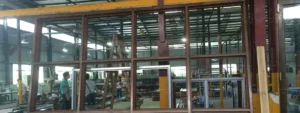
If a company claims to be a China furniture factory, a live video call or visit should follow the production route for your item—from incoming material through machining, assembly, finishing, upholstery, inspection and packing. A warehouse full of finished products does not prove manufacturing ownership.
Factory or trading company?
A specialized factory may offer stronger technical control and a lower direct price for its core category. A competent trader or China import agent may offer better coordination across many categories. For a hotel or apartment project, the correct answer may be several specialist factories under one managed BOQ rather than one “all-products” supplier.
Sourcing this for a commercial project?
FBM Sourcing works with project owners, developers, main contractors and FF&E contractors on hotel, apartment, school, office and other commercial building projects. Send us your BOQ, drawings or product list — our team will review it and get back to you.
Step 5: normalize quotations
Create a comparison sheet with these columns:
- Supplier and production site
- Item code and exact revision
- Quantity and unit price
- Included material/construction
- Exclusions and proposed deviations
- Sample, tooling and testing cost
- MOQ and price-break assumptions
- Packaging method and package volume
- Incoterm and named place
- Production lead time
- Payment terms
- Warranty and spare-parts provision
- Validity period
Never compare an EXW price from one factory with a FOB or DDP price from another without rebuilding the cost boundary. Our FOB vs CIF vs DDP guide explains how cost and responsibility move under each option.
Step 6: approve a golden sample and specification
The approved sample should be paired with a signed, dated specification. Mark it with supplier, item code and revision, then seal or otherwise control the reference if it stays at the factory.
Approval should cover:
- Overall dimensions and ergonomics
- Visible design and colour
- Hidden frame or substrate
- Joint and reinforcement method
- Foam, fabric, leather and stitching
- Hardware and moving parts
- Surface finish and defect limits
- Labels and manuals
- Packaging and assembly method
- Required test outcome
Photograph the sample from standard angles and record details that photographs cannot prove, such as foam density or panel source. A “looks approved” message in a chat thread is not a production specification.
Step 7: write a purchase order that controls change
Your contract or purchase order should state:
- Contracting parties and manufacturing site
- Item list, quantity and specification revision
- Price, currency, Incoterm and named place
- Sample and test approval conditions
- Production and shipment milestones
- Inspection rights and hold points
- Rules for material or subcontractor changes
- Packaging, labels and document requirements
- Nonconformity remedy and reinspection cost
- Payment triggers linked to evidence
- Warranty, spare parts and claim procedure
- Governing law and dispute mechanism reviewed by counsel
Avoid a payment structure that leaves no commercial leverage before final inspection. The exact terms depend on order size, relationship and risk, but payment should follow real milestones rather than calendar promises.
Step 8: inspect materials and production early
Final inspection cannot reliably reveal every hidden frame, glue, foam, panel, electrical component or coating-preparation problem. Build China product inspection around the process.
Recommended inspection stages
| Stage | What it can catch | Typical evidence |
|---|---|---|
| Pre-production | Wrong drawings, materials, colours or components before volume work | Approved BOM, samples, incoming-material records |
| Pre-shipment | Quantity, appearance, function, labeling and packing defects | Final random inspection report and release decision |
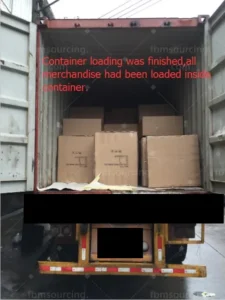
| Container loading | Wrong quantities, damaged cartons, poor loading or container condition | Count, seal, container and loading photos |
Whether inspection is carried out by your sourcing agent’s own team or by your own people, the checklist must refer to the purchase specification. A generic “AQL inspection” does not define the product requirements by itself.
Our Factory QC and Inspection When Sourcing from China guide gives a practical sequence. A real project example is the Office Furniture QC Inspection and Container Loading Case Study.
Step 9: engineer packaging for the route and site
Furniture packaging has to survive factory handling, warehouse stacking, container movement, terminal transfer, customs inspection, inland delivery and site movement.
Specify:
- Assembled, knock-down or semi-knock-down format
- Corner, edge and surface protection
- Moisture protection and ventilation strategy
- Carton strength and closure
- Crate or pallet requirements where justified
- Hardware pack location and spare quantity
- Assembly instructions and tool requirements
- Package dimensions, gross/net weight and handling marks
- Item, room and floor labels for project delivery
- Stack limits and “do not clamp” instructions where needed
For mixed shipments, create a loading plan before production is complete. It should consider carton dimensions, weight distribution, unloading sequence and site priorities. Maximum theoretical container volume is not the same as usable furniture capacity.
Step 10: book freight and customs early
Freight planning should start before the goods are finished. Give your forwarder or broker:
- Shipper and consignee details
- Importer-of-record information
- Product descriptions and proposed HS codes
- Package count, dimensions, weight and estimated volume
- Incoterm and pickup location
- Ready date and required delivery date
- Battery, chemical, wood-packaging or other special details
- Required declarations and supporting documents
For U.S.-bound ocean cargo, CBP states that an Importer Security Filing (ISF/“10+2”) is generally required no later than 24 hours before the cargo is loaded onto the vessel. Even when a broker or agent files it, the importer should provide accurate supplier, origin, HTS and stuffing data on time.
Furniture import document checklist
| Document/data | Usually prepared by | What to verify |
|---|---|---|
| Commercial invoice | Seller/exporter | Parties, detailed description, value, currency, Incoterm, origin |
| Packing list | Seller/exporter | Package count, contents, net/gross weight, dimensions and marks |
| Bill of lading or sea waybill | Carrier/forwarder | Shipper, consignee, notify party, ports, package and container data |
| Customs entry data | Importer/broker | Classification, valuation, origin, duties and declarations |
| ISF for applicable U.S. ocean cargo | Importer or filing agent | Accurate, timely 10+2 data matched to bill of lading |
| Certificate of origin, if requested | Authorized issuer/seller | Correct origin basis and destination format |
| Fumigation/ISPM 15 evidence for regulated wood packaging | Packaging provider/exporter | Treatment mark and compliant wood packaging |
| Product test reports/certificates | Lab, supplier or importer | Correct model, materials, factory, standard and validity |
| TSCA/Lacey or other regulatory data when applicable | Supply chain and importer | Complete product/material data and current filing requirement |
| Insurance certificate | Insurer/forwarder | Insured value, risks, route, exclusions and claim process |
Document names and responsibilities vary by country and shipment. Ask the destination broker for a written pre-shipment checklist rather than reconstructing it after arrival.
Step 11: control arrival, clearance and final delivery
Before the vessel or shipment arrives, confirm:
- Original or telex-release document status
- Entry documents accepted by the broker
- Estimated duty, tax and fee funding
- Free time and possible demurrage/detention exposure
- Port or terminal appointment
- Drayage, chassis and unloading equipment
- Site access, floor loading and elevator limits
- Labour and waste-removal responsibility
- Shortage and damage reporting procedure
The importer of record remains responsible for accurate entry data even when professionals prepare the filing. CBP’s tips for new importers emphasize providing a complete product description, origin, composition, use and value information.
At delivery, photograph the container seal and condition before opening. Count packages against the packing list, record visible damage before moving the goods, and preserve packaging for any insurance claim.
Step 12: close the order with installation and claim data
Furniture imports are not complete when customs releases the container. Close the loop by recording:
- Delivered and missing quantities
- Transit damage by item and cause
- Assembly or installation problems
- Site modifications required
- Spare parts used
- Supplier response time
- Final defect and claim cost
- Packaging changes for the next shipment
This information turns the second order into a controlled improvement rather than a repeat of the first shipment.
How long does importing furniture from China take?
A project schedule should include separate allowances for:
- RFQ clarification and supplier screening
- Shop drawings and sample development
- Testing and corrective samples
- Material ordering and production
- Final inspection
- Rework buffer
- Booking and origin transport
- Ocean or air transit
- Customs and destination handling
- Site delivery and installation
Do not count the supplier’s “production lead time” as the full import lead time. It may begin only after deposit, final drawing approval and receipt of nominated fabric or hardware. See our China Sourcing and Shipping Timeline by Project Type for planning logic.
Should you use a China purchasing agent?
A capable China purchasing agent or furniture sourcing company can help when the order involves multiple factories, custom drawings, repeated inspections, consolidation or a buyer who cannot verify suppliers locally.
The scope may include:
- Supplier search and legal verification
- Factory audits
- BOQ and quotation normalization
- Sample and finish coordination
- Purchase-order follow-up
- China product inspection services
- Consolidation and loading
- Export document coordination
Ask how the agent is paid, whether supplier commissions are received, who signs the purchase contract, who controls the bank payment, and who is responsible when goods fail inspection. “One-stop service” is not a substitute for a written scope.
Ten costly furniture-import mistakes
- Approving a price before product classification and compliance review.
- Buying from a showroom without identifying the factory.
- Comparing non-equivalent specifications.
- Using a supplier’s test report without checking model and material coverage.
- Waiting until final inspection to discover hidden construction.
- Letting the factory change material without written approval.
- Assuming DDP transfers all importer and compliance responsibility.
- Booking freight without accurate package dimensions.
- Ignoring antidumping/countervailing scope and additional tariffs.
- Planning port arrival but not site unloading and installation.
Frequently asked questions
Is it profitable to import furniture from China?
It can be, especially for project quantities, custom products and coordinated packages. Profit or savings depend on landed cost, compliance, damage, inventory, installation and after-sales cost—not only the ex-factory price.
Do I need an import licence to buy furniture from China?
Requirements depend on the destination and product. The United States does not use one general import licence for all goods, but agencies may impose product-specific entry, declaration, testing or certification requirements. Confirm your item with a customs broker and the relevant regulator.
What documents do China furniture exporters provide?
Common commercial documents include an invoice, packing list and transport document. Certificates, declarations, test reports, origin documents and wood-packaging evidence depend on the product and destination. The importer should define the list before production.
How much is the duty on furniture from China?
There is no safe universal percentage. Duty depends on current HTS classification, origin, customs value and any additional tariffs or trade-remedy orders. Ask a broker to review the detailed product before you rely on a budget rate.
Is FOB or DDP better for a furniture import?
FOB often gives experienced importers more control over international freight and destination clearance. DDP can appear simpler, but the buyer must understand who acts as importer, how duties are handled and whether the arrangement is lawful and transparent. Choose the term after mapping responsibilities, not because one quote looks lower.
When should I arrange a quality inspection in China?
Plan inspection before placing the order. Sample approval comes before production; the quality check itself is a full inspection once production is finished, before shipment, early enough to allow correction.
Can I combine furniture from several factories in one container?
Yes, but consolidation adds coordination risk. Use compatible delivery dates, consistent carton marks, a receiving checklist, warehouse inspection, an approved loading plan and clear responsibility for shortage or damage.
Build an import plan before placing the deposit
FBM Sourcing supports developers, contractors, designers and furniture importers from supplier selection through delivery. Our work can include RFQ normalization, factory verification, sample development, production follow-up, quality inspection China coordination, packaging review, consolidation and shipping-document support.
Send us your BOQ, drawings, quantities, destination and required-on-site date. We will help turn them into a supplier, compliance, cost, QC and logistics plan before the order becomes expensive to change.