There is no single minimum order for sourcing building materials from China — it depends on the product category and the factory, but most Foshan and Guangzhou building material producers set MOQs around one full container per item, typically one full container of goods per SKU. A building material sourcing agent and sourcing partner working across multiple product categories can consolidate smaller quantities from several factories into one shared container, which means a project buyer can often order well below what any single factory would accept on its own.
That is the short answer. The rest of this guide breaks down typical minimums by category, why factories set them, and how consolidation actually works when your project does not need a full container of any one item.
Typical Minimum Order Quantities by Category
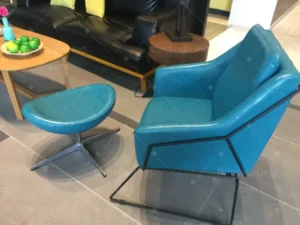
- Furniture: most factories set MOQs of 20–50 units per model and finish; upholstered items often run higher due to fabric cutting minimums.
- Floor and wall tile: commonly 500–1,000 square meters per pattern and color, since tile is fired in batch kilns.
- Doors and windows: usually 20–30 units per profile and finish combination, lower for standard stock sizes.
- Sanitaryware: toilets, basins, and bathtubs typically run 100–300 pieces per model, tied to mold and glazing batch sizes.
- Lighting and hardware: often the lowest MOQs in building materials, sometimes as low as 50–100 units per SKU.
Why Do Chinese Factories Set Minimum Order Quantities?
MOQs exist because most production processes have fixed setup costs that only make sense at volume. A tile factory has to run a full kiln batch to fire one pattern — there is no such thing as firing ten tiles. A furniture factory needs to cut a full roll of fabric or a full sheet of veneer to avoid wasting material on a short run, and a sanitaryware plant amortizes mold costs across a batch of castings. Below the MOQ, a factory either declines the order or quotes a much higher unit price to cover setup costs that a single small order cannot spread out.
This is why a buyer approaching factories directly for a small residential-scale order — a single villa, one apartment unit, a small renovation — often gets quoted prices well above what a commercial project buyer would pay, or gets turned away entirely. Factories are structured around container-scale commercial orders, not one-off retail quantities.
How Can a Sourcing Agent Help You Order Below Factory MOQ?
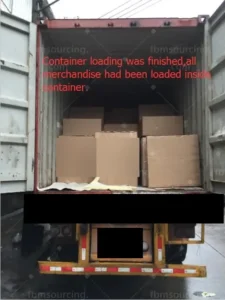
A china sourcing agent solves the MOQ problem primarily through consolidation. Instead of one buyer trying to hit one factory’s minimum on one product, an agent aggregates smaller orders across multiple product categories — say, 30 doors, 400 square meters of tile, and 150 light fixtures — into a single shared 40-foot container. Each factory still ships at or near its own minimum batch size, but the combined shipment lets a buyer whose project does not need a full container of any single item still access factory pricing rather than small-order surcharges.
FBM Sourcing works this way as a furniture sourcing agent and building material sourcing agent for developers, contractors, and FF&E procurement companies: we hold relationships with multiple category-specific factories in and around Foshan and Guangzhou, and we build container loads that combine several trades’ worth of materials into one consolidated shipment rather than requiring a buyer to place separate full-container orders with separate factories.
Consolidation in Practice
On a typical mixed-scope project — say a 40-room boutique hotel needing doors, bathroom fixtures, furniture, and lighting — no single category alone would justify a container from any one factory. We place smaller orders across four or five specialist factories, track each on a compatible production schedule, and bring finished goods into our Foshan warehouse for consolidation. The container that eventually ships carries all four categories loaded together, cutting freight cost per item and letting a mid-sized project source below what any factory would quote as a standalone order.
What If My Project Needs Less Than a Full Container?
Sample orders are always possible below MOQ — most factories will produce one to five pieces at a higher unit price so a buyer can confirm finish, comfort, and construction before committing to the full run. This is standard practice and separate from the MOQ question: a sample order is not a production order, and no factory expects sample pricing to reflect the final unit cost.
For genuinely small projects — a single villa renovation or a handful of units — the realistic options are: pay the small-order premium a factory quotes for below-MOQ production, wait to combine your order with another buyer’s shipment through a sourcing agent’s consolidation program, or scale the specification down to fewer SKUs so the quantity per SKU clears the factory minimum. Most project buyers we work with fall into the second category — their total order value justifies container-scale sourcing, but no single product line hits an individual factory’s MOQ on its own, which is exactly the gap a sourcing agent is built to close.
Sourcing this for a commercial project?
FBM Sourcing works with project owners, developers, main contractors and FF&E contractors on hotel, apartment, school, office and other commercial building projects. Send us your BOQ, drawings or product list — our team will review it and get back to you.
How MOQ Changes as Order Volume Increases
MOQ is not a fixed wall — it is the lowest volume a factory will accept, and pricing continues to improve well past that threshold. A door factory that sets a 20-unit minimum at a given price point will typically quote a lower unit cost at 100 units and lower again at 300+ units, because tooling, setup, and management overhead are spread across a larger run. This matters for project planning: a 60-unit apartment building ordering wardrobes, doors, and tile all at once is usually well past the MOQ threshold on every category, and the relevant question shifts from “can I meet the minimum” to “at what volume does the next price break happen.” A sourcing agent tracks these breakpoints across categories so a buyer can decide whether adjusting a specification — say, standardizing two door finishes into one — pushes enough volume into a single SKU to unlock a materially better unit price.
The reverse also holds: splitting one order across too many finish variants can push each variant below the price-break volume even though the total order is large. We frequently advise developers to consolidate finish options at the schematic design stage specifically to avoid this — fewer SKUs at higher volume per SKU almost always beats more SKUs at the same total unit count.
Common MOQ Mistakes Project Buyers Make
- Assuming MOQ is uniform across a factory’s product line: a factory’s advertised MOQ often applies to its simplest, most standard item — custom colors, sizes, or hardware combinations usually carry a higher minimum.
- Treating a quoted MOQ as fixed: most Chinese manufacturers will negotiate MOQ downward for buyers willing to accept a higher unit price, longer lead time, or prepayment — this is worth raising before walking away from a factory.
- Not accounting for finish and color variants when calculating true order volume: ten different tile colors at 100 square meters each is not the same as 1,000 square meters of one pattern, even though the total area matches — kiln batching means each color effectively resets the MOQ clock.
- Approaching multiple factories separately instead of through one consolidated program: this multiplies the number of individual MOQs a project needs to clear rather than pooling volume where it is available.
Sample Order to Production Order Timeline
Once a specification is confirmed, the factory produces a pre-production sample on a timeline it confirms for each item, followed by buyer review and any revision rounds. Only after a sample is formally approved does the factory schedule the full production run against its MOQ, with a lead time confirmed by the factory in writing for each order, depending on category and current factory bookings. Building this sequence into a project’s procurement timeline matters as much as the MOQ itself — a project that leaves only a short window between drawing approval and required site delivery will struggle regardless of order volume, because sample approval alone takes part of that window.
How FBM Sourcing Manages MOQ Across a Mixed Project
When a project brief comes in with several product categories and no single one at obvious container scale, our first step is a volume audit — mapping every line item against known factory MOQs for that category, region, and finish level. Items that clear MOQ on their own get quoted directly against the best-matched specialist factory. Items that fall short get grouped with compatible categories from other active client orders where the finish and quality tier is close enough to share a container without one client’s goods affecting another’s delivery schedule. This is the practical difference between working with an independent sourcing agent and approaching factories one at a time: the agent’s job includes actively managing the gap between what your project needs and what any single factory will produce on its own.
For hospitality and multi-unit residential projects specifically, we typically see MOQ become a non-issue past roughly 30–40 units of mixed FF&E and building materials — at that scale, most individual product lines clear factory minimums without consolidation, and the sourcing conversation shifts entirely to price breaks, lead time, and quality control rather than minimum order questions. Below that scale, consolidation is usually the deciding factor in whether container-scale China sourcing makes sense for a project at all, compared with buying finished goods locally at higher unit cost but no MOQ constraint.
Get a China Procurement Quote for Your Project
To find out whether your project’s order can be consolidated below standard factory minimums, send us your product list or drawings, estimated quantities per category, destination port, and timeline. FBM Sourcing will confirm which items clear factory MOQs on their own and how the rest can be consolidated into a shared container.
Submit your project requirements and our team will review it and get back to you.
For related reading, see our guide on how much a China sourcing agent costs and our comparison of sourcing agents versus buying direct from a factory or trading company.
Related reading
Related reading