There is no publicly verifiable list of “top” laboratory furniture manufacturers in China, because the category has no listed pure-play producers and almost every ranking online is written by a supplier or a lead-generation site. What a school, university or hospital project buyer can verify is different: the construction type of the casework, the worktop material, the standard the fume cupboards are tested to, and the containment test evidence. This guide sets out the supplier types that make up the Chinese market, the specification decisions that actually control cost and life, and the evidence to request from any supplier before ordering.
Why we have not published a list of named factories here
Before writing this guide we searched for Chinese laboratory furniture companies whose scale and business could be checked in public disclosure — stock exchange filings, audited annual reports, or an equivalent public record an overseas buyer can read without the supplier’s help. We did not find a listed pure-play laboratory furniture manufacturer. What the search returned instead was a set of unsigned “2026 top 10” pages published by suppliers and content farms, which cite no source and cannot be checked.
We could publish ten company names taken from those pages. We are not going to, for the same reason we do not publish trade figures we cannot trace: a list we cannot verify is worse than no list, because it borrows our credibility to launder someone else’s marketing. This is a private, mid-sized manufacturing sector — engineering-led workshops and project fit-out contractors, not branded consumer manufacturers — and there is no external disclosure to rank them on.
What follows is what we can state honestly: the supplier types, how to tell them apart, and what evidence each should produce.
What are the supplier types in Chinese laboratory furniture?
- Integrated laboratory casework manufacturers. Fabricate steel or steel-and-panel casework in-house, apply their own epoxy powder coating, and assemble benches, cupboards and storage. The strongest fit for a repeat-unit teaching laboratory. Evidence to request: photographs of the powder coating line with process parameters, salt-spray test report on the actual coating, and steel gauge measured on a sample.
- Fume cupboard specialists. Build extraction enclosures and controls; often buy casework from a partner. This is the highest-risk item in a laboratory package and the one worth concentrating diligence on. Evidence to request: containment test report to EN 14175-3 or ASHRAE 110, naming the test house and the exact cabinet model and sash configuration.
- Worktop suppliers. Epoxy resin, phenolic (compact laminate), ceramic, stainless steel and solid surface each come from different production routes and usually different factories. Evidence to request: chemical resistance test data on the actual worktop grade, and thickness with a physical sample.
- Laboratory fit-out contractors. Design, supply and install complete laboratories, subcontracting the manufacturing. Appropriate for complex research facilities where responsibility should sit with one party; weaker value where the scope is simply repeat classroom benches. Evidence to request: completed project references in your destination market and the names of the manufacturers behind the package.
- Trading companies. Buy from the above and resell. Some are competent buyers with real QC; some are pure intermediaries. Evidence to request: the manufacturing plant’s name and address in writing, and a clause requiring written approval before any substitution.
The type that fits your project depends on the mix. A secondary school with forty identical science benches and no fume cupboards is a casework purchase. A hospital pathology laboratory with containment requirements is not — that is an engineered package and should be bought as one.
Sourcing this for a commercial project?
FBM Sourcing works with project owners, developers, main contractors and FF&E contractors on hotel, apartment, school, office and other commercial building projects. Send us your BOQ, drawings or product list — our team will review it and get back to you.
Which specification decisions actually control cost and service life?
Four decisions dominate the price of a laboratory package and almost all of its long-term performance.
- Casework construction. Full welded steel, steel C-frame with modular cabinets, or panel-based casework with a steel frame. Full steel costs more and lasts longest in wet or corrosive rooms; panel construction is entirely adequate in a dry teaching laboratory. Our comparison of steel versus wood frame furniture for school and university projects covers the same trade-off in adjacent categories.
- Worktop material. Epoxy resin is the reference material for chemistry laboratories — monolithic, chemically resistant, repairable by sanding. Phenolic compact laminate is lighter and cheaper and adequate for most teaching and preparation work. Ceramic is used where extreme chemical or heat resistance is needed. Stainless steel suits sterile and biological work. Solid surface suits specimen handling and areas where a seamless coved detail matters; see our comparison of quartz versus solid surface countertops for healthcare projects. Specifying epoxy across a whole school when only two rooms do chemistry is one of the most common avoidable costs in this category.
- Fume cupboard containment. Containment is a property of the installed system — cabinet, sash, room airflow and duct — not of the cabinet alone. Specify the test standard, the face velocity and who performs commissioning tests on site.
- Service fittings and safety equipment. Gas, water and electrical service fittings, emergency showers and eyewashes are separately certified items. Where the destination market has a specific standard for emergency equipment, it applies regardless of who supplies the casework.
What standards should a laboratory furniture specification reference?
- EN 13150 — workbenches for laboratories: dimensions, safety and stability requirements.
- EN 14175 — fume cupboards, in several parts. Part 3 covers type tests including containment; part 6 covers variable air volume units. Ask which part the report covers.
- ASHRAE 110 — the North American containment test method, reported as an “as manufactured” or “as installed” result. An “as manufactured” result does not predict site performance on its own.
- SEFA recommended practices — the North American reference set for laboratory casework, worktops and fixtures.
- EN 14470-1 and NFPA 30 — fire-resisting storage cabinets for flammable liquids. These are separate certified products, not ordinary cupboards with a label.
- Destination-market conformity marks. Where the project is in a market requiring a conformity route — for example the Gulf states — the electrical and safety components need their own documentation; our guide to SABER and CE certification for school and hospital projects covers how this works in practice.
A specification that names the standard and the test report requirement gets meaningfully better quotations than one that names a competitor’s product code, because Chinese manufacturers can price against a standard but will guess against a brand name.
How does a laboratory package fit into a school or hospital procurement?
Laboratory furniture is rarely bought on its own. On a school project it usually arrives with classroom furniture, library furniture and washroom fittings; on a hospital project with ward furniture, casework and sanitary fittings. Our guides to school furniture manufacturers for education projects and healthcare furniture manufacturers cover the adjacent categories, and our overview of sourcing building materials for school construction covers the wider package.
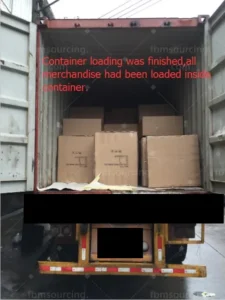
Sometimes, on a large project, the laboratory furniture alone fill full containers; sometimes the laboratory furniture share containers with the other product categories of the same project; and sometimes, in one batch, we combine a dozen or more product categories from several projects of the same client into a few containers — always full containers, and for us this is routine, well-practised work.
Two sequencing points matter. Fume cupboards must be coordinated with the mechanical package before manufacture, not after — duct spigot position and control interface are not field-adjustable. And worktop cut-outs for sinks and service fittings should be resolved against the actual fittings being supplied, or the cut-outs will be wrong on arrival.
What evidence should you request from any laboratory furniture supplier?
- Containment test report for the exact fume cupboard model and sash type, naming the laboratory that performed it and the standard and part.
- Chemical resistance data for the specific worktop grade, with a physical sample of the same batch.
- Coating specification and salt-spray or adhesion test evidence for the steel casework.
- Certification for fire-resisting storage cabinets, if any are in the scope.
- A written statement of which items are manufactured in-house and which are bought in, with the plant name for each bought-in item.
- Photographs of a completed unit of the same model from a previous order, not a rendered image.
We ask for evidence rather than asserting what any supplier holds. That is the difference between a list you can act on and a list that simply repeats what suppliers say about themselves.
About FBM Sourcing
FBM Sourcing manages the entire China procurement package for overseas construction projects. Sourcing since 2014, we have shipped 1,000+ containers to project sites in 20+ countries, working with project owners, developers, main contractors and FF&E contractors on schools, hospitals, hotels, apartment buildings, offices and other commercial buildings. All quotations, invoices and shipping documents are issued by FBM Sourcing — you deal with us, and we carry the responsibility. For suppliers you nominate, we charge a 5% commission; for products we source for you, we quote a direct price.
If you have a laboratory package on a school or hospital project, send us the room schedule and the laboratory layouts at https://fbmsourcing.com/china-building-materials-ffe-procurement/.
Frequently asked questions
Are there listed laboratory furniture manufacturers in China?
We could not identify a Chinese laboratory furniture manufacturer whose business is verifiable through public stock exchange disclosure. The sector is made up of private engineering-led manufacturers and fit-out contractors, which is why this guide describes supplier types and evidence requirements rather than publishing a ranked list of names.
What worktop material should a school science laboratory use?
Epoxy resin is the reference material where chemicals are used regularly; phenolic compact laminate is adequate for general teaching and preparation rooms. Specifying epoxy throughout a school when only a few rooms handle chemicals is a common avoidable cost.
Which standard covers fume cupboards?
EN 14175 in Europe, with part 3 covering type tests including containment, and ASHRAE 110 in North America. Ask which part the report covers and whether the result is “as manufactured” or “as installed”.
Can laboratory furniture be shipped with the rest of a school package?
Yes. We do not handle loose freight; laboratory furniture is consolidated into full container loads for one client and can share containers with the other product categories of the same project.
What is the biggest coordination risk on a laboratory package?
Fume cupboards. Duct spigot position, control interface and airflow requirement have to be agreed with the mechanical package before manufacture, because none of it is field-adjustable once the units are built.