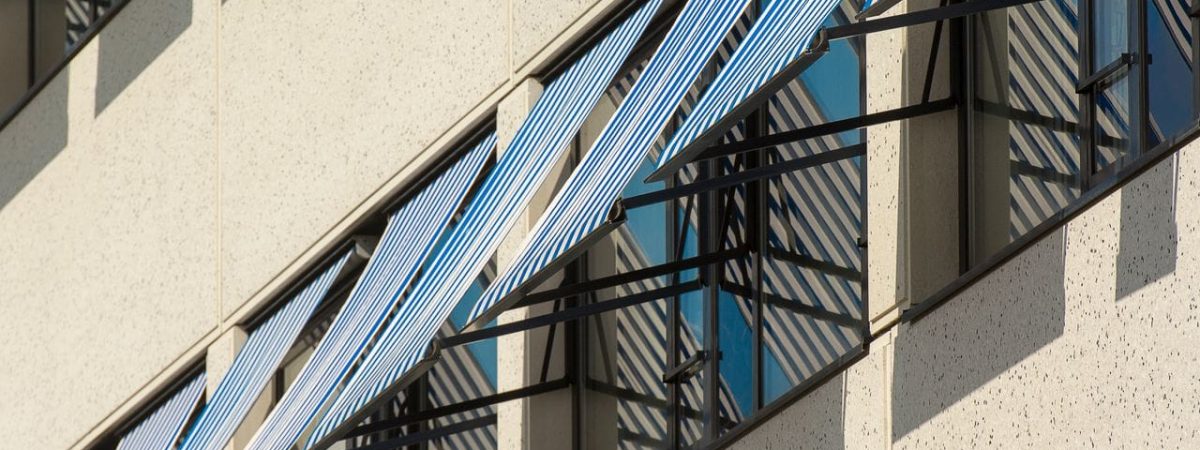
Facade shading systems — fixed aluminum brise-soleil, vertical fins, aerofoil louvers and perforated screen panels — are produced in the same Guangdong extrusion and curtain-wall district that supplies commercial window systems worldwide, and a project team can procure them factory-direct through a building material sourcing agent and sourcing partner rather than through a destination-market fabricator’s markup. Facade shading systems sourcing from China suits orders that are project-shaped from the start: an office tower specifying 400 aerofoil blades across its west elevation, a school putting fixed sun-control fins over every classroom window, or a hotel podium wrapped in a perforated architectural screen. FBM Sourcing manages the factory shortlist, shading engineering review, shop drawings, production inspection and container consolidation from Foshan, so the shading package arrives engineered, finished and labeled bay by bay.
Key numbers a specifier should hold before requesting quotes:
- Production lead time: 30–45 days for custom extruded shading after shop-drawing sign-off
- Extrusions: 6063-T5 aluminum, single-piece blade spans up to 6 m before splicing
- Finishes: PVDF two- or three-coat to AAMA 2605 (25–40 μm) or polyester powder coat 60–80 μm
- Wind-load engineering to ASCE 7, EN 1991-1-4 or AS/NZS 1170.2 depending on destination
- FBM Sourcing agency fee: a 5% commission for suppliers you nominate (direct price for products we source)
Facade Shading System Types and Specifications
Chinese curtain-wall factories fabricate every fixed-shading format that appears on commercial facade schedules, and most of them extrude the profiles in-house rather than buying them in — which is exactly where a project buyer gains, because blade geometry, wall thickness and bracket engineering are all negotiable at the factory level.
| System Type | Typical Commercial Use | Key Specification Points |
|---|---|---|
| Horizontal brise-soleil | Office and school facades, west/north elevations | Projecting blade racks 600–1,500 mm deep, outrigger brackets back-fixed to slab or mullion |
| Vertical fin systems | Towers, hotel facades, feature elevations | Fin depths 200–600 mm, single-piece lengths to 6 m, concealed fixings |
| Aerofoil (elliptical) louvers | Premium office and civic buildings | Extruded aerofoil sections 200–450 mm chord, 1.8–3.0 mm wall, blade pitch per shading study |
| Perforated metal screens | Hotel podiums, car parks, plant screening | 2–3 mm aluminum sheet, open area 30–50%, custom perforation patterns |
| Expanded mesh panels | Budget-driven large elevations | Lighter than perforated sheet at equal coverage; frame-mounted cassettes |
| Operable blade systems | Facades needing adjustable shading | Motor- or crank-driven rotating blades — quoted together with motorized sunshade systems |
Materials, finishes and sub-structure
Commercial-grade systems are extruded from 6063-T5 aluminum alloy; heavier structural members and long-span outriggers step up to 6061-T6. Coastal and high-rise projects should specify PVDF coating to AAMA 2605, which carries a 10-year-plus film integrity expectation and is verified by batch test reports; interior courtyards and low-exposure elevations can run standard polyester powder coat at 60–80 μm to Qualicoat class 1. Fasteners are stainless steel 304 as a minimum, 316 within 1 km of salt water. The sub-structure — brackets, outriggers, thermal isolation pads — is where undersized quotations hide: a blade rack that meets the drawing but hangs on 3 mm brackets will not pass a wind-load check, so FBM Sourcing has the factory’s structural calculations reviewed against the project’s specified wind code before any order is confirmed.
The performance case is worth stating in the specification, because it is what gets the shading package protected when budgets tighten. Correctly pitched external shading intercepts solar gain before it reaches the glass — external systems can cut solar heat gain through a glazed elevation by 70–80%, where internal blinds manage a fraction of that — and on office and school projects the shading study feeds directly into mechanical plant sizing. A value-engineering exercise that deletes the brise-soleil often hands the saving straight back in chiller capacity, which is an argument a design team can win when the shading is priced factory-direct rather than through two layers of destination margin.
Fixed shading is routinely consolidated with the rest of the exterior envelope package. Projects that also carry ventilation or screening louvers can put both lines through one factory — see our companion page on louvers sourcing from China — and smaller-scale canopy and blade products are covered under aluminum sunshades.
Sourcing Process for Facade Shading Systems from China
Facade shading is engineered product, not catalog product, so the procurement sequence runs through drawings rather than samples alone.
- Inquiry. Send facade elevations, the shading detail or design intent drawings, blade type and depth, total coverage area and destination country. State the applicable wind code and, for high-rise work, the design wind pressure if the facade engineer has already published it.
- Factory comparison — 5–7 days. FBM Sourcing prices the package across two to four vetted curtain-wall and extrusion factories, normalizing what each quote includes: alloy and temper, wall thickness, coating system, bracket engineering and freight terms.
- Engineering and shop drawings — 1–2 weeks. The factory produces shop drawings with blade layouts, bracket positions, fixing types and movement joints, plus structural calculations for the specified wind load. This set is checked against the architect’s facade drawings before release.
- Sampling — 7–10 days. A 1-meter blade section in the specified profile and finish, plus coating color plates, is the standard approval set. Full mock-up bays are worth the cost only on tower projects above roughly 2,000 m² of shading.
- Production — 30–45 days. Extrusion, cutting, welding, machining and coating in sequence; perforated screens with custom patterns sit at the long end of the range.
- Inspection and shipping. Pre-shipment QC (detailed below), then export packing. Shading profiles ship as long bundles and flat-packed cassettes that consolidate efficiently with windows, railings and other envelope products from the same project. Ocean transit runs 18–22 days to the US West Coast, 28–35 days to the East Coast, and 12–18 days to Australian ports.
End to end, a project that turns drawings around promptly can hold facade shading on site within 10–12 weeks of first inquiry. The critical-path risk sits in drawing approval, not fabrication — a two-week delay in signing off blade spacing costs exactly two weeks at the far end, so FBM Sourcing’s project managers chase the approval loop with the same discipline as the production schedule.
Sourcing this for a commercial project?
FBM Sourcing works with project owners, developers, main contractors and FF&E contractors on hotel, apartment, school, office and other commercial building projects. Send us your BOQ, drawings or product list — our team will review it and get back to you.
Payment follows conventional export practice: a deposit against order confirmation, balance tied to passed pre-shipment inspection, which keeps commercial leverage on the buyer’s side until the goods are verified.
Quality Standards and Inspection
Facade shading failures concentrate in four areas — coating, welds, tolerances and brackets — and inspection concentrates there too.
Coating verification. Film thickness is gauge-measured against specification — 25–40 μm for PVDF systems, 60–80 μm for powder coat — with cross-hatch adhesion testing to ISO 2409. Coastal projects should require 1,000-hour neutral salt spray reports to ASTM B117 on the actual coating line’s samples, not a generic mill certificate.
Fabrication accuracy. Blade lengths and bracket hole positions are checked to ±1.5 mm; on modular fin systems a single accumulating error repeats across an entire elevation, so blade lengths and hole positions are measured at the pre-shipment inspection by our own team. Welded aluminum joints are visually inspected to AWS D1.2 workmanship criteria.
Structural components. Bracket material grade, plate thickness and anchor type are verified against the approved calculations. Where the destination requires it — European projects under EN 1090 execution classes, Australian projects certifying to AS/NZS 1170 loads — FBM Sourcing confirms the factory’s documentation package covers the requirement before shipment rather than after a compliance query on site.
Packing. Long extrusions are strapped in timber-battened bundles with interleaving to protect the coating; cassette panels ship on edge in crates. Every bundle is labeled to the shop-drawing bay reference so the installer can hoist each lift straight to its elevation.
Why Source Facade Shading Through FBM Sourcing
The gap between a curtain-wall factory with in-house extrusion, coating and engineering and a workshop that assembles bought-in profiles is invisible in a quotation PDF — both documents show the same blade, and only one of them is backed by structural calculations that will survive review. As a China sourcing agent working on a 5% commission for suppliers you nominate (products we source for you are quoted at a direct price), FBM Sourcing sits on the buyer’s side of that gap: we audit factories before they quote, put the wind-load engineering in front of the project’s own consultants, hold the approved sample blade as the enforceable finish standard, and inspect the finished goods before shipment.
Because FBM Sourcing procures across the whole shading category — fixed systems on this page alongside the operable and fabric products in the full sunshade range — a developer or general contractor can run brise-soleil, screens and motorized shading through one drawing-approval process, one QC program and one consolidated shipping plan. That structure serves office, hotel, school, apartment and municipal projects — buyers for whom facade shading is one line on a much larger procurement schedule, and for whom a shading package that misses the facade access window is late no matter whose signature was slow.
Get a Quote for Your Project
Send us your facade elevations, shading details or design-intent drawings, the coverage area, destination port and installation deadline. You will receive one quotation covering blade specification, coating system, engineering scope and lead time — and a clear view of what each price actually buys. Reach FBM Sourcing through the contact form, WhatsApp or email, and put the facade shading package on the same procurement track as the rest of your project.