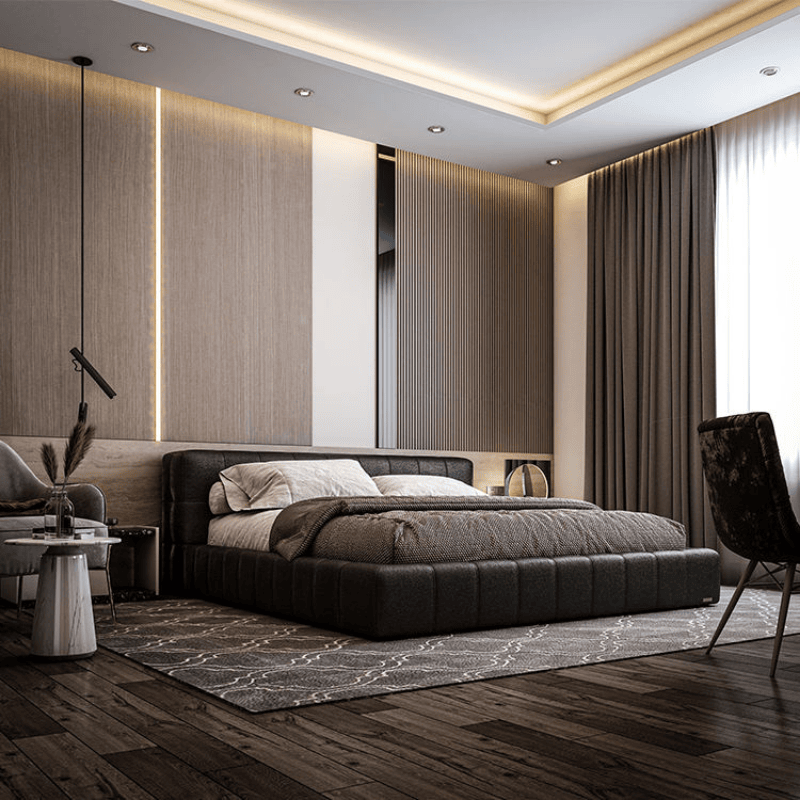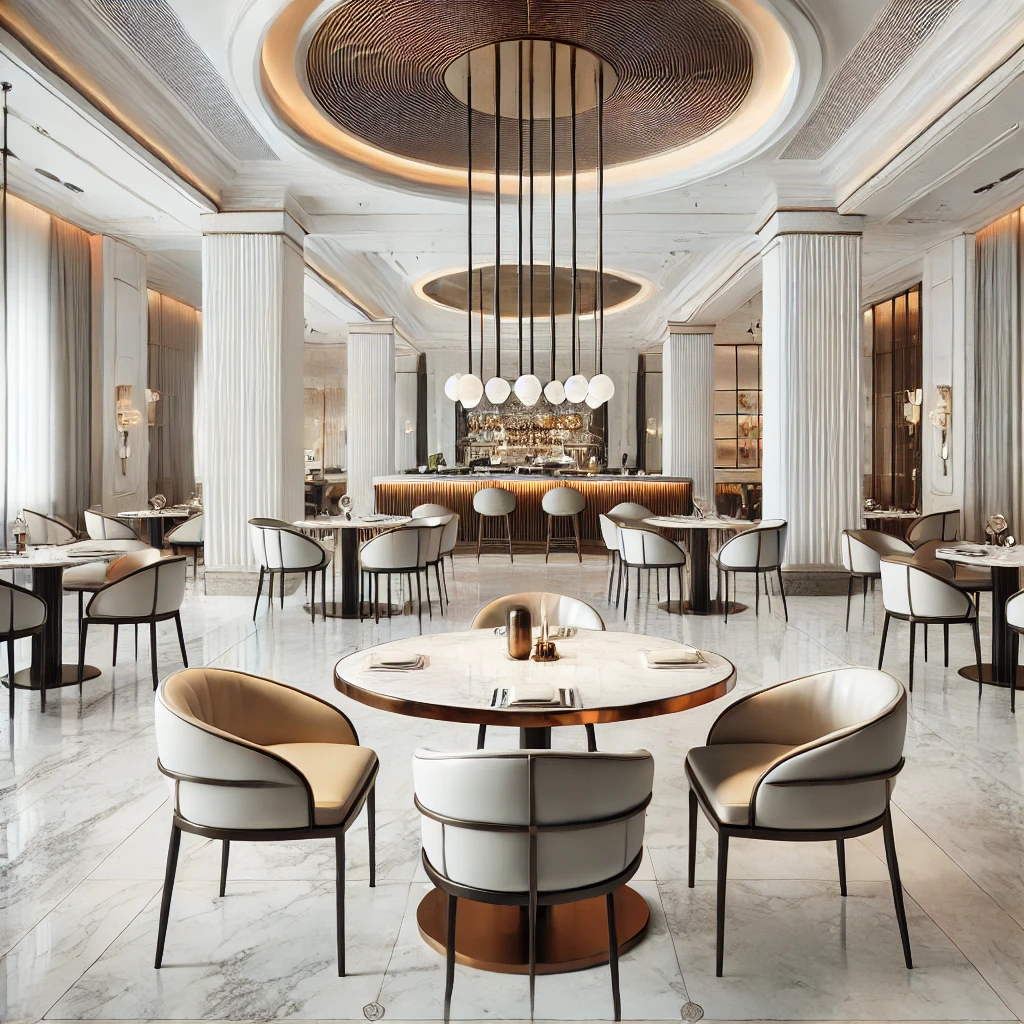
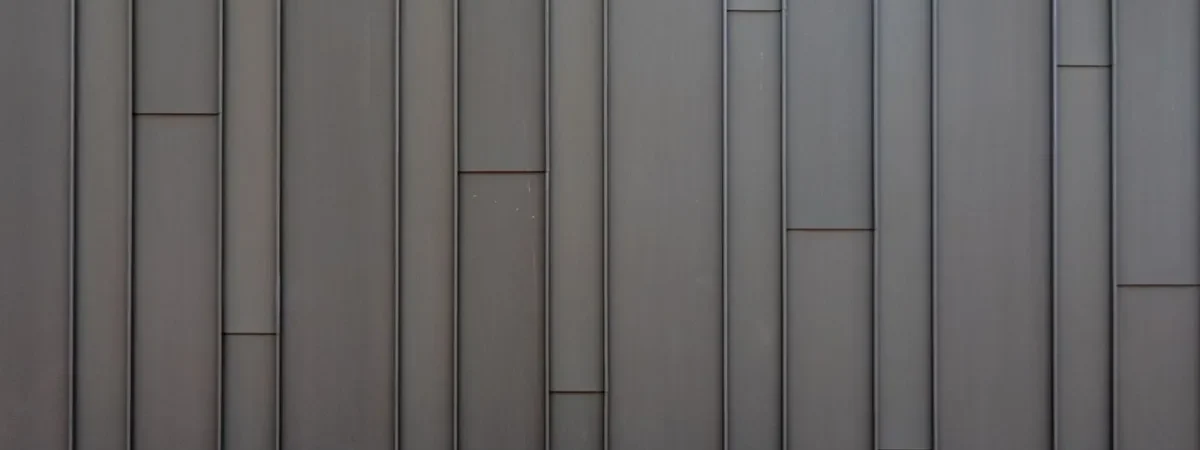
Decorative metal panels carry a disproportionate share of a building’s first impression — the carved aluminum feature wall behind a hotel reception, the champagne-toned stainless cladding in an elevator lobby, the patterned ceiling plates over a restaurant — yet they are priced locally as bespoke metalwork, with CNC time and hand-finishing driving the bill. Decorative metal panels sourcing from China moves that fabrication into the workshops that produce architectural sheet metal at volume, and FBM Sourcing manages the category as a building material sourcing agent and sourcing partner: artwork engineering, finish samples, batch-consistent production and labelled, install-ready delivery in one accountable scope.
Types of Decorative Metal Panels and Specifications for Commercial Projects
Most project packages draw from four panel families, often combined in one interior scheme:
- Carved and engraved aluminum panels — relief patterns CNC-routed or embossed into 2–3 mm solid aluminum for feature walls, column wraps and reception backdrops
- Stainless steel cladding panels — 0.8–1.2 mm sheet in brushed, mirror or PVD-colored finishes, laminated to plywood or honeycomb backers for elevator lobbies, portals and lift-car interiors
- Metal ceiling feature panels — perforated, embossed or laser-cut plates in aluminum for lobby and pre-function ceilings, supplied with concealed suspension systems
- Composite and honeycomb feature panels — aluminum skins on honeycomb cores where large flat modules must stay dead-flat at low weight
The controlling specifications are substrate thickness, finish system and fire behaviour. Solid aluminum feature panels run 2–3 mm to hold flatness at wall scale; stainless cladding uses thinner 0.8–1.2 mm sheet because the backer provides the stiffness. Finishes follow location: architectural powder coating at 60–80 µm for painted schemes, anodizing at 15–25 µm for metallic aluminum, and PVD coating on stainless for the bronze, champagne and black tones hospitality interiors favour — the aluminum-side trade-offs are covered in our guide to powder coating vs anodized aluminum. Being non-combustible, metal panels also clear interior finish fire requirements that eliminate many timber and polymer alternatives — a real advantage when the wall covering schedule meets the fire engineer.
How Does Decorative Metal Panel Sourcing from China Work?
The workflow is file-and-sample driven. The starting inputs are the designer’s elevations, pattern artwork or reference imagery, a panel schedule with dimensions and quantities, and the intended fixing method — adhesive, concealed clips or hang-on subframes. The factory returns shop drawings showing panel joints, edge returns and fixing positions, and where only reference photos exist, redraws the pattern as a vector file for sign-off before any cutting.
Finish approval happens on physical samples, not screens: a 300×300 mm sample plate in the specified material, pattern depth and finish is produced first, because PVD tones and brushed grains read very differently in hand than in a render — the same golden-sample discipline described in our sample approval guide. Production for a typical interior package runs 25–40 days after sample sign-off. Panels ship film-protected and foam-interleaved in plywood cases, labelled to the setting-out drawings; a full hotel public-area panel package typically travels as part of a consolidated container rather than filling one alone, which is exactly how it should ship. Where the panel needs its own supporting sub-structure rather than fixing to an existing wall, add custom metal frames from China to the same order.
Quality Standards and Inspection
Panel quality is measured in flatness, finish consistency and edge quality. FBM Sourcing’s own inspection team checks all three in the factory before shipment: a full inspection of the finished panels against the approved sample and shop drawings, covering pattern registration, deburring, lamination bond, coating thickness readings, colour consistency across the full batch and protective-film packing before the cases close, documented in photos and video for the client’s record. Because colour drift between finishing batches is the classic failure in this category, the whole project’s panels are finished in continuous runs so the last panel installed matches the first.
Why Source Decorative Metal Panels Through FBM Sourcing
Feature panels almost never travel alone. The same interior usually carries metal screens, aluminum ceilings and often a feature stair — see our metal stairs sourcing page — that want the same finish family and the same container. As a building material sourcing agent we run those scopes as one architectural metalwork package on a 5% commission for suppliers you nominate (products we source for you are quoted at a direct price): one finish-approval dialogue, one inspection regime, one shipping plan, with the panels consolidated alongside the rest of the project’s materials.
Sourcing this for a commercial project?
FBM Sourcing works with project owners, developers, main contractors and FF&E contractors on hotel, apartment, school, office and other commercial building projects. Send us your BOQ, drawings or product list — our team will review it and get back to you.
Get a Quote for Your Project
Send us your elevations or pattern references, panel schedule, finish intent, destination port and programme dates. FBM Sourcing will return pattern-engineering feedback, a sample plan, pricing by panel type and a consolidation estimate — start on our project inquiry page.