Steel office furniture manufacturers in China cover everything from single-product filing cabinet lines to factories that make desks, lockers, shelving and storage in one metal workshop. A buyer who asks for “steel office furniture” without naming the product group will receive quotations for different things, in different finishes, with different assumptions about locks, fixing and packing.
This guide groups the supply side into five types and explains what to specify and what evidence to request. It is not a ranking. No factory is named or scored here, and no claim is made that any supplier’s product meets a particular standard. Name the standard the project requires, and ask each supplier for evidence on the specific model and configuration it offers.
What should a steel office furniture brief state?
- Product groups: filing cabinets (vertical or lateral), storage cabinets, lockers, desks and pedestals, credenzas, shelving. List each group separately with quantities.
- Dimensions and configurations: sizes, number of drawers or shelves, door types, and any variants by floor or department.
- Finish: powder coat colour reference, texture, and any specific edge or corner treatment. Keep the colour reference and the approved sample together.
- Hardware: lock type and keying approach, handles, drawer runners, and whether drawers must have anti-tilt or interlock features if the specification requires them.
- Test and safety evidence: the standard or test method the project specifies for strength, durability and stability, and the edition. For storage furniture, see our guide to EN 16121:2023 scope and exclusions.
- Delivery form: fully assembled, knock-down or flat-pack, and who assembles on site.
Five steel office furniture supplier types to consider
1. Filing cabinet and drawer-unit producers
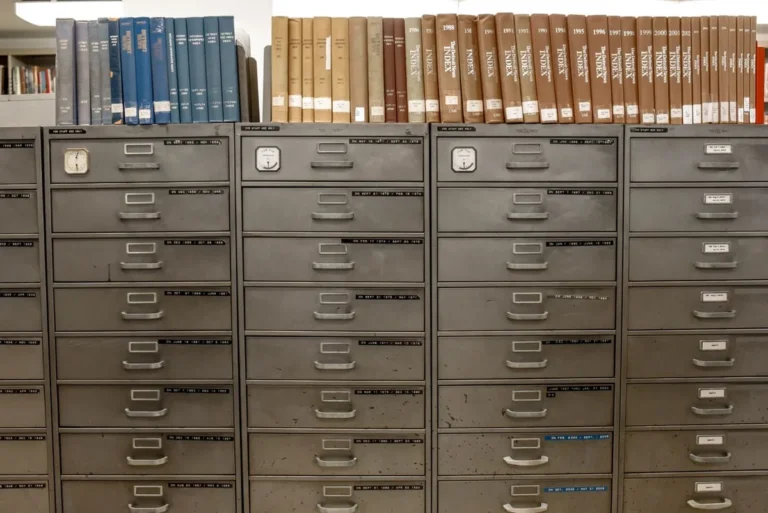
These suppliers run dedicated lines for vertical and lateral filing cabinets, pedestals and drawer units. Ask for the drawer construction, the runner type, how drawer fronts are fixed, and how the cabinet is protected against tipping if the specification requires it. Because the product is repeated, ask how the supplier controls consistency in dimensions and finish across a large order.
2. Storage cabinet and locker producers
Steel storage cabinets and lockers share fabrication methods with filing cabinets but have different requirements for doors, locks and ventilation. If your project includes staff lockers or gym and school lockers, see our locker supplier guide and the comparison of laminate, steel and plastic lockers. Check whether the product you intend to buy falls within the scope of the standard in your specification before asking for evidence.
3. Steel desk, workstation frame and credenza makers
Some factories supply steel-frame desks, workstation frames and credenzas with laminate or timber-based tops. The top and the frame may come from different processes, so ask what the top is made of, how it is fixed, and how cable management and modesty panels are handled. Request a sample or drawing for any element the design depends on, such as the leg detail.
4. Steel shelving and archive storage suppliers
Archive rooms, back-of-house stores and libraries use shelving systems rather than furniture. They are specified by load, bay size and configuration. Ask how the supplier states load capacity, what test or calculation backs it up, and how bays are connected. Our library furniture and shelving guide covers a related category.
5. Metal fabrication and powder-coating specialists
Some projects need custom steel pieces, such as reception units or bespoke storage, made to a design. Specialist metal fabricators and coating shops are the right fit. Ask for the pretreatment and coating process, how finished edges are protected, and a coated sample in the project colour. Agree how touch-up and repair are handled on site.
Finish, hardware and tolerances: where steel quotations differ
Two quotations for the same cabinet can differ in the details that determine how it behaves in use: the thickness of the steel, the drawer runner, the lock and the coating process. Do not assume these are equal. Ask each supplier to state them in the quotation. If the specification names a steel thickness, a coating requirement or a hardware grade, put that wording into the request so every supplier answers the same question.
Powder coat is applied after fabrication, so colour matching depends on process control. Approve a finished sample in the specified reference and record its code. For large orders, agree how colour will be checked across production lots.
Sourcing this for a commercial project?
FBM Sourcing manages the entire China procurement package for overseas construction projects. We work with Developers · General Contractors · Builders · Commercial Project Owners · Interior Design & Construction Companies · FF&E Solution Providers. Send your BOQ, drawings or product schedule for review.
Compare steel office furniture quotations on the same basis
- Product and configuration: model, size, drawers, doors, shelves and locks per line item.
- Finish and colour: the reference, process and approved sample.
- Evidence: test reports or declarations for the product configuration offered, showing the standard and edition cited and the laboratory that issued them.
- Packing: assembled or knock-down, protection for finished surfaces, and cartons or crates per item.
- Assembly and installation: who assembles, who installs, and what is excluded.
- Spare parts: keys, handles and runners provided for later replacement.
- Substitutions: any change in steel thickness, runner or lock that the supplier proposes.
Where several product groups come from different factories, set one schedule and one approval route for the whole package; our project sourcing overview explains how.
Common specification gaps that cause disputes on steel furniture orders
Steel furniture orders rarely fail on the product category. They fail on gaps the brief did not close. The first is the standard: a specification that says “to a recognised standard” is not a specification. Name the standard, the edition and the test level or class if the standard has them, and ask each supplier to confirm which product configuration the evidence covers. A report for one cabinet size does not automatically cover a different size or drawer count unless the standard allows a range to be represented by a tested item; ask the supplier to explain how its report relates to the models you are buying.
The second gap is hardware. Locks, keying systems, handles and runners are small items that make or break daily use. Decide whether keys are keyed alike, keyed differently or master-keyed, who creates the key schedule, and how keys are delivered and labelled. A project that discovers a keying problem on installation day has to wait for replacement hardware.
The third gap is finish and damage allowance. Steel furniture is handled many times before it is in place. Ask how finished surfaces are protected, what percentage of spare parts or touch-up material is included, and how site damage is handled. These are commercial questions that belong in the quotation, not in a later email chain.
The fourth gap is sequencing. If the same project buys steel storage from one supplier, desks from another and seating from a third, delivery dates and site access need one schedule. Our shop drawing guide explains how drawings and approvals keep several suppliers aligned.
Which supplier type should handle which product group?
Treat the five supplier types as a way to split the package, not as alternatives. A typical office fit-out may take filing and storage cabinets from a dedicated cabinet producer, steel-frame desks from a workstation maker, and shelving from a shelving specialist. The more product groups you place with one factory, the simpler the coordination, but the more you depend on that factory being equally strong in each group.
A practical approach is to shortlist two or three suppliers per product group, ask each to quote the same schedule, and then decide whether a single supplier’s combined offer is worth the loss of specialisation. Keep the evidence requirement the same for every shortlisted supplier so the comparison is clean. If one supplier cannot produce the evidence for a given product group, treat that line as unquoted rather than lowering the requirement.
Next steps
Prepare the product schedule, finish reference, hardware requirement and the standard named in the specification, then ask each shortlisted supplier to respond in the same format. For furniture packages that include office seating and tables, FBM Sourcing also runs FBM Furniture’s office furniture pages.
Questions buyers ask about steel office furniture suppliers
Does a steel filing cabinet need a test report?
That depends on the project specification. If it names a standard or test method for strength, durability or stability, ask the supplier for a report on the specific model and configuration offered, showing the standard, its edition and the issuing laboratory.
Can one factory make desks, cabinets and lockers?
Some can, but strength in one product group does not prove strength in another. Ask each group to be quoted separately with its own evidence and sample.
What should we check about the powder coating?
Ask for the coating process, a finished sample in the project colour reference, and how colour will be controlled across production lots. Agree how touch-up will be handled on site.
Should we buy filing cabinets assembled or knock-down?
Assembled units reduce site labour but take more container space. Knock-down units pack more efficiently but need assembly. Decide who assembles and include that in the quotation request.
How does FBM Sourcing support a steel furniture package?
We review the schedule, collect comparable quotations and manage the package for the project. For suppliers you nominate, we charge a 5% commission; for products we source for you, we quote a direct price. Our own team performs one inspection after bulk production is complete and before shipment, and the client’s project team is welcome to attend.
FBM Sourcing manages the entire China procurement package for overseas construction projects. We work with Developers · General Contractors · Builders · Commercial Project Owners · Interior Design & Construction Companies · FF&E Solution Providers.