FF&E procurement for university campus, library and common-space projects from China works the same way it does for any commercial building project — a sourcing partner sources, inspects and consolidates furniture and fit-out materials into full containers for delivery to the campus — but the buyer group differs from hotel or apartment work in one structural way: purchasing usually runs through a university procurement office or design-build contractor working against a fixed capital budget and an academic-calendar deadline, not a hospitality brand standard. That changes how specs get written and how tightly the delivery date has to be held.
- Campus furniture orders are typically split into three specification tiers: library and study furniture (task chairs, study carrels, stack shelving), common-area and lounge furniture (soft seating, collaborative tables), and classroom and lecture furniture (tablet-arm chairs, lecterns, fixed or mobile seating) — each tier has different durability testing expectations.
- Commercial contract furniture for education projects is commonly tested to BIFMA (US) or EN 16139 (Europe) strength and durability standards, not residential furniture standards — a university buyer specifying furniture should ask which standard a quoted product was tested to, not assume commercial-grade means tested.
- Academic-calendar deadlines are hard: most campus fit-out work has to land in a single summer window between terms, which means the order’s deposit-to-delivery timeline has to be planned backward from a fixed date, not a flexible one.
- Library shelving and stack systems are ordered by linear meter of shelving, not by unit count — a project’s total shelving run is the number a factory needs first to plan production and container loading.
How Is a University or Library FF&E Package Typically Structured?
Most campus common-space and library projects separate into two purchasing streams even when they land on the same PO: fixed and built-in items (reception desks, built-in shelving units, millwork) that go through shop-drawing approval before production, and loose furniture (chairs, tables, soft seating) that is ordered against a spec sheet and sample approval without a drawing cycle. Treating both streams as one order usually causes the schedule problem — built-in items take longer to approve because drawings go back and forth until the university’s project manager signs off, while loose furniture could be produced in parallel. Splitting the two streams at the RFQ stage, so the drawing-dependent items start production planning weeks earlier, is the single most common fix a sourcing agent makes to a campus schedule.
Sourcing this for a commercial project?
FBM Sourcing works with project owners, developers, main contractors and FF&E contractors on hotel, apartment, school, office and other commercial building projects. Send us your BOQ, drawings or product list — our team will review it and get back to you.
What Durability Standard Should Campus Furniture Be Tested To?
Campus common-space and library furniture sees heavier, more continuous daily use than most hotel or office furniture, which is why buyers should specify a commercial contract testing standard rather than accept a factory’s general “commercial grade” claim. BIFMA X5 series testing (US) and EN 16139 (Europe, covering strength, durability and safety for non-domestic seating) are the two most commonly referenced standards on campus RFQs; a Chinese factory that regularly exports contract furniture to education or hospitality projects should be able to produce a specific test report for the exact model quoted, not a generic factory certificate.
How Does the Academic-Calendar Deadline Affect the Order Timeline?
Please plan for about four months between your deposit and shipment on a typical campus FF&E order — the drawing stage for any built-in or custom-millwork items usually takes around two months, because custom pieces go back and forth until the university’s project manager signs off, and production takes about another two months after that. Working backward from a fixed summer installation window means the order and deposit usually need to be placed in late winter or early spring for a delivery that lands before the next term starts — waiting until late spring to place the order is the most common reason campus fit-out projects miss their summer window.
How Does Container Loading Work for a Campus Furniture Package?
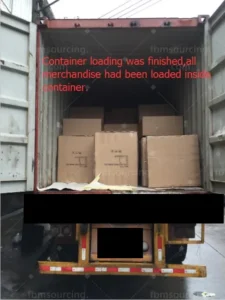
A single library or common-space renovation is rarely large enough to fill a container on its own with one furniture category, which is where a sourcing partner’s consolidation work matters. Sometimes, on a large campus project, one furniture category alone fills full containers; sometimes it shares containers with the other categories of the same project — classroom seating, lounge furniture and shelving loaded together; and sometimes, in one batch, we combine a dozen or more product categories from several buildings or phases of the same client into a few containers. Always full containers — for FBM Sourcing this is routine, well-practised work, not an exception made for smaller campus orders.
For the wider picture of how a full FF&E procurement China package is structured — who holds the specification, how categories are grouped across factories, and where the sequencing risk sits — our main guide covers the whole process end to end.
Frequently Asked Questions
What furniture testing standard should a university library RFQ specify?
BIFMA X5 series (US projects) or EN 16139 (European projects) are the commercial contract testing standards most commonly specified for campus and library furniture; a residential furniture standard, or no standard at all, is a sign the quoted product was not built for continuous institutional use.
Should built-in library shelving and loose furniture be ordered on the same purchase order?
They can share a PO, but they should be tracked as two separate production streams — built-in and custom items need shop-drawing approval before production starts, while loose furniture can move straight to sample approval and production, so combining them into one undifferentiated timeline is what usually causes schedule slippage.
How far in advance should a campus project place its FF&E order for a summer installation?
Given roughly four months from deposit to shipment, plus site delivery and installation time, most campus projects targeting a summer between-terms installation need to place the order and deposit in late winter or early spring.
Can a small library renovation still get full-container shipping?
Yes — FBM Sourcing consolidates a smaller campus project’s furniture with other product categories from the same building phase, or with other projects from the same client, so the shipment still moves as a full container rather than a partial load.
Related Reading
- Top Student Accommodation (PBSA/BTR) Furniture Manufacturers in China
- How Do You Source Dormitory and Classroom Furniture from China for School Construction Projects?
- Top School & Education Furniture Manufacturers in China
- What Is EN 16139? Strength and Durability Standards for Contract Furniture
- China Sourcing Agent for Hotel FF&E Procurement: Who Should You Use?