
Aluminum windows for Gulf climate projects need a fundamentally tougher specification than the same products shipped to Europe or North America: double-glazed Low-E units with a solar heat gain coefficient (SHGC) of 0.25–0.30 or lower, glass U-values of 1.8–2.0 W/m²K or better, thermally broken frames with polyamide strips of at least 24mm, and coastal-grade powder coating to Qualicoat Class 2 or AAMA 2604/2605 backed by salt-spray test reports, with the test hours set by the project specification. Hardware within 5–10km of the coastline should be 316-grade stainless steel, and the complete window should carry air, water and wind test results to EN 1026/1027/12211 or ASTM E283/E331. Specify to these numbers and China-made aluminum windows perform reliably in Riyadh, Jeddah, Dubai or Doha; specify a temperate-market product and you will see coating chalking, seal failure and sticking hardware within a few years. On projects like this, FBM Sourcing works as your dedicated sourcing partner.
This guide is written for GCC developers, main contractors and façade contractors specifying China-made aluminum windows, doors and curtain-wall glass for commercial projects — hotels, apartment towers, schools, hospitals and office buildings. The baseline Gulf-climate specification breaks down into five decisions:
- Glazing: double-glazed solar-control Low-E, SHGC ≤0.25–0.30, glass U-value ≤1.8–2.0 W/m²K, tempered to EN 12150.
- Frames: thermal-break profiles with ≥24mm polyamide strips; wall thickness ≥1.4mm for commercial buildings.
- Surface finish: Qualicoat Class 2 or AAMA 2604/2605 powder coating for coastal exposure, or anodizing at ≥20 microns.
- Hardware: stainless steel friction stays and multi-point locks — 316 grade near the coast.
- Testing and compliance: EN 1026/1027/12211 or ASTM E283/E331 performance reports, plus SASO/SABER for Saudi Arabia and ESMA conformity for the UAE.
Why Gulf Conditions Change the Window Specification
Four environmental loads act on a Gulf façade simultaneously, and each one attacks a different part of the window. Dark aluminum profiles on a west-facing elevation in Riyadh or Doha routinely reach surface temperatures above 80°C in August, while ambient air holds at 45–50°C for weeks. That thermal load accelerates the aging of gaskets, sealants and insulating-glass edge seals far faster than any European test climate assumes.
UV radiation in the Gulf is among the highest recorded for inhabited regions, which is why standard Class 1 powder coatings that keep their color for a decade in northern Europe can chalk and fade visibly within 3–5 years on an unshaded Gulf elevation. Coastal chloride is the third load: Jeddah, Dammam, Dubai and Doha are all humid marine environments where airborne salt corrodes untreated aluminum, carbon-steel hardware and even 304-grade stainless. Finally, wind-driven sand and dust abrade coatings, pack into tracks and hinges, and force higher air-tightness classes so fine dust does not migrate into conditioned interiors.
The practical consequence: a window specification copied from a UK or Australian project will under-perform in the GCC even if the manufacturer is excellent. The spec itself has to change — which is exactly the review a building material sourcing agent runs before an RFQ ever reaches a Chinese factory.
What Glass Specification Works for 50°C Gulf Summers?
Glazing drives cooling load more than any other envelope element, so it is the first line of the spec. For Gulf commercial projects the working baseline is a double-glazed unit with a solar-control Low-E coating, targeting SHGC ≤0.25–0.30 and a center-of-glass U-value ≤1.8–2.0 W/m²K. Saudi and UAE energy codes push façade glazing toward exactly this band, and every reputable Chinese processor of float glass can supply it — the risk is not capability but whether the RFQ states the numbers.
Solar-control coated glass does the heavy lifting on SHGC. Specify the coating position (surface 2 in a standard double-glazed unit) and require the manufacturer’s spectrophotometer report for the actual coated product, not a catalogue value. On visible light, aim for a light-to-solar-gain ratio that keeps interiors bright without tinting so dark that lighting loads rise; specify visible transmittance and SHGC as a pair and confirm both on the supplier’s spectrophotometer report.
Safety glazing is non-negotiable on commercial work. Specify tempering to EN 12150, and for typhoon-equivalent wind zones, overhead glazing, balustrades and full-height lobby glass, move to laminated glass with PVB interlayers — or SGP (ionoplast) interlayers where post-breakage stiffness matters, since SGP is roughly 100 times stiffer than standard PVB at elevated temperatures. Heat-soak testing of tempered panes is worth specifying on tower projects to screen out nickel-sulfide spontaneous breakage before panels reach site.
Two details deserve scrutiny because heat degrades them quietly. Argon fill improves U-value by roughly 0.2–0.3 W/m²K over air, but argon leaks faster through poorly made edge seals at sustained high temperatures — so require dual-seal units (PIB primary, silicone secondary) and ask for the EN 1279 durability test report. Warm-edge spacers reduce edge condensation and thermal bridging; in the Gulf their bigger value is that quality warm-edge systems typically come from the better IGU production lines, which is a useful proxy for overall unit quality.
Frame, Coating and Hardware Specs for Coastal Gulf Exposure
Thermal-break aluminum is the commercial baseline. The polyamide strip that separates inner and outer profile halves must be at least 24mm wide to deliver a meaningful frame U-value; 14–20mm strips are common in budget systems and look identical in a rendering, but the thermal performance gap shows up in every cooling bill. For commercial buildings, specify a minimum profile wall thickness of 1.4mm — thin-wall 1.0–1.2mm profiles intended for low-rise residential work will not hold hardware fixings or wind load on a mid-rise façade.
Surface finish is where Gulf projects most often get under-specified. For coastal exposure, require powder coating to Qualicoat Class 2 or AAMA 2604/2605, with a coating thickness of 60–80 microns and a neutral salt-spray test report from the coater’s lab, with the test hours set by the project specification. Standard-class powder coating carries roughly half the UV resistance of Class 2 in accelerated weathering, which is precisely the margin the Gulf sun consumes. Anodizing at ≥20 microns (AA20) is a proven alternative for coastal towers, particularly in natural silver and bronze tones, and resists sand abrasion better than organic coatings.
Hardware fails before frames do. Friction stays, hinges and multi-point locking gear should be stainless steel throughout; within about 5–10km of the coastline, specify 316 grade rather than 304, because 304 pits in chloride-laden humidity. Multi-point locks matter beyond security — they pull the sash evenly against gaskets, which is what sustains the air-tightness class that keeps dust out. These are the same points we audit when qualifying fabricators for export projects, as covered in our review of top aluminum window and door manufacturers in China for Australian projects — the Gulf spec simply tightens the coating and hardware grades further.
Sourcing this for a commercial project?
FBM Sourcing works with project owners, developers, main contractors and FF&E contractors on hotel, apartment, school, office and other commercial building projects. Send us your BOQ, drawings or product list — our team will review it and get back to you.
Performance Testing and GCC Compliance: What Reports Should You Demand?
A Gulf window package should arrive with test evidence, not adjectives. The core performance triad is air permeability to EN 1026, watertightness to EN 1027 and wind resistance to EN 12211 — or the ASTM equivalents E283 (air) and E331 (water penetration under static pressure) for projects on American specifications. For driving-rain events like Gulf shamal storms and the increasingly heavy Dubai downpours, specify a watertightness class of E750 or higher under EN 12208 for exposed mid-rise elevations, and confirm the tested specimen matches your frame series and opening type.
Regulatory conformity runs in parallel. Saudi-bound shipments of regulated building products clear customs through the SASO/SABER system — product and shipment certificates issued by SASO-approved certification bodies before the container sails, a process we break down in our guide to SASO/SABER certification for building materials into Saudi Arabia. UAE-bound goods fall under ESMA conformity schemes, and the GSO G-mark applies to certain regulated product groups across GCC member states. Confirm the applicable scheme per product line at RFQ stage — certification lead time belongs on the project program, not discovered at the port. Fire performance of glazing and spandrel assemblies follows the same logic; see our overview of fire rating standards for building materials and finishes.
Gulf-Climate Aluminum Window Specification Table
| Component | Gulf-climate specification | Test standard / evidence |
|---|---|---|
| Glazing unit | Double-glazed solar-control Low-E; SHGC ≤0.25–0.30; U-value ≤1.8–2.0 W/m²K; dual-seal edge, argon fill | EN 1279; manufacturer spectral report |
| Safety glass | Tempered panes; laminated PVB or SGP for wind zones, overhead and full-height glazing; heat-soak on towers | EN 12150; EN 14449; EN 14179 |
| Frame profile | Thermal break, polyamide strip ≥24mm; wall thickness ≥1.4mm commercial | Profile section drawings; mill certificates |
| Powder coating | Coastal grade, 60–80 micron film; neutral salt spray, with test hours set by the project specification | Qualicoat Class 2 / AAMA 2604–2605 |
| Anodizing (alternative) | ≥20 micron anodic film (AA20) | Qualanod; film thickness gauge readings |
| Hardware | Stainless friction stays and multi-point locks; 316 grade within ~5–10km of coast | Material certificates; cycle test data |
| Whole-window performance | Air / water / wind classes matched to elevation exposure; E750+ watertightness on exposed elevations | EN 1026 / 1027 / 12211 / 12208 or ASTM E283 / E331 |
| Market conformity | SASO/SABER (KSA); ESMA (UAE); G-mark where applicable | Certificates via SASO-approved certification bodies |
How FBM Sourcing Controls Quality Before Windows Ship
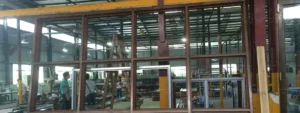
Test reports prove the system can perform; inspection proves your batch actually does. Once production is finished, FBM Sourcing’s own QC team carries out one full pre-shipment inspection of window and glazing orders at the factory, with photo and video records delivered before any container is released. On aluminum window packages the checks are specific: coating thickness gauge readings against the 60–80 micron specification across sampled frames, glass edge and spacer inspection on IGUs for seal integrity and desiccant condition, verification of tempering stamps and interlayer type, and cycle sampling of friction stays and multi-point locks to confirm smooth engagement across the sampled lot.
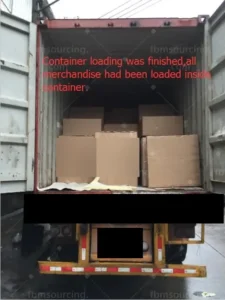
Packing is checked at the same visit, because glazing is unforgiving in transit: A-frames or plywood crates with cork separators, corner protection on finished profiles, and container loading plans that keep glass upright and braced. A 20ft container typically carries the windows and doors for a single low-rise building; multi-building GCC projects run to multiple 40HQ containers, and the sailing from South China to Jeddah or Dammam takes weeks — so a rejected batch discovered at destination costs far more program time than a re-inspection. Catching it at the factory is the entire point. Contractors across the region use this model on façade and fit-out packages alike; see how UAE and Middle East contractors source from China in practice.
For US projects the equivalent energy label is NFRC rather than a U-value quoted in metric units — see NFRC ratings and U-factor for US project windows for the IECC limits by climate zone.
Glazing is one of several specification points a Gulf project changes relative to a US or Australian one; the rest are set out in what changes when you source a Middle East project from China. Where the windows form part of a wider hospitality package, see hotel FF&E procurement from China for Saudi and GCC projects.
Get a China Procurement Quote for Your Project
FBM Sourcing manages the entire China procurement package for overseas construction projects. For Gulf window and glazing packages, send us your façade drawings, window schedules or BOQ with quantities, glass specifications, destination port (Jeddah, Dammam, Jebel Ali, Hamad or elsewhere in the GCC) and your project timeline. We will match the package to qualified fabricators, align the specification to Gulf-climate requirements and the applicable SASO/SABER or ESMA scheme, and manage production, our own pre-shipment QC and shipping through to your port.
If your project lands in Saudi Arabia, our China sourcing agent service for Saudi Arabia covers the full route from RFQ to SABER-cleared delivery. For suppliers you nominate, we charge a 5% commission; for products we source for you, we quote a direct price. One team stays accountable for specification, certification, quality and logistics across the whole package.