The top elevator and escalator manufacturers in China for commercial buildings are Guangri, Canny, SJEC, IFE and Xizi. Between them they cover the full commercial range — passenger and freight elevators, escalators and moving walkways — from two manufacturing clusters: the Pearl River Delta around Guangzhou and Dongguan, and the Yangtze Delta around Suzhou and Hangzhou. For a commercial project buyer the practical questions are not whether Chinese factories can build the equipment, but which certification your destination requires, what the production lead time does to your construction schedule, and who installs and maintains the unit once it lands — questions your sourcing partner should already be asking before you sign.
This guide takes the project-buyer view a sourcing agent works from: elevators as one line inside a larger commercial building package, alongside windows, doors, cabinets and FF&E — not as a standalone equipment trade.
- Main manufacturing clusters: Guangzhou and Dongguan in the Pearl River Delta (Guangri, IFE); Suzhou and Hangzhou in the Yangtze Delta (Canny, SJEC, Xizi).
- China’s national elevator code GB 7588 is closely aligned with the European EN 81-20 / EN 81-50 standards.
- Standard passenger elevator production starts after shop-drawing approval, on a lead time confirmed by the factory in writing for each order, before sea freight.
- Mid-rise commercial buildings typically specify car speeds of 1.0–2.5 m/s; high-rise cores run 3.0 m/s and above.
- Commercial escalators follow EN 115 with standard step widths of 600, 800 and 1,000 mm at 30° or 35° inclines.
Can Chinese Elevators Be Certified for US, European and Australian Buildings?
Yes — the large export manufacturers run production lines certified for each major regime, but certification always attaches to a specific model and configuration, never to the factory as a whole. For the European Union, lifts must comply with the Lifts Directive 2014/33/EU, with conformity assessed by a notified body against EN 81-20 and EN 81-50 — the same technical basis China’s GB 7588 is modelled on, which is why CE export lines are well established. For the United States and Canada, the governing code is ASME A17.1 / CSA B44, and acceptance ultimately sits with the state or local authority having jurisdiction, so code edition and local amendments must be confirmed before the order is placed. Australian projects specify the AS 1735 series.
The second half of the answer is installation. Elevators are not a supply-only trade: units are installed by licensed elevator contractors in the destination country, with the manufacturer providing installation supervision and commissioning support. A Chinese elevator purchase only works when a local installation and maintenance partner is identified early — ideally before the supply contract is signed — because that partner will also hold the ongoing maintenance agreement your building certification depends on.
The Five Manufacturers to Know
1. Guangri (GRPE)
Guangri, founded in Guangzhou in 1956, is one of the oldest elevator manufacturers in China and the local partner behind Hitachi Elevator (China), the long-running Guangzhou joint venture — an engineering lineage that shows in its own product line. It builds passenger and freight elevators, escalators and moving walkways for commercial buildings, transit and public projects, and its 2025 half-year report states that overseas orders rose 45.58% by unit count and 43.06% by value year on year.
- Location: Guangzhou, Guangdong
- Established: 1956
- Classification: Full-line elevator and escalator manufacturer
- Key products: Passenger and freight elevators, escalators, moving walkways
- Standards: GB 7588; CE export lines to EN 81-20/50 (model-specific)
Verdict: The longest track record of the five — a natural shortlist for buyers who weight engineering heritage and public-project references.
2. Canny
Canny Elevator, founded in 1997 and headquartered in Suzhou, is one of the leading listed domestic manufacturers (Shenzhen Stock Exchange, 002367). Its catalogue is broad across the commercial mid-market: standard and high-speed passenger elevators, machine-room-less units, sightseeing elevators for hotel atriums and retail podiums, and freight elevators. That breadth makes it a common single-source answer for mixed-use buildings that need several elevator types in one package.
- Location: Suzhou, Jiangsu
- Established: 1997
- Classification: Listed full-range elevator manufacturer (SZSE 002367)
- Key products: Passenger, high-speed, sightseeing, machine-room-less and freight elevators, escalators
- Standards: GB 7588; CE export capability (model-specific)
Verdict: Broad mid-rise commercial coverage — offices, hotels and retail podiums that want one manufacturer across several elevator types.
3. SJEC
SJEC, founded in Suzhou in 1992, is not traded on a Chinese stock exchange under the code 601313 that older sources cite. Alongside passenger elevators it runs one of the strongest escalator and moving-walkway programs among the domestic manufacturers, plus multi-storey parking systems — a product mix that maps directly onto shopping malls, mixed-use retail and transport-adjacent commercial buildings.
- Location: Suzhou, Jiangsu
- Established: 1992
- Classification: Elevator and escalator manufacturer
- Key products: Passenger elevators, escalators, moving walkways, parking systems
- Standards: GB 7588; EN 115 escalator lines; CE export capability (model-specific)
Verdict: The escalator-weighted choice — malls and retail-heavy projects where vertical transport is more walkway than shaft.
Sourcing this for a commercial project?
FBM Sourcing works with project owners, developers, main contractors and FF&E contractors on hotel, apartment, school, office and other commercial building projects. Send us your BOQ, drawings or product list — our team will review it and get back to you.
4. IFE
IFE, established in Dongguan in 1998, is the most export-oriented manufacturer on this list. It runs three production bases across Dongguan (Guangdong) and Hebi (Henan) with an annual capacity of around 47,000 units, and sells into more than 60 countries, with established sales networks in Australia, the UAE, Qatar, Singapore, Indonesia and Malaysia. For overseas commercial buyers, that existing in-country presence matters more than any catalogue page, because it is what turns a supply contract into supported installation and maintenance.
- Location: Dongguan, Guangdong (plus Hebi, Henan)
- Established: 1998
- Classification: Export-focused elevator and escalator manufacturer, ~47,000 units/year capacity
- Key products: Passenger, observation, hospital, freight and machine-room-less elevators, escalators, moving walks
- Standards: GB 7588; CE export lines; destination compliance confirmed per model
Verdict: The most export-ready of the five — the shortlist leader for projects in Australia, the Middle East and Southeast Asia.
5. Xizi
Xizi, based in Hangzhou within the Xizi UHC industrial group, comes at elevators from component-manufacturing depth: the group spent decades as one of China’s major elevator component and system suppliers and has run a joint venture with Otis since 1997, alongside complete elevators under its own name. That component heritage — guide rails, machines, control systems manufactured in-group — is a genuine supply-chain advantage for buyers who care about where the critical parts inside the shaft actually come from.
- Location: Hangzhou, Zhejiang
- Established: Group elevator operations since the 1990s
- Classification: Elevator manufacturer within a major components group
- Key products: Passenger elevators, elevator components and systems
- Standards: GB 7588; CE capability via group lines (model-specific)
Verdict: The component-depth choice for buyers who weight in-group manufacturing of rails, machines and controls.
How Does Elevator Procurement Fit into a Commercial Building Package?
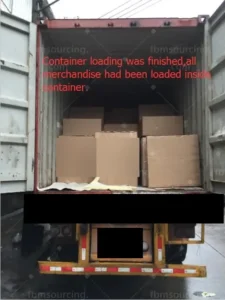
Elevators behave differently from every other line in a construction BOQ. They are engineered equipment, not materials: production only starts after shop drawings are reconciled against the as-built hoistway dimensions, and a passenger unit ships as a set of crates — machine, rails, car, doors and controller — planned into the container load. Multi-unit orders consolidate rails and cars across containers, and a spares package (door rollers, guide shoes, control boards) should ship with the original order rather than chase it later.
For most of our clients, the elevator is one line in a much larger package that also covers aluminum windows and doors, kitchen cabinets, interior finishes and FF&E. That is where a china sourcing agent earns its fee on the category: confirming the certified model against the destination code, following up production and factory testing with photo documentation, checking export packing on equipment that cannot tolerate transit damage, and consolidating the elevator shipment into the project’s wider container schedule — the same project logic we apply as a building material sourcing agent across every trade, and the reason interior packages and finishes budgets are planned together. For suppliers you nominate, we charge a 5% commission; for products we source for you, we quote a direct price. (See our cost breakdown for furnishing a 100-room hotel from China).
Comparison Table: China’s Top Commercial Elevator Manufacturers
| Manufacturer | Base | Established | Core strength | Best fit for |
|---|---|---|---|---|
| Guangri (GRPE) | Guangzhou, Guangdong | 1956 | Longest track record, Hitachi JV lineage | Public and reference-driven commercial projects |
| Canny | Suzhou, Jiangsu | 1997 | Broad range incl. high-speed and sightseeing | Mixed-use, offices, hotels |
| SJEC | Suzhou, Jiangsu | 1992 | Escalators, moving walkways, parking systems | Malls and retail-heavy buildings |
| IFE | Dongguan, Guangdong | 1998 | Export networks in 60+ countries, 47,000 units/yr | Australia, Middle East, Southeast Asia projects |
| Xizi | Hangzhou, Zhejiang | 1990s (group) | In-group component manufacturing, Otis JV history | Buyers weighting component provenance |
Which Manufacturer Fits Which Commercial Project?
Match the manufacturer to the shape of your vertical transport, not to a ranking. A hotel or office tower running several elevator types points to Canny or Guangri; a shopping mall where escalators outnumber shafts points to SJEC; an overseas project in Australia, the Gulf or Southeast Asia should start with IFE’s in-country networks; and a buyer who wants component provenance inside the shaft looks at Xizi. High-rise cores above 2.5 m/s narrow the field further and deserve engineering review before shortlisting anyone.
The harder question is usually not which factory, but how the elevator line coordinates with the other forty lines of the BOQ — fire-rated landing doors and shaft interfaces alone touch the standards covered in our guide to fire rating standards for building materials and finishes. When the elevator is part of a full building package with a local installer already engaged, sourcing it from China alongside the rest of the package works well; when there is no installation and maintenance partner in the destination country, solve that first. For an example of how a multi-category commercial package is run end to end, see our five-star hotel building materials procurement case study.
Vertical transportation is bought on code compliance and on who maintains it afterwards. The last column is where most of these decisions actually turn.
| Project scenario | Shortlist from this list | Why it fits | What would change the answer |
|---|---|---|---|
| Public sector or reference-driven procurement | Guangri (GRPE) | The longest track record on the list, which is what reference-weighted tenders score | A private developer indifferent to installed-base history |
| Mixed-use development, offices and hotels | Canny | Broad range including higher-speed units suits a mixed core | A single low-rise lift scope |
| Mall or retail-heavy building with escalators and walkways | SJEC | Escalators and moving walkways are a core line, not an accessory | A residential tower with no escalator scope |
| Australia, Middle East or Southeast Asia delivery | IFE | Established export networks and in-market documentation experience | A market where the manufacturer has no service presence |
| Buyers weighting component provenance | Xizi | In-group component manufacture makes provenance traceable | A buyer indifferent to component sourcing |
| Any commercial building | Confirm the destination code first | EN 81-20/-50 or ASME A17.1 compliance and local registration decide acceptance, not the brand | A local authority requiring a certification body the maker has not used |
Evidence to Request Before You Shortlist
Catalogues and showrooms all look convincing. What separates a elevator manufacturer that will perform on a commercial project is the documentation it can produce for your specification — request these items with your RFQ, and treat slow or partial answers as information:
- Type-examination certificates for the exact model and configuration — EN 81-20/81-50 for Europe, ASME A17.1/CSA B44 acceptance path for North America — not a different car size from the same series
- A written destination-compliance statement: which local authority (AHJ) approvals and site inspections the unit will need before it can carry passengers
- Factory test certificates per unit, including the load and safety-gear test protocol
- The maintenance and spare-parts arrangement at your destination in writing — who services the unit, parts lead times, and remote diagnostics access
- Project references with installed, operating units in your market, not just export totals
- Written lead time covering engineering submittals, manufacturing, shipping and installation supervision
On FBM-managed packages our own QC team collects and cross-checks every one of these documents against the actual production batch during factory visits and inspection before shipment — so the evidence file your project holds matches the goods in the container, not just the brochure.
Get a China Procurement Quote for Your Commercial Building
FBM Sourcing manages China building materials and FF&E procurement for hotels, apartment buildings, offices, schools and other commercial projects across the USA, Australia, Europe and the Caribbean. Send us your drawings, elevator schedule, destination port and project timeline, and we will come back with a sourcing plan covering the elevator package and every other trade you are buying from China.
Frequently Asked Questions
Can Chinese elevators be certified for US, European and Australian buildings?
Yes, but certification always attaches to a specific model and configuration, never to the factory as a whole. EU-bound lifts are assessed against EN 81-20/81-50 under the Lifts Directive, the same technical basis China’s GB 7588 is modelled on.
How does elevator procurement fit into a building materials package?
Elevators are engineered equipment, not stock materials – production only starts after shop drawings are reconciled against as-built hoistway dimensions, and each unit ships as a set of crates planned into the container load.
What documentation should an elevator shortlist provide?
Type-examination certificates for the exact model and configuration (EN 81-20/81-50 for Europe, ASME A17.1/CSA B44 for North America), not a different car size from the same product series.