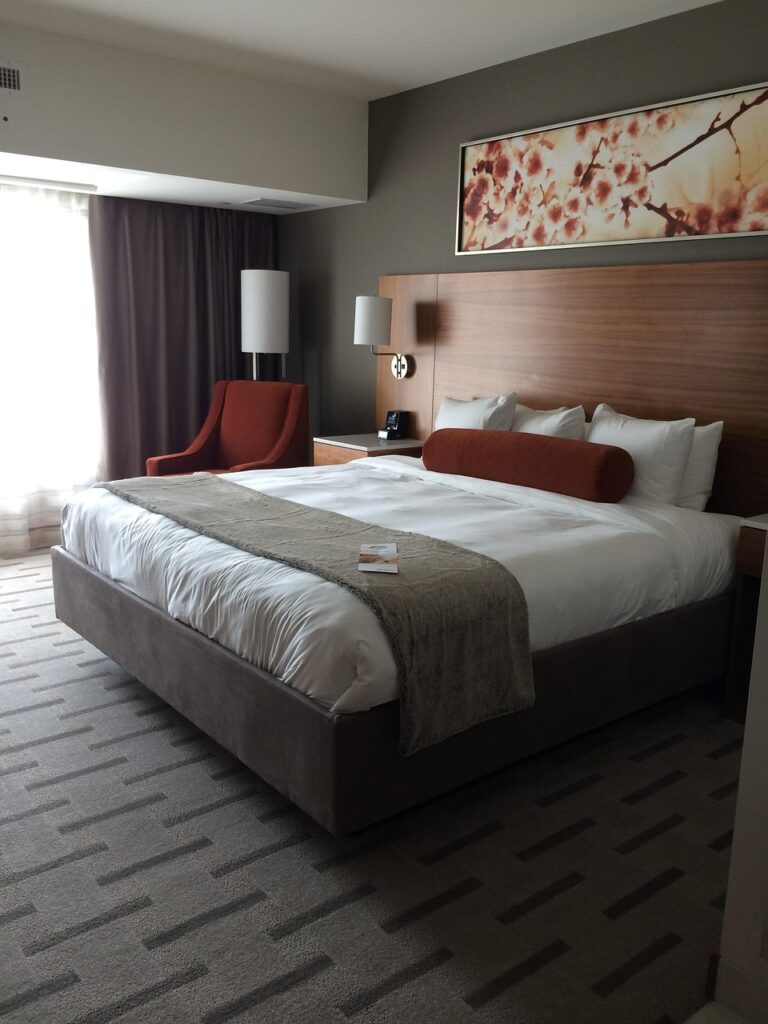
Almost every hospitality casegoods package made in China — the wardrobes, headboards, desks, minibar units, vanities and fitted joinery that furnish hotel guest rooms — comes out of a handful of concentrated manufacturing hubs: Foshan and Dongguan in Guangdong Province above all, supported by Jiangmen, the solid-wood cluster around Ganzhou in Jiangxi, and the northern belt near Beijing. The factories in these hubs are overwhelmingly OEM manufacturers producing to other companies’ drawings, which is why hospitality casegoods manufacturers in China rarely have consumer-facing brands you can google. If you are specifying or budgeting hotel FF&E, understanding where each hub sits — and what it is actually good at — matters more than hunting for brand names that mostly do not exist. FBM Sourcing works as your sourcing agent and sourcing partner throughout this process.
Quick Summary: Hospitality Casegoods Hubs at a Glance
| Question | Verdict | What to do |
|---|---|---|
| Where do most hotel casegoods come from? | Guangdong — Foshan and Dongguan produce the bulk of export hospitality casegoods | Start factory shortlists in these two cities before anywhere else |
| Why can’t I find the manufacturers online? | They are OEM plants building to drawings, not brands selling catalogues | Work from your own drawings and specs, not from brand searches |
| Which hub for high-end 5-star packages? | Dongguan leads on premium veneer and finishing quality | Budget accordingly; expect stricter minimums |
| Which hub for mixed FF&E scope? | Foshan — casegoods, loose furniture, lighting and materials in one radius | Consolidate multi-category packages through Foshan |
| Can I buy from these hubs without being on the ground? | Difficult — OEM factories qualify buyers through relationships and project volume | Use a sourcing agent with existing factory relationships in the hub |
What Are Hospitality Casegoods — and Why Can’t You Find the Brands?
Casegoods are the “box” furniture in a hotel room: wardrobes, headboard and bed-surround assemblies, desks, luggage benches with storage, nightstands, minibar cabinets, vanities and fitted wall paneling. On a typical guest room, casegoods and fitted joinery represent roughly 40–50% of the room’s FF&E budget — the single largest slice, ahead of seating, lighting and soft goods.
The reason you cannot build a shortlist from brand searches is structural. Hospitality casegoods are custom products: every hotel flag, every design scheme, every room mix produces different drawings. The factories that make them are original equipment manufacturers — they build to the purchaser’s shop drawings and never touch the end customer. A plant in Dongguan may have produced casegoods for internationally flagged five-star hotels for fifteen years and still have no meaningful English-language web presence, because its clients are FF&E procurement companies and purchasing agents, not the public. The essential facts about this market:
- Production is concentrated: Guangdong Province — chiefly Foshan and Dongguan — dominates China’s export hospitality casegoods output.
- The business model is OEM: factories manufacture to project drawings, so “brand” reputations live inside the trade, not on the internet.
- Typical casegoods production runs 45–60 days after shop-drawing and finish-sample approval.
- US-bound casegoods must use panels compliant with TSCA Title VI / CARB Phase 2 formaldehyde limits — certificates should name the actual board supplier.
- Factory access runs through relationships: the best plants qualify buyers by project volume and drawings quality before quoting seriously.
Foshan: The Deepest Furniture Supply Chain in the World
Foshan — specifically the Shunde district towns of Longjiang and Lecong — is the centre of gravity of Chinese furniture manufacturing. Lecong hosts what is widely described as the world’s largest furniture wholesale market: a contiguous strip of showroom buildings stretching more than five kilometres, with tens of thousands of dealers under roof. Next door, Longjiang is a manufacturing town where furniture plants, board mills, veneer houses, hardware suppliers and finishing shops sit within a 30–50 km radius of each other — which is precisely why lead times and pricing from Foshan are hard to beat for mixed packages.
For hospitality projects, Foshan’s strength is breadth. A single project team can close casegoods, loose guest room furniture, sofas, dining chairs, lighting, stone tops, tiles and sanitary ware within one city — and consolidate everything into shared containers. That is the practical reason most hotel furniture sourcing programmes for mid-scale and upscale properties are anchored in Foshan even when individual items come from elsewhere.
| Foshan at a glance | |
|---|---|
| Core districts | Longjiang and Lecong (Shunde) |
| Best at | Panel casegoods, fitted wardrobes, mixed FF&E consolidation |
| Typical project fit | Midscale to upscale hotels, apartment buildings, student housing |
| Supply chain radius | Boards, veneers, hardware and finishing within 30–50 km |
Sourcing this for a commercial project?
FBM Sourcing works with project owners, developers, main contractors and FF&E contractors on hotel, apartment, school, office and other commercial building projects. Send us your BOQ, drawings or product list — our team will review it and get back to you.
Dongguan: Where High-End Hotel Casegoods OEM Lives
An hour east of Foshan, Dongguan — particularly the towns of Dalingshan and Houjie — built its reputation on export furniture for the North American market, and it remains the strongest hub in China for premium hospitality casegoods. Dalingshan’s factories grew up manufacturing for large US furniture importers, and the surviving plants inherited exacting habits: proper veneer layup and sequencing, multi-stage spray finishing, moisture-content control, and QC documentation formatted the way American FF&E purchasers expect. Several of the hub’s flagship plants operate industrial parks of 100,000 square metres or more dedicated substantially to hotel work.
Dongguan is where five-star casegoods packages usually land: book-matched veneers, high-gloss and open-pore lacquer work, integrated lighting and leather-wrapped details. The trade-offs are equally predictable — higher minimums, fuller order books, and less patience for small or loosely documented projects. A 200-key upscale project with complete shop drawings gets excellent attention; a 20-key boutique with sketches will struggle without an intermediary who already has standing in the hub.
| Dongguan at a glance | |
|---|---|
| Core districts | Dalingshan, Houjie |
| Best at | Premium veneer casegoods, 5-star finishing, US-spec documentation |
| Typical project fit | Upscale and luxury hotels, branded residences |
| Watch out for | Higher minimums; strong preference for complete drawing sets |
Beyond Guangdong: Jiangmen, Ganzhou Nankang and the Northern Belt
Three secondary clusters round out the map. Jiangmen, southwest of Foshan, overlaps heavily with the Foshan supply chain and is notable for metal-frame furniture, outdoor pieces and bathroom cabinetry — useful when a casegoods package extends into vanities and wardrobe and cabinet scope with significant metalwork.
Ganzhou’s Nankang district in Jiangxi Province is China’s largest solid-wood furniture cluster — local authorities count the cluster in the thousands of furniture-related enterprises. Nankang’s cost base is lower than Guangdong’s and its solid-timber machining capacity is enormous, which suits lodge, resort and student-accommodation projects specifying solid wood over veneer panels. The compromise is a thinner export-services layer: fewer English-speaking project teams, and finishing standards that need closer inspection for hospitality-grade work.
Finally, the northern belt around Xianghe and Shengfang near Beijing serves domestic hotel projects across northern China competently, but for export work through southern ports it seldom beats Guangdong once inland freight is counted. For most overseas hospitality projects, the practical decision is between Foshan and Dongguan, with Nankang as the solid-wood alternative.
How Do Hotel Projects Actually Buy From These Hubs?
Because the plants are OEM manufacturers, the buying process starts with your documents, not their catalogues. A workable enquiry package contains room-type drawings or an FF&E schedule, target quantities by room mix, destination port and a delivery window. As a volume reference, a complete casegoods package for a 100-room select-service hotel typically ships in five to eight 40 ft high-cube containers of about 68 cubic metres each — our breakdown of the cost to furnish a 100-room hotel from China covers how that scales across FF&E categories.
The access problem is real: the best hospitality plants quote seriously for buyers they trust to run a clean project. This is where a china sourcing agent earns its place — an established sourcing agent already holds audited relationships inside Foshan and Dongguan, matches each room type to the factory that actually makes that construction well, and manages QC and consolidation across the package for a 5% commission for suppliers you nominate (products we source for you are quoted at a direct price). On a recent five-star resort project in a hurricane zone, that hub knowledge was the difference between specification and reality — the full story is in our five-star hotel procurement case study.
We Recommend: Match the Hub to the Project, Not the Other Way Around
For mixed FF&E packages at midscale to upscale level, anchor the programme in Foshan and consolidate there. For luxury casegoods where veneer and finish quality carry the design intent, shortlist Dongguan and accept the stricter minimums. For solid-wood-led schemes — lodges, resorts, student accommodation — price Nankang against Guangdong before deciding. And in every case, arrive with complete drawings: in an OEM market, the quality of your documents determines the quality of factory you can access. As a furniture sourcing agent working these hubs daily, we would rather see a project brief with quantities and a room mix than a brand wishlist — the brands were never the point in this market.
Get a China Procurement Quote for Your Project
If you are budgeting or tendering the casegoods and FF&E for a hotel, apartment or student accommodation project, FBM Sourcing — a building material sourcing agent and furniture sourcing agent based at the centre of the Foshan hub — can turn your drawings into a factory-level procurement plan. Send us your drawings, quantities, destination port and project timeline, and our team will review your requirements and get back to you.
Frequently Asked Questions
Where do most hotel casegoods come from in China?
Overwhelmingly from Guangdong Province – Foshan (particularly Shunde’s Longjiang and Lecong towns) and Dongguan produce the bulk of export hospitality casegoods, supported by secondary clusters in Jiangmen and Nankang, Jiangxi.
Why can’t hotel casegoods manufacturers be found through a brand search?
Because these are OEM plants building to a buyer’s own drawings, not brands selling from a catalogue. The buying process has to start with your documents, not their marketing material.
What share of a hotel guest room’s FF&E budget do casegoods represent?
Roughly 40-50%, the single largest slice of the room budget, ahead of seating, lighting and soft goods.