Dormitory and classroom furniture sourcing from China for a school construction project runs in five steps: fix the specification against your market’s school-furniture standards (durability, formaldehyde limits, fire ratings, anti-tip and edge-safety requirements), pre-qualify factories in the education-furniture clusters of Guangdong and Zhejiang, approve physical control samples, inspect during and after production, then consolidate and ship 25–40 days by sea to arrive in installation order before term start. A furniture sourcing agent manages the whole sequence under one scope, which matters on school work because the deadline is not movable — a semester start date does not slip because a container did. For scale, one 40ft high-cube holds roughly 400–600 classroom desk-and-chair sets or 120–160 knocked-down dormitory bed-desk-wardrobe sets, so a 500-student school typically ships 3–8 containers.
What a School Project Actually Buys: The Furniture Schedule
New build school and student accommodation programs order across four furniture groups, each made by different specialist factories:
- Classroom: student desks and chairs (fixed-height by grade band, or adjustable to EN 1729 sizing), teacher desks, lecterns, storage cabinets, mobile pedestals
- Dormitory: steel or timber bed frames (single, bunk, loft-over-desk), mattresses, study desks, task chairs, wardrobes and lockers — usually knocked-down for freight efficiency and re-assembled on site
- Common areas: library shelving and reading tables, dining tables and stacking chairs, lounge and collaboration furniture, science lab benches with chemical-resistant tops
- Administration: staff room and office furniture, reception counters
Steel-frame dormitory production sits mainly in Guangdong and Hebei; classroom desking in Zhejiang and Guangdong; lab benching is its own niche with a shorter list of credible export factories. This spread across factory clusters is precisely why school programs consolidate through one china sourcing agent rather than placing five direct orders — the same logic covered on the materials side in sourcing building materials for school construction from China, which pairs with this guide for the full project scope.
Which Standards Apply to School Furniture from China?
School furniture is regulated harder than office furniture because the end users are children and the buyers are public institutions. The specification should name, by destination:
- Dimensional and ergonomic standards — EN 1729-1/-2 size marks for Europe and the UK; equivalent grade-band sizing conventions for US and Australian projects
- Formaldehyde limits on wood-based panels — CARB Phase 2 / TSCA Title VI for the US, E1 or better for Europe, the Gulf and Australia; details in formaldehyde standards for China-made cabinets
- Fire performance — upholstered and mattress items to the destination’s flammability code (US state fire codes for schools, Crib 5 for the UK, AS 1530-series test evidence for Australian linings and finishes)
- Structural safety — anti-tip performance for wardrobes and shelving over 750mm, guardrail heights and ladder specs on bunk and loft beds, radiused edges and finger-safe gaps on classroom items
- Surface durability — HPL or thermally-fused laminate tops rated for daily institutional cleaning, powder-coat thickness on steel frames (60–80 microns is a reasonable specification point)
Factories will meet any of these when they are written into the purchase order and checked physically. The failure mode is ordering “school furniture” generically: the factory then ships its domestic-market line, which is cheaper for a reason.
Quality Control That Fits How School Furniture Fails
School furniture failures are predictable: weld quality and coating on steel frames, edge-banding lift on desktops, hardware that loosens under daily abuse, and knocked-down kits arriving with missing fixings. The inspection plan should target exactly these points:
During production (30–50% complete): verify board grade and formaldehyde certificates against approved samples, check weld penetration and frame geometry on the first production batches, confirm powder-coat thickness with a gauge rather than by eye.
Pre-shipment: AQL-based sampling across finish, function and dimensions; assembly test on random knocked-down kits — build at least one complete dormitory set from packed cartons to prove the fixing packs and instructions are right; carton drop-test on a sample if goods transship. Rework happens before the container is booked, never after — the sequencing is described in handling defects and rework before the container ships.
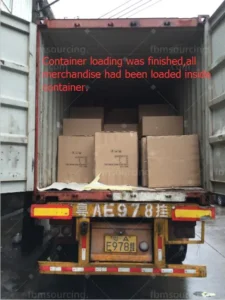
Loading: knocked-down dormitory furniture loads dense (a 40HQ takes 120–160 bed-desk-wardrobe sets), so crush protection between stacks and clear room-by-room carton labeling decide whether site installation takes one week or three.
Sourcing this for a commercial project?
FBM Sourcing works with project owners, developers, main contractors and FF&E contractors on hotel, apartment, school, office and other commercial building projects. Send us your BOQ, drawings or product list — we’ll come back with a sourcing plan and budget estimate.
Sampling: The Cheapest Stage to Get Right
On school programs the sample stage does double duty — technical verification and stakeholder sign-off. Order physical pre-production samples of every high-quantity item: one complete classroom set per grade band, one full dormitory set assembled and disassembled, laminate and powder-coat swatch boards for the finish palette. Test the samples the way students will use them — sit, lean, rock, slam the wardrobe door fifty times — and put the approved units in a locked room as the contractual QC reference for the whole production run. Sampling for a typical school schedule costs a few hundred dollars per item and 10–20 days; it is the last point in the program where a design change costs almost nothing. Every requirement discovered after this point — a deeper desk, a higher bunk guardrail, a different blue — costs calendar time the term-start date does not have.
Budget Structure: What School Furniture from China Actually Costs to Land
Education budgets are public and scrutinized, so the cost model needs to be honest from the first estimate. On a consolidated school furniture program, ex-factory product typically represents 60–72% of landed cost; the balance is packing, inland haulage to port, ocean freight, insurance, destination charges, duties and QC inspection (budget 1.5–2.5% of order value for a proper during-production plus pre-shipment program). Because classroom and dormitory furniture ships dense — knocked-down and stacked — freight per student position is low, and the landed saving against local institutional dealer pricing commonly runs 35–50% at equivalent specification. Three budgeting rules from delivered programs:
- Price per student position, not per item. A dormitory position (bed, mattress, desk, chair, wardrobe) and a classroom position (desk plus chair) are the units school boards understand and the units that make quote comparison meaningful across factories
- Ring-fence a 2–3% attic stock allowance. Schools break furniture; ordering replacement desks two years later in a matching finish at single-container-share cost is far cheaper than a micro-order, so ship spares with the main program
- Do not let the cheapest quote define the specification. The lowest quote on a generic RFQ is usually quoting domestic-market product; hold every quote to the same written standard before comparing numbers
Timeline: Working Back from Term Start
The controlling fact of school procurement is the calendar. A workable backward plan from a September opening: furniture on site by late July, port arrival by mid-July, departure from China by mid-June (US East Coast: ~30–35 days transit; Australia: ~20–25 days), production start by early May, samples approved by mid-April, order and specification frozen by end of March. Total program: roughly 4.5–5 months from confirmed order to installed furniture, of which production itself is only 30–40 days — the rest is approvals, inspection, transit and installation buffer.
Two scheduling notes specific to China production. First, factory capacity in the education categories peaks between March and June, when domestic school procurement and export orders for northern-hemisphere autumn openings compete for the same lines — orders confirmed in Q1 get better production slots and better pricing than orders confirmed in May. Second, build the Chinese New Year shutdown into any spring-delivery program: factories close for two to three weeks around late January or February, and the fortnight before closure is the worst QC window of the year. A program that must ship in March should have completed production — not just started it — before the holiday.
Delivered reference points at both ends of the education scale: our Florida primary school furniture procurement case ran classroom and common-area furniture to US school-code requirements alongside the companion elementary school building materials procurement scope; at university scale, the University of Melbourne student accommodation furniture procurement program delivered dormitory-type furniture at multi-container volume against a fixed intake date.
Three Failure Patterns to Design Out of Your School Program
The late-specification spiral. Education projects often involve boards, principals and design committees, and furniture is the scope everyone has an opinion about. Every finish change after sample approval restarts a piece of the production clock. The defense is procedural: one sign-off authority named in the program, a sample-approval date treated as contractually fixed, and changes after it priced and scheduled as new orders rather than absorbed quietly into a slipping timeline.
The single-factory shortcut. A factory that makes excellent classroom desks will still accept your dormitory bed order — and subcontract it invisibly to a workshop you never audited. Order each category from the cluster that specializes in it, and let the consolidation happen at the logistics stage, not the manufacturing stage. That is the structural reason project-scale school programs run through a furniture sourcing agent rather than through the first capable factory found online.
The unverified assembly kit. The most expensive school furniture failure is not a broken chair; it is 140 dormitory wardrobe kits arriving with the wrong cam-lock fittings three weeks before opening. The single QC step with the highest return on a knocked-down program is building complete random sets from packed cartons at the factory — one day of inspection time that has saved entire installation schedules.
Get a China Procurement Quote for Your Project
FBM Sourcing manages dormitory and classroom furniture sourcing from China for school, college and student accommodation construction projects — specification support, factory selection, sample approval, independent QC and consolidated shipping under one accountable scope. Send your furniture schedule or BOQ, drawings, quantities, destination port and term-start deadline through our building materials and FF&E procurement page, and we will respond with a sourcing plan and quotation support built around your opening date.