A hotel project procurement timeline from China should allow around four months from deposit to shipment (around two months for drawings and around two months for production) for custom FF&E, with quotation and factory selection before the deposit, one inspection by our own team once production is finished, and sea freight after loading, with the transit time confirmed by the carrier at booking. The timeline is planned backward from the opening date, not forward from today, and the single most consequential decision is when sourcing starts: a china sourcing agent and sourcing partner engaged at design development, well before the site installation window, can hold the whole sequence; one engaged after the construction schedule is set usually cannot.
This guide gives the week-by-week sequence for a full hotel FF&E and building materials package, a backward-planning table keyed to your installation date, and the points where real projects lose weeks.
Why Can’t China Lead Times Be Compressed?
Unlike local distributors who hold stock, Chinese factories manufacture project orders from scratch after confirmation. That is exactly why the pricing works — factory-gate cost without a distribution chain — but it means the production clock is manufacturing reality, not a negotiating position. The two lead-time categories on a hotel package:
Furniture and FF&E
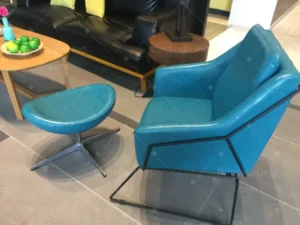
Custom hotel furniture — guest room casegoods, lobby seating, fixed cabinetry — needs a drawing stage of around two months, because custom pieces go back and forth until they are approved, and around two months of production: allow around four months from deposit to shipment, then sea freight. Complex packages spanning multiple factories need the most planning.
Building Materials
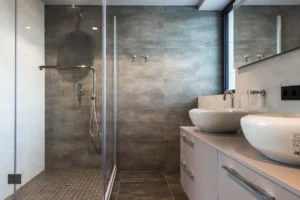
Tiles, doors, windows, sanitary ware and railing systems have lead times that each factory confirms in writing, with the critical path set by custom items — fire-rated door sets with test evidence, aluminium window systems with specific performance ratings, and custom stone cladding all sit at the long end and need the most pre-production specification work. See our building material sourcing agent guide for lead-time detail by category.
How Do You Plan the Timeline Backward from Opening Day?
Anchor everything to the date goods must be on site (the start of FF&E installation), then count backward:
| When | Milestone | What must be true |
|---|---|---|
| At design development | Engage sourcing agent | Design development under way; FF&E schedules and finish direction exist |
| Before quotation | Specification freeze | BOQ, drawings, room schedules and certifications defined; quotation round starts |
| Start of the four-month allowance | Factory selection and deposits | Like-for-like quotes compared; POs issued; deposits paid |
| Around two months for drawings | Sample and mock-up sign-off | All finishes, dimensions and hardware approved in writing; production released |
| Around two months | Mass production | Production follow-up reports |
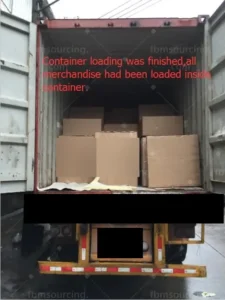
| Once production is finished | Final inspection and loading | One random final inspection by our own team passed; containers loaded by building zone |
| After loading | Ocean freight and clearance | Transit time confirmed by the carrier at booking, then port clearance and inland freight |
If the around four months from deposit to shipment, plus sea freight, no longer fit before your site date, the honest options are scope triage (long-lead custom items first), partial air freight, or a revised installation date — the table does not bend.
Sourcing this for a commercial project?
FBM Sourcing works with project owners, developers, main contractors and FF&E contractors on hotel, apartment, school, office and other commercial building projects. Send us your BOQ, drawings or product list — our team will review it and get back to you.
What Does the Stage-by-Stage Timeline Look Like?
The forward view of the same schedule, assuming a 200-room hotel with a full FF&E and building materials package. Scale timings proportionally for smaller projects.
Stage 1: Specification and Factory Engagement
The sourcing agent receives the project specification — FF&E schedules, finish boards, room count, and required certifications (fire ratings, energy codes, CARB compliance) — reviews it for ambiguities, and begins factory selection. Don’t send specifications to factories directly at this stage: the agent adapts technical drawings into factory-ready briefing documents, identifies the right manufacturers per category, and requests initial quotations. Key output: a factory shortlist with indicative pricing and confirmed capability per product category.
Stage 2: Quotation and Factory Selection
Quotations are compared like-for-like — materials, finish specifications, hardware brands, packing standard and lead-time commitments, not just unit price. Purchase orders are issued and deposits paid. For multi-factory packages, this stage also sets the staggered start plan: a furniture factory with a long run and a tile factory with a shorter run must start at different dates to converge on the same consolidation window.
Stage 3: Sample Production and Approval
Factories produce physical samples, with timing that depends on complexity: full-finish furniture samples, tile and stone pieces, door leaf samples, aluminium profiles. Review runs via high-resolution photo and video records, with physical samples couriered to the client or designer on major decisions. Approval in writing triggers mass production. This is where delays most often occur — revision requests, finish rejection or slow client sign-off can add weeks, so build buffer into this stage, not into production or freight.
Stage 4: Mass Production
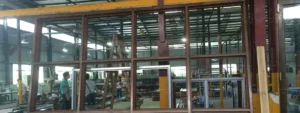
Allow around two months for production once drawings and samples are signed off; the factory confirms the lead time in writing for each order. The agent follows production up with each factory and provides regular production update reports: quantities completed, material shortages flagged, tracking against the agreed loading date. For an overview of how the whole hotel package is bought rather than just scheduled, see our purchasing service for hotel projects in China.
Stage 5: Pre-Shipment Inspection
Once production is finished, FBM Sourcing’s own inspection team carries out one final random inspection at each factory before container loading (clients are welcome to join it), checking dimensions, finish quality, hardware function, defect rate and packing against the approved specification and sample — with a full photo and video record delivered to the client before loading is approved. Defects found here are rectified before the container loads; anything needing replacement production is flagged immediately while minor items can still be re-run. See our Florida hotel procurement case study for this stage in practice.
Stage 6: Container Loading and Export
Loading is supervised: goods correctly packed, container contents matched to the packing list, export documents in order, container and seal numbers confirmed to the client before departure. A 200-room hotel’s furniture and building materials package fills multiple 40HQ containers; the count depends on scope and item dimensions and is set in the load plan.
Stage 7: Sea Freight and Site Delivery
Sea freight transit time from South China depends on the destination and routing and is confirmed by the carrier at booking; port clearance and inland freight to site come on top. The agent provides tracking throughout; coordination of the arrival against the fit-out programme sits with the client’s project manager.
Where Do Delays Actually Come From?
Almost never from the factory floor running slow — and almost always from four upstream causes: late drawing changes after quotations are issued (every change reopens pricing and sampling), slow sample approval on the client side (each idle week at stage 3 moves delivery a week), unclear responsibility between suppliers on interfacing items (who provides the vanity top the joinery must fit), and missing consolidation planning so finished goods sit waiting for a container plan. The protection is procedural: freeze specifications before quoting, pre-agree who signs samples and within how many days, and hold every factory to one project timeline with the long-lead items — fire-rated doors, custom aluminium, design-sensitive public area pieces — sequenced first. More failure patterns are collected in what to watch out for when sourcing hotel furniture in China.
When Should You Engage Your China Sourcing Agent?
At design development — well before your site installation start — so specification review, factory selection and sample approval complete before production must begin; from deposit to shipment alone, allow around four months. Projects that engage later face three options: accept a delayed opening, pay air freight premiums that erode the factory-gate saving, or fall back to less competitive local stock. None is a good outcome, and the deciding variable is simply the start date. How the engagement itself works — scope, deliverables and a 5% commission for suppliers you nominate (products we source for you are quoted at a direct price) model — is covered in our China procurement agent guide for hotels and apartment developments.
Get a Procurement Schedule Built Backward from Your Opening Date
FBM Sourcing provides hotel FF&E and building materials procurement from the Guangdong manufacturing region for commercial building projects. If you have a defined installation window, send your project details via our China building materials and FF&E procurement page — we will build a procurement schedule that works backward from your opening date and identify the latest point at which factory engagement must begin.