The top waterproofing membrane manufacturers in China for building projects are Oriental Yuhong, Keshun, Canlon, Zhuobao and Hongyuan. Together they produce every membrane family a commercial building specifies — SBS and APP modified bitumen rolls, TPO and PVC single-ply, self-adhesive HDPE pre-applied membranes and liquid-applied coatings — and the largest of them supply China’s own airports, metro systems and high-rise programs. For an overseas project buyer the decision is less about finding capacity and more about matching membrane type to your roof or below-grade detail, verifying test reports against the standard your engineer named, and planning shipment around a product that is heavy, temperature-sensitive and unforgiving of bad storage — the kind of detail a sourcing partner should already have covered.
Facts that frame every waterproofing order from China:
- SBS modified bitumen membranes are produced to GB 18242 in China and commonly specified at 3 mm or 4 mm thickness in 1 m × 10 m rolls.
- TPO and PVC single-ply membranes run 1.2 mm / 1.5 mm / 2.0 mm, tested against GB 27789 (TPO) and GB 12952 (PVC) domestically, with ASTM D6878 and EN 13956 the usual export references.
- Bitumen membrane is payload-limited cargo: a 20GP reaches its ~26–27 tonne limit long before it fills, so freight quotes should be built on weight, not volume.
- Production lead time for standard membranes is short — typically 10–20 days — but third-party batch testing adds another 1–2 weeks that must sit inside your schedule.
- Every reputable factory can provide type-test reports; the buyer’s job is to confirm the report matches the exact thickness, reinforcement and grade being shipped.
Top Waterproofing Membrane Manufacturers in China: The Shortlist
1. Oriental Yuhong
Oriental Yuhong is the largest waterproofing manufacturer in China by a clear margin, with a national plant network and a project résumé that includes major airports, rail programs and landmark commercial buildings.
Location: Beijing (plants nationwide) · Established: 1995 · Classification: Large listed manufacturer (Shenzhen Stock Exchange) · Key products: SBS/APP bitumen membranes, TPO, PVC, pre-applied HDPE membranes, waterproof coatings · Compliance basis: GB 18242/27789/12952, CE-marked export lines, ISO plants
Verdict: The reference bid for any large commercial roof or basement package — if another factory cannot explain why it beats Yuhong’s documentation, it usually doesn’t.
2. Keshun
Keshun is the Guangdong heavyweight of the sector, headquartered in Foshan’s Shunde district, and pairs its membrane range with an engineering-service culture built on developer framework contracts.
Location: Shunde, Foshan, Guangdong · Established: 1996 · Classification: Large listed manufacturer (Shenzhen Stock Exchange) · Key products: Modified bitumen membranes, self-adhesive membranes, TPO/PVC, waterproof coatings · Compliance basis: GB standards, ISO, export testing on request
Verdict: The natural pick when your project already buys tiles, sanitary ware or cabinets from the Foshan corridor and wants waterproofing in the same consolidation plan.
3. Canlon
Canlon is younger than the giants but has specialised hard in high-polymer membranes and pre-applied systems, the product families engineers increasingly specify for basements and podium decks.
Location: Suzhou, Jiangsu · Established: 2011 · Classification: Listed specialist manufacturer · Key products: High-polymer self-adhesive membranes, pre-applied HDPE, TPO/PVC lines · Compliance basis: GB standards, ISO, project technical support
Verdict: Shortlist Canlon when the drawing says pre-applied or blind-side waterproofing — the detail work there matters more than brand seniority.
4. Zhuobao
Shenzhen-based Zhuobao built its name on self-adhesive membrane technology and has decades of installations in metros, airports and municipal works across southern China.
Location: Shenzhen, Guangdong · Established: 1996 · Classification: Specialist manufacturer · Key products: Self-adhesive bitumen membranes, pre-applied systems, waterproof coatings · Compliance basis: GB standards, ISO plants
Verdict: A solid self-adhesive specialist for projects that want torch-free application — relevant wherever open-flame roofing work is restricted.
5. Hongyuan
Hongyuan operates from Shouguang in Shandong — the city that hosts China’s densest cluster of waterproofing factories — and represents the value tier of credible, standards-compliant membrane production.
Location: Shouguang, Shandong · Established: mid-1990s · Classification: Large cluster manufacturer · Key products: SBS/APP membranes, self-adhesive membranes, coatings · Compliance basis: GB standards, export batch testing on request
Verdict: The price-check bid for straightforward SBS roof scopes — specify the exact grade and insist on batch testing, and the Shandong cluster delivers strong value.
Sourcing this for a commercial project?
FBM Sourcing works with project owners, developers, main contractors and FF&E contractors on hotel, apartment, school, office and other commercial building projects. Send us your BOQ, drawings or product list — our team will review it and get back to you.
Which Membrane Type Does Your Project Actually Need?
Membrane family follows the building detail, not the factory catalogue. Exposed flat roofs on commercial buildings increasingly go single-ply — TPO where heat-welded seams and reflectivity are wanted, PVC where chemical exposure or detailing complexity favours it. Conventional protected roofs and podium decks still run on SBS modified bitumen, typically two plies at 3 mm + 3 mm or a single 4 mm torch-applied layer. Basements and blind-side walls are where pre-applied HDPE self-adhesive systems have taken over, bonding to poured concrete so water cannot track between membrane and structure. A building material sourcing agent should make the factory confirm, in writing, that the quoted product matches the specified standard and thickness — GB 18242 for SBS, GB 27789 or ASTM D6878 for TPO, EN 13956 for European-specified single-ply — because “waterproof membrane” on a quotation sheet covers a price range of several multiples.
Waterproofing is selected by application condition first — substrate, exposure and how it is applied on site. Brand comes after that.
| Project scenario | Shortlist from this list | Why it fits | What would change the answer |
|---|---|---|---|
| Large commercial roofs and podium decks | Oriental Yuhong | Full-range national scale suits large single-application areas | A specialist below-grade condition |
| Foshan-consolidated project taking several material categories | Keshun | Range plus developer service in the same cluster as other materials | A project sourcing nothing else from South China |
| Basement and blind-side waterproofing | Canlon | Pre-applied and high-polymer systems are designed for blind-side conditions | An exposed roof application |
| Sites where torch-applied systems are not permitted | Zhuobao | Self-adhesive technology removes the open flame | A site with no restriction on hot works |
| Price-checked standard SBS membrane at volume | Hongyuan | Cluster-scale value production for standard specifications | A specification requiring a proprietary system with named accessories |
| Any waterproofing package | Match the system, not the roll | Membrane, primer, accessories and detailing must come from one system for the warranty to hold | Mixing manufacturers across a single system — which voids most warranties |
How Do You QC a Product Whose Failures Appear Years Later?
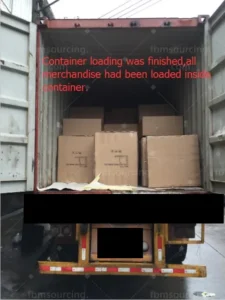
Waterproofing is the classic deferred-failure product: it either works invisibly for decades or fails expensively after handover, so quality control has to happen at the factory, not on site. Storage and shipment matter too: rolls ship upright, strapped, and out of summer deck heat where bitumen compounds can deform. On the logistics side, plan by weight — bitumen membrane hits a 20GP’s ~26-tonne payload ceiling with space to spare — and remember that minimum order quantities for building materials are rarely the obstacle here, because membrane MOQs are small relative to any real roof.
Comparison Table: China Waterproofing Manufacturers for Project Buyers
| Manufacturer | Base | Established | Core strength | Best fit for |
|---|---|---|---|---|
| Oriental Yuhong | Beijing | 1995 | Full range, national scale, deep references | Large commercial roofs and basements |
| Keshun | Foshan, Guangdong | 1996 | Range + developer service model | Foshan-consolidated project packages |
| Canlon | Suzhou, Jiangsu | 2011 | High-polymer / pre-applied systems | Basement and blind-side details |
| Zhuobao | Shenzhen | 1996 | Self-adhesive technology | Torch-free application requirements |
| Hongyuan | Shouguang, Shandong | mid-1990s | Cluster-scale value production | Price-checked standard SBS scopes |
Matching Manufacturer to Project: A Practical Frame
Buy the roof the way the engineer drew it: reference-grade manufacturers for warranty-critical exposed roofs, pre-applied specialists for below-grade work, cluster factories for straightforward protected-membrane scopes where batch testing substitutes for brand premium. If waterproofing is one line in a broader building material order — tiles, doors, windows, cabinets moving in the same program — the practical gain is consolidation: one inspection trip covers the membrane factory alongside the others, and the rolls ride shared containers instead of paying for their own. That is the model FBM Sourcing runs as a china sourcing agent for commercial building material packages, with fire and finish standards handled the same documented way as our guide to fire rating standards for building materials describes.
Evidence to Request Before You Shortlist
Catalogues and showrooms all look convincing. What separates a waterproofing manufacturer that will perform on a commercial project is the documentation it can produce for your specification — request these items with your RFQ, and treat slow or partial answers as information:
- Type test reports for the exact membrane — thickness, tensile strength, elongation — to the GB, ASTM or EN standard your specification names
- Batch QC certificates plus an agreed thickness/dimension verification protocol at inspection (waterproofing failures surface years later; the batch record is your evidence)
- The application specification and whether the warranty is conditional on approved applicators or system components
- Material vs system warranty terms in writing — they are very different promises
- Compatibility statements for your substrate, primers and adjacent materials
- References at comparable roof, podium or basement scale
On FBM-managed packages our own QC team collects and cross-checks every one of these documents against the actual production batch during factory visits and inspection before shipment — so the evidence file your project holds matches the goods in the container, not just the brochure.
Get a China Procurement Quote for Your Project
Send us your waterproofing specification — membrane types, thicknesses, areas, standards named by your engineer — along with destination port and program dates. FBM Sourcing will return a factory comparison with verified test documentation, batch-testing options and a weight-planned freight picture, integrated with the rest of your building material scope. Start with your drawings and BOQ on our project inquiry page.
Frequently Asked Questions
How should a project choose between membrane types?
By building detail, not factory catalogue – exposed flat roofs favor single-ply TPO or PVC, protected roofs and podium decks typically run SBS modified bitumen, and basements and blind-side walls use pre-applied HDPE self-adhesive systems.
Why is waterproofing quality control harder than for other materials?
Because it is a deferred-failure product – it either works invisibly for decades or fails expensively after handover, which is why QC has to happen at the factory, not discovered on site years later.
What documentation should a waterproofing manufacturer provide?
Type test reports for the exact membrane (thickness, tensile strength, elongation) to the GB, ASTM or EN standard specified, plus batch QC certificates and an agreed thickness/dimension verification protocol.