Gas station chains can source most of the buildable scope of a new station from China — canopy steel components, ACM facade panels, LED price signs and canopy lighting, convenience store shelving and cold-room doors, restroom tiles and sanitaryware, and fire-rated doors — through one procurement channel instead of a dozen separate vendors. A single new-build station typically fits in 1–2 x 40HQ containers, and once the first station’s specification is locked, every subsequent site becomes a repeat order with shorter lead times and no re-engineering. FBM Sourcing, your China sourcing partner, runs this model for multi-site operators as part of our China building materials and FF&E procurement service, working with the project owner, developer or main contractor rather than individual store managers.
- Core sourcing scope for one station: canopy steel and fascia system, ACM (aluminum composite) cladding, LED price signs and canopy lights, store shelving and checkout counters, cold-room and display-cooler doors, restroom tiles and fixtures, and fire-rated back-of-house doors.
- A standard single-site package loads into 1–2 x 40HQ containers (76 cbm each); a 3-station rollout phase usually consolidates into 4–5 containers.
- First-station engineering and production runs 60–75 days; repeat stations drop to 30–45 days because drawings, molds and finish approvals already exist.
- US-bound electrical scope is quoted with UL-listed components (canopy luminaires to UL 1598), and door and materials selections respect NFPA-driven fire separation requirements around the store and storage areas.
- For suppliers you nominate, we charge a 5% commission; for products we source for you, we quote a direct price.
What Can a Gas Station Chain Actually Source from China?
The fuel system itself — dispensers, tanks, vapor recovery — stays with your regulated domestic vendors. Almost everything else that makes up the visible station and the store is fair game for China procurement:
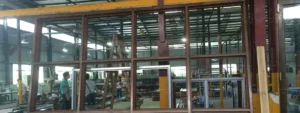
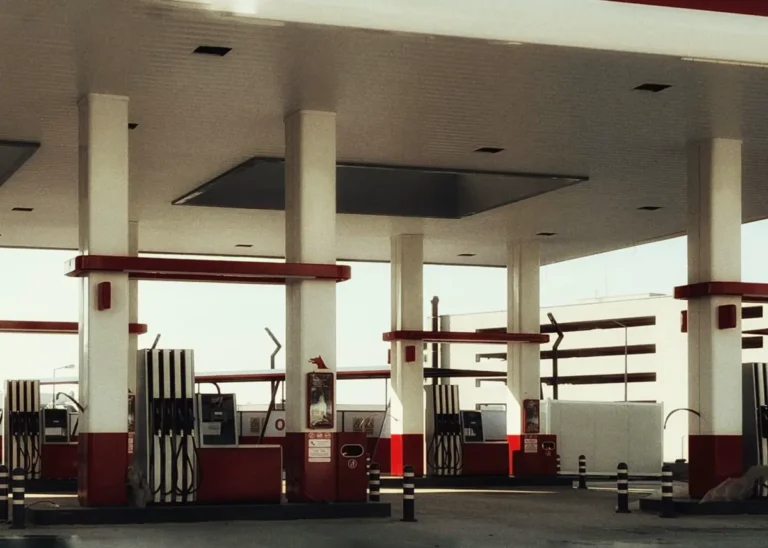
- Canopy structure and fascia. Fabricated steel columns, beams and deck components, plus the ACM fascia and brand-color trim. These are shop-welded, primed and match-marked packages engineered from your canopy drawings — the same fabrication stream as our commercial steel structure sourcing and metal canopy packages.
- Exterior cladding. ACM panels cut and routed to shop drawings for the store facade and canopy fascia, with color-matched coil coating to your brand standard.
- LED price signs and lighting. Main ID price signs with remotely controlled LED digits, canopy recessed luminaires, facade and forecourt lighting — see our roundup of LED and architectural lighting manufacturers in China for how this segment is structured.
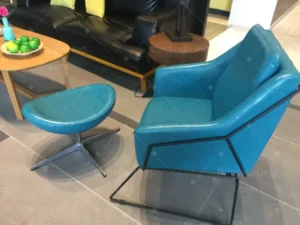
- Convenience store fit-out. Gondola shelving, wall shelving, checkout counters, back-room racking, and glass doors for walk-in coolers and display cases.
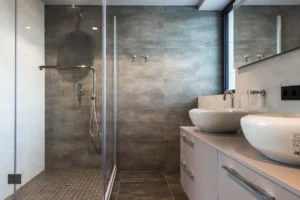
- Restrooms. Porcelain floor and wall tiles, toilets, urinals, basins, stainless accessories and toilet partitions — tile selection guidance is in our porcelain vs ceramic tiles for commercial projects guide.
- Doors. Storefront aluminum doors plus fire-rated steel doors for storage, electrical and back-of-house rooms.
On a typical new-build station, this package covers 60–70% of the non-fuel construction materials budget — large enough that the sourcing decision materially moves the per-site build cost, which is exactly what matters when the same station is built 10, 20 or 50 times.
How Does Multi-Site Standardization Work for a Rolling Program?
Chains do not buy stations one at a time; they buy a prototype and then repeat it. The procurement mechanics should match:
- Station 1 locks the specification. Every SKU — from canopy fascia extrusion to restroom tile to shelving bay — is documented in a controlled spec book with drawings, finishes, part numbers and approved samples retained in China.
- Repeat stations are released by PO only. A new site release references the spec book plus site-specific quantities (canopy size, store area, restroom count). No re-engineering, no re-sampling, no drift between stations.
- Lead times compress. First-station engineering and production runs 60–75 days; repeat stations drop to 30–45 days because shop drawings, tooling and finish approvals already exist.
- Versioning is controlled. When the brand updates — new fascia color, new shelving height — the spec book is revised once, and every later station builds to the new revision while earlier sites can order retrofit kits from the same drawings.
This is the same rolling-program logic that works for restaurant chain equipment rollouts: the value of a china sourcing agent in a chain program is less about any single purchase order and more about holding the standard steady across dozens of them.
Standardization also changes the commercial conversation with the factories. Once a chain commits to a documented spec, production volumes become forecastable, and forecastable volume is what factories price for: tooling for the price-sign cabinet is amortized across the program instead of one station, ACM coil runs are batched across sites for color consistency, and shelving lines can hold brand-specific components in stock between releases. The result is that station 10 is not just faster than station 1 — it is cheaper, with pricing locked per spec-book revision rather than renegotiated per site.
Sourcing this for a commercial project?
FBM Sourcing works with project owners, developers, main contractors and FF&E contractors on hotel, apartment, school, office and other commercial building projects. Send us your BOQ, drawings or product list — our team will review it and get back to you.
Who Should Own the China Sourcing Relationship in a Chain Program?
In practice we see three ownership models, and the choice shapes how much value the program captures:
- The brand or franchisor owns it. Head office holds the spec book and the relationship with the sourcing agent; franchisees and their GCs release site POs against the fixed standard. This captures the most value: one negotiation covers the whole pipeline, and brand consistency is enforced at the point of manufacture rather than policed on site afterwards.
- The developer or main contractor owns it. Common when one construction partner builds most of the network. The GC folds the China package into its procurement schedule and treats FBM Sourcing as a materials subcontractor with a fixed a 5% commission for suppliers you nominate (products we source for you are quoted at a direct price) line — clean for tendering, and the GC keeps the savings as margin or passes them through.
- Site-by-site buying. Each franchisee sources independently. This is the weakest model: volumes fragment, specifications drift within two or three stations, and nobody accumulates the compliance paper trail that makes permitting faster over time.
Whichever party owns the relationship, the operational rule is the same: the spec book lives in one place, revisions are numbered, and every purchase order cites the revision it builds to. A chain of 20 stations should generate one engineering effort, not twenty.
How Is Quality Controlled Before Containers Leave China?
All inspections are carried out by FBM Sourcing’s own team at the factories, with a full inspection once fabrication is finished, before shipment: steel grades and coating thickness on canopy components, coil-coating batch consistency on ACM panels, weld quality on structural members, LED module binning and power-supply testing on signs, edge banding and rack-load testing on shelving, a 100% count, dimensional spot checks against drawings, and function tests on every electrical assembly, with photo and video records delivered to the client before shipment. Rated components — fire doors, UL-listed fixtures — are checked against their certificates at this stage so the paperwork that lands with the container matches the physical goods. For a repeat station the whole QC file follows the same template as station 1, which means your construction manager reviews it in minutes, not days.
US Compliance: UL-Listed Lighting and Fire Requirements
For US programs, two compliance threads have to be built into the specification from station 1, because your permitting engineer and AHJ will check both:
- Electrical and lighting. Canopy luminaires, facade fixtures and price-sign assemblies are quoted with UL-listed components — luminaires to UL 1598, sign assemblies with UL-recognized power supplies — and the listing documentation travels with the shipment so inspection sign-off is a paperwork check, not an argument. Forecourt fixtures over dispensing areas carry the ratings the location classification demands.
- Fire and materials. Station design in the US sits under NFPA-driven requirements; on the materials side that translates into fire-rated door sets for storage and electrical rooms, appropriate separation between store and storage areas, and cladding build-ups selected for the fire performance the design engineer specifies. FBM Sourcing’s role is to procure exactly what the stamped drawings call for and to supply the certification trail for every rated component.
Compliance items are documented per SKU in the spec book, so certificates for station 14 are identical to the ones the AHJ accepted at station 2 — a quiet but real accelerator for chain permitting.
How Many Containers Does One Station Need?
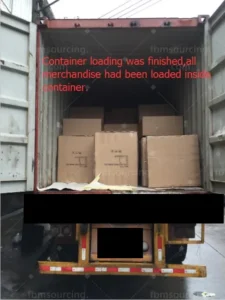
A standard single-site package — canopy steel and fascia, cladding, signs and lighting, store fit-out, restroom package and doors — loads into 1–2 x 40HQ containers (76 cbm each), depending mainly on canopy size and store area. Steel ships match-marked and bundled at the bottom, shelving flat-packed above, and fragile scope (signs, tile, sanitaryware) crated and loaded last for first-out unloading. When 2–3 stations in the same region open in one phase, we consolidate the sites into 4–5 containers and sequence deliveries against each site’s program, which cuts per-station freight cost by 15–25% versus shipping each station alone. All pre-shipment inspection is performed by FBM Sourcing’s own team at the factories, with photo and video records of each loading delivered before the containers leave.
Working the Timeline Backwards from Opening Day
Chains plan from the opening date backwards. For a US site, a workable back-schedule from a repeat-order release is: materials on site 4 weeks before store fit-out completion; add 7–10 days for inland delivery from port; 30–35 days ocean transit; 30–45 days production for a repeat station. That means a repeat-station PO needs to be released roughly 100–110 days before the date the GC needs materials on site — and about 130–140 days for a first station, where engineering and sample approval are still in the path. The discipline that keeps rolling programs on time is simple: the next site’s PO is released the day its building permit is filed, not the day it is granted. The same back-planning structure we use on hotel and apartment programs applies here, with fewer approval loops because the chain spec is already fixed.
Two scheduling details are worth building into the program from the start. First, canopy steel and fascia should be sequenced ahead of store fit-out scope where possible, because the canopy is usually on the site’s critical path while shelving and restroom packages install late — a split delivery inside the same container plan handles this without extra freight. Second, keep a rolling 2–3 station lookahead with the factories: when they can see the next quarter’s releases, production slots are reserved in advance and a compressed 30-day turnaround on an urgent site stops being a favor and becomes part of the routine.
Get a China Procurement Quote for Your Project
If you are building or refreshing a gas station network — whether it is the first prototype site or the next tranche of a rollout — send us your station drawings, brand standards or materials list. FBM Sourcing, as a building material sourcing agent for commercial projects, will return an itemized station package quote, a spec-book proposal for multi-site standardization, and a container and timeline plan, all under one a 5% commission for suppliers you nominate (products we source for you are quoted at a direct price). Use the quote button above or WhatsApp +86 135 6007 5057 to start the conversation.