
Top Skylight & Glass Roof System Manufacturers in China (2026)
Overhead glazing is the only glazing position where a failure lands on someone’s head, and it is the position where Chinese supply is most often bought as if it were a window. It is not. A skylight or glass roof is a structural assembly — glass, frame, thermal break, gaskets, structural silicone, drainage, fall protection and sometimes opening gear — and each of those parts is governed by a different standard at the destination. The manufacturers who make the glass are large, listed and verifiable. The companies who engineer and fabricate the system are a different trade, mostly private, and the ones who can actually certify a system for an overseas project are a small subset of those.
This guide is written for developers, project owners, main contractors, builders, interior design and construction companies and FF&E contractors delivering hotels, offices, retail, transport, education and healthcare buildings. It sets out the manufacturer types behind a skylight and glass roof package, the test and certification evidence each must produce, and the two decisions that determine whether the package is buildable.
The Two Decisions That Come Before Any Factory
Before a project talks to a single manufacturer, two things have to be settled, because they change which manufacturers are even eligible.
Decision one: who carries the structural design. A glass roof is designed against wind, snow and maintenance loads, and somebody has to produce the calculation. A Chinese system fabricator will normally produce a structural calculation for the system; whether that calculation is accepted at the destination depends on whether it is carried out to the destination’s load code and signed by an engineer the destination recognises. In Europe that means wind actions to EN 1991-1-4 and snow actions to EN 1991-1-3; in North America it means ASCE 7 loads with glass thickness determined to ASTM E1300; in Australia it means AS/NZS 1170 with glazing to AS 1288. Ask at enquiry stage which code the factory can calculate to. Many can only calculate to the Chinese code, which is a legitimate answer but decides the procurement route.
Decision two: what the glass make-up has to be. Overhead glazing is generally required to be laminated so that a broken pane is retained rather than dropped. For toughened glass used overhead, the additional requirement is heat soak testing to EN 14179, which is the destructive-testing process that removes panes carrying nickel sulphide inclusions before they reach the roof. Spontaneous breakage of toughened glass is rare per pane and unacceptable overhead, and heat soaking is the only practical control. The same toughening and standards questions arise whenever structural glass is specified — see how to specify structural glass to Chinese factories. A quotation for an overhead package that does not mention heat soak is a quotation for a different product.
Publicly Listed Manufacturers a Buyer Can Verify
We name only companies whose listing and disclosures are public and checkable.
- Xinyi Glass Holdings (信義玻璃), Hong Kong Stock Exchange: 868. Founded 1988, headquartered in Hong Kong, one of the world’s larger integrated glass groups, covering float glass, automotive glass and energy-saving architectural glass. Role note: a glass producer, not a skylight system company. Relevant to the glass specification — float quality, low-iron, coating, toughening and lamination. Evidence to request: the coating performance data (U-value, solar factor, light transmittance) for the exact build-up, and the processing certification for toughened and laminated production.
- CSG Holding (南玻集團), Shenzhen Stock Exchange: 000012 (B share 200012). Established 1984 and one of the earliest listed companies in China, CSG is the country’s largest architectural glass manufacturer, operating energy-saving glass, electronic and display glass and solar glass chains. Role note: again a glass producer with processing capability, not a roof system engineer. Evidence to request: laminated glass conformity — in Europe EN 14449 for laminated and laminated safety glass with the interlayer specification behind it, in North America ASTM C1172 — plus heat-soak records if toughened panes are going overhead.
- Jangho Group (江河集團), Shanghai Stock Exchange: 601886. Founded 1999, headquartered in Beijing, listed on the Shanghai main board, with curtain wall construction and interior decoration as its core businesses, delivering facade packages on offices, hotels, commercial complexes, airports, railway stations, sports venues and residential buildings internationally. Role note: this is a facade contractor rather than a product manufacturer — the category that carries design, fabrication and installation on large glazed roofs. Relevant when the roof is an engineered one-off at scale rather than a catalogue rooflight. Evidence to request: project references in the destination market with the certification route used, and clarity on what is fabricated in-house versus subcontracted.
Beyond these, the skylight and rooflight trade in China is privately held and fragmented. A numbered ranking of private fabricators would be an opinion presented as a finding. The rest of this guide is written as manufacturer types with the evidence to request from each. FBM Sourcing works as the buyer’s sourcing partner across those types, holding the specification and the technical exchange rather than handing over a list of factory names.
The Manufacturer Types That Make an Overhead Glazing Package
1. Architectural glass processors
- Where: Guangdong, Hebei, Jiangsu, Shandong and Anhui, clustered around the float lines.
- What they make: toughened, heat-strengthened, laminated and insulating glass units; coated and low-iron glass; heat-soaked toughened glass.
- Evidence to request: the full build-up written as a make-up, not as a word — for example 8 mm heat-soaked toughened, 16 mm cavity, 6+6 mm heat-strengthened laminated with a 1.52 mm interlayer — plus the interlayer type — the choice between PVB and SGP interlayers changes post-breakage behaviour overhead — the edge seal system for the insulating unit, and the durability testing on the sealed unit. For overhead units, ask specifically for the heat-soak certificate referencing EN 14179 and the pane identification that links it to your order.
- Common failure: a quotation that says “tempered laminated glass” with no thicknesses, no interlayer type and no heat soak, which can be priced three different ways and delivered as the cheapest one.
2. Unit skylight and prefabricated rooflight manufacturers
- Where: Guangdong, Zhejiang and Jiangsu.
- What they make: fixed and opening roof windows, flat-glass rooflights, domes, walk-on and walk-over rooflights, smoke vents.
- Evidence to request: the product standard route. In North America a factory-assembled unit skylight is normally expected to be certified to the AAMA/WDMA/CSA 101/I.S.2/A440 performance standard, with thermal performance certified through NFRC where an energy code applies. In Europe, prefabricated rooflights fall under EN 1873 and continuous rooflights under EN 14963. In Australia, windows and rooflights are covered by AS 2047 with glazing selection to AS 1288. Ask which of these the product has actually been tested to, on which size, because performance certification is issued per tested configuration and does not scale freely.
- Common failure: a certificate for a small tested unit being offered as cover for a much larger unit on the project.
3. Engineered glass roof and skylight system fabricators
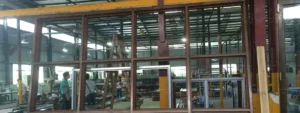
- Where: Guangdong and Jiangsu, overlapping heavily with the curtain wall and architectural glass trade.
- What they make: ridge and pyramid rooflights, barrel vaults, atrium roofs, structural silicone glazed and capped systems, point-fixed and spider-fitting glazing.
- Evidence to request: system performance testing rather than component certificates. For a glazed roof this means watertightness and air permeability testing on a representative specimen — in Europe the curtain walling suite of EN 12152 for air permeability, EN 12154/EN 12155 for watertightness and EN 13116 for wind resistance; in Australia, system testing to AS/NZS 4284. Where structural silicone carries glass, ask for the structural sealant specification and the adhesion and compatibility test results for the actual substrates, which is what ASTM C1184 and EN 13022 address. Ask who performs the field water test at the destination and to what procedure — AAMA 501.2 is the common reference for a hose test on a completed installation.
- Common failure: a package assembled from individually compliant parts with no test on the assembly, then leaking at a junction that no component certificate ever covered.
4. Aluminium profile and thermal break suppliers
- Where: Guangdong (Foshan in particular), Shandong and Jiangsu — the same extrusion base as the aluminium window and door manufacturers.
- What they make: extruded aluminium rafters, purlins, capping and pressure plates, polyamide thermal break strip, gaskets and drainage components.
- Evidence to request: alloy and temper, coating specification and its warranty basis, and the thermal break material and width. For coastal or high-humidity destinations ask for salt-spray performance to ASTM B117 on the finished coating, and for powder coating ask whether the specification is architectural grade for the exposure. On a roof the coating is on the weather side and cannot be recoated in service.
- Common failure: a thermal break narrow enough to meet a headline U-value on paper but not enough to prevent condensation on the internal rafter face in a humid interior such as a pool hall.
Sourcing this for a commercial project?
FBM Sourcing works with project owners, developers, main contractors and FF&E contractors on hotel, apartment, school, office and other commercial building projects. Send us your BOQ, drawings or product list — our team will review it and get back to you.
Fall Protection and Maintenance Access
Two requirements get discovered late and cost the most to retrofit.
The first is non-fragility. In several markets a rooflight that someone could fall through has to be either non-fragile or protected, and non-fragility is a tested property of the assembly, not a claim about the glass. In the UK the common reference is the ACR[M]001 drop test, and EN 1873 addresses the same question for prefabricated rooflights. If the roof will ever be walked on for maintenance — and every roof is — the specification has to say whether the rooflight is non-fragile, whether it is protected by a guard, or whether access is by a permanent system that keeps people off it.
The second is cleaning and glass replacement access. A glass roof needs a route for cleaning and a route for replacing a single pane, and both have to be designed before the frame is fabricated. Retrofitting anchor points into a completed glazed roof is disproportionately expensive and sometimes impossible. Ask, at design stage, how a single pane is removed and replaced, and get the answer in writing.
What a Complete Overhead Glazing Enquiry Contains
- Roof plan and sections with levels, spans and the supporting structure it lands on.
- Destination, and the load code to be used, with the design wind speed and snow load.
- Required thermal performance — U-value, solar factor and light transmittance — and which energy code applies.
- Glass make-up requirements, including whether heat soak is mandatory and whether laminated is required on both leaves.
- Watertightness and air-permeability performance class required, and whether a system test on a specimen is required before production.
- Non-fragility requirement and maintenance access strategy.
- Opening vents and smoke ventilation requirements with the control interface.
- Finish specification with a coating warranty requirement.
- Destination port, target programme and whether site installation is in scope.
A supplier who receives that package can quote a system. A supplier who receives only an elevation will quote a number, and the number will change.
How the Quality Control Works
All inspection on FBM Sourcing packages is carried out by our own team at the factory before shipment, with photo and video records. For overhead glazing, the pre-shipment inspection checks the heat-soak and lamination records against the pane schedule, the profile finish, a representative assembled bay and the crating. Manufacturer and laboratory test reports are reviewed as documents in their own right: we check the tested configuration, the size range covered, the issuing body and the expiry, rather than accepting a certificate at face value.
Frequently Asked Questions
Does overhead glass have to be laminated?
In most destination codes, yes, and where it is not explicitly required it is still the right answer. Laminated glass retains the broken pane in the frame rather than dropping it. Where toughened glass is used overhead, heat soak testing to EN 14179 is the additional control that removes panes liable to spontaneous breakage.
What is heat soak testing and why does it matter on a roof?
Heat soaking is a destructive batch process: toughened panes are held at elevated temperature so that panes containing nickel sulphide inclusions break in the oven rather than in the building. The inclusion rate is low, but overhead is the one position where a single spontaneous breakage is unacceptable. Ask for the heat-soak certificate and check it references your pane identification.
Can a Chinese factory certify a skylight for a European or North American project?
Some can and many cannot, and it is a question to settle at enquiry stage rather than at order stage. The practical test is whether the factory holds test reports to the destination standard — AAMA/WDMA/CSA 101/I.S.2/A440 and NFRC for North America, EN 1873 or the curtain walling suite for Europe, AS 2047 for Australia — on a tested configuration that covers your sizes, and whether it can produce a structural calculation to the destination load code.
How is a glass roof package shipped?
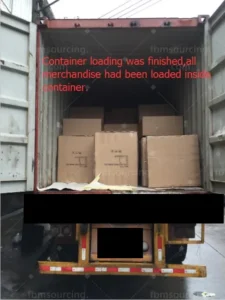
Glass ships in steel or timber A-frames on edge with moisture protection; profiles ship in bundles with the finish protected; gaskets, fixings and sealant ship as a separate consolidated carton set with an itemised list. Our minimum order commitment is a full container load. The item that most often goes missing is the sealant and consumable set, so it should appear on the packing list as its own line rather than as an assumed inclusion.
Should the factory install the roof?
That depends on the destination and the scale. For an engineered atrium roof, a factory-supervised installation or at minimum a factory technician attending the first bay is worth specifying. For catalogue rooflights, local installation against a clear method statement is normal. Either way, decide before ordering, because the fixings, tolerances and sequence differ.
Sourcing this for a commercial project?
FBM Sourcing works with project owners, developers, main contractors and FF&E contractors on hotel, apartment, school, office and other commercial building projects. Send us your BOQ, drawings or product list — our team will review it and get back to you.
Get a China Procurement Quote for Your Project
FBM Sourcing has managed China procurement packages for commercial building projects since 2014, across more than 20 countries and over 1,000 containers. We manage the entire China procurement package on the buyer’s side: we hold the specification, run the technical exchange with glass processors and system fabricators, check that the test evidence actually covers your configuration before production starts, inspect with our own team and consolidate the package for shipment.
Send your roof plan, sections and performance requirements with the destination and target programme, and we will review them and come back to you with a route through the manufacturer types above. More on how a full package is put together: China building materials and FF&E procurement.